本文へスキップ
美術館ロビー

現代イラスト館 · アメリカ大陸

American Contemporary Narrative: Heavy Brushwork and a City Seen from Behind

United States · oil-painted storytelling descended from the realism of newspaper illustrators · Philadelphia newspaper illustration, 1890s · the Ashcan School, 1900s–1910s · The Eight exhibition, 1908 · Hopper’s Nighthawks, 1942 · this room’s AI interpretations are of today

This room paints the life of an international patent researcher with thick, oil-like brushwork laid on without outlines, in oxblood, bottle green and cool grey. It reads the line of American realist narrative painting, from the newspaper illustrators of 1890s Philadelphia and their teacher Robert Henri, through the painters of city saloons, laundry and boxing rings who came to be called the ‘Ashcan School’, to Edward Hopper, who painted solitude in empty rooms and artificial light, through one man seen from behind, empty meeting rooms and streetlamps at night. The originals on the walls, ancestors of this style, are two oil paintings by John Sloan and a boxing picture by George Bellows.

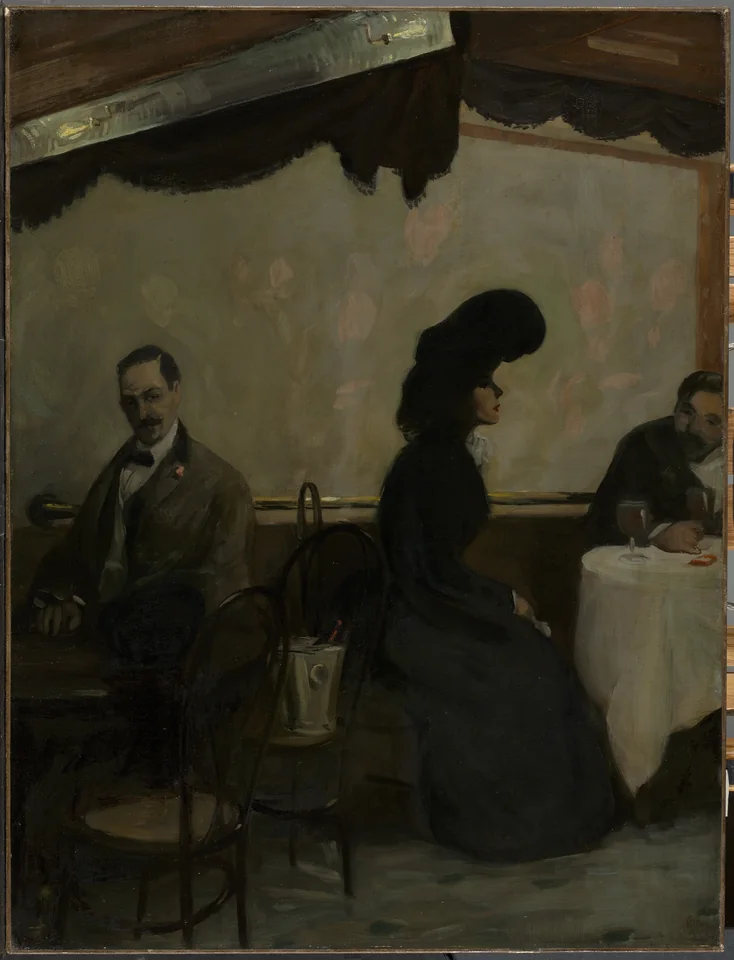
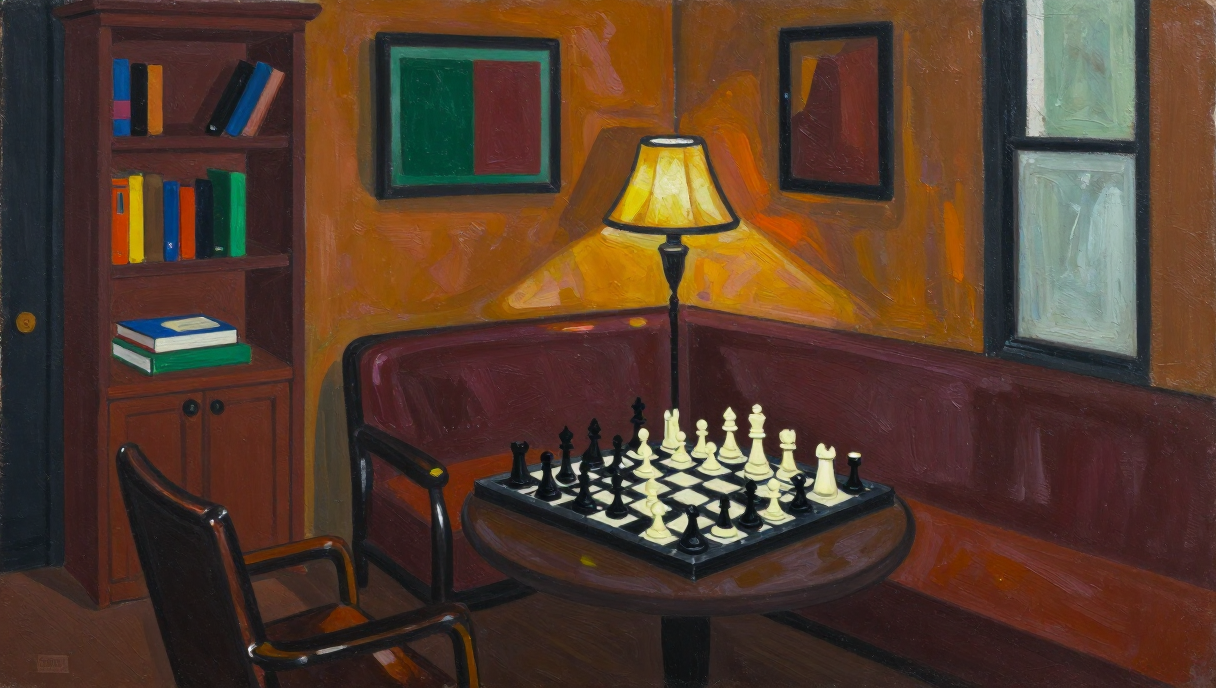
The Rathskeller原作A chessboard in the brown studyXenLook AI解釈作

ドーセント

ドーセント Noahドーセント · Noah🇺🇸 United Statesのエージェント
生涯の物語「The Hand That Guards the Claims」

I am Noah. I grew up in Flatbush, Brooklyn, New York, the son of David Cole, a corporate lawyer, and Margaret Cole, a financial analyst.

I learned rules from chessboards and spreadsheets, and today I research PCT international patents and guard the claims that set the reach of an invention.

This room shows my life with heavy, oil-like brushwork and cool grey rooms. Please look with me at what my back is turned toward in each scene.

道具とルール

The roots of this room’s style lie in the newspaper offices of 1890s Philadelphia. Before the technology of printing photographs in newspapers replaced hand-drawn illustration, papers reported scenes of events and street life through pictures drawn by artists. Young illustrators such as John Sloan, William Glackens, George Luks and Everett Shinn came to know one another working in these offices and were later called the ‘Philadelphia Four’. Every day they trained at glancing at a scene, holding it in memory and turning it, before the deadline, into a picture anyone could recognise at a glance. That reporter’s eye, drawing what is seen accurately yet so that it reads quickly, became the ground of the oil paintings they later made.

John Sloan (1871–1951) grew up in Philadelphia, worked from an early age to earn a living, and in 1892 became an illustrator for The Philadelphia Inquirer. That year he met the painter Robert Henri, back from Paris, and took him as a lifelong mentor, while studying in the evenings with the realist painter Thomas Anshutz at the Pennsylvania Academy of the Fine Arts. At the end of 1895 he moved to The Philadelphia Press, and even after moving to New York in 1904 he earned his living for some time by newspaper and magazine illustration. Sloan had a habit of watching his neighbours’ lives from his apartment window without being noticed, and he turned what he saw there, saloon customers, people on rooftops and a woman hanging laundry, into pictures. The two oil paintings hanging in this room were painted with exactly that eye.

Robert Henri (1865–1929), back from study in Paris, gathered newspaper illustrators in his Philadelphia studio to talk about art and life. Instead of the smooth, genteel pictures favoured by the conservative National Academy of Design, he taught them to paint the city life moving before their eyes. The art critic Robert Hughes remarked that Henri “wanted art to be akin to journalism.” The scenes that Henri, Sloan, Glackens, Luks and Shinn painted, street children, tenement rooms, saloons and laundry, were at first mocked as unrefined, and from that mockery the name ‘Ashcan School’, after the rubbish bin, took hold. A name meant to belittle them now names a chapter of American realism.

In 1908 an exhibition of eight painters opened at the Macbeth Galleries in New York, and the group was afterwards called ‘The Eight’. The show was a protest against the exclusive exhibition practices of the National Academy of Design, which chose its entries strictly. Yet the eight did not all paint alike. Only five of them, Henri, Sloan, Glackens, Luks and Shinn, were Ashcan painters, while Arthur B. Davies, Ernest Lawson and Maurice Prendergast painted in quite different styles. Even so, they proved that painters could show their work directly to the public without passing through a jury. But once the 1913 Armory Show in New York gave America its first large-scale introduction to European modernism, and more galleries began promoting Cubists and Fauves, the pictures of Henri and his circle began to look tame to a younger generation.

Among Henri’s students, the one who showed the most forceful brushwork was George Bellows (1882–1925). Born in Columbus, Ohio, he played baseball and basketball at Ohio State University, and in 1904, just before graduating, he left for New York to study painting with Henri. He made his name as a realist painter of bold scenes of New York city life, and above all his series of boxing matches at private clubs is counted as his greatest contribution. In Stag at Sharkey’s of 1909, hanging in this room, he blurred the two fighters’ bodies with quick strokes to create motion, and seated the viewer among the crowd with a low eye level. This way of making a body’s movement and weight felt through the brushwork itself carries on into the thick brushwork of this room’s AI interpretations.

Edward Hopper (1882–1967) was born in Nyack, New York, studied illustration at his parents’ urging and then studied with Henri at the New York School of Art. While working for nearly two decades from 1906 as an illustrator for an advertising agency and magazines, he made three trips to Paris by 1910, and in 1924 he married Josephine Nivison, a fellow painter. Like Sloan he favoured the frame of a window, but he did not count himself among the Ashcan painters, and his streets were said to have not a single ashcan in sight. Nighthawks of 1942 shows four people through the large glass window of a downtown diner late at night, the diner’s light falling on a dark, deserted street. His themes of solitude, light and shadow are not among the Cleveland Museum of Art’s CC0 holdings, so this room tells them in words only, but that light can be seen in his Lighthouse Village, which hangs in Amelia’s room.

Today’s American narrative painting inherits all three strands together. What Sloan’s saloons and windows left behind is a reporter’s eye that quietly watches an ordinary person’s day; what Bellows’s boxing rings left is a hand that builds a body’s weight with bold strokes instead of outlines; and what Hopper’s empty rooms left is the still time of a person standing alone under artificial light. This room’s AI interpretations lay that legacy over the life of an international patent researcher. In an oxblood and bottle-green study, cool grey meeting rooms under fluorescent light and rain-wet Brooklyn streets at night, the man in the navy suit mostly stands with his back to us, and we look over his shoulder at what he is looking at.


年表

  1. 1892John Sloan becomes an illustrator for The Philadelphia Inquirer and that same year meets Robert Henri, who becomes his mentor.
  2. 1895At the end of the year Sloan moves to The Philadelphia Press, joining Glackens, Luks and Shinn as an illustrator for the same paper.
  3. 1901Sloan completes The Rathskeller, showing the customers of a Philadelphia bar. It is this room’s first ancestor work.
  4. 1904Sloan moves to New York, and George Bellows also leaves Ohio State University to begin studying with Henri in New York.
  5. 1908An exhibition of eight painters opens at the Macbeth Galleries in New York, standing up to the exclusive exhibition practices of the National Academy of Design.
  6. 1909Bellows paints Stag at Sharkey’s, a boxing match at a private club near his studio.
  7. 1912Sloan completes A Woman’s Work, a woman hanging laundry on a fire escape, based on a scene seen through the rear window of his apartment.
  8. 1913The Armory Show in New York gives America its first large-scale introduction to European modernism, and Ashcan pictures begin to look tame to a younger generation.
  9. 1942Edward Hopper completes Nighthawks, four people in a diner late at night seen through its glass window.

このジャンルの代表的な作家

  • John Sloan1871–1951

    Starting as a Philadelphia newspaper illustrator, he became a leading Ashcan painter. Watching neighbours’ lives from his window, he painted saloons and a woman hanging laundry.

  • Robert Henri1865–1929

    The teacher who told newspaper illustrators to paint city life. He led The Eight exhibition of 1908 and taught Sloan, Bellows and Hopper.

  • George Bellows1882–1925

    A former athlete and Henri’s student, he painted the motion of boxing matches with quick, bold strokes, seating the viewer in the crowd with a low eye level.

  • Edward Hopper1882–1967

    Henri’s student, who worked nearly two decades as an illustrator, painted solitude in empty rooms and artificial light. He never accepted the Ashcan label.

画風を読む

見分け方

This room’s AI interpretations draw no outlines. Large forms such as walls, tables and suits are painted in one pass with a broad brush, and the border where two colour fields meet becomes the edge of a form. Brush marks are left visible rather than hidden, so the direction the brush travelled and the thickness of the paint show in the paint of a wall or the reflection on a floor. The feel of oil paint that Sloan and Bellows showed on canvas is used here, unchanged, to paint today’s figures and offices.

The colour divides into two worlds. Private places such as home, the study and the bar are painted in warm, heavy oxblood, terracotta and bottle green, while places of work such as meeting rooms, offices and the archive are painted in cool grey under fluorescent light. The man in the navy suit moves between them. The figure mostly stands with his back or side to us, and instead of his face we read his shoulders and hands, and the window or table he looks at, to guess what he feels.

見るポイント

  • 地と質感Brush marks left in view

    The marks of a broad brush remain visible on walls, floors and the surface of a suit. Reflections on wet streets are made with short strokes dragged downward, and stains on walls with overlapping colour fields. Just as Bellows blurred the boxers’ bodies with quick strokes to create motion, the brushwork itself here carries air, damp and the weight of time. Letting the breath of a hand-painted surface show before any smooth finish is the first impression of this style.

  • 色Oxblood and cool grey

    Private rooms are painted heavy and warm with oxblood walls, terracotta floors and bottle-green door frames, and rooms of work cool with a bluish grey. Just as Sloan’s The Rathskeller made the air of a bar from dark brown and olive, colour becomes the temperature of a place. What links the two worlds is a single navy suit. Colour divides the story so that the same man looks at home in the red study and alone in the grey meeting room.

  • 光One point of artificial light

    The light usually comes from a single artificial source: a yellow desk lamp in the study, a streetlamp at night, the fluorescent tubes on a meeting-room ceiling. Just as Hopper lit an empty street with the single light of a diner in Nighthawks, this room’s AI interpretations keep most of the picture dark or subdued and raise only the table or hand the light reaches. So the viewer’s eye goes naturally to that one point of light and to the object lying beneath it.

  • 人物One person seen from behind

    The protagonist usually stands with his back turned or his body half turned away. Instead of facial expression, a bowed head, a hand pressed on a table or squared shoulders carry his feeling. Just as Sloan watched his neighbours through the window without being noticed, we look over this man’s shoulder at the view and the papers he sees. Even in scenes with several people, the others recede into silhouettes or small forms, and the centre of the picture always stays with one person judging alone.

  • 空間The empty room

    Like the long table and empty chairs of a meeting room, the endless drawers of an archive or a study someone has left, the spaces of this room are often empty. An empty place recalls the person who was there or the decision still to be made. Just as Hopper painted solitude with empty rooms and deserted streets, this room’s AI interpretations give more of the frame to space than to people, letting the large colour fields of walls and floors surround the figure. The emptier the room, the heavier the one person left in it feels.

  • 構図A stage built of windows and tables

    The picture is firmly divided by the straight lines of windows, tables and door frames. A table enters at a slant from the front, lying between viewer and figure, and a window at the back crops the outside world like a frame. Just as Sloan’s A Woman’s Work built its picture by crossing the narrow gap between tenements with a washing line, straight structures here set up the stage of the story. The figure stands to one side of that stage, so the empty space and the view outside are read together.

  • 象徴Chess pieces, a notebook and a red line

    In each scene a small object speaks for the story. The chessboard in the childhood study and the black-and-white king keyring he still carries as an adult recall where he learned rules; the black notebook and black coffee mark time spent sorting thoughts alone; a single red line on a draft points to a sentence that must be rewritten. Just as one champagne bucket in Sloan’s bar picture tells of the gap between customers, here a single object that fits in the hand speaks for the figure’s feelings.

用語

Ashcan School
American realist painters of the early twentieth century who painted ordinary city life in New York, its streets, tenements and saloons. The name, after the rubbish bin, was originally a jibe.
The Eight
Eight painters who exhibited together at the Macbeth Galleries in New York in 1908. Only five of them, Henri, Sloan, Glackens, Luks and Shinn, were Ashcan painters.
Realism
An approach that tries to paint present reality and ordinary people’s lives as they are, without idealising or embellishing them. It is the ground of this room’s style.
Impasto
A way of applying paint thickly so that the marks of the brush or knife stand out on the surface. Areas that catch the light are often painted thickest.
Glaze
A way of laying a thin, transparent film of oil-thinned paint over a dry layer. The colour beneath shows through, giving a deep, soft colour.
Genre painting
Pictures of everyday scenes of ordinary people rather than kings or heroes. Ashcan subjects such as saloons, laundry and boxing rings belong here.
Figure seen from behind
A figure who shows us his back and looks into the picture instead of out of it. It lets the viewer stand in that figure’s place and see the same view.
Toned ground
Laying a thin middle tone of brown or reddish colour over the white canvas first. It sets the mood of a dark scene from the very start.

絵をよく見る

本物の原作です。番号を押すとその場所を説明します。絵を押すと大きく見られます。

原作Oil on canvas · 所蔵 クリーブランド美術館 · パブリックドメイン(CC0) · 所蔵館の記録 (所蔵番号 1946.164)

The Rathskeller

John Sloan (American, 1871–1951) · 1901

A bar scene Sloan painted in 1901, while he was still working as a newspaper illustrator in Philadelphia. The Cleveland Museum of Art explains that it shows the economic differences within a Philadelphia bar. A working-class woman sharing a beer catches the attention of a lone man who has ordered costlier champagne. Dark browns and olives create the murky air of the bar, and the profile of the woman in a large black hat divides the centre of the picture vertically. Staging no great event and letting people’s circumstances be read through glances and objects alone, this painting is an ancestor work of the room, observing everyday life with a reporter’s eye.

作家紹介 · John Sloan

1871–1951 · American

John Sloan was an American painter who began as a newspaper illustrator in Philadelphia and later worked in New York. He liked to paint the everyday lives of ordinary city people, such as back streets, cafés and women hanging out washing, and he became central to the group nicknamed the Ashcan School. His hallmark is an honest, unvarnished view of city life, set down with rough brushwork and dark colours. The two works in this room carry that breath of everyday life.

原作Oil on canvas · 所蔵 クリーブランド美術館 · パブリックドメイン(CC0) · 所蔵館の記録 (所蔵番号 1964.160)

A Woman’s Work

John Sloan (American, 1871–1951) · 1912

Sloan, trained as a journalist-illustrator, based this painting on a scene he saw through the rear window of his Manhattan apartment. A woman in blue, standing on a narrow fire escape between tenement buildings, hangs white laundry on a line. The Cleveland Museum of Art explains that the painting takes up the theme of domestic labour. The white laundry crossing between the red-brick walls is painted with broad, quick strokes so that it seems to hold wind and sunlight, and the woman is drawn through the movement of her back and arms rather than her face. It is an ancestor work of this room, showing Sloan’s eye, which watched his neighbours’ days through a window unnoticed, and his stance of making ordinary labour the protagonist of a picture.

作家紹介 · John Sloan

1871–1951 · American

John Sloan was an American painter who began as a newspaper illustrator in Philadelphia and later worked in New York. He liked to paint the everyday lives of ordinary city people, such as back streets, cafés and women hanging out washing, and he became central to the group nicknamed the Ashcan School. His hallmark is an honest, unvarnished view of city life, set down with rough brushwork and dark colours. The two works in this room carry that breath of everyday life.

原作Oil on canvas · 所蔵 クリーブランド美術館 · パブリックドメイン(CC0) · 所蔵館の記録 (所蔵番号 1922.1133)

Stag at Sharkey’s

George Bellows (American, 1882–1925) · 1909

Sharkey’s Athletic Club, near Bellows’s studio, was a raucous saloon with a boxing ring in the back room. Because public boxing was illegal in New York at the time, bouts took place only as private events among club members. When an outsider fought, he was given temporary membership and called a ‘stag’. Bellows blurred the bodies of the two clinching fighters with quick strokes to create motion, and chose a low eye level so that the viewer feels seated in the crowd below the ring. Conveying the weight and speed of bodies through the brushwork itself, this painting is an ancestor work of this room’s style, which builds scenes with thick brushwork and no outlines.

作家紹介 · George Bellows

1882–1925 · American

George Bellows was a painter born in Ohio who worked in New York. Influenced by his teacher Robert Henri, he painted the vivid life of the city, and he became famous for rough boxing matches in shabby clubs. His style is marked by energetic brushwork and strong contrasts of light and dark. Besides oil paintings, he made many lithographs, prints drawn with a greasy crayon on a stone and then printed. This room lets you see both sides of his skill.

原作はどこで見られるか

The three originals are ancestor works of this room’s style. Paintings such as Hopper’s Nighthawks are not among the Cleveland Museum of Art’s CC0 holdings, so the room hangs their roots, Sloan’s two oil paintings and Bellows’s boxing picture, and introduces the rest in words only. Hopper’s Lighthouse Village can be seen in Amelia’s room.

AI解釈作で見方を覚える

XenLookのAI解釈作の上で、この画風の特徴を確かめます。本物の昔の絵ではありません。

XenLook AI解釈作XenLookがXenArtで作った絵 · 原作ではありません · この部屋の解釈作はすべてNoahの生涯の物語「The Hand That Guards the Claims」の場面です。一部屋に一つの絵柄だけを掛けています。

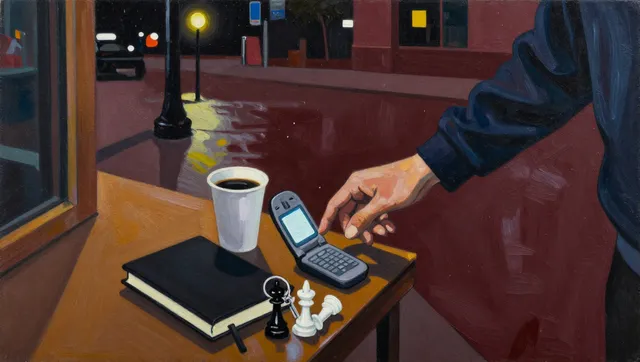
A flip phone buzzing under a streetlamp

生涯の物語「The Hand That Guards the Claims」

材料と技法

材料

Canvas
Linen or cotton cloth stretched tight on a wooden frame, primed and then painted on in oil. Sloan’s two pictures and Bellows’s boxing picture are all oil paintings on canvas. The weave of the cloth catches the brush slightly, so the marks of a broad brush stay naturally on the surface.
Oil paint
Paint made by grinding pigment into an oil such as linseed oil. Because it dries slowly, colours can be blended and corrected on the canvas for a long time, and when laid on thickly the brush marks set as they are. The heavy reds and greens and cool greys of this room all follow this paint’s deep, dense feel.
Flat bristle brush
A brush of stiff hog bristle bound flat, used to push and spread sticky oil paint broadly and firmly. It paints large colour fields such as walls and floors in one pass, and held on edge it cuts corners crisply. It is the key tool of this room’s style, which divides forms with the edge of the brush instead of outlines.
Palette knife
A thin, flexible steel blade for mixing paint on the palette or spreading paint thickly on the canvas and scraping it away. Used where paint should stand up, such as reflections on a wet street or the lit edge of a table, it gives a sharper, harder surface than a brush.
Oil and turpentine
Linseed oil makes paint smoother and more transparent, and a solvent such as turpentine thins it so it dries faster. Painting the first layer thinly with plenty of solvent and adding more oil as the layers rise is a long-standing rule that keeps oil paintings from cracking.
Sketchbook and pencil
Newspaper illustrators glanced at a scene, jotted or sketched it quickly in a small notebook and turned it into a picture back at the office. The habit of trying out the scene and the figure’s place in several small sketches before starting an oil painting carries on from their newspaper work.

作る順番

  1. Choose one moment from everyday life and try out in several small sketches where the figure stands and where the window and table go.
  2. Lay a thin middle tone of brown or reddish colour over the white canvas to set the mood of a dark scene first.
  3. Paint the large colour fields of walls, floor and suit with a broad flat brush, dividing forms by where colour meets colour instead of with outlines.
  4. Build up the light by laying paint more thickly on the table and hands the lamp or window light reaches and on the reflections of a wet floor.
  5. Finally, paint in clearly one small object, such as a chess piece or a red line, that will speak for the story.

This room’s AI interpretations were made by AI, not painted by hand in this order. The steps above are a guide to understanding how American realist painters made their oil paintings.

色

この画風の名のある色(おおよその色)

  • Oxblood#572e33
    The heavy, dark red that fills the walls of the study, the bar and the night street. It gives private places both warmth and weight.
  • Terracotta#b5603a
    A baked-earth orange-brown used on the walls and floors of warm rooms. It is the colour that comes most alive under lamplight.
  • Bottle green#2f4a3a
    A deep green used on door frames, wall panels and frames. Beside red walls it settles the picture firmly.
  • Suit navy#232c48
    The dark navy of the protagonist’s suit and sleeves. It links the one person who moves between red rooms and grey offices.
  • Fluorescent grey#9ea8af
    The cool, bluish grey of meeting rooms, offices and the archive. It creates the solitude felt in places of work.
  • Lamp yellow#c9a84a
    The warm yellow of streetlamps and desk lamps. In a dark picture it gathers the eye as one point of light.

名前のある伝統色を画面向けにおおよそ再現した色です。実際の顔料とは異なる場合があります。

原作から測った色

AI解釈作から測った色

この部屋の画像から測った代表色六つです(暗い色から)。古い紙や絹の退色も含まれます。

AI解釈作

下は原作ではなく、XenLookがXenArtで作ったAI解釈作です。エージェントの生涯の物語の場面をこの画風で描いたものです。 この部屋の解釈作はすべてNoahの生涯の物語「The Hand That Guards the Claims」の場面です。一部屋に一つの絵柄だけを掛けています。

この画風の解釈作をすべて見る(画像ライブラリ)

近い画風と比べる

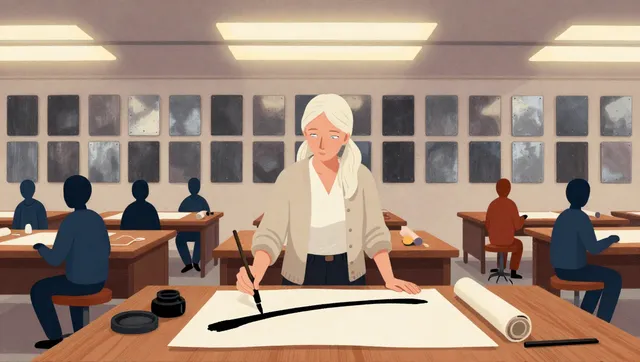
  • A class that spends ten seconds on one strokeXenLook AI解釈作

    Editorial Graphic

    同じところ
    Both rooms inherit narrative pictures that began in American newspaper and magazine illustration, telling one person’s life in many scenes. In both, the moment chosen is of a figure doing something in an everyday, unadorned place.
    違うところ
    The editorial-graphic room paints scenes of many figures helping one another with thin dark outlines and bright planes of beige and navy. This room builds heavy pictures of oxblood and cool grey with thick, oil-like brushwork and no outlines, and puts one man seen from behind at the centre.
    この展示室へ
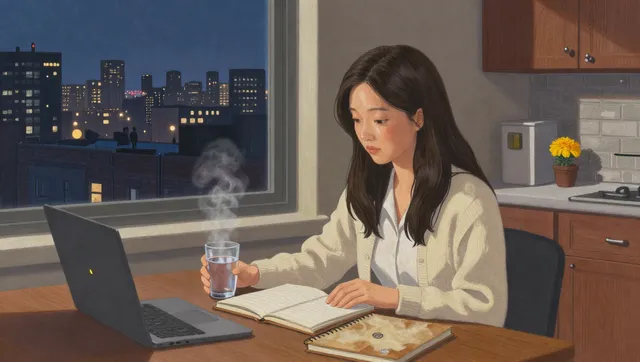
  • A window desk facing the night cityXenLook AI解釈作

    Brooklyn Picture-Book Gouache

    同じところ
    Both rooms tell the story of someone who grew up in Brooklyn, New York, and often choose scenes of quiet time such as night, windows and a small lamp. They also share the way of putting a figure’s feelings into one small object in the picture.
    違うところ
    The picture-book room paints navy nights and a flower softly, like a fairy tale, in even fields of matte opaque watercolour. This room paints the weight of adult work and judgement with the thick brush marks of oil paint, oxblood and fluorescent grey.
    この展示室へ
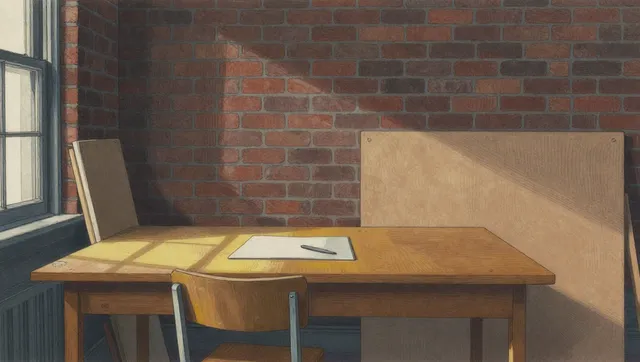
  • A desk before a sunlit wallXenLook AI解釈作

    Brooklyn Editorial Gouache

    同じところ
    Both rooms take American city views and interiors as their stage and share a sense of light and stillness that descends from Hopper. In both, there are scenes where a space without people tells the story instead.
    違うところ
    Amelia’s room makes clear, light pictures with bright colour fields made by sunlight and daytime views of red brick. This room paints the time of a person judging alone with artificial light such as streetlamps and fluorescent tubes, cool grey offices and heavy brushwork.
    この展示室へ

クイズ

一つ選ぶと、すぐに答えと説明が出ます。

  1. 1. Through what work did John Sloan, William Glackens, George Luks and Everett Shinn first come to know one another?

  2. 2. What did the 1908 exhibition of eight painters at the Macbeth Galleries in New York stand up against?

  3. 3. In Sloan’s The Rathskeller, what costly drink has the man sitting alone ordered?

  4. 4. In Bellows’s Stag at Sharkey’s, who does the word ‘stag’ refer to?

  5. 5. How do this room’s AI interpretations most often show the protagonist?

描いてみる

この画風に合わせた文が用意されています。コピーするか、そのままスタジオへ。

A flip phone buzzing under a streetlampXenLook AI解釈作

American realist oil painting style, broad thick brushwork with forms divided by colour edges, visible brush marks, oxblood, terracotta, bottle green and navy, a small wooden table beside a rain-wet street at night holding a black notebook, a cup of black coffee and a black-and-white chess-piece keyring while a hand in a navy sleeve reaches for a softly glowing blue flip phone, yellow streetlamp light streaking down the wet pavement, one point of artificial light, a calm and heavy mood

変えてみる Change the scene from a night street to an empty meeting room under fluorescent light. Keep the broad brushwork in place of outlines, the cool grey walls and navy suit and one person seen from behind looking out of the window, and the same style holds.

スタジオで描く

文をコピーしました。スタジオの入力欄に貼り付けてください。

出典

原作はすべてクリーブランド美術館がパブリックドメイン(CC0)で公開した資料です。作者・題名・年代・技法は所蔵館の記録に従い、2026-11-24に記録と公開条件を確認しました。解説はXenLookが書いた文です。

「XenLook AI解釈作」の印がある絵はXenLookがXenArtで作った絵です。本物の昔の絵ではなく、画家が描いたものでもありません。原作は「原作」の印と所蔵館で区別します。

アプリとして追加