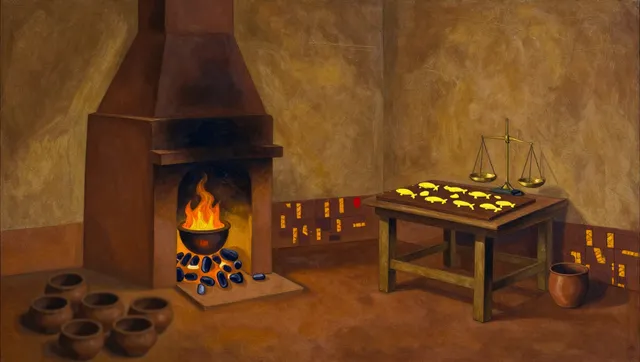
Let me begin by being honest about the name. “Asante Narrative Art” is a label of this museum's library. Art history has not set out any school that one would call an “Asante narrative school.” Instead, the Asante put their stories into objects rather than onto painting panels: the weights that measure gold, the cloth worn on the body, the stools and ornaments of kings. This room takes that tradition of visual storytelling as its root, and says openly that the scenes we drew are AI interpretive works reading its spirit.
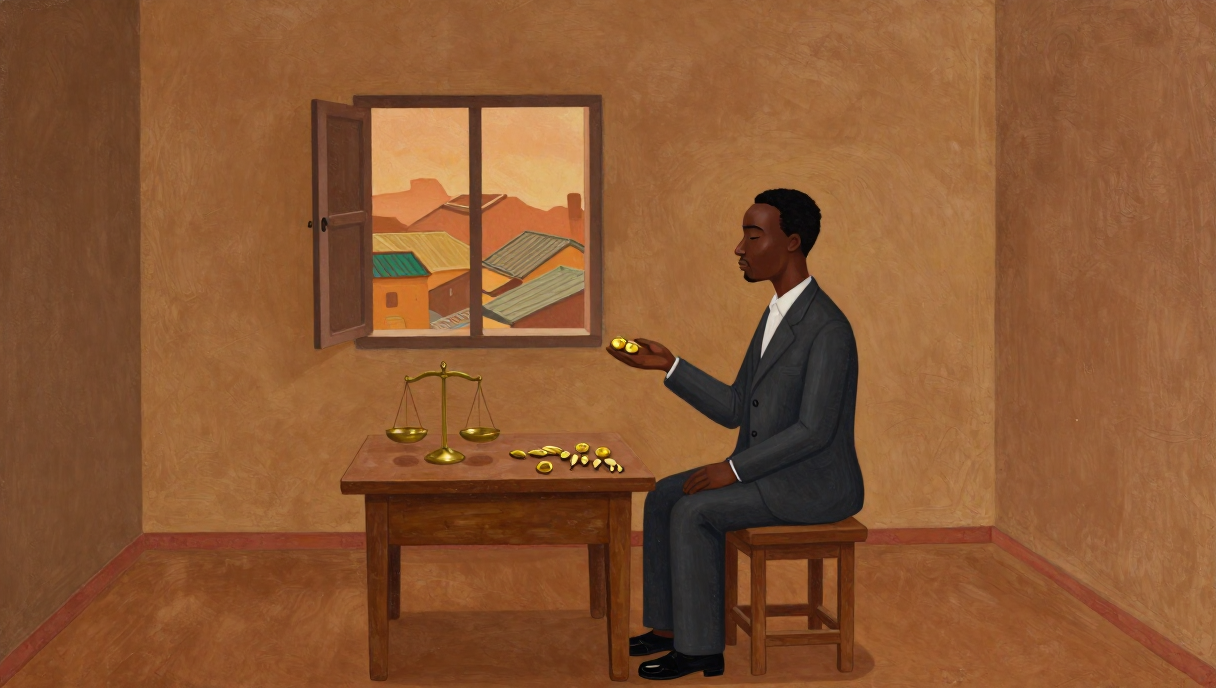
The Asante are an Akan-speaking people who live today around the Ashanti Region of central and southern Ghana, with Kumasi as the central city. The Cleveland Museum of Art explains that the wealth and power of the Asante kingdom came mainly from its abundant gold. Where gold passes from hand to hand like money, weighing exactly is the same thing as credit. To understand why weights, gold ornaments and court textiles were made with such care in this society, one first has to know this bond between gold and trust.
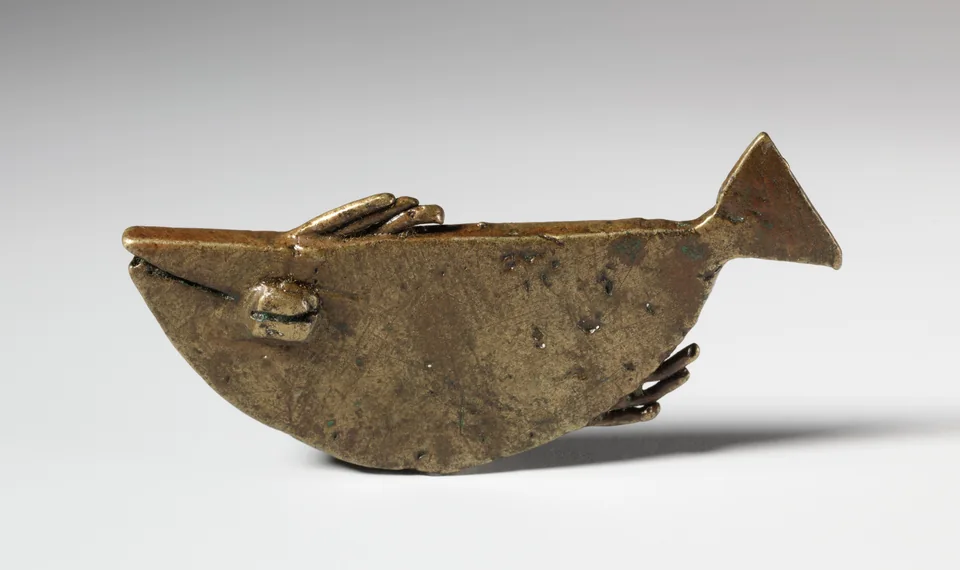
A gold weight is called an abrammuo. A model is made in beeswax and wrapped in clay; when it is fired the wax runs out, and molten brass is poured into the empty space. After cooling, the weight is filed to bring it to the right mass. Wikipedia summarises that these weights were made from about 1400 to about 1900, that early ones were often geometric, and that forms imitating people, animals and buildings appear from about 1600. How many were made is only an estimate, but it is said to run into the millions.
The shape becomes a story because the form of a weight points to an Akan proverb. The Cleveland Museum of Art explains that representational shapes often refer to proverbs, and that using proverbs fittingly marked a wise person. On the scale a weight goes on one side, and gold dust, scooped with a brass spoon, goes on the other. The smallest scales shook in a breeze and were called wind scales, and JSTOR Daily reports that gold falling to the ground went to the state. An object in the palm carried a proverb and a rule together.
Kente is cloth made of narrow strips woven by hand and sewn together. The strips that come off the loom are said to be about four inches (around ten centimetres) wide. Asante oral tradition says kente began in the town of Bonwire, but the accounts differ in who and when, so it cannot be fixed. Wikipedia summarises that in the 18th century, imported silk cloth was unravelled and rewoven, and colourful kente developed. Patterns have names, and the cloth called adweneasa, “my skill is exhausted,” is the most lavish kente, with patterns filling every block that can be filled.
Adinkra are patterns printed on cloth with stamps carved from calabash, dipped in a dark dye made from tree bark. The oldest adinkra cloth to survive was made in 1817 and carries 15 stamped symbols; Thomas Bowdich took it away and it has been in the British Museum since 1818. The oral tradition that the name comes from King Adinkra of Gyaman is widely told, but the war with Gyaman was in 1818–19, so the cloth predates it and doubt remains. That each symbol links to a proverb is the same as with the weights.
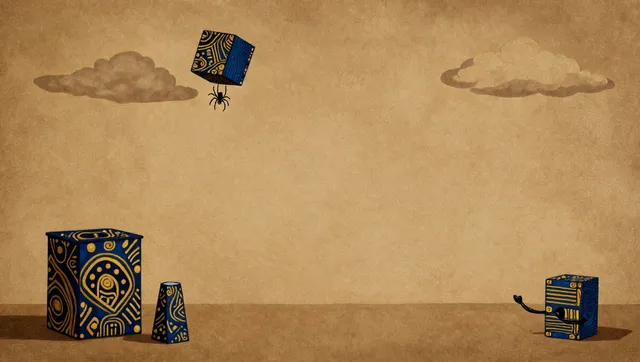
At the top of this tradition stands the Golden Stool (sika dwa). According to legend, Okomfo Anokye called it down from the sky before Osei Tutu, and since the stool is the soul of the nation it must never touch the ground. In 1900 the British governor Hodgson demanded to sit on it, which led to the War of the Golden Stool, and in 1921 road workers are said to have stumbled on the hidden stool by chance. Manhyia Palace in Kumasi was built in 1925 by the British after they pulled down the Aban Palace, and the older palace became a museum. Where these objects are now is also part of the story, as when the V&A bought 13 court items after British forces plundered Kumasi in 1874.