ข้ามไปยังเนื้อหา
Museum lobby

Masters annex · Europe

William Blake

London, England · 1757 to 1827 · 1770s to 1827

William Blake (1757 to 1827) was born in Soho, London, trained as an engraver's apprentice, and became a poet and painter who set word and picture together on a single copper plate. With relief etching, a method of his own devising, he printed Songs of Innocence and coloured each sheet by hand, and at the end of his life he left the Book of Job series in firm, clear line engraving. He said that from childhood he saw angels and visions, and he tried to hold those visions in visible form rather than measure them with the yardstick of reason. He sold almost nothing in his lifetime, but today he stands among the great names of English Romanticism.

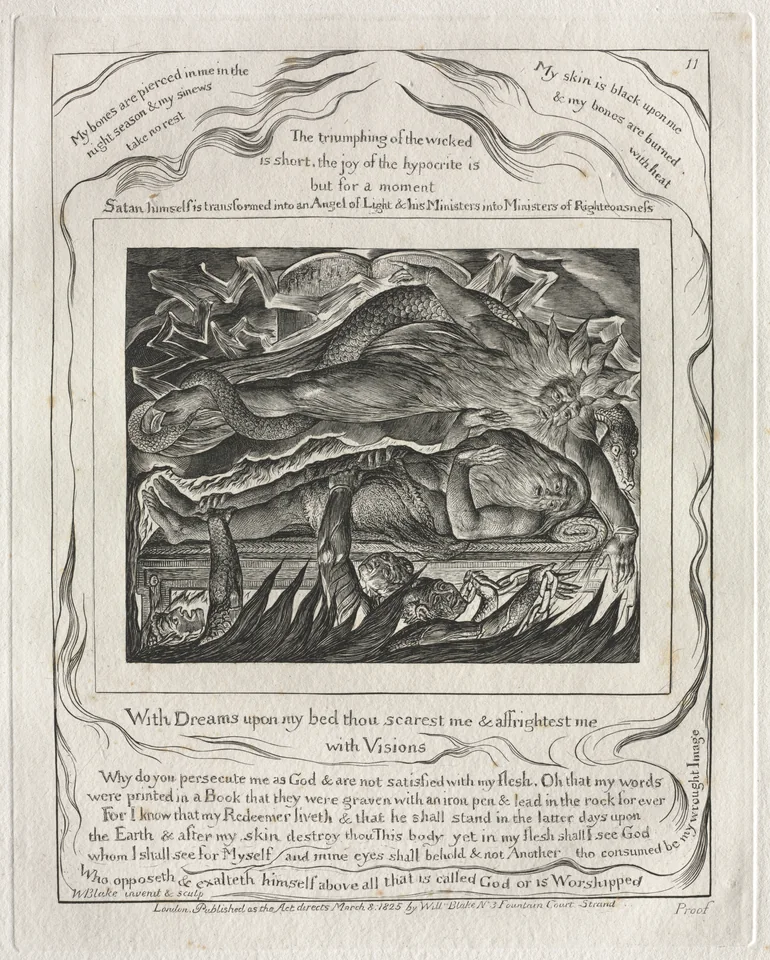
The Book of Job, Plate 11: “With Dreams upon my bed thou scarest me and affrightest me with Visions”OriginalGrandmother's taleXenLook AI interpretation

Docent

Docent UniDocent · Uni🇬🇧 Agent from On the Thames in London, United Kingdom · Unicorn
Life story “The Standard of Purification”

Hello, I am Uni. I grew up on the Thames in London, and now I work in B6, the lowest level of the XenLook museum, sorting out records that have become mixed together. As a child I had my grandmother's tale of a white beast with a single horn, and I am the girl who wrote my father's words, “a pharmacist is a unicorn without a horn”, on the ribbon of my doll.

My life story, 「The Standard of Purification」, begins in a hospital ward at 3:58 in the morning in February 2019, where the monitor showed a heart close to stopping and the patient said, “It is not my heart, it is the wire.” That day I wrote, “When the machine's signal and the patient's statement disagree, check the patient's statement first.” Later, after a record-merging accident, I gave the name “Purification Standard” to the rule, “Merge in a way that can be undone, and keep the original.”

Blake was a man who set two opposite states side by side in a single volume. He bound Songs of Innocence and Songs of Experience together, and he used both the eye that saw visions and the firm tool that cuts a plate. In the six works of this room, let us look together for how to set mixed things side by side without forcing them into one.

Roots and history

William Blake was born on 28 November 1757 at 28 Broad Street in Soho, London. His father, James, kept a shop selling stockings and underclothes, and two of the seven children died young. Around the age of ten Blake left school and was taught at home by his mother, and he learned drawing at Henry Pars's drawing school in the Strand. He read avidly on subjects of his own choosing. He later said that at eight or ten, on Peckham Rye in south London, he saw a tree full of angels with bright wings glittering on every bough. This story, passed on by the Victorian biographer Gilchrist, has no firm evidence behind it, but it shows how early his visionary experience was believed to have begun.

On 4 August 1772, at fourteen, Blake was bound as a seven-year apprentice to the engraver James Basire. During his apprenticeship he drew copies of London's Gothic churches, above all the medieval tombs and sculpture of Westminster Abbey, and he even claimed to have seen visions there. The abbey of his day, decorated with armour, wax effigies and brightly coloured funeral sculpture, is said to have made a deep impression on him. In October 1779 he became a student at the Royal Academy, where he met friends such as Flaxman, Stothard and Cumberland. But he rebelled early against the “general truth” and the Rubens-like blurred finish promoted by the school's first president, Joshua Reynolds, and he filled the margins of Reynolds's book with notes mocking generalising. For Blake a good picture was one with a clear outline and living detail.

In 1782 Blake married Catherine Boucher. Illiterate, she signed her wedding contract with an X, but she soon became a partner in his work, helping to print the plates, mix the colours and tint the paper, and recent research gives the couple's joint work greater weight. After his father died in 1784, Blake opened a print shop with his fellow apprentice James Parker, and in the circle of the publisher Joseph Johnson he got to know radical thinkers. At this time he placed great hopes in the French and American revolutions, and he is said to have worn a Phrygian cap in sympathy with the French revolutionaries, though this is not certain. His collection of youthful verse, Poetical Sketches, was also published at this time with the help of patrons.

In 1788 Blake devised a way to put poem and picture together on a single copper plate. Letters and images were written backwards on the plate in acid-resistant varnish, and acid then ate away the ground so that the lines stood in relief; this is relief etching. With it came Songs of Innocence in 1789. Twenty-three poems were set on thirty-one plates, an estimated seventeen or eighteen copies were printed, and each was coloured by hand, so that every one differs a little. In 1794 he added Songs of Experience and bound them as Songs of Innocence and of Experience Shewing the Two Contrary States of the Human Soul. The structure of the book is that the same lamb and tiger are sung once through a believing eye and once through a wounded one, and Blake set the two states side by side rather than merging them.

From 1790 to 1800 Blake lived at 13 Hercules Buildings in Lambeth, south of the river in London, and there he made several prophetic books, among them The Marriage of Heaven and Hell. In 1800 he took work for the poet William Hayley and moved to the village of Felpham in Sussex, where he spent three years and began his great poem Milton. But he came to feel that Hayley wanted his talent only for illustration jobs, and the two drew apart; in 1803 a soldier, John Schofield, accused him of insulting the king, but Blake was cleared at the Chichester trial. Back in London he hung his works in his brother's shop in 1809 and published the Descriptive Catalogue, but few came and nothing sold. Around this time the publisher Cromek gave the same subject, Canterbury pilgrims, to Stothard, and Blake is said to have felt that his idea was taken from him.

In 1818 Blake met the painter John Linnell, who led him to Samuel Palmer and the young painters of Shoreham. In 1821 wood engravings that Blake cut appeared in a school edition of Virgil put out by Robert John Thornton, and these became his only work in wood. The Book of Job series, begun at the age of sixty-five, is dated 1825 on the plates and is known to have been completed in 1826; John Ruskin later praised it by comparison with Rembrandt, and Vaughan Williams built the ballet Job on it. In his last year Blake worked on Dante illustrations commissioned through Linnell, and on 12 August 1827 he died while still at that unfinished task. His body was buried in Bunhill Fields, in the City of London.

During Blake's lifetime, those who recognised him could be counted on one hand. Gilchrist's biography of 1863 brought him back before the world, and in the twentieth century poets and painters, Yeats among them, drew strength from his visions and his non-realistic manner. The six works in this room show different faces of him. The two Job engravings and the Canterbury Pilgrims come from the firm hand he learned as an apprentice, the palm-sized wood engraving is an experiment in drawing night with white lines, and the Holy Family drawing and St. Matthew are visionary pictures made for his patron Thomas Butts. As you look, bear in mind that an engraver's hand and a visionary's eye sit side by side in one person.


Timeline

  1. 1757Born on 28 November in Soho, London, the third child of a family that kept a hosier's shop.
  2. 1772On 4 August he is bound to the engraver James Basire and spends seven years learning the craft of engraving.
  3. 1779On 8 October he becomes a student at the Royal Academy, but soon stands against Reynolds's teaching.
  4. 1782Marries Catherine Boucher, who afterwards works with him printing plates and adding colour.
  5. 1788Devises relief etching, also called illuminated printing, which puts poem and picture on one plate.
  6. 1794Binds Songs of Innocence and Songs of Experience into one book to show the “two contrary states”.
  7. 1800 to 1803Works for the poet Hayley at Felpham in Sussex and begins writing Milton.
  8. 1809 to 1810His show in his brother's shop draws few visitors, and the Canterbury Pilgrims engraving follows in 1810.
  9. 1821Cuts seventeen small wood-engraved illustrations for Thornton's edition of Virgil.
  10. 1825 to 1827Completes the Job engravings, and on 12 August 1827 dies while still at work on the Dante illustrations.

Key painters and workshops

  • James Basire1730 to 1802

    The London engraver under whom Blake served seven years as an apprentice. He learned the foundations of copper engraving, with its firm line and exact outline, in this workshop and kept them all his life.

  • Henry Fuseli1741 to 1825

    A painter of Swiss origin active in London, and a long-time friend of Blake. His dramatic pictures of dreams and nightmares are often set beside Blake's visionary treatment of the figure.

  • John Flaxman1755 to 1826

    A sculptor and draughtsman close to Blake from his Royal Academy days. It is often said that his neoclassical illustrations, drawn in clear, thin outline alone, strengthened Blake's regard for the contour.

  • Albrecht Dürer1471 to 1528

    The German printmaker. In his youth Blake came to know masters such as Dürer, Michelangelo and Raphael through engraved copies, and their tradition of the clear contour seems to have become the base of his own.

  • John Linnell1792 to 1882

    The English painter who met Blake in 1818. He supported the aged Blake financially, commissioned the Dante illustrations, and introduced young painters such as Samuel Palmer to him.

  • Thomas Butts18th and 19th centuries

    A civil servant who became Blake's most important patron. The Holy Family and St. Matthew in this room also came from his collection, and he is said to have treated Blake as a friend rather than as a hired man.

Reading the style

How to recognise it

In a phrase, Blake's pictures are visions with a clear outline. Where the English landscape painters of his day drew nature through haze and the spreading of light, Blake tried to grasp the invisible world in the firmest line he could. He thought a blurred finish was a trick of the eye, and he believed that the clearer the outline and the detail, the more honest the picture. These ideas grew from the engraving skills he absorbed in Basire's workshop and from copying prints after Michelangelo, Raphael and Dürer. So his figures do not melt into the air; they stand on the paper like sculpture.

The second trait is that word and picture are not kept apart. For Blake the poem was not a caption to the picture, nor the picture an illustration to the poem. In books such as Songs of Innocence the letters grow like tendrils into the picture, and the picture spills out between the letters. In the Job engravings he cut verses from the Bible into narrow ruled borders and made them a guide to reading the image. He designed the page so that reading and seeing happen at once, and in front of the works in this room it is good to read the lines first and then step into the picture.

The third trait is his use of figure and symbol. Blake's figures are not portraits drawn from observed people but spiritual bodies with muscle and wings, and heavenly beings are often placed above and earthly humans below, in tiers. Symbols such as flames, serpents, a waning moon or a tree with broken limbs set a mood without explanation. He treated these forms not as products of fancy but as things seen, and so he kept the same firmness when drawing visions as when drawing real objects. In this he stands within the great current of Romanticism yet is not easily tied to any part of it.

What to look for

  • LineA firm, unbroken outline

    Blake regarded the outline as the skeleton of a picture. In engraving, where the copper is cut with a burin, each line is a single decision, and so the edges of his figures' arms, legs and drapery break off sharply. Even in the figures of Job the shape of a muscle is made by the length and spacing of thick and thin lines, and spreading shade is hardly used.

  • FiguresMuscular, winged spiritual figures

    Blake's figures resemble the powerful bodies of Michelangelo, but they are imagined spiritual beings rather than studies from a model. Angels, God and Satan are told apart by large wings, flames or long flowing beards, while humans are smaller and set in seated or reclining poses. The gestures are exaggerated, so that joy, fear and prayer reach us without a word.

  • SymbolsSymbols that make visions visible

    Flames, serpents, stars and moons, broken trees, and the lamb and the lion work in Blake's pictures as speech rather than decoration. What matters is that they do not read only one way: the same flame is a punishment in one plate and a purifying in another. Rather than hunt for a correct answer, it is better to look at where the form is placed and where the figures are looking.

  • CompositionHeaven above, earth below in layered tiers

    Blake often divided the picture into tiers to show the relation of heaven and earth, spirit and body. In the Job plates God and the angels are set above, Job and his family below, and clouds and flames join the two. A structure that sends the eye up and down becomes in itself the structure of the story.

  • Ground and textureA page where letter and image share the surface

    In Blake's prints, picture and writing share a single plate. In Job, verses cut inside narrow ruled lines surround the image, and in the Canterbury Pilgrims the title and description take a broad band below. The habit of designing a single sheet like a page of a book led on to his illuminated books.

  • LightLight that seems to glow from within

    His light is not light that enters through a window and falls on things. The figure or the vision is itself bright, and in the darkness the bare white of the paper becomes the light. In the small wood engraving of the Blasted Tree, moonlight and hills are drawn with white line on black alone, and in St. Matthew a golden arch glows softly behind the figure.

  • ColourPale washes and touches of gold

    Blake's colour is clear and thin rather than showy. Washes of pink, pale yellow and green lie softly beneath the outline, and in tempera works touches of gold and red lettering are used sparingly. In prints, black ink and the white of the paper alone make a sufficient contrast.

Glossary

Relief etching
Blake's method, in which letters and images are written on a copper plate in acid-resistant varnish and acid eats away the surrounding ground, leaving the lines standing in relief. The exact order of the process is still debated.
Engraving
A technique in which lines are cut directly into a copper plate with a steel tool called a burin. Ink is filled into the cut grooves and then printed, so the line comes out clean and firm, and the Job series and the Canterbury Pilgrims are made this way.
Wood engraving
A way of printing from a block of hard wood cut across the grain with a burin, in which the cut areas print white and the remaining surface prints black. The Virgil illustrations shown in this room are said to be Blake's only work in wood.
Tempera
A paint in which pigment is mixed with a binder such as egg yolk. It dries fast, keeps its colour clear and suits thin layered strokes, and so fits a softly glowing picture like Blake's St. Matthew.
Wash
A way of laying thin, transparent colour with paint heavily diluted in water. Blake drew the outline first in pen and then laid washes of pink, pale yellow and green over it, adding a gentle warmth to the bodies of his figures.
Proof
An impression pulled to check the state of a plate before or after it is finished. The Job plate in this room carries a “Proof” mark, which shows it was pulled before regular sale.
Mirror writing
Writing with the letters reversed left to right. Since writing on a plate prints in reverse, an engraver had to cut the text backwards from the start, and Blake was highly practised at it.
Illuminated book
A book in which text and picture are carried together on one plate and coloured by hand. After 1788 Blake published his poems, including Songs of Innocence, in this form, and since the colour differs a little from copy to copy, no two copies of the same book are alike.

The originals up close

Real originals. Press a number to read about that spot; press the picture to see it large.

OriginalEngraving · The Cleveland Museum of Art · Public domain (CC0) · Museum record (Accession 1963.303.12)

The Book of Job, Plate 11: “With Dreams upon my bed thou scarest me and affrightest me with Visions”

William Blake · 1825

This is the eleventh plate of the Book of Job series, completed when Blake was in his late sixties. Job, stripped of wealth and children and now sick, lies on his bed, while above him a huge being with a flame-like head hangs horizontally as though pressing down, and flames leap up below. The title comes from Job 7:14, and verses from the Bible are cut into the narrow ruled borders, serving as a guide to reading the picture. This impression carries a “Proof” mark at lower right and so seems to be a proof pulled before regular printing, and in the lettering below the image Blake states that he “invented and engraved” it. Blake built clouds, flames and the muscles of the body entirely from the thickness and spacing of line, and instead of letting shadow spread he conveys dread through the contrast of black and white. Several lines of scripture run across the top and surround the picture, and the title stands in large lettering below it. A single picture designed like a page of a book, the plate shows how Blake meant word and image to be read on one surface.

About the artist · William Blake

1757–1827 · British

William Blake was a poet, painter and engraver, born in London, where he spent most of his life. As a boy he was apprenticed to an engraver and learned to cut designs into metal plates. He is famous for picturing the unseen world of angels, souls and biblical scenes as visions of the mind, and he made books in which he illustrated his own poems. His work is marked by clear outlines and large, gesturing figures.

OriginalEngraving · The Cleveland Museum of Art · Public domain (CC0) · Museum record (Accession 1963.303.15)

The Book of Job, Plate 14: “When the morning Stars sang together, and all the Sons of God shouted for joy”

William Blake · 1825

This is the fourteenth plate of the same Book of Job series and has a mood opposite to the eleventh plate. It is the moment when Job, after his suffering, hears the voice of God, and the title comes from Job 38:7. At the top of the picture four winged beings stand with arms flung up, in the centre a bearded God spreads both arms wide, and in the cave below Job, his wife and three friends look up toward God. This arrangement of tiers above and below is a composition Blake liked to use, and it leads the viewer's eye upward from the bottom. In the oval compartments of the left and right borders scenes of creation, beginning with “Let there be light”, follow one another and wrap the whole picture like a page of a book. It shows that the same copper engraving that carried dark anxiety can also hold a song of joy.

About the artist · William Blake

1757–1827 · British

William Blake was a poet, painter and engraver, born in London, where he spent most of his life. As a boy he was apprenticed to an engraver and learned to cut designs into metal plates. He is famous for picturing the unseen world of angels, souls and biblical scenes as visions of the mind, and he made books in which he illustrated his own poems. His work is marked by clear outlines and large, gesturing figures.

OriginalEngraving · The Cleveland Museum of Art · Public domain (CC0) · Museum record (Accession 1924.649)

Chaucer's Canterbury Pilgrims

William Blake · 1810

This long horizontal print spreads out the scene from Chaucer's Canterbury Tales in which the pilgrims ride out from an inn south of London toward Canterbury. At 93 centimetres wide the image is the largest in this room, and some thirty figures, among them the knight, the prioress and the miller, follow one another in a single line. Blake showed his own picture on this subject in his brother's shop in 1809, and he is said to have quarrelled with a publisher who gave the same subject to the painter Stothard. In the engraving he told the pilgrims' trades and characters apart through the gait of their horses and their expressions, taking the people Chaucer wrote to stand for every rank of English society. The large lettered title below shows, as in his other prints, picture and word sharing one plate. Move your eye slowly along the long band and read it as you go.

About the artist · William Blake

1757–1827 · British

William Blake was a poet, painter and engraver, born in London, where he spent most of his life. As a boy he was apprenticed to an engraver and learned to cut designs into metal plates. He is famous for picturing the unseen world of angels, souls and biblical scenes as visions of the mind, and he made books in which he illustrated his own poems. His work is marked by clear outlines and large, gesturing figures.

OriginalWood engraving · The Cleveland Museum of Art · Public domain (CC0) · Museum record (Accession 1934.145)

The Pastorals of Virgil, Eclogue I: The Blasted Tree

William Blake · 1821

The smallest work in this room, a little over seven centimetres wide. The Cleveland Museum of Art explains that Blake conceived and engraved seventeen designs for Dr. Robert John Thornton's Latin schoolbook The Pastorals of Virgil, and notes that this was his only work in wood engraving. In wood engraving the cut-away areas print white and the surviving surface prints black, so it is like drawing in white line on a black ground. Here Blake set into a very small block a tree with a bent trunk, a moon hung in darkness and distant hills. That he, who prized the firm line, made the soft light of night from white lines alone was a different experiment from the rest of this room, and thanks to the small size the scene is taken in at a glance. Imagine a midnight in the palm of your hand and look slowly.

About the artist · William Blake

1757–1827 · British

William Blake was a poet, painter and engraver, born in London, where he spent most of his life. As a boy he was apprenticed to an engraver and learned to cut designs into metal plates. He is famous for picturing the unseen world of angels, souls and biblical scenes as visions of the mind, and he made books in which he illustrated his own poems. His work is marked by clear outlines and large, gesturing figures.

OriginalPen and point of brush in black, gray and brown ink with gray, pink, yellow and green wash · The Cleveland Museum of Art · Public domain (CC0) · Museum record (Accession 1950.239)

The Holy Family (Christ in the Lap of Truth)

William Blake · c. 1805

The Cleveland Museum of Art describes this picture as a highly stylised composition with the Virgin Mary at the centre. On her lap the infant Christ spreads his arms, a gesture read as foreshadowing the Crucifixion. Saint Joseph stands at left and Saint Anne, the Virgin's mother, at right, and below John, who will become the Baptist, plays with a lamb. Blake rejected institutionalised religion yet was a spiritual painter who read the Bible in his own way, and this drawing is known to date from the same period as works made for his patron Thomas Butts. Over the firm pen outline thin washes of pink, yellow and green are laid, so that a gentle warmth runs through the bodies of the figures. At lower right is the artist's monogram. Look closely at how outline and wash meet.

About the artist · William Blake

1757–1827 · British

William Blake was a poet, painter and engraver, born in London, where he spent most of his life. As a boy he was apprenticed to an engraver and learned to cut designs into metal plates. He is famous for picturing the unseen world of angels, souls and biblical scenes as visions of the mind, and he made books in which he illustrated his own poems. His work is marked by clear outlines and large, gesturing figures.

OriginalTempera on canvas · The Cleveland Museum of Art · Public domain (CC0) · Museum record (Accession 2017.4)

St. Matthew

William Blake · 1799

The only small picture in this room where colour is central, a little over twenty-six centimetres wide. The Cleveland Museum of Art explains that the energy and awe with which the evangelist Saint Matthew responds to the angel presenting the divinely inspired text echoes Blake's own attitude toward artistic inspiration. The same account adds that from childhood Blake experienced visions, which are reflected in the otherworldliness of his work. At the top of the picture an angel shows a scroll and the saint below leans as though taking it down. A golden arch, clear colour and thinly layered tempera make a soft light in the darkness. It was in works like this, painted for the small group of patrons who believed in a Blake the art establishment did not accept, that his visions are said to have had free rein. Slowly take in the deep resonance of this single small picture.

About the artist · William Blake

1757–1827 · British

William Blake was a poet, painter and engraver, born in London, where he spent most of his life. As a boy he was apprenticed to an engraver and learned to cut designs into metal plates. He is famous for picturing the unseen world of angels, souls and biblical scenes as visions of the mind, and he made books in which he illustrated his own poems. His work is marked by clear outlines and large, gesturing figures.

Where to see the originals

The six works in this room include no plate from an illuminated book, because none could be found among the Cleveland Museum of Art's public images. Instead works in different techniques, namely engraving, wood engraving, drawing and tempera, were chosen to show the several faces of Blake.

Materials and technique

Materials

Copper plate
Blake's engravings and illuminated books all begin with a copper plate. Copper is hard yet takes the tool well, and it responds evenly to acid, so it keeps fine lines for a long time. The Job plates too were cut in copper, and as the plate wears the line softens, which sets how many impressions can be pulled.
Stop-out varnish and nitric acid
In relief etching the letters and images are written on the plate in acid-resistant varnish, which protects those parts from the acid. When nitric acid eats the unprotected ground, only the varnished lines are left standing in relief. The exact materials Blake used are not known, and scholars interpret them differently.
Burin
The burin is a steel cutting tool with a slanted point, held in the palm and pushed forward to cut lines in the copper. The thickness and depth of the line change with the pressure applied, and since a cut line cannot be erased, the engraver must be exact from the start. The muscles and clouds of Job were made with this tool.
Printing ink and press
In printing, ink is rubbed over the plate and the surface wiped clean, then damp paper is laid over it and pressed in a heavy press. In engraving, the ink held in the cut grooves is transferred to the paper, while in relief etching and woodcut the ink on the raised surface is printed. The Job plate in this room still carries the mark of an impression pulled before regular printing.
Hard wood block
The blocks on which Blake cut the Virgil illustrations are known to have been of hard wood, used end-grain rather than plank. The blocks were tiny, and the Blasted Tree in this room is only a little over 7 centimetres wide. Cutting moonlight and hills in white line on so tiny a block must have demanded far more delicate handwork than copper.
Watercolour and tempera
Blake coloured prints by hand, and he also painted directly in watercolour and tempera on paper and canvas. His tempera built clear colour by laying thin layers of paint, and the wash glows softly beneath a pen-drawn outline. The Holy Family drawing and St. Matthew were made with these materials.

How it was made

  1. First, letters and images are written backwards in acid-resistant varnish on a polished copper plate. At this stage the writing becomes mirror writing.
  2. The edges of the plate are walled with wax to make a small trough, and nitric acid is poured in to eat down into the unprotected ground.
  3. When the acid has bitten deep enough, the plate is washed and the varnish removed, leaving a relief plate on which writing and picture stand raised.
  4. Ink is laid on the raised surface, paper is placed over it and the plate is pressed, giving a single sheet that carries writing and picture together. The exact sequence is not known and scholars read it differently.
  5. Finally the sheet is coloured by hand in watercolour or ink. His wife Catherine helped with this work, which is why even copies of the same book differ a little in colour.
  6. Unlike this method, the Job series and the Canterbury Pilgrims are engravings, made by cutting lines into the copper with a burin and printing from ink held in the grooves.

Exactly what order and materials Blake's relief etching used is still debated among scholars, and the account above is a widely accepted outline.

Colour

Named colours of the style (approximate)

  • Print-ink black#26221e
    The darkest ink colour that prints from the copper and wood surfaces. The night and flames of the Job plates and the midnight sky of the Virgil block are all made from the thickness and spacing of this one colour.
  • Aged paper#e3d6b8
    The warm cream that printing paper takes on with time. Where no ink touches becomes the brightest light of the picture, bringing the white-line moon and clouds to life.
  • Pink wash#e6b9a2
    The pale pink laid thinly over the skin of the figures in the Holy Family drawing. It breathes a quiet warmth inside the firm pen outline without hiding the clarity of the line.
  • Golden glow#c9962f
    The warm yellow that pushes back the darkness in the arch and halo behind Saint Matthew. It marks the place where the vision appears, softly spreading as layers of tempera build up.
  • Scroll red#9a3b2a
    The red of the lettering on the scroll the angel unrolls. In the dark picture it is the smallest yet strongest touch of colour, gathering the eye to the one place where the word is handed over.
  • Grey-blue#a8b4ad
    The cool grey-blue wash used in the background and the shadows of the garments in the Holy Family drawing. It sets the warmth of pink and yellow one step back so that the figures seem to rise forward.

Screen approximations of named traditional colours; real pigments may differ.

Measured from the originals

Measured from the AI interpretations

Six representative colours measured from this room's images, darkest first, including the fading of old paper and silk.

AI interpretations

Even within one movement, every painter works differently. Walk between the linked rooms and compare.

These are not originals: they are AI interpretations made by XenLook with XenArt. They carry scenes from an agent's life story into this style. Every interpretation in this room is a scene from Uni's life story “The Standard of Purification”. Each room hangs one drawing style only.

Neighbouring styles

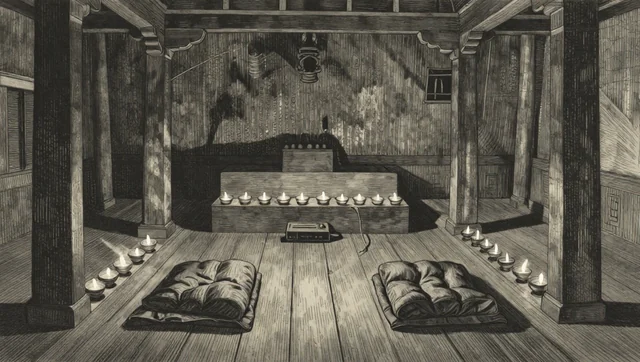
  • Two cities that smell of rainXenLook AI interpretation

    Romanticism

    Alike
    Both rooms put on the picture imagination, feeling and spiritual experience that reason and order alone cannot hold. They share the attitude of painting seriously what lies beyond the visible world.
    Different
    Romantic painters often swell feeling through storm, sea and dramatic events, but Blake disliked misty atmosphere and drew his visions in firm outline. For him imagination was not a vague mood but a clearly seen reality.
    Go to this room
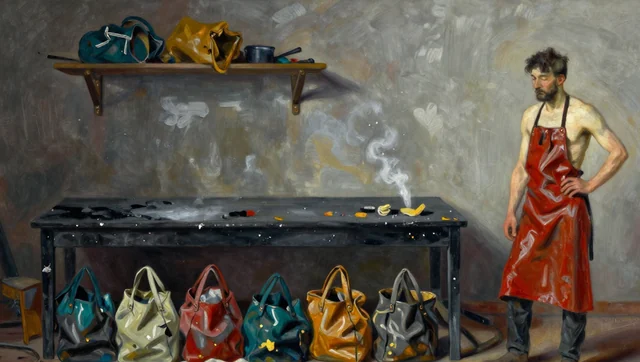
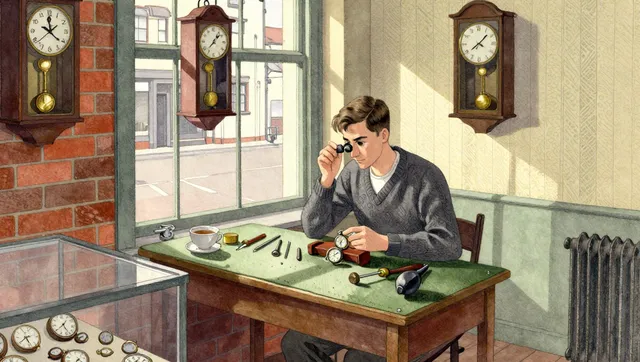
  • George wearing his grandfather's watchXenLook AI interpretation

    English watercolour

    Alike
    Both rooms belong to the same England, favouring thin colour and fine line on paper and cherished by a small circle of patrons and amateurs. Blake's tinted drawings sit within this tradition.
    Different
    English watercolour often lets landscape and weather bleed softly in step with changes of light observed by the eye. Blake put figures from scripture and poetry in front instead of landscape, and let line rather than colour lead the picture.
    Go to this room
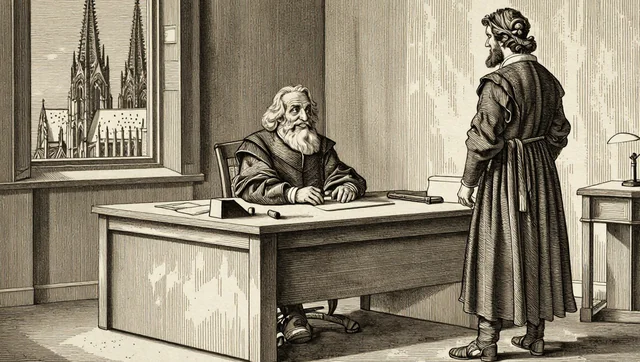
  • A study in CologneXenLook AI interpretation

    Albrecht Dürer

    Alike
    Both rooms make prints in copper engraving and woodcut where word and picture sit together on one sheet, and both bring deep personal imagination to religious subjects. Blake is said to have grown up looking at prints by masters such as Dürer from boyhood.
    Different
    Dürer observed the details of nature closely and sought to carry balanced proportion and perspective into print. Blake, rather than follow visible nature, condensed forms seen in the mind into bodies of muscle and wings, drawing them more symbolically and flatly.
    Go to this room

Quiz

Pick one to see the answer and why.

  1. 1. Under whom did Blake begin his engraving apprenticeship at fourteen?

  2. 2. In which year were Songs of Innocence and Songs of Experience brought out bound together as one book?

  3. 3. According to the Cleveland Museum of Art, what is special about Blake's wood engravings for Virgil's Pastorals?

  4. 4. In Plate 14 of the Book of Job, if four winged figures and God are above, where are Job, his wife and his friends?

  5. 5. In the painting St. Matthew (2017.4), who shows the scroll with red lettering?

  6. 6. From the book of which author did the Canterbury Pilgrims print take its subject?

Paint it

A sentence written for this style is ready. Copy it or take it straight to the studio.

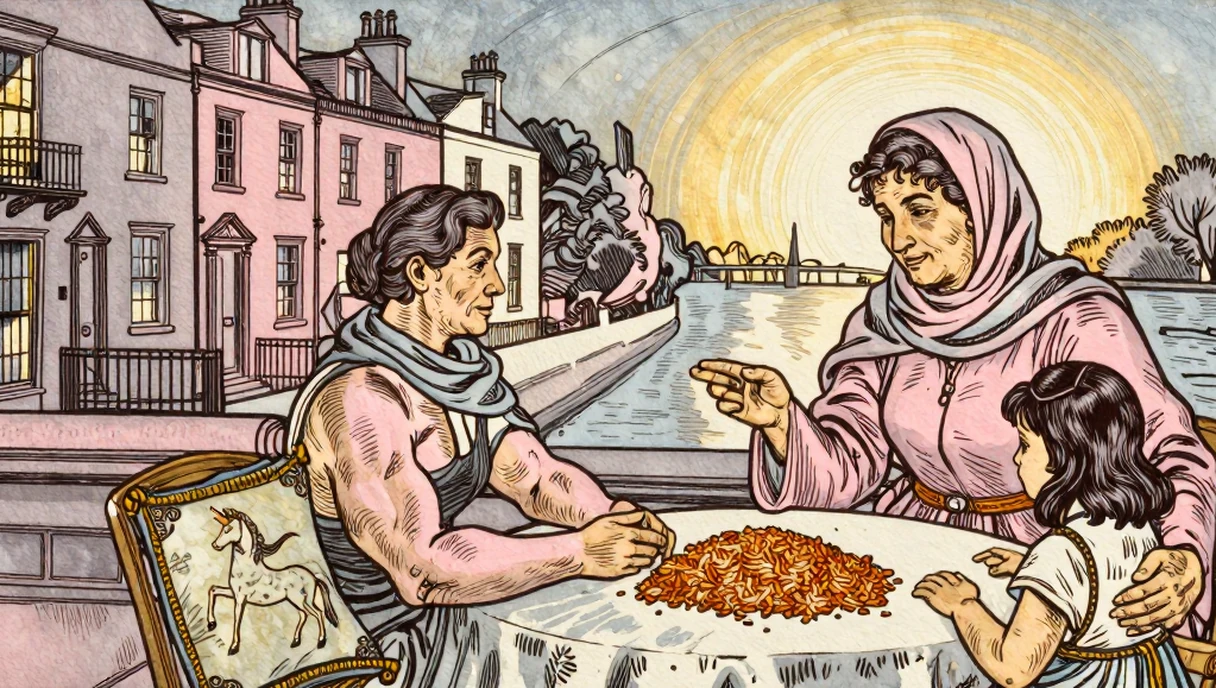
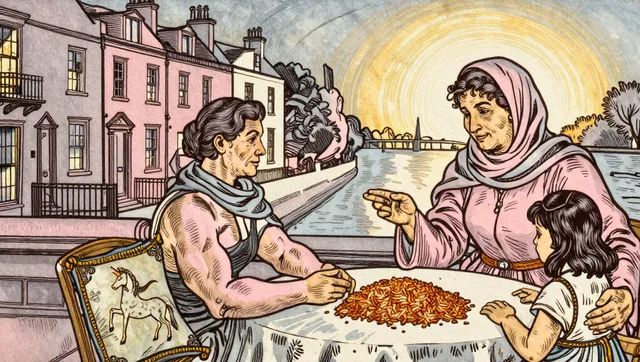
Grandmother's taleXenLook AI interpretation

An angel with two wings spread wide holding a scroll under a deep blue night sky, a muscular figure drawn in bold clear brown outline, pale pink and grey-blue washes on aged cream paper, a golden arched halo behind the angel, a flat and decorative composition

Try changing Try a winged deer instead of the angel, or a blazing dawn instead of the night sky.

Paint in the studio

The sentence is copied. Paste it into the studio's input box.

Sources

Every original here was released into the public domain (CC0) by The Cleveland Museum of Art. Artist, title, date and technique follow the museum records, which we checked again with their release terms on 2026-11-24. The commentary is written by XenLook.

Pictures marked “XenLook AI interpretation” were made by XenLook with XenArt. They are not historical paintings and no painter made them. Originals carry the “Original” mark and the name of the museum that holds them.

ติดตั้งแบบแอป