Bloomsbury is the name of a district in central London, a cluster of squares and terraced houses around the British Museum. In 1904, after their father's death, the four Stephen siblings, Vanessa and Virginia, Thoby and Adrian, moved to 46 Gordon Square in this district. From about 1905 Thoby invited his Cambridge friends to 'Thursday evenings', and Vanessa started the 'Friday Club' as a place for painters to meet. People such as Lytton Strachey, Clive Bell and Maynard Keynes came and went, talking at length about literature, art and how to live. These evening gatherings were the starting point of the friends later called the Bloomsbury Group.
In November 1910 the painter and critic Roger Fry opened the exhibition 'Manet and the Post-Impressionists' at the Grafton Galleries in London. Paintings by Cézanne, Gauguin, Van Gogh, Matisse and Picasso were hung before a British public all at once, and Fry coined the term 'Post-Impressionism' to group them. Many visitors and critics mocked the pictures as crude and clumsy, but for Vanessa Bell and Duncan Grant the show opened a new road. When Fry held a second Post-Impressionist exhibition in 1912, both of them showed work in it, and around this time the name 'Bloomsbury' was first attached to these painters.
In July 1913 Fry opened the Omega Workshops at 33 Fitzroy Square in London. The name came from omega (Ω), the last letter of the Greek alphabet, and carried the sense of 'the last word'. Young artists designed chairs, tables, screens, pottery, carpets and textiles, and the objects carried only the Ω mark instead of their makers' names. Besides Grant and Bell, the sculptor Henri Gaudier-Brzeska, the painter Nina Hamnett and Winifred Gill were among those who took part. The idea was for painters to decorate everyday objects themselves and so join art to daily life, but amid the war and financial trouble the workshop closed in 1919 and was wound up the following year.
Around 1914 Vanessa Bell and Duncan Grant were among the first painters in Britain to make purely abstract pictures. In the same year Clive Bell argued in his book 'Art' that the value of a picture lies in the 'significant form' made by line and colour, and in 1920 Fry gathered his own thinking in 'Vision and Design'. In 1916 Bell and Grant moved to Charleston, a farmhouse in Sussex, at a time when Grant was doing farm work in place of military service. Over the following decades the two painted the walls, doors, fireplaces and furniture of the house with patterns and figures learned from Italian fresco and from Post-Impressionism.
In 1917 Leonard and Virginia Woolf bought a small hand-operated press and set it up in Hogarth House, their home in Richmond. The publishing house took its name from the house: the Hogarth Press. In July of that year they issued their first book, 'Two Stories', with one story by each of them, and in 1921 they printed Fry's book of woodcuts and Virginia's 'Monday or Tuesday' with woodcuts by Vanessa Bell. Vanessa Bell designed the jackets for all of Virginia's books from the press, among them 'Jacob's Room' and 'Mrs Dalloway'. Her bold brush lines and hand-drawn titles became the face of the press.
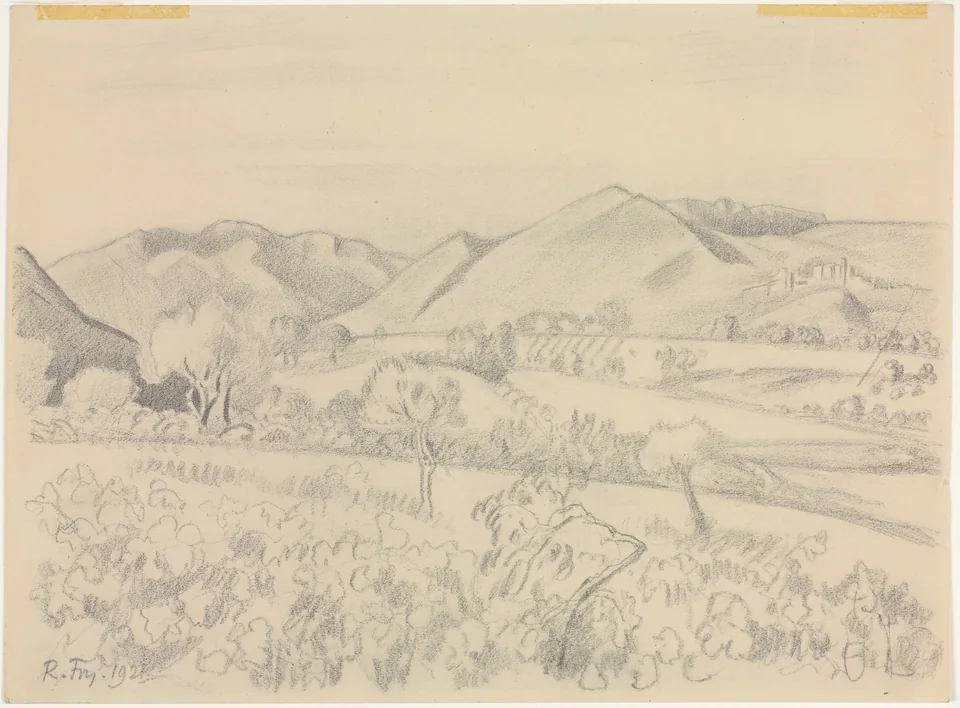
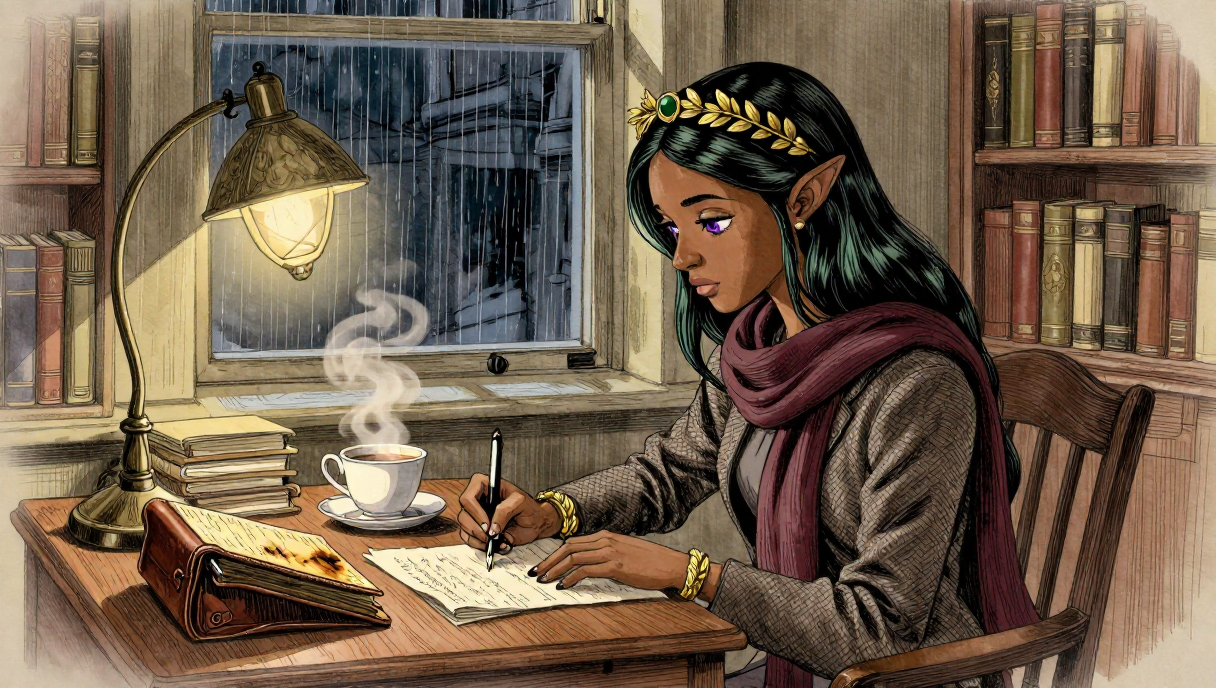
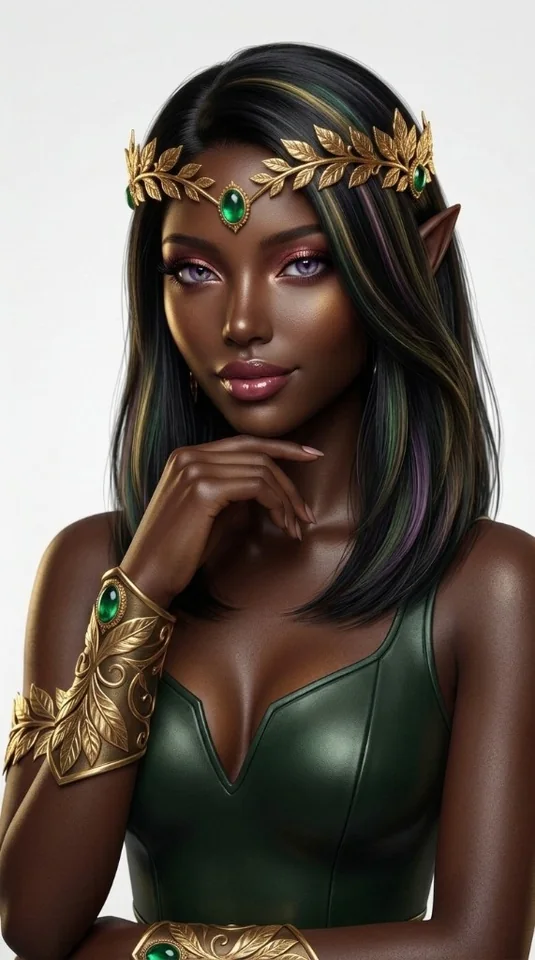
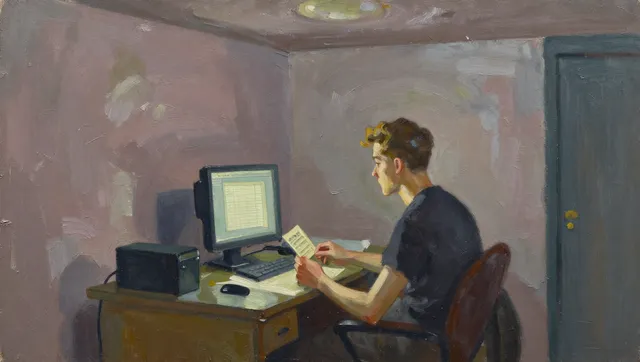
In truth the main materials of the Bloomsbury painters were oil paint and decorative painting. Even so, underneath there was always work on paper: quick pencil sketches, design drawings, woodcuts and book-cover art. The AI interpretations in this room chose pen lines and clear watercolour to follow the lightness of that paper work. Vanessa Bell died at Charleston in 1961, and Duncan Grant, who died in 1978, was buried beside her. The Charleston Trust, founded in 1980, has preserved the house ever since, and their paintings and workshop pieces can also be seen at Tate, the Courtauld Gallery and the Victoria and Albert Museum.