American magazine illustration began with wood engraving. Harper’s Weekly, a weekly founded in 1857 by the New York publisher Harper & Brothers, printed political reporting, fiction and several pictures every week until 1916. An artist drew the scene on a hard wooden block, and a professional engraver cut away everything but the lines. Before machines could transfer photographs to a printing surface, every view of war or the city that readers saw had passed through this chain of hands. Artists such as Winslow Homer and the political cartoonist Thomas Nast published pictures in the magazine.
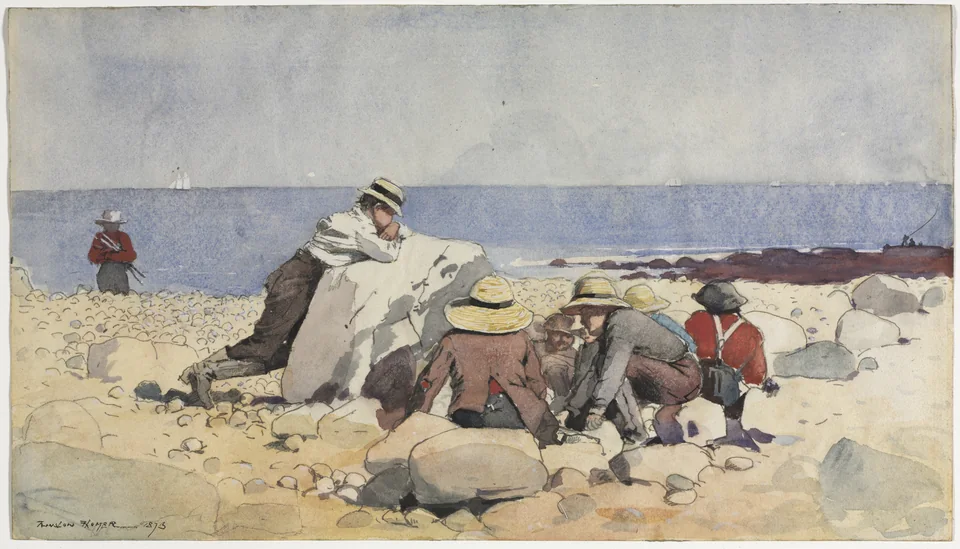
Winslow Homer (1836–1910), born in Boston and largely self-taught, began as a commercial illustrator. From 1857 he drew for Harper’s Weekly, and when the Civil War began in 1861 the magazine sent him to the Virginia front, where he drew everyday camp life. In the summer of 1873, in the fishing town of Gloucester, Massachusetts, he took up watercolour in earnest, and the composition of A Clam-Bake, which hangs in this room, was reused that same year as an illustration in Harper’s Weekly on 23 August. One scene travelled between a work on paper and a magazine page, which is why this room honours it as an ancestor of the style.
The years from around the 1880s to the early twentieth century are called the ‘Golden Age’ of American illustration. As printing technology improved and freed artists to experiment with colour and rendering, magazines and books were sold on the strength of famous illustrators’ pictures. At the centre of this movement stood Howard Pyle (1853–1911) of Wilmington, Delaware. He published pictures and writing in Harper’s Monthly and the children’s magazine St. Nicholas, and from 1894 he taught illustration at the Drexel Institute in Philadelphia. Maxfield Parrish and Jessie Willcox Smith were his students there, and after 1900 he opened his own school to train younger artists.
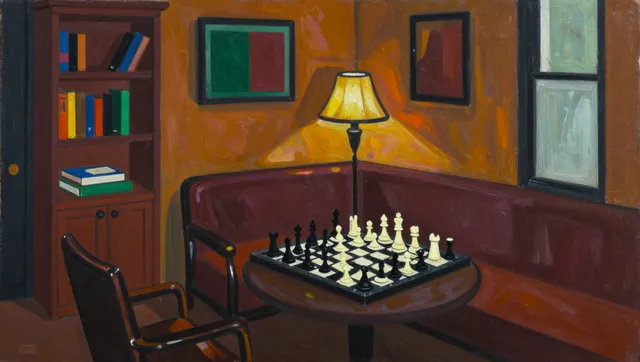
Pyle’s student N.C. Wyeth (1882–1945) received his first commission, a cover for The Saturday Evening Post, on 21 February 1903, and made his name with the illustrations for Scribner’s Treasure Island in 1911. Over his life he illustrated 112 books, and he settled in Chadds Ford, Pennsylvania. Later the illustrator and writer Henry C. Pitz grouped Pyle and his students under the name ‘Brandywine School’. Their pictures used dramatic light and clear placement of figures so that a single scene could bring a whole story to mind. The way this room’s AI interpretations choose one decisive moment for each scene is learned from that tradition.
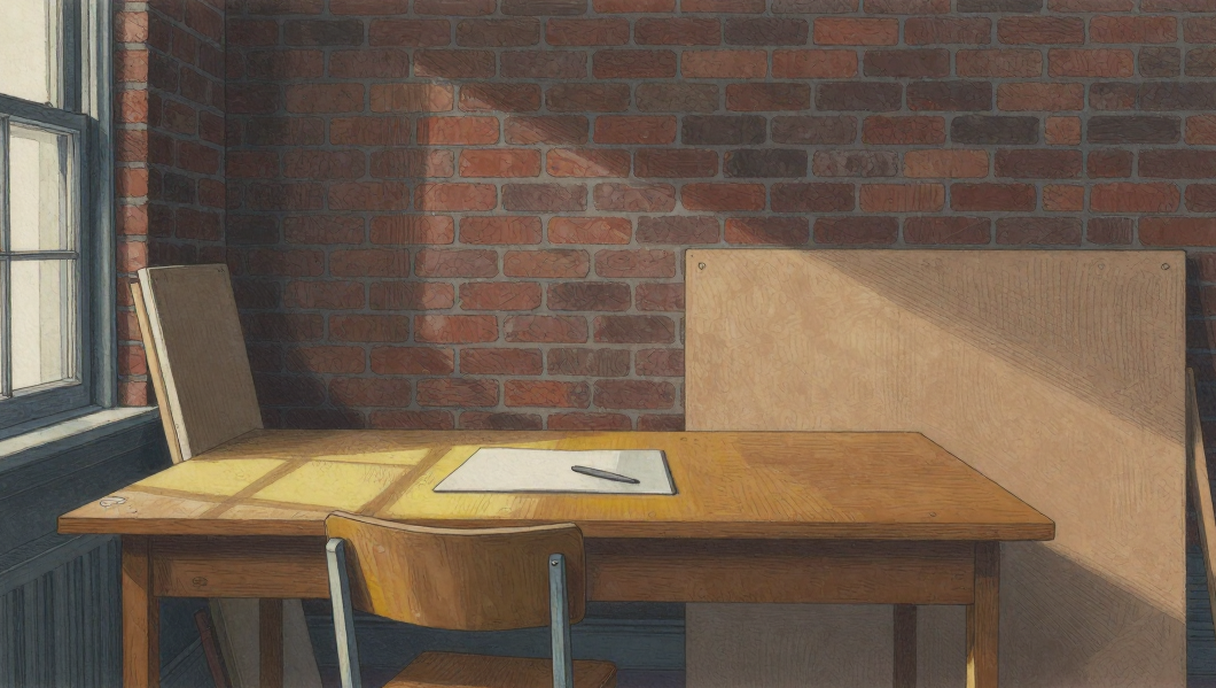
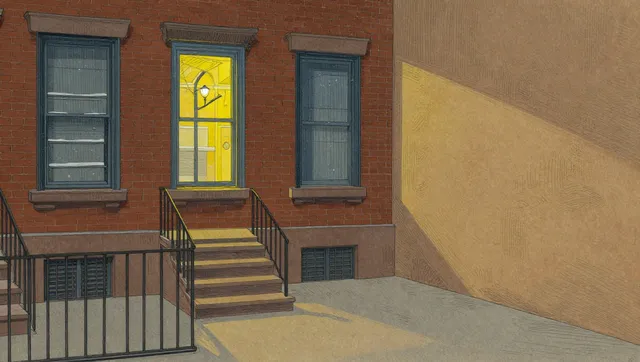
Edward Hopper (1882–1967), born in Nyack, New York, also earned his living through illustration. After studying commercial art, he trained at the New York School of Art under William Merritt Chase and Robert Henri, and from 1905 he worked part-time at an advertising agency, drawing pictures such as covers for trade magazines. He detested the work but returned to it several times because he needed the income. Hopper later became known as the painter of empty streets and rooms crossed by slanting sunlight. The quiet mood of this room’s AI interpretations, with their deserted stoops and patches of light on walls, leans on that lineage.
In 1954 in New York, Milton Glaser and Seymour Chwast opened Push Pin Studios with colleagues. Publishing their in-house paper The Push Pin Graphic, they broke away from the rigid modernism of the day with pictures and designs that freely revived historical styles, and from 1970 the touring exhibition ‘The Push Pin Style’ travelled through the Museum of Decorative Arts at the Louvre in Paris, other European cities and Japan. Glaser created the ‘I ❤ NY’ logo and in 1968 co-founded New York magazine. Just as The New Yorker, founded in 1925, is known for its illustrated and often topical covers, New York magazines remain a great stage for artists. This room introduces those covers in words only and does not hang them.