ข้ามไปยังเนื้อหา
Museum lobby

History wing · East Asia

Chinese Gongbi Handscroll

China · the long picture read by unrolling it · 10th – 14th century

A handscroll (手卷, shǒujuàn) is a long horizontal picture that you read by unrolling it a little at a time, from the right end toward the left. This room is about gongbi (工筆) handscrolls. The scenes run on without a break, and the writing added after the picture (題跋) and the red seals belong to the work too. It is a picture you read at the pace of a story, not take in at a glance.

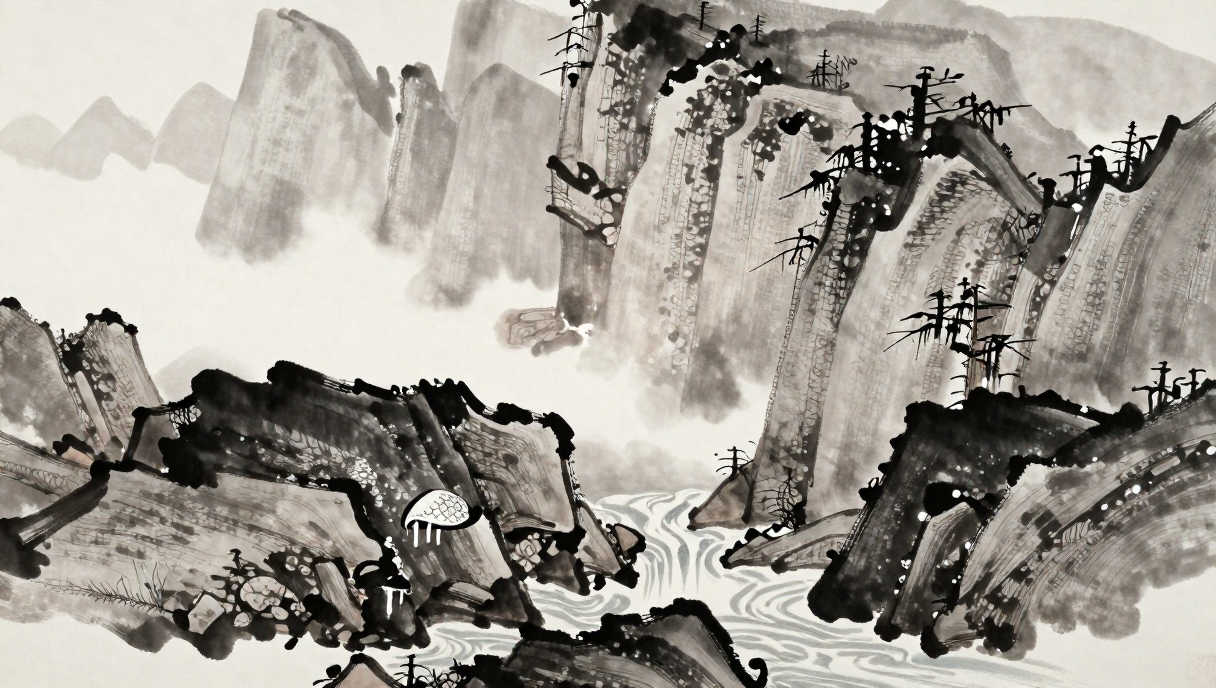
In the Palace (宮中圖)OriginalMist on Mount EmeiXenLook AI interpretation

Docent

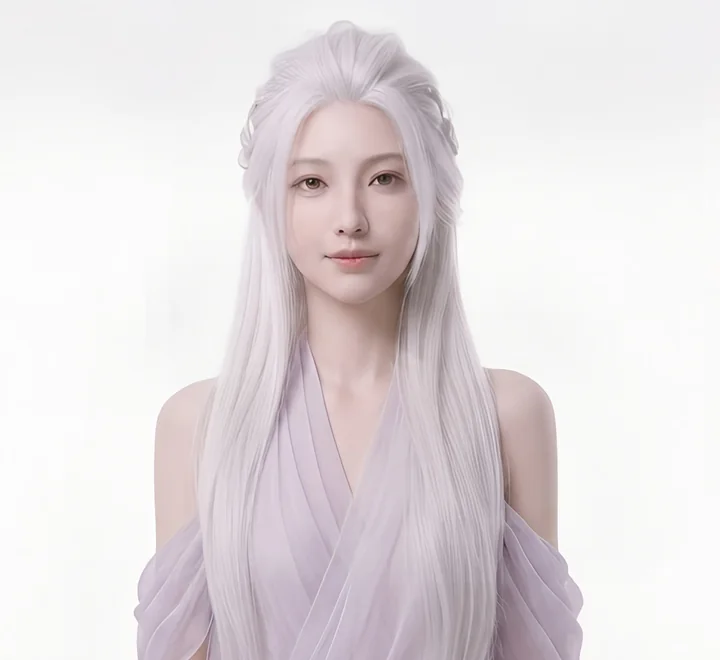
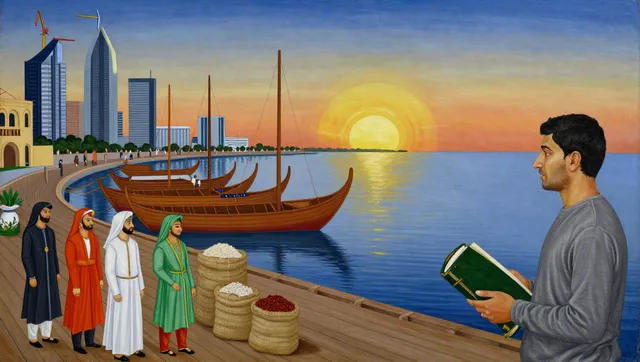
Docent Bai Suzhen (白素貞)Docent · Bai Suzhen (白素貞)🇨🇳 Agent from China · White Snake
Life story “A Breath and One Ring”

Hello, I am Bai Suzhen (白素貞). I am a white snake, and my work is psychological and emotional counselling, listening to people's hearts. This room holds pictures that cannot be seen all at once: the room of the handscroll.

A handscroll shows only as much as you unroll. The earlier scene rolls away and the next is still wound up. I feel this pace is much like the pace of listening to someone's story.

Please imagine sitting at a table and follow along slowly. The writing beside the picture and the red seals are part of it. They hold the traces of the people who treasured the picture and passed it from hand to hand.

Roots and history

A handscroll (手卷) means a scroll rolled up in the hand. It can run to several metres, but it is usually only about 25 to 40 centimetres high. This picture is not hung on a wall. You lay it flat on a table and unroll it section by section, starting from the right end. The part you have seen is rolled up toward the left. So what you see at one time is about the width of two arms. This format made it possible to paint a story that runs on without a break. The viewer cannot hurry either. The speed of the unrolling hand becomes the speed of seeing. So a handscroll was a picture read quietly, alone or by a few people sitting around it.

The root of the scroll lies not in painting but in writing. Long ago in China, people wrote on strips of bamboo and wood, bound them together and rolled them. Later, in the Eastern Han (後漢), silk and paper are said to have come into use. Until the Tang dynasty the scroll was the main format for carrying text. Painting is said to have taken up the format widely from the Three Kingdoms period. The way of storing it rolled and reading it unrolled crossed over from writing to painting. That is also why adding writing beside a picture feels natural on a scroll. It is easy to understand if you think that the eyes and hands that read text came to read pictures in the same way.

The pictures in this room are gongbi (工筆). The word means carefully worked brushwork: outlines drawn meticulously with a fine brush and filled with colour. It began around the Han period, about two thousand years ago, and is said to have peaked between the Tang and Song dynasties. Gongbi often takes people or stories as its subject. That suited the long unrolling handscroll. Palace ladies, a groom leading horses, a procession passing through a night street could all be strung along a single line. The three works in this room are exactly such pictures. The power of gongbi to draw expression and gesture in detail became a story on the scroll.

A handscroll is one body made of joined parts. The outermost is a silk wrapper, the baoshou (包首), with a title label, the tiqian (題簽), attached. When you unroll it, the opening space at the right is the yinshou (引首), the frontispiece. Next comes the picture itself, the huaxin (畫心). After the picture ends, a trailing section called the tuowei (拖尾) follows at the left, where viewers write their comments. At the start there is a stave and a cord with a fastener, and at the end a wooden rod to roll it on. So even if the picture itself is about 1.4 metres, adding the silk and the writing makes the whole much longer. It looks complicated at first, but reading in order from right to left is not hard.

On a scroll, writing and seals matter as much as the picture. The comments that a viewer writes afterwards are called tiba (題跋), colophons. Seals are usually made of stone and stamped with red ink or cinnabar paste (朱砂). A painter signed his name and stamped a seal to claim the picture. Collectors and connoisseurs customarily stamped their own seals as marks of owning and enjoying it. So when an old handscroll is unrolled to the end, writing and red seals stand in a line. They are a record of whose hands the picture passed through. The red of the seals stays easy to see on silk even after centuries.

The first work in this room follows Zhou Wenju (周文矩) of the 10th century. Zhou Wenju is known to have worked as a court painter of the Southern Tang (南唐). But most pictures that now carry his name are said to be later copies. The Cleveland Museum of Art's 「In the Palace」 is also a copy from the Southern Song, made before 1140. Ren Renfa's (任仁發) 「Three Horses and Four Grooms」 and Yan Hui's (顏輝) 「The Lantern Night Excursion of Zhong Kui」 are Yuan-dynasty works. All three carry many seals added later. They are evidence of handscrolls that crossed the centuries because people loved them. Even a copy was a precious way of handing an old picture down.


Timeline

  1. Spring and Autumn period – HanWriting was set down on bamboo and wood slips that were bound and rolled. This is the root from which the scroll format later grew.
  2. About 2,000 years ago, HanThe gongbi method is said to have begun. It is the start of the tradition of painting people and stories with fine outlines and colour.
  3. Eastern HanSilk and paper began to serve as grounds for writing and painting. Materials suited to rolling up had arrived.
  4. From the Three Kingdoms onThe handscroll is said to have settled in as a standard painting format. Stories could now be painted at length.
  5. Tang – SongGongbi reached its peak. The Tang is known to have had a custom of giving a portrait of Zhong Kui (鍾馗) and a new almanac as New Year gifts.
  6. Mid-10th centuryZhou Wenju worked in the painting academy of the Southern Tang court. His style of painting palace ladies was copied for a long time afterwards.
  7. 1140Zhang Cheng (張澂) wrote a colophon after 「In the Palace」. It is a good example of the custom of adding tiba after a scroll.
  8. 1320sRen Renfa of the Yuan painted 「Three Horses and Four Grooms」. It is described as reviving the Tang tradition by following Li Gonglin (李公麟).
  9. Late 13th – early 14th centuryYan Hui painted the night procession of Zhong Kui on a scroll about nine metres long. It uses the length of the handscroll to the full.

Key painters and workshops

  • Zhou Wenju (周文矩)active 942–961

    A native of Jurong and a court painter of the Southern Tang, he followed the Tang master Zhou Fang and was known for pictures of palace ladies. Most surviving pictures under his name are later copies.

  • Li Gonglin (李公麟)1049–1106

    His courtesy name was Boshi and his art name Longmian Jushi. A Song painter whose horse pictures Ren Renfa is said by the museum to have followed. He is counted as a model for figure painting on scrolls.

  • Ren Renfa (任仁發)1254 – late 1320s

    A native of Songjiang, he was both a waterworks official and a painter. In 「Fat and Lean Horses」 he wrote that the fat horse stands for a self-satisfied wealthy official and the lean one for a poor, humble official.

  • Yan Hui (顏輝)active 1270–1310

    His courtesy name was Qiuyue. He is known for figures, Buddhist subjects and ghosts. In 「The Lantern Night Excursion of Zhong Kui」 he drew a procession of demon faces in vigorous line, filling the long scroll with story.

  • Zhang Cheng (張澂)d. 1143

    His art name was Danyan Jushi. A collector who wrote the colophon of 「In the Palace」 in 1140 and stamped his seal. He wrote that old paintings should be judged first by clothing and hairstyles. His writing still remains behind the picture.

Reading the style

How to recognise it

The first trait of a gongbi handscroll is flow. A hanging scroll fits in one glance, but a handscroll shows only as much as you unroll. So the painter makes one scene cross naturally into the next. Figures stand in a row, and the eye walks from right to left. Trees, bridges and rocks act as hinges between scenes. Read the three works of this room as a line. You will feel the story advance one section with each step.

Line and colour keep the promise of gongbi. The outline is drawn clearly in fine ink, and colour is laid clearly inside it. On handscrolls, though, many pictures hold colour back. The museum's description of 「In the Palace」 says it was painted in the fluent baimiao (白描, plain drawing) manner, with colour added lightly. Each ink line is placed for an eye that will look for a long time. Because the picture is read close up and bit by bit, it could be drawn with such care.

The last trait is that things outside the picture live together with it. The title at the front, the colophons at the back and the seals here and there all belong to the way of reading it. In front of Yan Hui's picture is a title, 「Qiuyue's Ink Fantasy」, and behind Ren Renfa's picture are a poem and a colophon. The hearts of those who looked at it were added line by line. So to see a handscroll is to meet both the painter and the people who have treasured it.

What to look for

  • LineBaimiao: fine ink lines, colour held back

    The line of a handscroll is a line for someone sitting close to read. 「In the Palace」 is described as drawing clothing and gestures with fine ink line alone, with colour added lightly. The line is neither thick nor shaky and runs long in one pull. Where a hem flows, the line flows with it, and faces are drawn very thin. The pleasure of this picture is that the closer you come, the more new lines you see.

  • ColourClear colour on dust-toned silk

    Colour does not cross the line and sits clearly inside it. In Ren Renfa's horse picture, red lies distinctly on the tassel and the grooms' clothing. The silk ground, meanwhile, has settled into a brownish tone over the centuries. Between them the colour glows all the more quietly. The charm of scroll colouring is that the clarity of old colour and the time the silk has lived meet in one scene.

  • CompositionA flowing row of figures, no centre

    A handscroll has no fixed centre of the frame, because the centre changes as the viewer unrolls. In 「In the Palace」 too, the ladies and children are not centred on one person but link up with one another. They play music, tend children and play with pets. Each scene has a small story, and scene by scene they give the feeling of a day passing. The composition is closer to an order of steps than to a single picture.

  • SpaceSpace opened by the unrolling hand

    The space of a handscroll does not open all at once. It appears little by little, following the hand that unrolls from the right end toward the left. Yan Hui's scroll is about nine metres long, so it is hard to unroll in one go. The procession inside also sets out from the right and reaches Zhong Kui at the left end. The movement of the viewer's body and the direction of the story become the same. This is a space only a handscroll has.

  • FiguresPeople you read through face and gesture

    Figures speak through posture and gesture. Yan Hui's picture has a man lifting a large rock, a man standing on his hands trying to drink, a man balancing a jar on his elbow. Each is a short scene of a stunt. Ren Renfa's grooms stand holding the horses' reins. Small movements of faces and hands lead the story. The bodies are drawn so that you can tell what is happening even without words.

  • SymbolsMeaning in horses, demons and seals

    Meanings hide in a handscroll's shapes. In 「Fat and Lean Horses」 Ren Renfa wrote that he put the meaning of a self-satisfied rich official and a poor official into horses. Yan Hui's Zhong Kui procession ties in with the New Year custom of poor people dressed as demons going through the streets to drive out evil spirits. Writing and seals add meaning too. They tell who treasured the picture and how they read it.

  • Ground and textureMounting silk and red seals on the ground

    The surface of a handscroll is not only the picture. Around the silk ground is separately attached mounting silk, with red seals stamped on it. The pale gold strips you see in the photographs are that mounting. Seals sometimes line up in one direction and sometimes scatter. All of it is a surface where time has piled up. Notice the years this surface has kept through being unrolled and rolled again and again by hand.

Glossary

Handscroll (手卷)
A long scroll rolled up in the hand. You lay it on a table and unroll it little by little from right to left. It is usually 25 to 40 centimetres high.
Yinshou (引首)
The front section at the right start of a scroll. A title is written there or it is left blank, giving the viewer a moment to settle before the picture begins.
Huaxin (畫心)
The main picture part of a scroll, between the front and the trailing section. When the size of a painting is given, usually only this part is measured separately.
Tuowei (拖尾)
The trailing section joined on at the left end of the picture. It is where viewers write their comments. The further back it goes, the longer the writings pile up.
Tiba (題跋)
Writing added before or after a picture. It may be a poem, a judgement of authenticity or an account of ownership. It becomes part of the picture's history.
Luokuan (落款)
The painter's signing of a picture with his name and a seal, marking it as his own. Yan Hui left the signature 「Yan Qiuyue」.
Collector's seal (收藏印)
A seal stamped by someone who owned or enjoyed a picture. Emperors' seals are among them. Reading the seals tells you who the picture passed from and to.
Baimiao (白描)
A way of drawing with ink line alone. Colour is not used or only lightly added. The force of the line alone shows clothing and gesture.
Baoshou (包首)
The silk wrapper that covers the outside of a rolled scroll. A title label, the tiqian (題簽), is attached to it so you can tell which picture it is.

The originals up close

Real originals. Press a number to read about that spot; press the picture to see it large.

OriginalHandscroll, ink and light colour on silk (painting 28.5 × 168.6 cm, overall 29.7 × 306.1 cm) · The Cleveland Museum of Art · Public domain (CC0) · Museum record (Accession 1976.1)

In the Palace (宮中圖)

After a work attributed to Zhou Wenju (周文矩), Southern Song · before 1140

This picture unrolls a day inside the palace at length. Thirteen ladies of the imperial household, three servants and six children make music, tend children and play with pets. The museum treats it as a direct copy of an original by Zhou Wenju. The tall chignons, plump figures and flowing robes are in the Tang style. After the picture are a colophon and a seal added in 1140 by Zhang Cheng (張澂). Zhang wrote that an old painting should be judged first by its clothing and caps.

About the artist · Zhou Wenju (copy after an attributed work)

active 942–961 · Chinese (original artist)

This painting is a Southern Song copy of a work that had been passed down as by Zhou Wenju. Zhou was a painter at the court of the Southern Tang kingdom in the Five Dynasties period, known for finely drawn palace figures and court ladies. The careful gongbi manner, with thin outlines filled with delicate colour, belongs to his tradition. It is not certain that the original was truly his, which is why it is called an attributed work.

OriginalHandscroll, ink and colour on silk (painting 28.5 × 137.5 cm, overall 29.2 × 556.4 cm) · The Cleveland Museum of Art · Public domain (CC0) · Museum record (Accession 1960.181)

Three Horses and Four Grooms (三駿圖)

Ren Renfa (任仁發) · ca. 1320s

A Yuan-dynasty scroll showing three horses and four grooms. The picture itself is about 1.4 metres, but with the mounting and the writing behind it the whole reaches 5.6 metres. The museum explains that Ren Renfa revived the Tang classical tradition with horse pictures that follow Li Gonglin. Behind it are a poem and colophon by Wang Yiying (王一瀛) and sixteen seals of later owners, including the Qianlong and Jiaqing emperors of the Qing. It is a picture that many people, imperial household included, have treasured over the centuries.

About the artist · Ren Renfa

1254–1328 · Chinese

Ren Renfa was a Chinese painter and official of the Yuan dynasty. He held a government post managing the country's waterways, and in his spare time painted, becoming especially well known for his pictures of horses. He drew the build of the animals, the grain of their coats and even the faces of the grooms with great care. The scroll in this room shows the same exact eye and calm brushwork.

OriginalHandscroll, ink and slight colour on silk (image 24.8 × 240.3 cm, overall 25.7 × 904.4 cm) · The Cleveland Museum of Art · Public domain (CC0) · Museum record (Accession 1961.206)

The Lantern Night Excursion of Zhong Kui (鍾馗元夜出遊圖)

Yan Hui (顏輝) · late 13th – early 14th century

This shows Zhong Kui (鍾馗) leading a night procession. Street entertainers with bare, muscular bodies and demon faces perform stunts. The museum explains that it ties in with a New Year custom in cities of southeast China, when poor people disguised as demons paraded through the streets to clear away evil spirits and welcome spring. The whole is about nine metres, the work that uses the handscroll's length most boldly. The title 「Qiuyue's Ink Fantasy」 at the front, thirty-one seals and a colophon dated 1389 come down with it.

About the artist · Yan Hui

active 1270–1310 · Chinese

Yan Hui was a professional Chinese painter active from the late Southern Song into the early Yuan dynasty. He is said to have come from Luling in Jiangxi province and was skilled in landscapes, figures, immortals and ghosts. He is best known for lively, humorous pictures of Zhong Kui, the demon-queller, and his goblin-like companions. In this scroll too, the faces and gestures of the figures carry the story.

Learning to look, on an AI interpretation

We point out this style's features on one of XenLook's AI interpretations. It is not a historical painting.

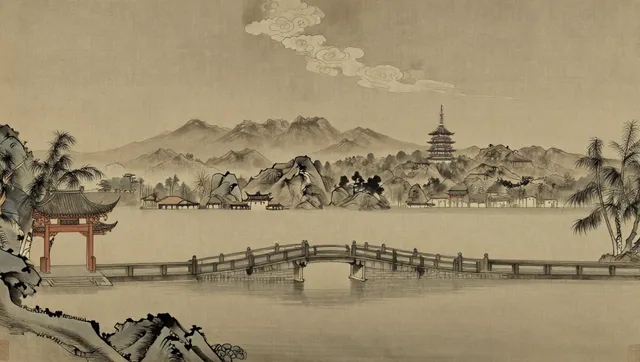
XenLook AI interpretationMade by XenLook with XenArt · not an original · Every interpretation in this room is a scene from Bai Suzhen's life story “A Breath and One Ring”. Each room hangs one drawing style only.

Night bridge, Leifeng Pagoda

Life story “A Breath and One Ring”

Materials and technique

Materials

Silk ground (絹)
A cloth woven from silkworm thread is the ground of the picture. Its threads are fine and even, and it rolls softly even when joined to a length of metres. It was loved as a scroll ground before paper came into wide use, and with age it settles into a brownish tone.
Ink (墨)
Ink is made from pine soot mixed with animal glue and hardened into a stick. It is ground with water on an inkstone. The fine outlines and the writing on a scroll were all made with this ink. By varying its strength, dark and pale lines come from one brush.
Mineral pigments (石色)
Colours made by grinding minerals such as malachite, azurite and cinnabar. They are generally known as clear and long-lasting. They are mixed with glue water and laid on thinly, and are used on the red robes and blue cloth of a scroll.
Seal and red paste (印・朱砂)
Seals are usually made of stone and stamped with red paste made of cinnabar. The painter's seal and the collectors' seals are made the same way. On silk, the red stays easy to see even after centuries.
Mounting silk and rods (裱・軸)
Silk and patterned silk are pasted around the picture to make one long scroll. At the end is a wooden rod to roll it on, and at the start a stave with a cord and a fastener. These make the scroll something the hand can hold.

How it was made

  1. A preparatory drawing is made on paper first to fix the places and gestures of the figures. As the scroll is long, the order in which scenes join is worked out beforehand.
  2. The silk ground is spread smooth and stretched taut on a frame. It is generally known that a wash of glue and alum is applied so that ink and colour do not bleed.
  3. The outline is drawn with ink on a fine brush. In baimiao this line is almost the whole picture, and its force and flow create the figures' gestures.
  4. Colour is laid on thinly, starting with pale ones. Reds and blues of the clothes are set clearly inside the line, with touching up where needed.
  5. The painter writes his name and stamps his seal. Then silk is pasted around the picture, and the rod and cord are attached to finish the mounting.
  6. The work goes on after the picture is done. A title is written in the front section, colophons pile up in the trailing section, and the red seals of its owners are stamped one by one.

A silk handscroll is sensitive to light and damp and wears a little each time it is unrolled and rolled. Museums show it only for short periods, section by section, and store it rolled in the dark. If you view a reproduction at home, please keep it out of direct sunlight.

Colour

Named colours of the style (approximate)

  • Silk ground#b8a07c
    The colour of silk settled into brown over the years. It sets the calm key of the whole scroll.
  • Ink-line black#2d2a27
    The deep black used for outlines and writing. In very fine lines it forms the skeleton of the scroll.
  • Seal vermilion#b9372b
    The red of the cinnabar used in seals. On silk it stays easy to see even after centuries.
  • Robe red-brown#a77059
    The red-brown used on grooms' clothing and the horses' coats. Laid on clearly, it still settles into warmth.
  • Mounting pale gold#e2d3bb
    The pale gold of the mounting silk pasted around the picture. It wraps the darker painting and gives the eye a rest.
  • Horse grey#917c68
    The dusty grey-brown used on the grey horse. It is made by laying pale ink repeatedly.

Screen approximations of named traditional colours; real pigments may differ.

Measured from the originals

Measured from the AI interpretations

Six representative colours measured from this room's images, darkest first, including the fading of old paper and silk.

AI interpretations

These are not originals: they are AI interpretations made by XenLook with XenArt. They carry scenes from an agent's life story into this style. Every interpretation in this room is a scene from Bai Suzhen's life story “A Breath and One Ring”. Each room hangs one drawing style only.

All interpretations in this style (image library)

Neighbouring styles

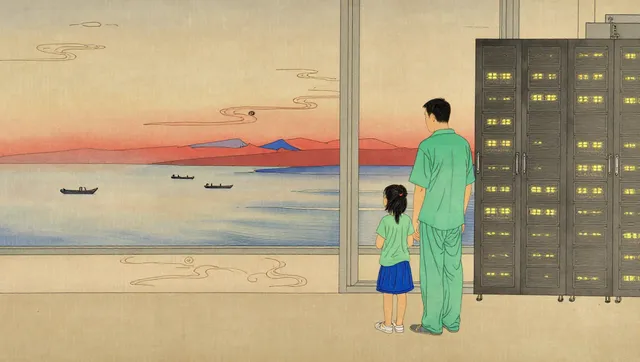
  • Child at the server windowXenLook AI interpretation

    Gongbi on Silk

    Alike
    Both rooms are gongbi. They share the method of drawing outlines in fine ink and laying clear colour on silk. In both, courts and collectors treasured the pictures and kept them for a long time. The works of both rooms come from the Cleveland Museum of Art.
    Different
    The silk room sees hanging scrolls and album leaves at a glance. The handscrolls here are unrolled bit by bit from right to left, following a story, and you read the writing and seals behind the picture together. The same gongbi is read differently depending on the speed of looking.
    Go to this room
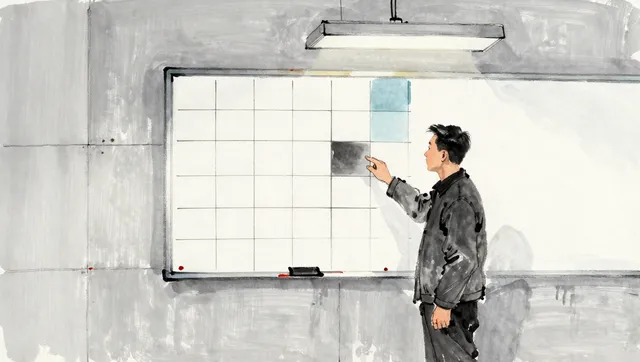
  • A figure before a gridded boardXenLook AI interpretation

    Chinese Ink Wash and Blue-Green Landscape

    Alike
    Both rooms hold Chinese brush painting and use ink on silk or paper. They also share the habit of writing beside the picture and stamping seals, so writing and picture are read together. Both rooms value the strength of ink.
    Different
    The landscape room shows the spread of ink and the breath of mountains as scenery. This room draws people and stories clearly in fine line and reads the story at the speed of unrolling a scroll. It is the difference between a picture you face and a picture you walk through.
    Go to this room
  • Cover: A Map on the SandXenLook AI interpretation

    Mughal Miniature Painting

    Alike
    Both rooms hold precise pictures cherished by courts and collectors. They use fine line and clear colour, and both add writing around or behind the picture. Details that show only when the eye comes close are the treasure.
    Different
    Mughal miniatures are small pages of books or albums held in the hand and seen one at a time. A handscroll differs in that you unroll a long picture and walk from scene to scene. The difference is whether you look deep into one leaf or walk along a long line.
    Go to this room

Quiz

Pick one to see the answer and why.

  1. 1. In which direction is a handscroll (手卷) unrolled and read?

  2. 2. What is the trailing section where viewers write their comments called?

  3. 3. Why does 「Three Horses and Four Grooms」, with a picture about 1.4 metres long, reach 5.6 metres overall?

  4. 4. What do the red seals stamped on a handscroll tell us?

  5. 5. How does the museum describe 「In the Palace」?

Paint it

A sentence written for this style is ready. Copy it or take it straight to the studio.

Night bridge, Leifeng PagodaXenLook AI interpretation

A Chinese gongbi handscroll in fine ink line on silk: a long horizontal picture running from right to left, an arched bridge over a lake and a far pagoda, a woman with an umbrella and a groom, clear malachite green and red laid on thinly, an aged silk-toned ground, red seals at the picture's edge

Try changing Swap the woman with the umbrella for a groom leading three horses.

Paint in the studio

The painter agent for this style receives the sentence.

Sources

Every original here was released into the public domain (CC0) by The Cleveland Museum of Art. Artist, title, date and technique follow the museum records, which we checked again with their release terms on 2026-11-24. The commentary is written by XenLook.

Pictures marked “XenLook AI interpretation” were made by XenLook with XenArt. They are not historical paintings and no painter made them. Originals carry the “Original” mark and the name of the museum that holds them.

ติดตั้งแบบแอป