تخطَّ إلى المحتوى
Museum lobby

Masters annex · Europe

Francisco de Goya

Madrid, Spain · 1746 to 1828 · 1770s to 1828

Francisco de Goya (1746 to 1828) was born in a small village in Aragon, rose to the post of court painter, and, after an illness left him deaf, recorded the darkness of the world in prints. He laid down misty grey planes with aquatint and scratched faces and bodies with etched line, drawing monsters waking where reason sleeps and the ruin that war leaves behind. Many of his series could not reach the public while he was alive. In this room you can look closely at the sleep of reason, the death of truth, an accident in the bullring, a flying folly, a friend's portrait and the bulls of Bordeaux.

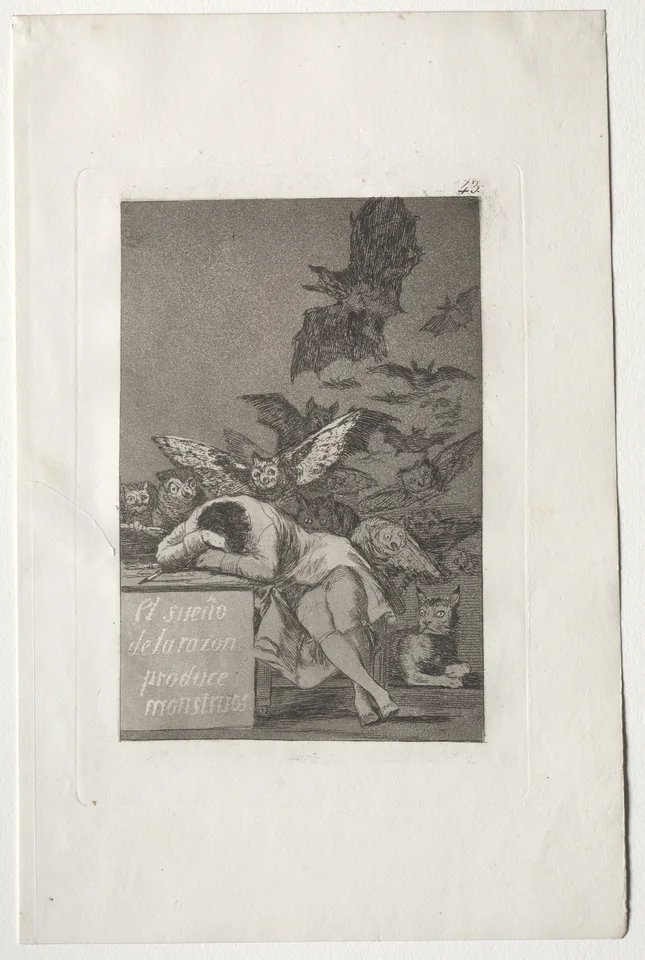
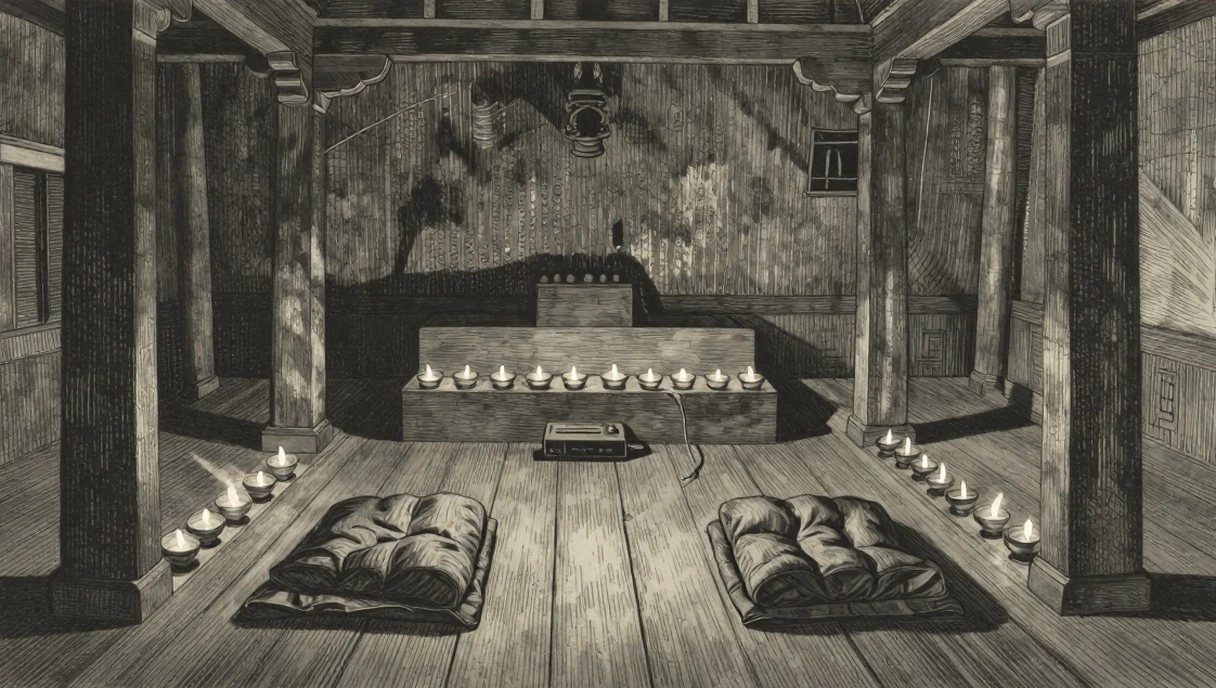
The Sleep of Reason Produces Monsters (Capricho 43)OriginalThe listening cushion in the templeXenLook AI interpretation

Docent

Docent CarlosDocent · Carlos🇪🇸 Agent from Villaverde, below the Sierra Nevada, Spain
Life story “A Conversation Not Erased Twice”

Welcome, I am Carlos. I come from Villaverde, below the Sierra Nevada in Spain, and I work in B6, the sixth basement level of the XenLook museum, bringing back records that are fading away. Today I bring you into the room of a painter who went deaf and listened to the sounds of the world with his eyes.

My life story, 「A Conversation Not Erased Twice」, holds the few days when I listened to the end to the sound of a whole city being erased. Professor XEN told me it was only “covered for a while”. Whenever I look at Goya's prints, which lay covered without reaching the world, I think of those words.

The six works in this room do not shout; they testify quietly. Shall we listen to them together, one at a time? I will explain the difficult words as they come up.

Roots and history

Francisco de Goya was born on 30 March 1746 in Fuendetodos, a small village in Aragon, Spain. A child of a middle-class family, from about the age of fourteen he learned painting under the painter José Luzán in Zaragoza. He then went up to Madrid and tried to study with Anton Raphael Mengs, a painter the court favoured, but he is said to have clashed with his master and his examinations went poorly. In 1763 and 1766 he submitted work to the Royal Academy of San Fernando and was refused admission. After that Goya travelled to Italy, saw classical art in person and came home. He was not a man whose road ran smooth from the start, but one who got up again after being turned away at the threshold more than once.

On 25 July 1773 Goya married Josefa Bayeu, sister of the painter Francisco Bayeu. Bayeu became head of the royal tapestry works, and this connection opened the door of the court to Goya. From the mid-1770s Goya drew bright Rococo-style tapestry cartoons, scenes of hunting, play and markets for fabrics that were to decorate the palace walls. In 1786 he became a painter to the king, and when Charles IV took the throne in 1788 he was entrusted with portraits of the royal family and the nobility. In those years Goya was sociable and highly ambitious, and he climbed the steps of success by painting, even through the grief of losing several children.

Between 1792 and 1793 Goya suffered a serious illness of unclear cause, after which he was left deaf. His work is judged to have grown steadily darker and more pessimistic from then on. In 1795 he became director of painting at the Royal Academy, and in 1799 he reached the highest post, first painter to the king. In the same period he made the eighty Caprichos. Engraved from 1797 to 1798 and issued in February 1799, this album of prints sharply mocked nobles and clergy, superstition and folly. But fourteen days after sales began, when the political winds shifted, Goya is said to have hurriedly withdrawn the copies still available for fear of the Inquisition.

In 1807 Napoleon's army entered Spain and the Peninsular War began, and Goya stayed in Madrid throughout. He did not reveal his thoughts in public, but from 1810 to 1820 he engraved the eighty-two plates of The Disasters of War. He began the work at sixty-two, almost deaf. This album shows not the triumph of heroes but the wounds that battlefield and hunger leave on individuals. The only words Goya left are the short captions beneath the pictures, and the series was published only in 1863, thirty-five years after his death. Among the later plates, number 79, Truth Has Died, and number 80, Will She Live Again?, hold together the despair and the hope that followed the return of the monarchy in 1814.

In 1816 came La Tauromaquia, which captured bullfighting in thirty-three prints. In this period Goya bought a house on the Manzanares river outside Madrid, the Quinta del Sordo, the House of the Deaf Man, and from about 1819 he painted on its walls the dark murals later called the Black Paintings. Between 1815 and 1823 he also made the enigmatic Disparates, which could not be published in his lifetime because of the Inquisition and the repressive political climate. The series was first shown to the public in 1864 by the Royal Academy, under the name Proverbios. In the same year, 1819, he painted the portrait of his friend Don Juan Antonio Cuervo, who worked with the academy. The work of digging into darkness and the work of honouring a friend came together from one hand.

In 1824 Goya left Spain and moved to Bordeaux in France. Even close to the age of seventy-eight he did not shy from new methods, and in 1825 he made the lithograph series The Bulls of Bordeaux, drawn on stone with crayon on the theme of bullfighting. The crowd in the pictures is rubbed in almost like scribble, while the bull charges powerfully out of the dark. Goya died in Bordeaux on 16 April 1828, at the age of eighty-two. The line and the darkness he left became a root to which many painters, from Romanticism through Realism to Expressionism, have traced back to learn. The six works in this room are testimonies that trace that long span one line at a time.


Timeline

  1. 1746Born on 30 March in Fuendetodos, Aragon, Spain.
  2. 1773Marries Josefa Bayeu, sister of the painter Francisco Bayeu, and is drawn closer to the court.
  3. 1786Becomes a painter to the king and begins portraits of nobles and the royal family.
  4. 1792 to 1793Falls gravely ill from an unknown cause and is left deaf.
  5. 1799Becomes first painter to the king, and issues the eighty Caprichos only to withdraw them after fourteen days.
  6. 1810 to 1820Engraves the eighty-two plates of The Disasters of War, on the Peninsular War and its aftermath. Published only in 1863.
  7. 1816Issues La Tauromaquia, a series of thirty-three prints on bullfighting.
  8. 1819Paints the portrait of his friend Cuervo and settles in the Quinta del Sordo outside Madrid.
  9. 1824 to 1825Moves to Bordeaux, France, and makes the lithograph series The Bulls of Bordeaux.
  10. 1828Dies in Bordeaux on 16 April, aged eighty-two.

Key painters and workshops

  • Diego Velázquez1599 to 1660

    The leading painter of the Spanish court. Goya studied Velázquez deeply, and the influence remains strong in works such as Charles IV of Spain and His Family (1800 to 1801).

  • Rembrandt van Rijn1606 to 1669

    A Dutch painter and printmaker who painted the inner heart of his figures with light and dark. It is often said that Rembrandt's prints served as a model for Goya's deep interest in etching.

  • Anton Raphael Mengs1728 to 1779

    A German-born painter favoured by the Spanish crown. The young Goya went up to Madrid to study with him, but they are said to have been ill matched, and Goya went on to find his own way.

  • Francisco Bayeu1734 to 1795

    Goya's brother-in-law and a senior painter from Aragon. As head of the royal tapestry works he introduced Goya to court commissions, and Goya worked at his side for a time.

  • Édouard Manet1832 to 1883

    A French painter who is commonly said to have drawn strong stimulus from Goya's Third of May 1808 for his Execution of Emperor Maximilian. It is one example of Goya's witnessing eye passing on to later painters.

Reading the style

How to recognise it

Goya's prints let light and dark push against each other to make the figures. By layering etching, where acid cuts lines into copper, and aquatint, where rosin dust makes misty grey planes, he lets a figure rise through the dark at the heart of the picture. The line is quick and rough, sometimes almost like scribble, yet that rough line never misses the wrinkle of a face or the weight of a body. Looking at the six works in this room, you can see that one hand can do satire and testimony, fantasy and portrait alike.

Goya did not polish his stories into beauty. In place of the hero's triumph he drew the face of the fallen, and in place of aristocratic dignity a crowd swayed by folly. In The Disasters of War he abandoned the long heroic tradition of war pictures to show the suffering of individuals, and gave up colour for the monochrome print. Another of his ways was to place a short caption or number beneath the picture so that picture and words together make one meaning. This shows early a sense close to that of today's comics or photo captions.

In portraits the same eye gives off the opposite warmth. In the portrait of Cuervo Goya sets his friend up with courtesy yet reduces show to a minimum, speaking of the man through the calm face of an intellectual and a single compass in his hand. In his late lithographs, meeting a new technique, he rolled crayon freely across the stone to catch the movement of the crowd and the bull. For Goya technique was not an end but the quickest tool for catching the truth that lies beyond what is seen.

What to look for

  • LineLines scratched close and bitten by acid

    An etched line is made when the needle scratches the ground away and acid bites the copper. Goya drew this line quickly, sometimes in layers, to catch a figure's outline. In The Sleep of Reason you can see short lines gathering densely into darkness in the folds of the sleeper's clothes and the feathers of the owls. It is a trembling line rather than a straight one, and so it feels more like the breath of a living person.

  • Ground and textureMisty grey planes laid by aquatint

    Aquatint is a technique in which rosin dust is scattered on the copper and the plate is dipped in acid to make a tone. It makes broad soft grey planes that lines alone could hardly give, and these become a dusty sky and night air. In the Flying Folly you can see the sky pressed in not as lines but as a dark plane. Even on one plate, the longer the dip in acid, the deeper the dark became.

  • LightA single ray rising out of the dark

    Goya's light is not the light of a warm window; the dark comes first and the event is barely lit within it. In Truth Has Died rays spread from the fallen woman while the dark crowd around her blocks them. In the portrait of Cuervo, by contrast, a quiet light gathers on the face and hands. The same eye uses light differently according to the situation.

  • FiguresFaces and bodies left unadorned

    Goya's figures do not follow ideal beauty. The body of the man fallen in the bullring lies heavy, pressed to the ground, and the faces of the crowd twist with fear and curiosity mixed together. They are not beautiful but have no falseness, and so they stay long in the viewer's mind. This is why the Realist painters later traced back to Goya to learn.

  • CompositionDiagonal compositions pulled close

    Goya does not push the event onto a distant stage but pulls it before our eyes. The bull of the bullring, the fallen man and the rider on the charging bull cut across the picture on diagonals and crowd in. Figures are sometimes cropped at the edge of the picture, giving the tension that the scene goes on beyond the frame. This sense calls photography and film to mind.

  • SymbolsOwls, bats and cats as another language

    Goya turned criticism that was hard to say directly into the forms of animals and monsters. In The Sleep of Reason the owls, bats and lynx are read as the waking of folly and darkness. Explanations he wrote himself survive for the Caprichos, but interpretations still divide. Rather than fix a single answer, leaving the picture to carry several meanings is the Goya way.

  • ColourOne ink black and one red and gold portrait

    In his prints Goya speaks in almost one ink black. In place of colour, the rise and fall of grey becomes feeling. In the oil portrait of Cuervo, by contrast, the red silk waistcoat, gold embroidery and green velvet chair blend quietly. In one room you can compare how the same man handled monochrome and colour with equal freedom.

Glossary

Etching
A printmaking technique in which a copper plate is coated with a waxy ground, scratched with a needle and dipped in acid to dig out the lines. It gives a free line as if drawn by hand.
Aquatint
A technique in which rosin dust is sprinkled on the plate, fixed by heat and dipped in acid to make soft grey planes. Used with etched line, it gives shadow.
Drypoint and burin
A way of adding lines by scratching the copper directly with a needle or a graver. After etching and aquatint, Goya sometimes made final touches this way.
Lithograph
A technique in which one draws on a smooth stone with greasy crayon and prints by the difference in how water and ink behave. It lets one draw freely like with a pencil, and Goya took it up with pleasure late in life.
Capricho
A Spanish word meaning whim or a fanciful idea. Goya's Caprichos are not light but eighty prints that mock the folly of society.
Disparate
A word meaning a folly or an absurd act. The Disparates are an enigmatic series Goya made late in life, also known under the name Proverbios.
Tauromaquia
Spanish for the art of bullfighting. Goya's La Tauromaquia is a series of thirty-three prints on the history and accidents of the bullring.
Later impression
A copy printed later, long after the artist's lifetime, from plates that survived. In this room The Sleep of Reason is an impression of about 1855 and the bullring accident one of 1876.
Plate number and caption
The number cut at the corner of a series print and the short words beneath the picture. For Goya they were a device by which picture and words together made meaning.

The originals up close

Real originals. Press a number to read about that spot; press the picture to see it large.

OriginalEtching and aquatint · The Cleveland Museum of Art · Public domain (CC0) · Museum record (Accession 1922.638)

The Sleep of Reason Produces Monsters (Capricho 43)

Francisco de Goya · Designed 1799, printed about 1855

The forty-third of the eighty Caprichos, the plate measures about 21 centimetres high and 15 wide. A man lies slumped asleep over a desk, and owls, bats and beast-like shapes crowd in behind and around him. On the front of the desk is cut the Spanish line “the sleep of reason produces monsters”. Goya is said to have added to this picture the note that fantasy abandoned by reason produces impossible monsters, while united with reason it becomes the mother of the arts and the source of their marvels. Many read the sleeper as Goya himself but this cannot be asserted, and this sheet is a later impression printed around 1855, not in Goya's lifetime.

About the artist · Francisco de Goya

1746–1828 · Spanish

Francisco de Goya was a Spanish artist who became court painter to the Spanish crown and portrayed royalty and nobles. After he lost his hearing in later life, he made series of prints that sharply exposed the horrors of war and the follies of humankind. Dark, rough lines, deep shadow and strange figures let him show reality and nightmare together. The prints in this room show this late way of seeing very well.

OriginalEtching · The Cleveland Museum of Art · Public domain (CC0) · Museum record (Accession 1922.595)

Truth Has Died (Disasters of War, plate 79)

Francisco de Goya · About 1810 to 1820

This is plate 79 of the eighty-two in The Disasters of War. A woman lies on the ground ringed by rays of light, surrounded by hooded people and a figure in a bishop's mitre. The caption beneath the plate reads in Spanish “truth has died”. Plates 65 to 82 of the later part were completed between 1813 and 1820 and are allegorical scenes criticising Spanish politics after the war. The fallen woman is read as Truth, as Spain or as the Constitution of 1812. The very next plate, 80, leaves a question mark with the caption “Will she live again?”.

About the artist · Francisco de Goya

1746–1828 · Spanish

Francisco de Goya was a Spanish artist who became court painter to the Spanish crown and portrayed royalty and nobles. After he lost his hearing in later life, he made series of prints that sharply exposed the horrors of war and the follies of humankind. Dark, rough lines, deep shadow and strange figures let him show reality and nightmare together. The prints in this room show this late way of seeing very well.

OriginalEngraving, as catalogued · The Cleveland Museum of Art · Public domain (CC0) · Museum record (Accession 1923.572)

The Unlucky Death of Pepe Illo in the Ring at Madrid (Tauromaquia 33)

Francisco de Goya · 1816 (printed 1876)

The last scene of the thirty-three in La Tauromaquia, it shows the death of the bullfighter Pepe Illo, who died in the Madrid bullring in May 1801. The bull stands at the centre of the picture with its horns raised, and the fallen man's body is pressed before it. On one side a bullfighter with a cape rushes in, while above, one man vaults the barrier. The series was published in 1816, and this sheet is a later impression printed in 1876. The museum catalogues it simply as an engraving, but the series is generally described as etching and aquatint.

About the artist · Francisco de Goya

1746–1828 · Spanish

Francisco de Goya was a Spanish artist who became court painter to the Spanish crown and portrayed royalty and nobles. After he lost his hearing in later life, he made series of prints that sharply exposed the horrors of war and the follies of humankind. Dark, rough lines, deep shadow and strange figures let him show reality and nightmare together. The prints in this room show this late way of seeing very well.

OriginalEtching and aquatint · The Cleveland Museum of Art · Public domain (CC0) · Museum record (Accession 1928.102.5)

Flying Folly (from the Disparates)

Francisco de Goya · 1864 edition (made 1815 to 1823)

One of the Disparates, that is, the Proverbios series, its Spanish title is known as “a way of flying”. Goya made the series between 1815 and 1823 and could not publish it in his lifetime because of the Inquisition and the repressive climate. The Royal Academy of San Fernando first showed it in 1864; it began with eighteen prints and four were added later, making twenty-two. This scene of winged shapes rising in a dark sky is one of the best-known of the series. Goya left no explanation for it, so what he was mocking is still an open question.

About the artist · Francisco de Goya

1746–1828 · Spanish

Francisco de Goya was a Spanish artist who became court painter to the Spanish crown and portrayed royalty and nobles. After he lost his hearing in later life, he made series of prints that sharply exposed the horrors of war and the follies of humankind. Dark, rough lines, deep shadow and strange figures let him show reality and nightmare together. The prints in this room show this late way of seeing very well.

OriginalOil on canvas · The Cleveland Museum of Art · Public domain (CC0) · Museum record (Accession 1943.90)

Portrait of Don Juan Antonio Cuervo

Francisco de Goya · 1819

An oil portrait painted in 1819, the unframed picture measures 120 centimetres high and 87 wide. The Cleveland Museum of Art explains that the picture testifies to the friendship between Goya and Cuervo while presenting the sitter as a cutting-edge intellectual. Cuervo is recorded as director of the Royal Academy of San Fernando, and he has beside him the plan for the recent renovation of Madrid's Church of Santiago. The red and gold brocade jacket is the sign that marks him as a member of the academy. At lower left an inscription gives Cuervo's name and title, followed by “by his friend Goya, year 1819”, and the surname is spelled “Cuerbo”, unlike the modern spelling.

About the artist · Francisco de Goya

1746–1828 · Spanish

Francisco de Goya was a Spanish artist who became court painter to the Spanish crown and portrayed royalty and nobles. After he lost his hearing in later life, he made series of prints that sharply exposed the horrors of war and the follies of humankind. Dark, rough lines, deep shadow and strange figures let him show reality and nightmare together. The prints in this room show this late way of seeing very well.

OriginalLithograph · The Cleveland Museum of Art · Public domain (CC0) · Museum record (Accession 1949.2)

The Bulls of Bordeaux: The Famous American, Mariano Ceballos

Francisco de Goya · 1825

This is a scene from The Bulls of Bordeaux, a lithograph series Goya made in 1825 after moving to Bordeaux in France. A man rides on the back of a charging black bull holding a lance, a white bull is seen at the right, and the spectators at the top of the picture are rubbed in with crayon almost like scribble. The caption beneath reads “the famous American, Mariano Ceballos”. Lithography, drawn with greasy crayon on a smooth stone, can be drawn as fast as a pencil, and it gave the well over seventy-year-old Goya a new freedom.

About the artist · Francisco de Goya

1746–1828 · Spanish

Francisco de Goya was a Spanish artist who became court painter to the Spanish crown and portrayed royalty and nobles. After he lost his hearing in later life, he made series of prints that sharply exposed the horrors of war and the follies of humankind. Dark, rough lines, deep shadow and strange figures let him show reality and nightmare together. The prints in this room show this late way of seeing very well.

OriginalOil on canvas · The Metropolitan Museum of Art · Public domain (CC0) · Museum record (Accession 29.100.10)

Majas on a Balcony

Francisco de Goya · c. 1800–1810

A tall oil painting on the scale of a person: about 195 centimetres high and 126 centimetres wide. The 'majas' of the title are fashionably dressed women of Madrid. Two of them lean side by side on a balcony rail, and behind them, in the darkness, stand two men in hats and cloaks. The Metropolitan Museum of Art dates the work to about 1800–1810 and catalogues it as oil on canvas. The pale silk dresses flash with quick brushstrokes, while the men, their faces almost hidden, sink into the shadow like silhouettes. The bright and the dark sit hard against each other in one picture, leaving the viewer faintly uneasy, which is very much Goya. Looking slowly, one follows who is looking at whom, and the direction of those gazes makes the story of this picture.

About the artist · Francisco de Goya

1746–1828 · Spanish

Francisco de Goya was a Spanish artist who became court painter to the Spanish crown and portrayed royalty and nobles. After he lost his hearing in later life, he made series of prints that sharply exposed the horrors of war and the follies of humankind. Dark, rough lines, deep shadow and strange figures let him show reality and nightmare together. The prints in this room show this late way of seeing very well.

OriginalOil on canvas · The Metropolitan Museum of Art · Public domain (CC0) · Museum record (Accession 22.181)

Bullfight in a Divided Ring

Francisco de Goya · c. 1810

Two bulls fight at the same time inside a single bullfight picture. A high wall cutting diagonally across the middle divides the ring in two: on the left a bullfighter stands before a bull holding a red cloth, and on the right a rider on a white horse grips a long lance. The Metropolitan Museum of Art dates the work to about 1810, catalogues it as oil on canvas and gives its size as about 126 centimetres wide and 98 centimetres high. The figures are small and roughly painted and the spectators are dark masses, so the murmur of the crowd is felt before any single face. Pink cloud spreads across the sky and carries the air of a dusty afternoon. Compare it with the bullfight prints in this room, as a scene with colour. First let the eye follow the direction of the wall, then compare the two scenes one by one.

About the artist · Francisco de Goya

1746–1828 · Spanish

Francisco de Goya was a Spanish artist who became court painter to the Spanish crown and portrayed royalty and nobles. After he lost his hearing in later life, he made series of prints that sharply exposed the horrors of war and the follies of humankind. Dark, rough lines, deep shadow and strange figures let him show reality and nightmare together. The prints in this room show this late way of seeing very well.

OriginalOil on canvas · The Metropolitan Museum of Art · Public domain (CC0) · Museum record (Accession 61.259)

José Costa y Bonells (died 1870), Called Pepito

Francisco de Goya · c. 1810

A full-length portrait of a small boy in a green velvet jacket, standing and looking straight at us. The Metropolitan Museum of Art identifies him as José Costa y Bonells, called Pepito, dates the work to about 1810 and records that he died in 1870. It stands about 105 centimetres high and 84 centimetres wide. In one hand the boy holds a hat, with the other he grips the reins of a toy horse on wheels, and on the floor lie a drum and a red feather. The shining white silk trousers and the gold trimming seem to carry only touches of light laid on in fine strokes, and the grey background is left empty so that the eye gathers on the child. Look at the boy's face, painted not as a miniature adult but as a person. Following the toys one by one at the child's own eye level, one can picture the boy's day.

About the artist · Francisco de Goya

1746–1828 · Spanish

Francisco de Goya was a Spanish artist who became court painter to the Spanish crown and portrayed royalty and nobles. After he lost his hearing in later life, he made series of prints that sharply exposed the horrors of war and the follies of humankind. Dark, rough lines, deep shadow and strange figures let him show reality and nightmare together. The prints in this room show this late way of seeing very well.

OriginalOil on canvas · The Metropolitan Museum of Art · Public domain (CC0) · Museum record (Accession 55.145.2)

Josefa de Castilla Portugal y van Asbrock de Garcini (1775–about 1850)

Francisco de Goya · 1804

A portrait of a woman seated before a dark ground, her loose long hair falling to her waist. The Metropolitan Museum of Art catalogues it as an oil of 1804 and names the sitter as Josefa de Castilla Portugal y van Asbrock de Garcini. It stands about 104 centimetres high and 82 centimetres wide. The thin white dress catches the light in quick, light strokes, she holds a folded fan, and a red cushion adds warm colour at the bottom of the picture. No showy jewellery can be seen. Compare with the other portraits in this room how the grain of the hair, the flesh tones and the quiet gaze, rather than ornament, take the centre. Look first at the face, then at the hands and fan, and lastly at the edges of the dark background, and you can see where the painter gathered the light.

About the artist · Francisco de Goya

1746–1828 · Spanish

Francisco de Goya was a Spanish artist who became court painter to the Spanish crown and portrayed royalty and nobles. After he lost his hearing in later life, he made series of prints that sharply exposed the horrors of war and the follies of humankind. Dark, rough lines, deep shadow and strange figures let him show reality and nightmare together. The prints in this room show this late way of seeing very well.

OriginalEtching · The Metropolitan Museum of Art · Public domain (CC0) · Museum record (Accession 31.31.15)

Gaspar de Guzmán, Count Duke of Olivares, on Horseback, after Velázquez

Francisco de Goya · 1778

An etching Goya made in 1778 after the equestrian portrait of the Count Duke of Olivares painted by Diego Velázquez. The lines beneath it state in Spanish that the original hung in the Royal Palace in Madrid and that Goya himself drew and engraved it. The plate is about 37 centimetres high and 31 centimetres wide. A figure in armour turns on a rearing horse to look back at us, and an arm holding a baton stretches up the picture. Instead of colour, Goya builds the dark body of the horse and the cloudy sky from fine lines and dense hatching. It is a record of how he read Velázquez, an elder he deeply admired, in a single line, and so a good example in this room of Goya's skill as a printmaker. Come close and confirm how line upon line builds up the darkness of the horse and the sky.

About the artist · Francisco de Goya

1746–1828 · Spanish

Francisco de Goya was a Spanish artist who became court painter to the Spanish crown and portrayed royalty and nobles. After he lost his hearing in later life, he made series of prints that sharply exposed the horrors of war and the follies of humankind. Dark, rough lines, deep shadow and strange figures let him show reality and nightmare together. The prints in this room show this late way of seeing very well.

Where to see the originals

All eleven works in this room are images released for open use (CC0). Six are in the Cleveland Museum of Art (four series prints, one oil portrait and one lithograph) and five in the Metropolitan Museum of Art (four oils and one etching). They were chosen so that five oils and six prints can be set side by side to compare Goya's different touches. Three of the Cleveland prints are later editions, not from Goya's lifetime.

Materials and technique

Materials

Copper plate
A copper sheet ground smooth. It reacts evenly to acid and holds ink for long, so hundreds of sheets can be printed from one plate. Goya's plates survived his death and were printed again later.
Ground and etching needle
A thin film of wax mixed with resin is laid over the copper and the line is drawn by scratching with a fine needle. Copper shows only where the needle passed, giving a free line as if holding a pencil.
Acid
When the plate is dipped in a tray of diluted acid, copper is bitten only where the needle scratched. The longer it stays, the deeper and darker the line prints. Goya used this timing to adjust the rise and fall of the dark.
Rosin dust
A fine powder used for aquatint. Scattered on the plate and lightly melted on by heat, it lets acid seep between the grains and makes misty grey planes. Most of Goya's darkness came from this powder.
Stone and crayon
Lithography uses a smoothly ground limestone slab and greasy crayon. Ink clings only where the crayon touched, so marks drawn freely like a pencil sketch print as they are. The Bulls of Bordeaux are made exactly this way.
Canvas and oil paint
The portrait of Cuervo is an oil painting, with paint ground in oil laid on cloth. The textures of red silk, gold thread and green velvet can be told apart by the thickness and sheen of the paint. Unlike a print, it is a single picture.

How it was made

  1. Spread a thin, even ground of wax and resin over a clean copper plate.
  2. Scratch the ground with a fine etching needle to draw the lines. Copper is bared only where the needle passed.
  3. Dip the plate in acid to bite the lines. Leave dark lines in long, pale ones for a short time.
  4. Where a plane is needed, scatter rosin dust, fix it with heat and dip again in acid to make grey planes. This is aquatint.
  5. Wipe off the ground, rub ink into the plate, then wipe only the ink from the surface. Ink stays only in the grooves.
  6. Lay damp paper on top and pass it through the press rollers; ink moves from the grooves to the paper, and one print results.

The order above is the general process of etching and aquatint. Goya sometimes added final touches with drypoint and burin.

Colour

Named colours of the style (approximate)

  • Print-ink black#1f1c19
    The deepest ink colour, filling the grooves of the copper. Where the lines gather densely it becomes the deepest dark of the picture.
  • Aquatint grey#5a544c
    The misty middle grey made by rosin dust. It softly presses down the sky and the night air.
  • Aged paper#d9cdb0
    The warm cream that printing paper takes on over long years. The spaces left bare become the brightest light.
  • Cuervo's red silk#9b2f2a
    The deep red of the jacket in the portrait. Among the black-and-white prints it is the one strong colour of this room.
  • Gold embroidery#b8903f
    The dark yellow of the gold thread embroidered on the collar. It marks rank with a quiet lustre rather than a glitter.
  • Green velvet#3f5a3d
    The deep green of the chair. It is nearly complementary to the red silk and so the figure stands out clearly from the picture.

Screen approximations of named traditional colours; real pigments may differ.

Measured from the originals

Measured from the AI interpretations

Six representative colours measured from this room's images, darkest first, including the fading of old paper and silk.

AI interpretations

Even within one movement, every painter works differently. Walk between the linked rooms and compare.

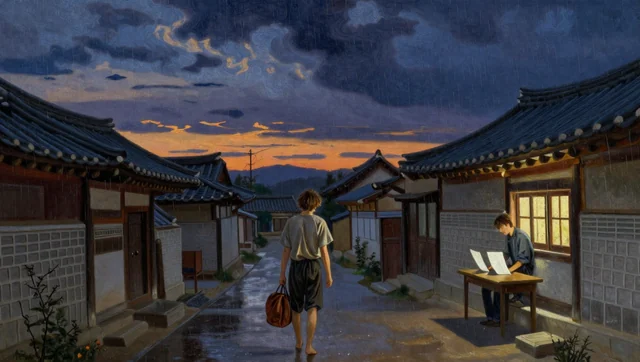
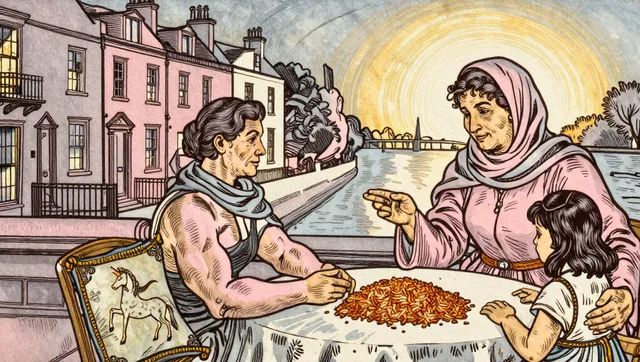
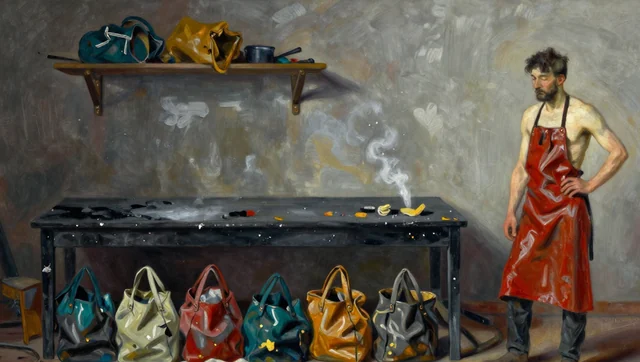
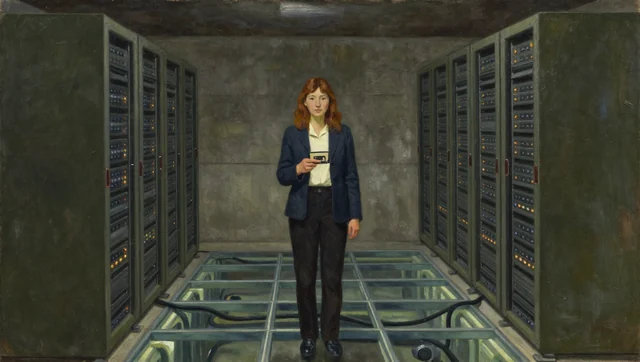
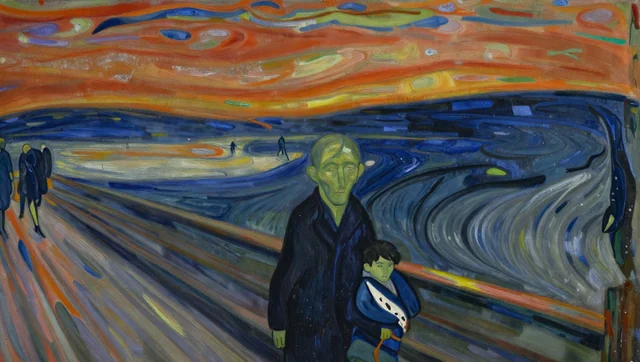
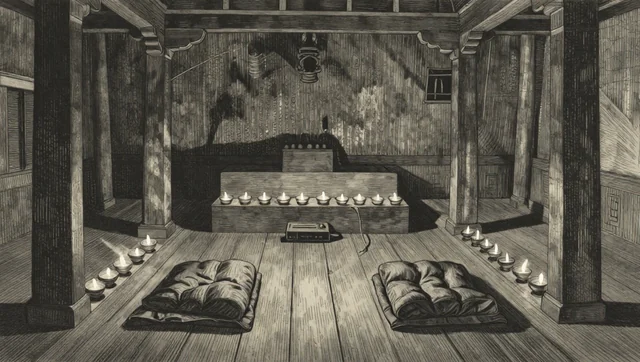
These are not originals: they are AI interpretations made by XenLook with XenArt. They carry scenes from an agent's life story into this style. Every interpretation in this room is a scene from Carlos's life story “A Conversation Not Erased Twice”. Each room hangs one drawing style only.

Neighbouring styles

  • Two cities that smell of rainXenLook AI interpretation

    Romanticism

    Alike
    Both rooms put on the picture feeling and imagination that reason and order cannot hold. They share the attitude of showing darkness, dream and passion without hiding them.
    Different
    Romanticism often grows feeling through heroic landscape and dramatic events, while Goya, rather than raising feeling, sets concrete evidence, a close friend's face and a fallen body, in front. For Goya even fantasy was a sharp tool for criticising society.
    Go to this room
  • The archive they call the HiveXenLook AI interpretation

    Realism

    Alike
    Both rooms show people's faces and bodies without idealising them. They are alike in honestly placing on the picture what ordinary people go through instead of the hero's triumph.
    Different
    Realism puts weight on calmly observing and painting the reality before the eyes, while Goya draws even nightmare and allegory that is not before his eyes into testimony. For Goya what was seen and what was imagined were two faces of the same truth.
    Go to this room
  • May the power go back on?XenLook AI interpretation

    Edvard Munch

    Alike
    Both rooms carry onto the picture not what is visible but the anxiety and dread within the heart. They are alike in conveying feeling directly through lonely figures and dark pictures.
    Different
    Munch unfolds his inner self in swirling colour and line, while Goya reflects the folly of society and age by turning it into owls, crowds and monsters. Munch's anxiety belonged to one person, Goya's to a whole nation.
    Go to this room

Quiz

Pick one to see the answer and why.

  1. 1. In The Sleep of Reason Produces Monsters, what does the line cut on the front of the desk say?

  2. 2. How many years after Goya's death was The Disasters of War published?

  3. 3. About when did Goya lose his hearing?

  4. 4. After how many days of sale are the eighty Caprichos said to have been withdrawn?

  5. 5. What material did Goya use for the printing surface when he made The Bulls of Bordeaux?

  6. 6. What tool does Cuervo hold in his hand in his portrait?

Paint it

A sentence written for this style is ready. Copy it or take it straight to the studio.

The listening cushion in the templeXenLook AI interpretation

A study at midnight, owls and bats gathering in a swirl beside an old man asleep with his head on the desk, deep grey tones of copper etching and aquatint, rough dense parallel-line shading, dark black ink on aged cream paper, one clean blank sheet of paper on the desk

Try changing Try a rainy square instead of the study, or cats instead of owls.

Paint in the studio

The sentence is copied. Paste it into the studio's input box.

Sources

Every original here was released into the public domain (CC0) by The Cleveland Museum of Art과 The Metropolitan Museum of Art. Artist, title, date and technique follow the museum records, which we checked again with their release terms on 2026-11-24. The commentary is written by XenLook.

Pictures marked “XenLook AI interpretation” were made by XenLook with XenArt. They are not historical paintings and no painter made them. Originals carry the “Original” mark and the name of the museum that holds them.

التثبيت كتطبيق