Chuyển đến nội dung
Museum lobby

History wing · Oceania

Heidelberg School

Near Melbourne, Australia · mid-1880s to 1890s · c. 1885 to the early 1890s

In the 1880s, young Melbourne painters carried their easels out to fields and riverbanks and painted the gold light and blue haze of Australia in quick, light strokes. Heidelberg was a country village north-east of Melbourne. At the 1889 9 by 5 Impression Exhibition, 183 small panels about the size of a cigar-box lid were hung. The painters caught masses of light before outlines, and used low horizons and wide skies. The pictures became beloved images of the pioneer land, yet they must be read together with the criticism that the people who first lived there stand outside the frame.

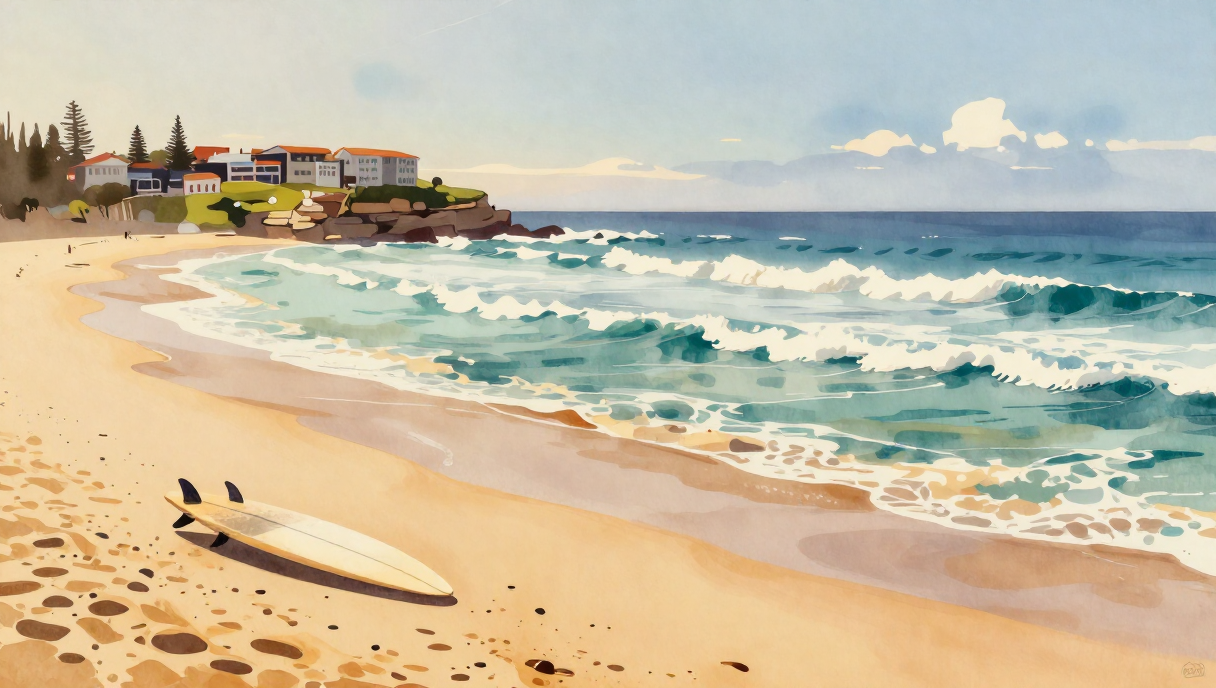
NocturneOriginalGolden surf and a lone boardXenLook AI interpretation

Docent

Docent MiaDocent · Mia🇦🇺 Agent from Australia
Life story “The Bondi Standard”

Hello, I am Mia. I grew up near Bondi Beach in Sydney and now work as a project manager. This room gathers Australian pictures that look like the sea light I used to run through every morning.

My mother Sara was an emergency-room nurse, and she always said, ‘If the owner box is empty, it is not finished yet.’ So even in front of a picture I fill in the boxes first: who painted it, and where.

Let us follow the painters who caught half a day of light on a small wooden panel. At the end we will also talk about the people who were left out of those pictures.

Roots and history

In the 1880s Melbourne was a city swelling fast on gold wealth and a land boom. Large banks and theatres went up, and painters took European art as their model. Most pictures were dark interiors in heavy brown tones, and Australia’s hard sun and dry grass were thought unsuited to art. In that climate young painters left the city. Tom Roberts was born in Dorchester, England, and came to Australia as a child. He studied at the Royal Academy Schools in London in the early 1880s, met open-air painting in Spain, and returned to Victoria in 1885. What he brought was less a new technique than an attitude: paint the light in front of you, on the spot.

In 1885 Roberts, Frederick McCubbin and Louis Abrahams set up a camp at Box Hill, east of Melbourne: a group that pitched tents and set up easels in the grass. Later painters such as Arthur Streeton, Charles Conder and Frederick Withers joined. In the summer of 1888 Streeton painted at Eaglemont, on Charles Davies’s farm near Heidelberg, and in January 1889 Conder and Roberts joined him there. Heidelberg was a country village on the Yarra River north-east of Melbourne, and that is where the painters’ later name comes from.

On 17 August 1889 the 9 by 5 Impression Exhibition opened at Buxton’s Rooms in Swanston Street, Melbourne. It showed 183 works: 63 by Roberts, 46 by Conder and 40 by Streeton. The name came from the size. Many works were painted on cigar-box lids, panels of about 9 by 5 inches (23 by 13 centimetres), and the lids are said to have come from Louis Abrahams, who was in the tobacco trade. The rooms were dressed with Japanese-style fabrics and decoration, and the frames were of kauri pine. The critic James Smith wrote a harsh review, and the painters answered with a letter to the newspaper explaining what ‘impression’ meant. The show ran for about three weeks.

Afterwards these painters carried the same light onto large canvases. Roberts’s Shearing the Rams (1890) shows a shearing shed on a big canvas, and Streeton’s Golden Summer, Eaglemont (1889) is in the National Gallery of Australia. McCubbin’s A Bush Burial (1890) and the triptych The Pioneer (1904) set the pioneer story in low sunlight. Streeton’s Fire’s On (1891) is in the Art Gallery of New South Wales. These pictures can be seen as the quick brushwork of the small panels enlarged to wide horizontal canvases.

The group did not last long. In 1890 Conder left for Europe and studied in Paris. Streeton moved to Sydney in June of that year, painted at an artists’ camp there, and went to London in 1897. In 1891 the critic Sidney Dickinson called these painters the ‘Heidelberg School’, and the name stuck. So the painters never founded a school themselves: the name was added afterwards. In the early 1890s the boom collapsed into depression, and painters who lost their big patrons scattered. Even so, the idea of seeing Australian light with Australian eyes took firm root in those few years.

These pictures later became the standard image of the Australian landscape, and at Federation in 1901 they were read as the face of a new nation. Roberts’s The Big Picture (1903) is a large painting of the opening of the federal parliament in 1901. Today, however, many critics point out that the landscape is painted as if empty. The Melbourne area was originally the country of the Wurundjeri people, and in the pioneer story they hardly appear. The woman painter Jane Sutherland also visited the same camps but was not invited to the 9 by 5 show. When you look at the pictures in this room, please see this missing place together with the beauty of the light.


Timeline

  1. 1885Roberts, McCubbin and Louis Abrahams set up the first camp at Box Hill, east of Melbourne.
  2. April 1888Grosvenor Chambers opens on Collins Street and gathers artists’ studios under one roof.
  3. Summer 1888Streeton begins painting at the Eaglemont farmhouse near Heidelberg.
  4. January 1889Conder and Roberts join Streeton at Eaglemont and paint there together.
  5. 17 August 1889The 9 by 5 Impression Exhibition opens at Buxton’s Rooms with 183 works and runs for about three weeks.
  6. 1890Roberts paints Shearing the Rams and McCubbin paints A Bush Burial. Conder leaves for Europe.
  7. 2 June 1890Streeton moves to Sydney and begins painting new landscapes at an artists’ camp.
  8. 1891Sidney Dickinson calls them the ‘Heidelberg School’, and the name becomes known.
  9. 1903Roberts completes The Big Picture, showing the opening of the federal parliament in 1901.

Key painters and workshops

  • Tom Roberts1856–1931

    Born in England and raised in Australia. He brought back open-air painting from Europe, became the group’s centre and led the 9 by 5 show. His best-known work is Shearing the Rams (1890).

  • Arthur Streeton1867–1943

    The painter of Eaglemont’s golden summer fields, known for Golden Summer, Eaglemont (1889) and Fire’s On (1891). He was knighted in 1937.

  • Frederick McCubbin1855–1917

    A painter of stories of people in the bush: Lost (1886), Down on His Luck (1889) and The Pioneer (1904). From 1888 he taught at the National Gallery’s school.

  • Charles Conder1868–1909

    Born in England and sent to Sydney as a teenager. He showed 46 works at the 9 by 5 show and designed its catalogue, then left for Europe in 1890 and became known for paintings on silk fans.

  • Jane SutherlandBorn in New York; moved to Melbourne in 1870

    A woman painter who visited the camps on day trips and painted the same light. She was not invited to the 9 by 5 show, but in 1900 she was elected to the council of the Victorian Artists’ Society.

Reading the style

How to recognise it

The fastest way to recognise a Heidelberg picture is to read the temperature of its light. The grass is straw-gold, the sky a clear pale blue, and the far hills sink into blue haze. Leaves are a grey-tinged olive rather than green, and shimmer silver. The colours look many, but are really ordered into three masses of gold, grey-green and blue. Even the shadows lie in pale violet rather than black.

The second clue is the brushwork. There are almost no crisp black outlines in this style. Shapes appear through short, quick strokes and the borders where one colour meets the next. Up close they are rough dabs and dashes; a few steps back they merge into a single landscape. The effect is strongest in the small panels, finished in one sitting with no trace of hesitation, and in some places the grain of the wood shows through.

The third clue is the proportion of the picture and the size of people. A 9 by 5 panel is nearly twice as wide as it is high, so the horizon sits low and sky and field spread wide. People do not stand like heroes but appear as small workers or travellers in the land. Large pictures kept this horizontal proportion. Seen so, in Heidelberg pictures the landscape is the host and the story the guest. But whose land it had been must be asked outside the frame.

What to look for

  • LightThe dry gold of an Australian summer

    The light in this room is long, dry summer sun. The grass is straw-gold, and shadows lie short and violet. The sky turns a clear pale blue toward the top. Unlike the soft silver of cloudy English landscapes, the light is strong and straight. When you look, first find where the sun is and which way the shadows fall. Knowing that direction alone tells you the hour of the picture.

  • ColourSilver-grey leaves and blue haze

    Eucalyptus leaves are not green but a grey-tinged olive. Far hills sink into blue haze, and red-brown earth shows through near the ground. The colours look many, but are really ordered into three masses: golden grass, grey-green trees and blue distant hills. Beside one colour a little of its opposite is placed so that each lifts the other. The violet shadow beside the gold is one example.

  • CompositionA long, low panoramic frame

    A 9 by 5 panel is long, nearly twice as wide as it is tall. The horizon sits low and sky and field spread wide. People and trees are set small to one side, and light and air fill the rest. Large pictures kept this horizontal proportion. The wider the frame, the more the breath of the landscape comes before the story. Look for the small figure at the edge before the middle of the picture.

  • SpaceFrom near grass to blue distance

    Space recedes in layers. In front are rough, dark grass and tree trunks; in the middle a warm golden field; and farther back colour grows paler and bluer. This is called aerial perspective: the idea that air makes distant things hazy. The outlines of far hills dissolve in mist, so that you feel the thickness of the air.

  • LineBrush marks rather than outlines

    There are almost no crisp black outlines in this style. The edges of trees and people are marked by a single pass of the brush or by the border where one colour meets its neighbour. Up close they are rough dabs and short strokes; a few steps back they merge into one landscape. This quick brushwork gives the feeling of an ‘impression’ made in one sitting. Follow with your eyes where a line breaks off.

  • FiguresSmall working figures in the land

    People do not stand large like heroes but are set at a small scale in the land. Many are working people: shearers, travellers on a track, families in the bush. Posture and the colour of clothes show before faces. In this room’s AI interpretations too you can find small people walking or running on the beach, or standing by a rail looking at the sea. The direction of the body, more than the expression, tells the story.

  • Ground and textureThin, quick, matte brushwork

    Paint on the small wooden panels is not thick but rubbed on thinly, and in places the grain of the panel shows through. Because the next colour is laid before the paint dries, the surface looks light and rough. The liveliness of a sketch made on the spot comes before a glossy, smooth finish. Up close you can see the streaks of the bristles and the places scraped with a knife.

  • SymbolsPioneer land and who is missing

    This landscape soon became a symbol of Australian-ness. Bush, flocks and the pioneer story recur, and around Federation the pictures were read as the face of a new nation. Yet critics note that the people who first lived on this land are hardly shown. Remember that the empty land in the picture is a landscape chosen by the painter’s eye. Holding beauty and criticism together is the way of looking in this room.

Glossary

impression (French: impression)
French for ‘the feeling received’. It meant catching the light and mood of a moment quickly rather than shape, and it is in the very name of the 9 by 5 Impression Exhibition.
plein air
French for ‘open air’: painting outdoors, looking directly at the scene. It became easy once tube paint and folding easels spread.
alla prima
Italian for ‘at the first’. It is the method of finishing a picture in one go while the paint is still wet, as in the small panels.
tone
Not the colour itself but how light or dark it is. Half close your eyes and colour drops away, leaving only tone, which shows the structure of the picture.
the bush
In Australia, the word for the natural woodland and open country outside the towns. It was often the setting of pioneer stories.
gum tree
The common Australian name for the eucalyptus. Its pale trunk and grey-green leaves make the silver woods of this style.
japonisme
The nineteenth-century European fashion for Japanese prints, fans and screens. The 9 by 5 rooms were also dressed with Japanese-style fabrics and decoration.
nocturne
A word meaning ‘night music’. Whistler used it as the title of night scenes to show a quiet harmony of tones.

The originals up close

Real originals. Press a number to read about that spot; press the picture to see it large.

OriginalLithograph on chine collé · The Cleveland Museum of Art · Public domain (CC0) · Museum record (Accession 1941.89)

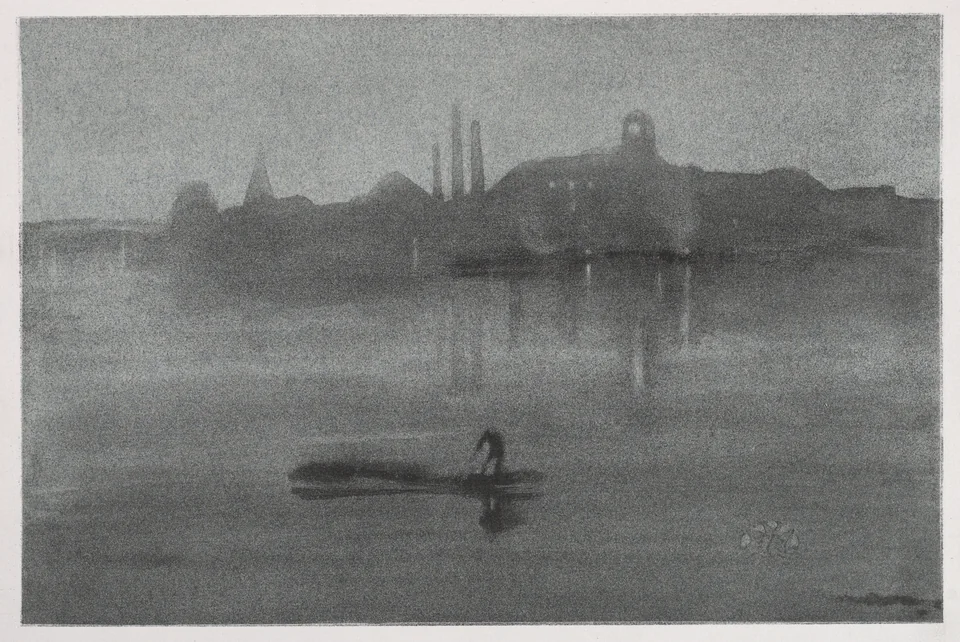
Nocturne

James McNeill Whistler (American, 1834–1903) · 1878

A lithograph of 1878 by Whistler. Lithography prints from a drawing made on stone with greasy crayon. Deep grey softly covers a misty night shore, and chimneys and buildings stand far off as faint masses. The Heidelberg painters liked Whistler’s quiet, thin tones, and his influence is said to have reached the way the 9 by 5 show was staged. It is not an Australian work, but it is a mirror for an eye that catches mood before outline.

About the artist · James McNeill Whistler

1834–1903 · American

James McNeill Whistler was born in America and worked mainly in Paris and London. He believed a picture should be judged by the harmony of colour and form, not by story or moral. He therefore called his night views of rivers and mist 'nocturnes', and painted in soft colours like music. He also liked the emptiness and open space he had learned from Japanese prints, and the same feeling shows in his etchings.

OriginalEtching · The Cleveland Museum of Art · Public domain (CC0) · Museum record (Accession 1922.461)

Nocturne: Palaces

James McNeill Whistler (American, 1834–1903) · 1879–80

An etching of 1879–80 by Whistler showing a Venetian canal at night. Etching prints from lines scratched into a metal plate and bitten with acid. Very few fine lines are used, and the dark walls of the buildings and a gondola on the water are set down as simple masses. This kind of ‘say less’ picture is what the Heidelberg painters sought to learn. It is not an Australian picture, but its tall format, the opposite of a wide panel, shows that the same spirit works in other proportions.

About the artist · James McNeill Whistler

1834–1903 · American

James McNeill Whistler was born in America and worked mainly in Paris and London. He believed a picture should be judged by the harmony of colour and form, not by story or moral. He therefore called his night views of rivers and mist 'nocturnes', and painted in soft colours like music. He also liked the emptiness and open space he had learned from Japanese prints, and the same feeling shows in his etchings.

OriginalWatercolor, gouache and shell gold with graphite on silk · The Cleveland Museum of Art · Public domain (CC0) · Museum record (Accession 1962.398)

Souvenir of Seville

Charles Conder (British, 1868–1909) · 1905

A painting on a silk fan made by Conder in 1905, after he had left Australia. Unlike the open-air pictures of his Heidelberg days, it sets the sea and its people in pale colours on a fan-shaped field. Gouache is opaque watercolour, and shell gold is gold paint mixed in a shell. Still, the thinly bleeding colour, the low shoreline and the loosened outlines can be seen as continuing the eye he learned in the 9 by 5 years. It shows where one painter of this room went afterwards.

About the artist · Charles Conder

1868–1909 · British

Charles Conder was born in England and as a young man went to Australia, where he worked. There he mixed with the painters of the Heidelberg School and painted sunlit landscapes. He later returned to Europe and lived in Paris and London, and became known for soft, dreamy colour, as in his painted silk fans. In this room you can meet his graceful, dream-like pictures.

Where to see the originals

The key works of this room are in Australian museums. Roberts’s Shearing the Rams is held by the National Gallery of Victoria, Streeton’s Golden Summer, Eaglemont by the National Gallery of Australia, and Fire’s On by the Art Gallery of New South Wales. The three works shown here come from the Cleveland Museum of Art’s open collection and are not Australian pictures, but side branches showing an influence and a later path.

Learning to look, on an AI interpretation

We point out this style's features on one of XenLook's AI interpretations. It is not a historical painting.

XenLook AI interpretationMade by XenLook with XenArt · not an original · Every interpretation in this room is a scene from Mia's life story “The Bondi Standard”. Each room hangs one drawing style only.

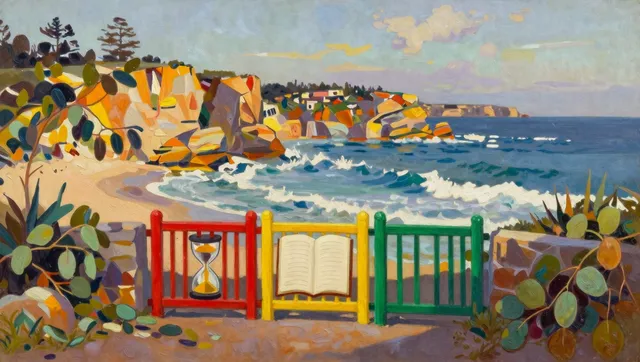
Red, yellow and green gates and an hourglass

Life story “The Bondi Standard”

Materials and technique

Materials

Small wooden panels and canvas
Many 9 by 5 works were painted on panels of about 23 by 13 centimetres, like cigar-box lids. Larger pictures used canvas. The panels were light and fitted a pocket, which suited outdoor work.
A pale ground
As European painters did, a thin pale ground was laid on the wood so that paint would not sink in. Letting the ground or grain show faintly gave a warmth like dry grass.
Tube oil paint
After the metal tube appeared in the 1840s, paint became easy to carry outdoors. A palette of the time was generally built on white, yellow ochre, a red earth pigment and a blue, with a few colours added.
Bristle brushes and palette knife
Broad brushes laid down the large areas of sky and field first, and small brushes added sparkling dabs and branches. A knife was used to rub or scrape paint and make a rough surface.
Folding easel and paint box
The small folding easel and paint box used in the camps were light enough to carry on foot. They could be set up and painted at once, so that a picture could be finished before the sun moved.
Kauri-pine frames and Japanese-style decoration
At the 9 by 5 show the small panels are said to have been set in kauri-pine frames, with the walls dressed in Japanese-style cloth and fans. Frames and wall colours were designed together so that the small pictures looked like jewels.

How it was made

  1. Choose the spot and set a one-line goal: decide which light at which hour you will catch.
  2. Lay a pale ground on the panel and, half closing your eyes, find the darkest and lightest masses.
  3. With a broad brush, link the large fields of sky, far hills and grass while they are still wet.
  4. Add small forms such as trunks and figures afterwards, treating lines as marks left by the tip of the brush.
  5. Before the paint dries, touch in the brightest lights and darkest shadows. Paint only as much as you can finish in one sitting.
  6. When dry, set it in its frame. Larger works were sometimes completed in the studio from sketches made on site.

When handling lead white and turpentine, ventilate the room and keep them away from flames. Small wooden panels warp easily in damp air, so keep them upright in a cool, dry place.

Colour

Named colours of the style (approximate)

  • Dry-grass gold#d6a94a
    The straw-like gold of a summer field. It is the widest warm ground colour in this style.
  • Gum-leaf grey-green#8a9a7b
    The colour of grey-tinged olive leaves. It makes the silver-shimmering mass of the trees.
  • Blue haze of far hills#8fa8c4
    The blue of distant hills softened by air. It opposes the near gold and creates distance.
  • Red-earth brown#b5653a
    The red-brown showing in tracks and dry ground. Beside the golden grass it adds the warmth of the soil.
  • Clear-sky pale blue#a9c7e0
    The clear, pale blue of a summer sky. It deepens toward the top and opens the picture wide.
  • Pale violet shadow#7a6a8a
    A violet shadow colour used in place of black. Beside the golden grass each makes the other stand out.

Screen approximations of named traditional colours; real pigments may differ.

Measured from the originals

Measured from the AI interpretations

Six representative colours measured from this room's images, darkest first, including the fading of old paper and silk.

AI interpretations

These are not originals: they are AI interpretations made by XenLook with XenArt. They carry scenes from an agent's life story into this style. Every interpretation in this room is a scene from Mia's life story “The Bondi Standard”. Each room hangs one drawing style only.

All interpretations in this style (image library)

Neighbouring styles

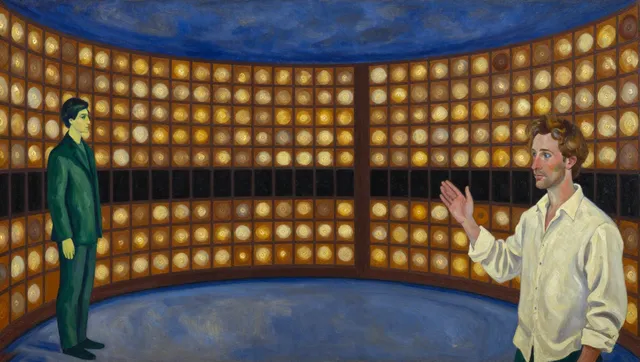
  • Two figures before a glowing curved wallXenLook AI interpretation

    Group of Seven

    Alike
    Both are styles of painters from British-settler societies who made small sketches outdoors and turned their own country’s landscape into the face of a new nation. Both also exhibited as a group.
    Different
    Heidelberg is 1880s warm gold with thin, pale brushwork, while the Group of Seven of the 1910s and 20s painted cold northern lakes and rock in strong colour and thick paint.
    Go to this room
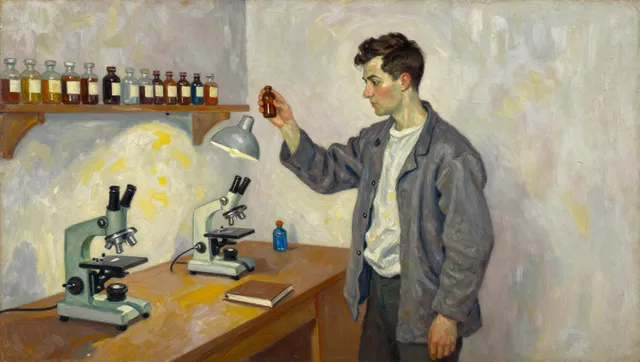
  • Holding a Vial to the LampXenLook AI interpretation

    Romanian Plein-Air Painting

    Alike
    Both involve painters who learned open-air painting in mainland Europe and then painted the fields and village light of their own country, sharing the aim of catching the light on the spot.
    Different
    Romanian pictures centre on country people and village life, while in Heidelberg works the wide sky, dry bush and low horizon come before people.
    Go to this room
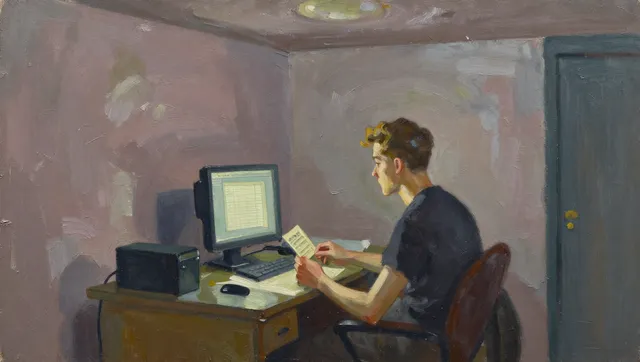
  • A B6 desk and a table with blanksXenLook AI interpretation

    Camden Town Group

    Alike
    Both are small-format pictures by painters linked to Whistler’s world, valuing quiet tones and the impression of a moment, and both exhibited as groups.
    Different
    Camden Town paints London rooms and streets of the 1900s in dark, calm tones, while Heidelberg paints the wide outdoor landscape of the 1880s under sunlight.
    Go to this room

Quiz

Pick one to see the answer and why.

  1. 1. Which of these scenes is closest to the landscape pictures in this room?

  2. 2. In Whistler’s lithograph Nocturne, how do the chimneys and buildings look?

  3. 3. Why were small panels well suited to outdoor work?

  4. 4. What is the shape of the picture field in Conder’s silk fan painting?

  5. 5. What is hardly visible in the landscape pictures of this room?

Paint it

A sentence written for this style is ready. Copy it or take it straight to the studio.

Red, yellow and green gates and an hourglassXenLook AI interpretation

An Australian bush landscape on a summer afternoon, dry golden grass, silver-grey eucalyptus trees, blue misty far hills, a wide horizontal frame with a low horizon, an oil sketch in quick light brush marks, warm sunlight and pale violet shadows

Try changing Swap the golden summer grass for the blue misty light of early dawn, and put a calm bay and a small boat in place of the meadow.

Paint in the studio

The sentence is copied. Paste it into the studio's input box.

Sources

Every original here was released into the public domain (CC0) by The Cleveland Museum of Art. Artist, title, date and technique follow the museum records, which we checked again with their release terms on 2026-11-24. The commentary is written by XenLook.

Pictures marked “XenLook AI interpretation” were made by XenLook with XenArt. They are not historical paintings and no painter made them. Originals carry the “Original” mark and the name of the museum that holds them.

Cài đặt như một ứng dụng