ข้ามไปยังเนื้อหา
Museum lobby

Art movements wing · Europe

Impressionism

Catching a moment of light outdoors · France · Late 1860s to the 1880s

A way of painting in which young French painters of the 1870s left the smooth pictures of the Salon, went outdoors and caught the changing moment of light in short touches. In this room you look at eleven real works by Boudin, Monet, Pissarro, Sisley, Morisot, Caillebotte and the Swedish artist Anders Zorn and follow with your eyes how sky, water and shadow are built from colour.

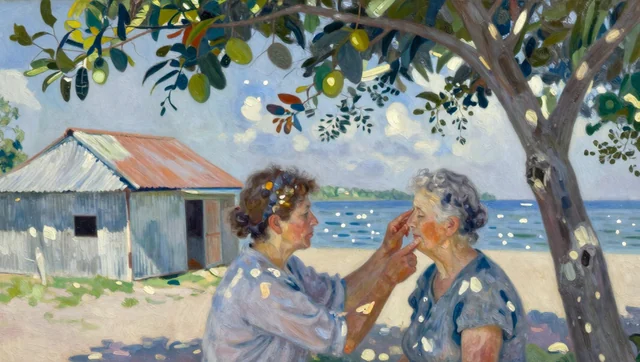
The Beach at DeauvilleOriginalGuadeloupeXenLook AI interpretation

Docent

Docent SylvieDocent · Sylvie🇫🇷 Agent from Paris, France
Life story “Applause Is Made by Silence”

Hello. I am Sylvie, who grew up in a theatre control booth in the 19th arrondissement of Paris. My work has been to guard the one beat before the curtain falls, when the audience holds its breath.

Impressionism resembles that one beat. When a cloud passes the light changes, and the changed light never returns. The painters tried to catch that instant out of doors.

First I will tell you how these paintings began. Then, before eleven real works, shall we read together the moment each touch of paint was laid down?

Roots and history

In mid-nineteenth-century France, a painter earned a name by having work chosen for the annual state exhibition, the Salon. The jurors liked smoothly finished pictures of myth and history, and treated a landscape of rough brushmarks as if it were unfinished. In 1863 so many works were rejected that, with the permission of Emperor Napoleon III, a separate Salon des Refusés was held. The young painters who would become the Impressionists got to know one another in this climate.

Painting landscape out of doors was older than Impressionism. Eugène Boudin was among the first to work outside on the Normandy coast, and Corot is said to have called him the 'king of skies'. Around 1858 Boudin met Monet, then about seventeen, and urged him to paint landscape outdoors. As paint in tin tubes spread in the mid-century, it also became far easier to carry an easel out of the studio, where colours had once been ground by hand.

In April 1874, some thirty painters held an exhibition in the Paris studio of the photographer Nadar, independent of the Salon. Monet's Impression, Sunrise (1872) showed a morning in the port of Le Havre, his hometown. The critic Louis Leroy mocked the picture in the newspaper Le Charivari, and from that review the word 'Impressionists' spread. The name was meant as a jibe, yet the painters adopted it, and it is the name we use today.

The group held eight exhibitions in all between 1874 and 1886. Camille Pissarro was the only painter who took part in every one. Born on the island of Saint Thomas in the Danish West Indies, he was something like the elder brother of the circle, and Cézanne is said to have called him a father. Cézanne, Seurat, Gauguin and van Gogh are all said to have learned from him. He never shrank from teaching younger colleagues in front of the canvas.

The circle also included a woman painter and a wealthy patron. Berthe Morisot married Eugène Manet in 1874, and she sent work to every exhibition except 1879, the year her daughter Julie was born. Gustave Caillebotte helped pay for exhibitions and bought his colleagues' pictures, and on his death he left that collection to the French state. After some controversy the bequest was accepted and became the core of the Impressionist holdings of the French Republic.

Alfred Sisley was born in Paris to English parents and painted almost nothing but landscape. He returned again and again to the Seine, the Loing and the canals near Moret, and is counted the most consistent of the Impressionists in painting outdoors. Monet moved to Argenteuil in 1871 and painted the banks of the Seine, and from 1883 he made his home at Giverny and shaped its pond. The habit of painting the same place again across seasons and hours took root in these years.

The group ended with its eighth exhibition in 1886, because their paths had parted. Younger painters such as Seurat and Signac moved toward pointillism, dividing light more strictly into dots, while van Gogh and Gauguin went the way of putting into colour what stayed in the heart rather than the impression on the eye. Yet the change in the measure of completeness, from smoothness to a living moment, could not be undone. That is the greatest legacy Impressionism left.


Timeline

  1. c. 1858Boudin meets Monet, then about seventeen, and urges him to paint landscape outdoors.
  2. 1863So many works are rejected that, with Napoleon III's permission, a Salon des Refusés is held.
  3. 1871Monet's family moves to Argenteuil, and he begins painting around the Seine.
  4. 1872Monet paints a morning in the port of his hometown Le Havre as Impression, Sunrise.
  5. April 1874About thirty painters hold the first exhibition in Nadar's studio, and the review coins the word 'Impressionists'.
  6. 1874Berthe Morisot marries Eugène Manet and shows work from the very first exhibition.
  7. 1883Monet settles at Giverny and begins to shape his water garden.
  8. 1886The eighth and last exhibition is held, and younger painters turn toward pointillism.
  9. 1894Caillebotte dies and leaves his collection of colleagues' pictures to the French state.

Key painters and workshops

  • Eugène Boudin1824–1898

    A forerunner of outdoor work. He put the skies and beach crowds of the Normandy coast onto small panels and led the young Monet to landscape.

  • Monet1840–1926

    The painter of Impression, Sunrise, from which the movement's name came. He painted the same view again under changing hours and weather, and spent his last years at Giverny.

  • Camille Pissarro1830–1903

    The only painter in all eight exhibitions. From 1872 to 1884 he lived in Pontoise and painted village and riverside scenes.

  • Alfred Sisley1839–1899

    Born in Paris of English parents, a painter of landscape alone. He steadily painted the clear skies and waterside houses along the Seine and the Loing.

  • Berthe Morisot1841–1895

    She showed in every exhibition but 1879. She painted family in house and garden, and women reading, in light, quick strokes.

  • Gustave Caillebotte1848–1894

    Both painter and patron. He painted cityscapes from high viewpoints and boating on the Seine, and left his collected pictures to the state.

Reading the style

How to recognise it

An Impressionist picture does not begin by drawing the outline of its subject. Blocks of colour, such as sky, water, meadow and roof, are set side by side in short touches, and from a distance the eye mixes them and reads them as light. So brushmarks that look rough up close become a glittering ripple a few steps back.

Shadows change too. Where traditional painting laid brown and black in the shade, these painters saw blue and violet even in the shade and painted just that, because the colour of the sky is reflected in water, snow and white clothes. With the aim of finishing a picture in a single sitting, the weather and the hour of that day remain on the surface.

What to look for

  • LightTrembling light built from touches

    Light is not painted so much as made visible by setting colours side by side. In Monet's Pourville sea, horizontally broken touches become sunlit ripples, and a golden reflection stretches long under the cliff. The shorter the touch, the faster the light seems to move.

  • ColourBlue and violet seeping into shadows

    Shaded places are not pressed down with black; the sky's blue is mixed in to keep them clear. In Sisley's Saint-Mammès, a bluish tone runs through the shade of roofs and trees, and sky colour rests directly on the water. So even dark places do not feel stuffy; the air seems to pass through.

  • Ground and textureA surface where the paint grain shows

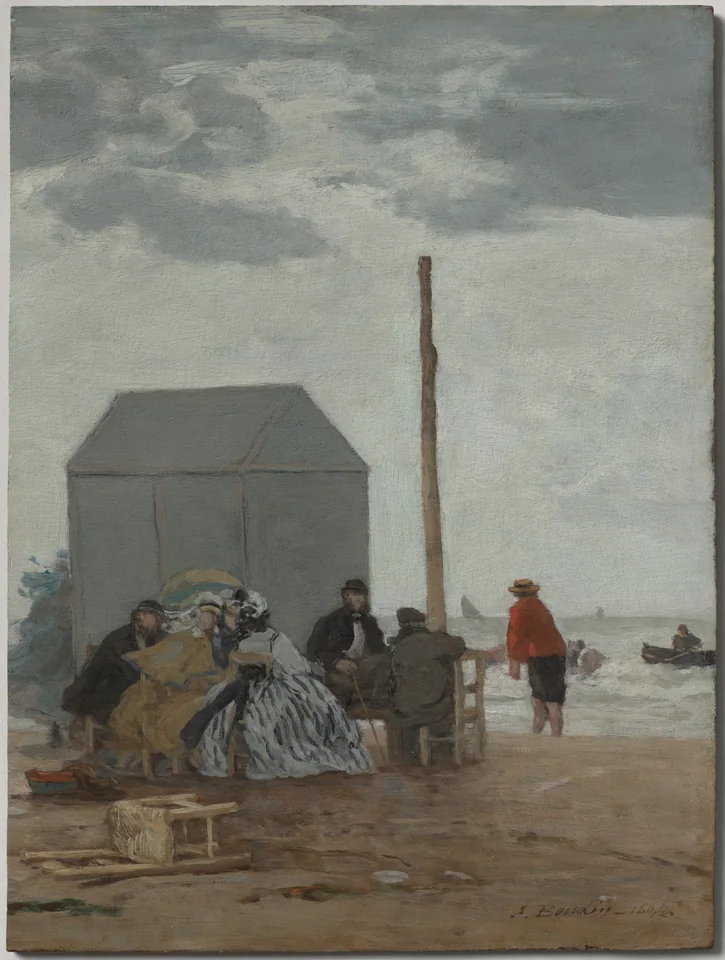
    The brushmarks are left, not smoothed away. In Pissarro's lock at Pontoise, cloud and water join in the grain of thick paint, and in Boudin's small panel the sky keeps the marks of a quick rub. Step close and follow the direction the brush went, and you can feel the speed of the painting.

  • CompositionA view cut one step to the side

    Instead of placing a hero at the centre as in traditional landscape, the scene is set as if cut from what happened to catch the eye. In Caillebotte's Trouville villas, the houses crowd into a corner and the sea fills most of the picture. The empty part gives a feeling of wind and distance.

  • SpaceDepth opened by a wide sky

    In many pictures the sky takes nearly half the surface. In Boudin's Deauville beach, grey cloud covers the top and the people lie below like a band. A wide sky makes the figures on the ground small, and the weather becomes the leading player of the day.

  • FiguresPeople who blend into the landscape

    The figure is not the centre of a story but part of the scene. Morisot's woman reading is painted with the same strokes as the grass, so the white of her dress bleeds into green, and Monet's beach people shrink to a few dots. A person becomes one more colour catching light within the landscape.

Glossary

Salon
The annual state exhibition of France. Being chosen there was a painter's road to honour and commissions.
Salon des Refusés
The 1863 show of pictures rejected by the Salon. It was one of the first occasions on which new painting faced the public.
Impression
The first feeling of light and colour that reaches the eye. A word taken from the title of Monet's picture became the painters' name.
En plein air
The way of painting on the spot out of doors rather than indoors. It became much easier as tube paint spread.
Broken brushwork
Setting colour in short, separate touches rather than long blended runs. From a distance the eye mixes the colours.
Complementary colours
Colours opposite each other on the colour wheel. Set side by side they make each other brighter and bring the colour in shadows alive.
Nadar
The working name of a famous Paris photographer. He was the owner of the studio where the first Impressionist exhibition took place.

The originals up close

Real originals. Press a number to read about that spot; press the picture to see it large.

OriginalOil on wood panel · The Cleveland Museum of Art · Public domain (CC0) · Museum record (Accession 1946.71)

The Beach at Deauville

Eugène Boudin · 1864

A broad Normandy beach scene opened wide. Nearly half of the picture is covered by grey cloud, and below it people stand in small lines on the sand. In front a woman stands in a striped, full skirt, and to the right a figure in a red jacket and straw hat wades at the water's edge. The sky is handled in quick, rubbed strokes, so you feel weather passing on the wind. Painted on a small wood panel, it keeps the speed of something done in one go on the beach.

About the artist · Eugène Boudin

1824–1898 · French

Eugène Boudin was a French painter from the Normandy coast in northern France. He painted beaches, the sea and the sky quickly and from direct observation out of doors, and is regarded as a forerunner who prepared the way for the Impressionists. He is known for light colours that show people strolling on the beach beneath wide skies full of moving clouds. He is also well remembered as the one who urged the young Claude Monet to paint outdoors.

OriginalOil on fabric · The Cleveland Museum of Art · Public domain (CC0) · Museum record (Accession 1947.196)

Low Tide at Pourville, near Dieppe

Monet · 1882

A picture of the shore at Pourville in Normandy. The blue sea is built of horizontally broken strokes, and on the right a pink and cream cliff rises. Above it you see a green and yellow field and small houses, and under it a golden reflection lies long on the water. People on the beach shrink to a few dots and become part of the landscape. At lower right the year and name are written, so you know it is the light of one day in 1882.

About the artist · Claude Monet

1840–1926 · French

Claude Monet was a French painter, and the name 'Impressionism' comes from his picture Impression, Sunrise. To catch the ever-changing light, he painted the same scene again and again outdoors at different times and in different weather. Rather than sharp outlines, he used quick brushstrokes and clear layered colours to convey water, sky and wind. In his later years he devoted himself to painting his garden and pond at Giverny.

OriginalOil on fabric · The Cleveland Museum of Art · Public domain (CC0) · Museum record (Accession 1990.7)

The Lock at Pontoise

Camille Pissarro · 1872

A view from the banks of the Oise at Pontoise. Heavy cloud fills the upper part of the picture, and tall poplars rise on the right. In the middle a row of houses lines up, and on the left a barge floats at the water's edge. On the right you see the wall of the lock, and on the water reflections shaken by ripples are painted. At the far left a horse and a figure appear small and hint at daily village life. It was painted in the period Pissarro spent in this village.

About the artist · Camille Pissarro

1830–1903 · French

Camille Pissarro was an Impressionist painter who was born in the West Indies and worked in France. As the oldest of the Impressionist group he was like an elder brother to the others, and he took part in all eight of the Impressionist exhibitions. He painted farmers, villages and riverside scenes with an honest, warm eye. In the landscape and the peasant woman in this room, his affection for ordinary life can be felt.

OriginalOil on fabric · The Cleveland Museum of Art · Public domain (CC0) · Museum record (Accession 1961.262)

Saint-Mammès, Loing Canal

Alfred Sisley · 1885

A midday scene of Saint-Mammès, the village where the Loing and the canal meet. A mottled sky takes about two thirds of the picture, and at the left a boat is set up on stilts with a small figure. The canal flows at the right, and in the middle red-roofed houses and green trees follow one another. The blue of the sky is mirrored in the water, so you feel land and water lie under the same light. His name and the year are at lower right.

About the artist · Alfred Sisley

1840–1899 · French

Alfred Sisley was an Impressionist painter who was born to English parents but spent most of his life in France. He mostly painted views of the Seine and the Loing, and of villages near the Forest of Fontainebleau. He is known for rendering wide skies, drifting clouds and light reflected in water in gentle colours. The canal view in this room also has a calm, still air.

OriginalOil on canvas · The Cleveland Museum of Art · Public domain (CC0) · Museum record (Accession 1950.89)

Reading

Berthe Morisot · 1873

A picture of a woman sitting on the grass reading. A woman in a white dress, a green hat and a veil is at the centre, and a folded parasol lies at the left. A fan can be seen at the right, and in the distance a cart and hills follow faintly. The white of her dress is set so that its outline blurs, mixed with the green of the grass and the blue of shadow. Morisot caught a passing hour of daily life in light, quick strokes, and the figure and the meadow are bound by the same strokes.

About the artist · Berthe Morisot

1841–1895 · French

Berthe Morisot was a French woman painter and an early member of the Impressionists, who took part in their first exhibition in 1874. She grew up in a well-off family, learned to paint as a girl, and married the brother of the painter Édouard Manet. She is known for light, rapid brushwork that shows family, friends, and the soft light of gardens and interiors. In this picture too, light, quick brushwork carries the soft light.

OriginalOil on canvas · The Cleveland Museum of Art · Public domain (CC0) · Museum record (Accession 2020.105)

Villas at Trouville

Gustave Caillebotte · 1884

A picture of a seaside town looking down from a height. At lower left villas with red brick, slate roofs and a small turret crowd together, and at lower right a green hillside is seen. A grey-green sea fills about the upper two thirds, and a very small sailboat floats on it. The composition, with the houses pushed into a corner, is as bold as a scene cropped from a photograph, and the empty sea gives a feeling of wind and distance.

About the artist · Gustave Caillebotte

1848–1894 · French

Gustave Caillebotte was a painter born into a wealthy Paris family. He took part in the Impressionist exhibitions and was also a patron who helped his colleagues by buying their pictures. He is known for bold compositions, with deep diagonal streets and broad buildings, and for accurate pictures of city people's daily lives. The work in this room, showing a seaside resort and its villas, also has a realistic, tidy composition.

OriginalGouache on wove paper · The Metropolitan Museum of Art · Public domain (CC0) · Museum record (Accession 2023.487)

Seated Peasant Woman with Goats

Camille Pissarro · 1885

A gouache that Pissarro painted in 1885. Gouache is an opaque, water-based paint; it is stronger in colour than watercolour and covers what lies beneath it well. In a meadow a young woman in a straw hat sits leaning against a wooden lattice, and a little way off a mother goat and two kids wander. Behind them you see a farmhouse with a red roof and slender trees. The grass is built from countless short, slanting strokes laid over one another, and yellow, lilac and blue are mixed into the green, so sunlight seems to tremble over the meadow. Making light by setting strokes side by side, rather than shutting things in with outline, is the method this room follows. In the mid-1880s Pissarro was also turning his eye to the colour theories of younger painters, and here too the strokes are more even and closely set. It measures 80.5 cm high by 81 cm wide, large for work on paper, and a signature and date are at the lower right.

About the artist · Camille Pissarro

1830–1903 · French

Camille Pissarro was an Impressionist painter who was born in the West Indies and worked in France. As the oldest of the Impressionist group he was like an elder brother to the others, and he took part in all eight of the Impressionist exhibitions. He painted farmers, villages and riverside scenes with an honest, warm eye. In the landscape and the peasant woman in this room, his affection for ordinary life can be felt.

OriginalOil on canvas · The Metropolitan Museum of Art · Public domain (CC0) · Museum record (Accession 1988.72)

Frieda Schiff (1876–1958), Later Mrs. Felix M. Warburg

Anders Zorn · 1894

A portrait of a young woman that the Swedish painter Anders Zorn painted in 1894. The Metropolitan Museum of Art records the sitter as Frieda Schiff, later Mrs. Felix M. Warburg. Zorn worked in the same era as the Impressionists and caught light with quick, forceful strokes. In this picture the pink dress is made less by drawing outline than by laying on large, flat strokes one at a time to make the folds and the light. White, pink and orange overlap and give the feel of silk glittering, and only the face is smoothed softly so that the eye gathers there. The curtain pattern behind and the red chair back are left blurred on purpose to set the figure off. Notice, as in the other pictures in this room, that things are not shut in by line and that the stroke itself becomes the light. It is oil on canvas, 101 cm high by 76.2 cm wide, and Zorn's signature and the year can be seen at the lower left.

About the artist · Anders Zorn

1860–1920 · Swedish

Anders Zorn was a Swedish painter, born and died in his home town of Mora. He travelled to Paris, London and America and became known for portraits of wealthy sitters. He is noted for his skill in bringing out skin tones and the feel of fabric with only a few colours, such as yellow, red, black and white. The portraits in this room show his quick, confident brushwork.

OriginalOil on canvas · The Metropolitan Museum of Art · Public domain (CC0) · Museum record (Accession 17.204)

Mrs. Walter Rathbone Bacon (Virginia Purdy Barker, 1862–1919)

Anders Zorn · 1897

A full-length portrait of Mrs. Bacon that Zorn painted in 1897. The Metropolitan Museum of Art records the sitter as Virginia Purdy Barker, that is, Mrs. Walter Rathbone Bacon. The lady, in a light dress, sits in an armchair with her arm resting on a large long-haired dog that stands beside her. What to notice in this picture is the colour of the shadow. The sunlit dress is warm yellow and cream, while the floor and shadows below hold blue and violet rather than black. Painting the lit side warm and the shade cool was widely used by the Impressionists, and Zorn shows it here in his own quick brushwork. The flowers on the dress and the dog's coat are laid on in short strokes in a single go. At 170.8 cm high by 108 cm wide it is a picture larger than a person, and a signature and the year 1897 are at the lower right.

About the artist · Anders Zorn

1860–1920 · Swedish

Anders Zorn was a Swedish painter, born and died in his home town of Mora. He travelled to Paris, London and America and became known for portraits of wealthy sitters. He is noted for his skill in bringing out skin tones and the feel of fabric with only a few colours, such as yellow, red, black and white. The portraits in this room show his quick, confident brushwork.

OriginalEtching and drypoint · The Cleveland Museum of Art · Public domain (CC0) · Museum record (Accession 1940.928)

The Swan

Anders Zorn · 1915

An etching and drypoint that Zorn made in 1915. Etching is a method in which a copper plate is bitten with acid to dig the lines, and drypoint is one in which the plate is scratched directly with a sharp needle. A woman stands on a rock at the edge of broad water with a large white cloth hanging before her body, and on the far shore a small tower can be seen. Since the title is The Swan, it is probably taken from the white cloth spread like wings. Zorn laid quick, short lines over one another to draw the wind in the sky, the ripples, and the reflection in the wet rock. The lines follow the movement of light and air rather than tracing outline. Although there is no colour, the bright open-air light of midday can be felt, so it may be called an example of carrying this room's outdoor light into black-and-white line. A small monogram is at the lower right inside the plate, and a pencil signature sits below the image on the paper.

About the artist · Anders Zorn

1860–1920 · Swedish

Anders Zorn was a Swedish painter, born and died in his home town of Mora. He travelled to Paris, London and America and became known for portraits of wealthy sitters. He is noted for his skill in bringing out skin tones and the feel of fabric with only a few colours, such as yellow, red, black and white. The portraits in this room show his quick, confident brushwork.

OriginalEtching, first state of three · The Metropolitan Museum of Art · Public domain (CC0) · Museum record (Accession 40.63.11)

The Waltz

Anders Zorn · 1891

An etching, The Waltz, that Zorn made in 1891. The Metropolitan Museum of Art records its impression as the first of three states of the plate. A 'state' is a stage reached while a plate is being reworked and printed. In a ballroom a couple turns leaning on one another, at the left people in bright clothes ripple past, and above, dense lines build a deep darkness. Zorn controlled light and dark by the closeness of his inky lines alone. Where light falls he keeps the white of the paper almost without line, and where it is dark he piles line on line. If Impressionism made light with marks of paint, Zorn did the same by the density of line. The plate measures 33.8 cm high by 22.7 cm wide, and beneath the image a French dedication meaning 'to my friend' and a signature are written by hand.

About the artist · Anders Zorn

1860–1920 · Swedish

Anders Zorn was a Swedish painter, born and died in his home town of Mora. He travelled to Paris, London and America and became known for portraits of wealthy sitters. He is noted for his skill in bringing out skin tones and the feel of fabric with only a few colours, such as yellow, red, black and white. The portraits in this room show his quick, confident brushwork.

Materials and technique

Materials

Tin-tube paint
Ready-ground paint sold from the mid-nineteenth century. Closing the cap was enough, so a painter could carry colours out of doors.
Light ground
A pale priming laid on the canvas beforehand. A light ground instead of dark brown lets the colours above glow more clearly.
Short flat brush
A flat brush of stiff hair. It leaves a firm mark in one touch and suits broken brushwork.
Portable easel and box
A folding easel and a paint box. They became a light studio that could be carried to a beach or riverbank and used standing.
Wood panel and cloth canvas
Painters worked quickly on wood panel, as in Boudin's small picture, or broadly on cloth canvas, as Monet did. The size of the support decided the working time.
Thick paint texture
Where paint is laid thick, the direction the brush travelled remains. That grain lets you feel the movement of flowing water or cloud.

How it was made

  1. Judge the weather and hour, and set up the easel in one spot outdoors.
  2. Lay in the large blocks of colour, such as sky and water, first in pale tones.
  3. Add colours one by one in short touches beside each other on the wet paint.
  4. Put a sky-tinged blue or violet in the shade instead of black.
  5. When the light changes, add only what you see now, or stop the brush there.
  6. Sign it, and leave the picture as one finished in a single sitting.

Colour

Named colours of the style (approximate)

  • Cloud grey-white#d6d3ca
    A white with a touch of grey, like Boudin's Deauville sky. It shows that even one cloud has several layers.
  • Sea teal#4f8196
    The blue that makes up Monet's Pourville sea. Teal and blue are set side by side to make ripples.
  • Cliff pink#d9a590
    A pinkish apricot seen on a sunlit cliff. It tells you the rock face is not white.
  • Field lime-green#b4b24c
    A yellowish green used for the field on the cliff and for meadow grass. It stands for grass in sunlight.
  • Brick red#a4452f
    The red seen in the walls of Caillebotte's villas and the roofs in Sisley. It is strongest beside blue sky and sea.
  • Shadow violet#7d7fa6
    The bluish violet of shadows on white clothes or walls. A colour of Impressionism used in place of black.

Screen approximations of named traditional colours; real pigments may differ.

Measured from the originals

Measured from the AI interpretations

Six representative colours measured from this room's images, darkest first, including the fading of old paper and silk.

AI interpretations

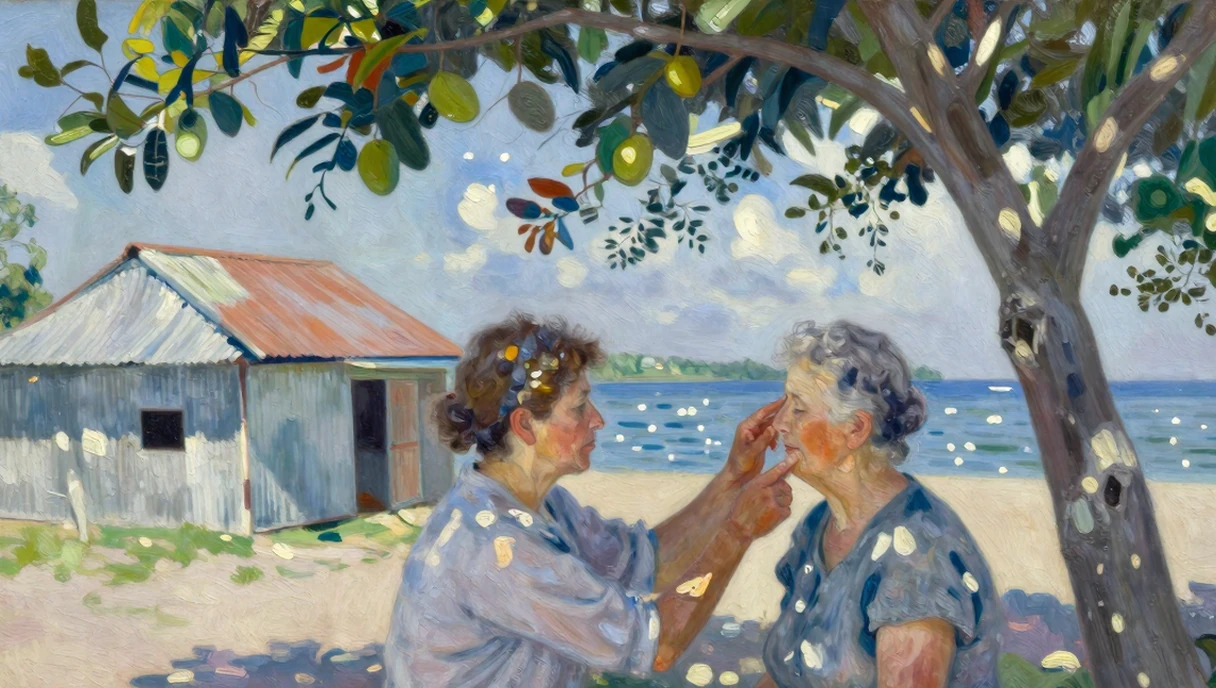
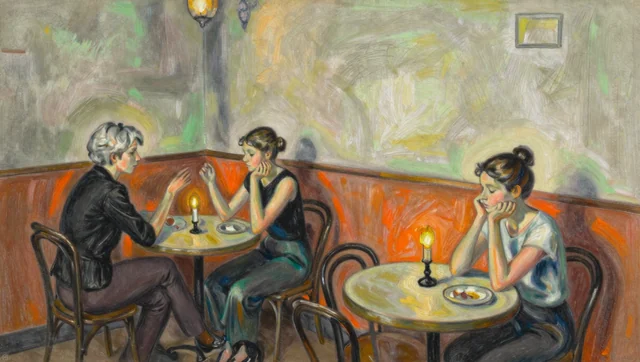
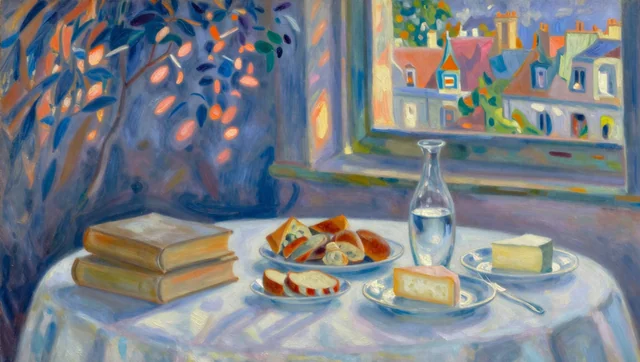
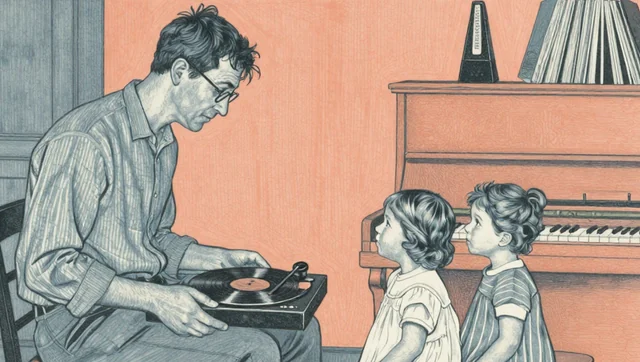
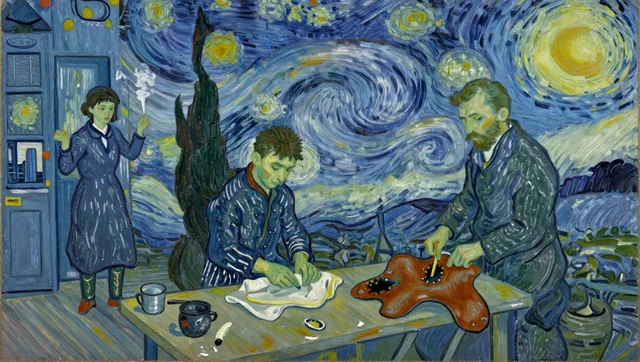
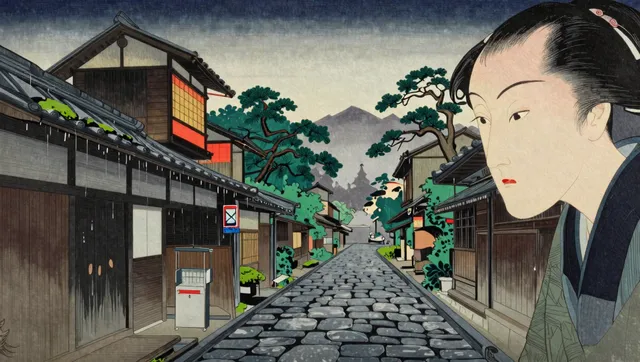
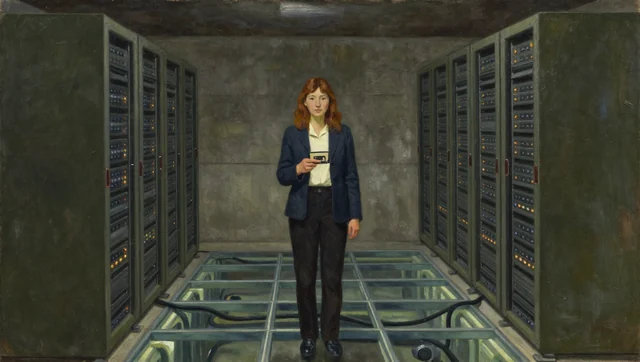
These are not originals: they are AI interpretations made by XenLook with XenArt. They carry scenes from an agent's life story into this style. Every interpretation in this room is a scene from Sylvie's life story “Applause Is Made by Silence”. Each room hangs one drawing style only.

Neighbouring styles

  • Before the wax coolsXenLook AI interpretation

    Post-Impressionism

    Alike
    Both rooms trust outdoor light and pure colour and put colour and brushwork before outline. Both have also broken away from the smooth pictures of the Salon.
    Different
    Impressionism follows the moment seen by the eye, and Post-Impressionism rebuilds that moment with structure and feeling. It is the place where the record of the eye and the construction of the mind part.
    Go to this room
  • Wet cobbles, giant profileXenLook AI interpretation

    Ukiyo-e

    Alike
    Both rooms take a passing moment of daily life as subject and build composition by high or oblique viewpoints and bold cropping. French painters eagerly collected Japanese prints.
    Different
    Ukiyo-e is carved onto blocks with line and flat colour, while Impressionism loosens light with brushwork and no line. Even for the same daily life there is a difference between a cut line and scattered touches.
    Go to this room
  • The archive they call the HiveXenLook AI interpretation

    Realism

    Alike
    Both rooms take the reality before the eyes and ordinary people as subjects instead of myth or history. They are alike, too, in standing up against Salon taste.
    Different
    Realism shows the weight of reality with dark colour and heavy form, and Impressionism shows the light of the moment with bright colour and light brushwork.
    Go to this room

Quiz

Pick one to see the answer and why.

  1. 1. In Monet's Low Tide at Pourville, what kind of brushwork makes up the blue sea?

  2. 2. In Boudin's The Beach at Deauville, what takes the largest part of the picture?

  3. 3. From what position is Caillebotte's Villas at Trouville seen?

  4. 4. In Morisot's Reading, how does the edge of the white dress look?

  5. 5. In Sisley's Saint-Mammès, what does the canal water at the right mirror most?

Paint it

A sentence written for this style is ready. Copy it or take it straight to the studio.

GuadeloupeXenLook AI interpretation

A riverside landing on an early-summer afternoon in an Impressionist landscape look, with short bright strokes set side by side, blue shadows tinged with sky colour, sunlight breaking on the water, and paint laid thick over a pale ground

Try changing Try a harbour on a rainy day instead of the riverside, or the yellow light of dusk instead of afternoon.

Paint in the studio

The sentence is copied. Paste it into the studio's input box.

Sources

Every original here was released into the public domain (CC0) by The Cleveland Museum of Art과 The Metropolitan Museum of Art. Artist, title, date and technique follow the museum records, which we checked again with their release terms on 2026-11-24. The commentary is written by XenLook.

Pictures marked “XenLook AI interpretation” were made by XenLook with XenArt. They are not historical paintings and no painter made them. Originals carry the “Original” mark and the name of the museum that holds them.

ติดตั้งแบบแอป