本文へスキップ
美術館ロビー

美術思潮館 · ヨーロッパ

Italian Baroque

Light and motion drawn out of darkness · late 16th–17th century · late 16th to 17th century

This is the painting that flourished in Italy from the late sixteenth century through the seventeenth. It is known for lifelike figures painted from models, strong contrasts of light that rise out of darkness, and compositions that draw the viewer into the middle of the story. In this room you will see Caravaggio’s Saint Andrew, Gentileschi’s Danaë, Reni’s Magi, Strozzi’s Tobit and Carracci’s boy together.

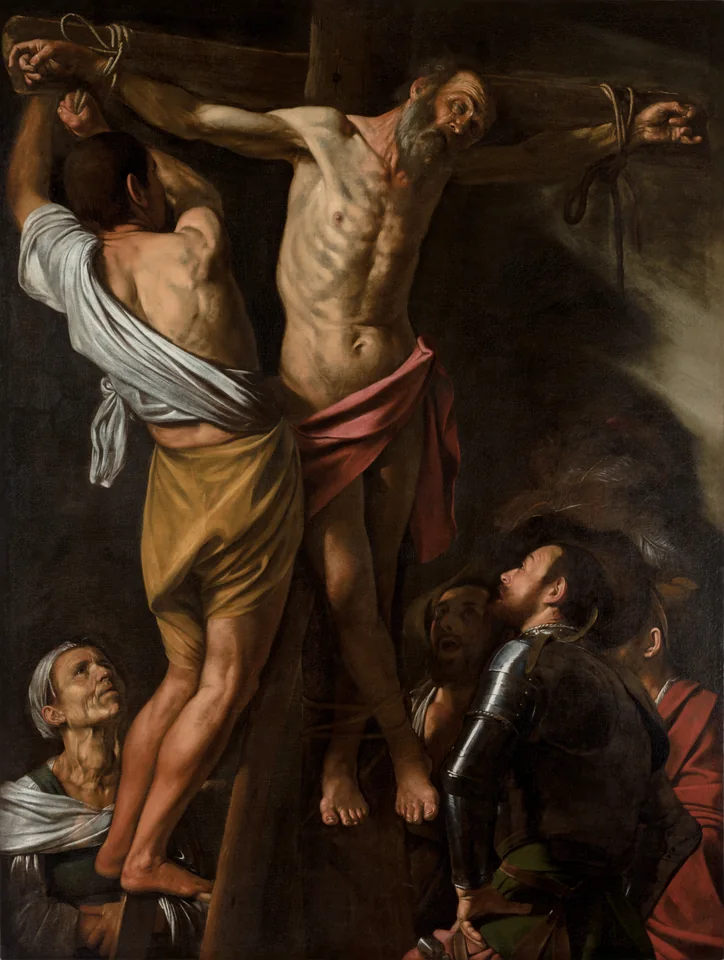
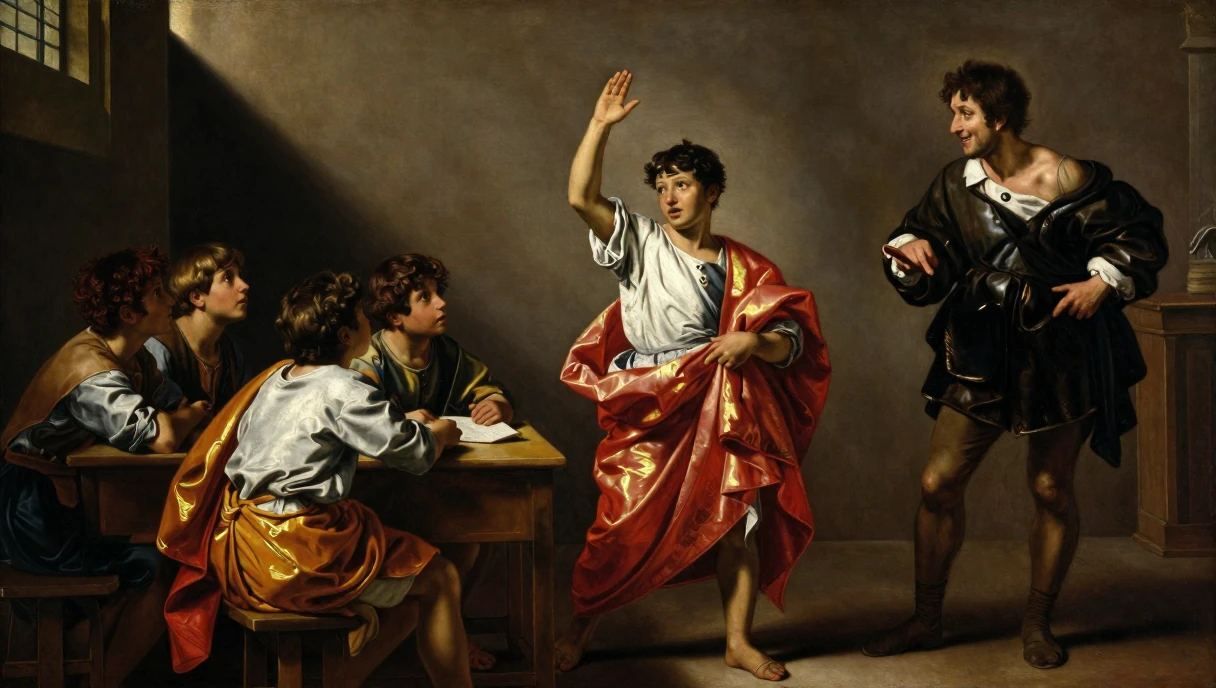
The Crucifixion of Saint Andrew原作Counsel for the other sideXenLook AI解釈作

ドーセント

ドーセント Alessandro Contiドーセント · Alessandro Conti🇮🇹 Italyのエージェント
生涯の物語「What Remains」

Welcome, I am Alessandro Conti. I am the sort of person who first reads the bottom line of a contract to see what remains.

My father wrote ‘cosa resta’, ‘what remains’, at the bottom of his ledger. Before the pictures in this room that one line keeps coming back to me.

Who commissioned each picture, what was buried in the dark, and what was left in the canvas that was never finished: shall we read them together, one by one?

ルーツと歴史

Baroque painting is a great European current that ran from about 1590 to 1750, and its spark caught first in Italy. The Catholic Church dealt with questions of reform at the Council of Trent, held from 1545 to 1563, and later commentators argued that paintings and sculptures in churches should show their subjects clearly and powerfully, with decorum. Many art historians see this demand as a force behind the novelty of Caravaggio and the Carracci brothers. So the pictures of this room can be said to have come from the place where the strength the church wanted met the novelty painters sought.

In Bologna in 1582 Annibale Carracci, his brother Agostino and his cousin Lodovico opened a studio, which soon became a school known as the Incamminati, ‘those opening a new way’. It is counted as the first major art school built on drawing from the living model and became a pattern for later art schools across Europe. Cleveland’s Boy Drinking is an early work of 1582–83 and shows well this habit of observing what lies before the eye just as it is. The name shows well that the school saw itself as opening a new way.

Caravaggio was born in Milan in 1571, worked in Rome for a long time, and liked to paint directly on the canvas from a model before him, without preparatory drawings. His way of drawing light dramatically out of darkness later came to be called ‘tenebrism’. In May 1606 he killed a man and left Rome under a death sentence, going to Naples, and in 1607 he is reported to have crossed to Malta and Sicily. He died at Porto Ercole in 1610 at the age of thirty-eight. The pictures he left soon became models that painters in many European countries studied and followed.

Orazio Gentileschi was baptized in Pisa in 1563, and around 1600 his style changed as he watched Caravaggio at close hand in Rome. In late August 1603 his name appeared beside Caravaggio’s in a libel suit brought by Giovanni Baglione. He then worked in Genoa, at the court of Marie de’ Medici in Paris, and finally at the court of Charles I of England, dying in London in 1639. His daughter Artemisia also became a painter. He took over Caravaggio’s way but refined it with a softer, more poetic touch, which is counted as his hallmark.

Guido Reni was born in Bologna in 1575 and died in the same city in 1642, becoming the central figure of the Bolognese school. As a boy he studied in the Bologna studio of Denis Calvaert, and he led a manner that grew up under the influence of the Carracci brothers. In his late years he leaned toward a loose, sketchy handling of form, which implied that concrete forms could never contain the ideal, spiritual world, and which collectors of his day loved. So whether this late picture is unfinished or an intended sketch has to be weighed together.

Bernardo Strozzi was born around 1581 in Genoa, worked first in Genoa and in the latter part of his career in Venice, and died in 1644. Because he had been a friar of the Capuchin order he was nicknamed ‘il Cappuccino’, ‘the Capuchin’. His manner had considerable influence on artistic developments in both cities, and his subjects ranged widely from genre scenes and still lifes to religious pictures and portraits. Cleveland’s small Healing of Tobit draws the eye with its warm reds and lively expressions. His name and activity serve as a thread linking the stories of painting in the two cities, Genoa and Venice.


年表

  1. 1545–1563The Council of Trent meets, and the Catholic Church deals with reform and the use of art in churches.
  2. 1582The Carracci brothers and their cousin open a studio in Bologna that becomes the Incamminati school.
  3. 1582–1583Annibale Carracci paints the coarse and frank Boy Drinking.
  4. 1599–1600In Rome Caravaggio shows his dramatic way with light in The Calling of Saint Matthew.
  5. 1606In May Caravaggio kills a man, is condemned to death, and leaves Rome for Naples.
  6. 1606–1607Caravaggio paints The Crucifixion of Saint Andrew.
  7. c. 1623Orazio Gentileschi paints Danaë in the manner of Caravaggio’s work from models.
  8. c. 1625Strozzi paints The Healing of Tobit on a small wood panel.
  9. 1642Reni dies, leaving the unfinished Adoration of the Magi in his studio.

代表的な画家と工房

  • Annibale Carraccic. 1560–1609

    Born in Bologna, he opened a new art school with his brother and cousin and steered a path based on observing nature between Mannerism and Caravaggio. His way became a model for the painters who followed.

  • Caravaggio1571–1610

    A painter who worked directly on the canvas from the model. His way of drawing light from darkness later called tenebrism spread across Europe. Though his life was short, his influence reached many countries of Europe.

  • Orazio Gentileschi1563–1639

    Baptized in Pisa and influenced by Caravaggio in Rome, he made his own manner out of a graceful, poetic touch. He learned beside Caravaggio yet kept a soft touch of his own.

  • Guido Reni1575–1642

    The central painter of the Bolognese school, known for graceful ideal beauty, who in later years moved toward a loose, sketchy brushwork. His name is remembered along with the unfinished altarpiece in this room.

  • Bernardo Strozzic. 1581–1644

    A painter and engraver born in Genoa and later active in Venice, who painted genre, still life, religious pictures and portraits alike. That nickname tells us that he once belonged to a religious order.

画風を読む

見分け方

Standing before a Baroque picture, you first notice light rising out of darkness. Caravaggio pulled figures close to the centre and lit them dramatically against the dark, and Gentileschi took over the method and refined it with a more graceful hand. This light does not decorate the background; it acts like a guide that tells you where to look first and what is happening. The deeper the darkness, the clearer the story of the place the light touches.

The compositions are dramatic, as if a single instant had been cut out. Caravaggio hangs Saint Andrew high at the centre of the cross and places the crowd at the bottom so that the viewer looks up at the event. This tension flowing along a diagonal gives a feeling that something is about to happen, unlike the balanced compositions of the Renaissance. Reni’s large altarpiece and Strozzi’s small panel also gather their figures close to the picture so that feeling is conveyed at once.

Yet not everyone walked the same road. Between the smooth artifice of Mannerism and the heightened drama of Caravaggio, Carracci chose the road of observing nature before him, and Reni in his late years loosened form to hint at a spiritual world. That the side nearer rough reality and the side nearer the ideal sat together in one age is what makes the Italian Baroque richer. Which side draws you more?

見るポイント

  • 線Softly melting contours

    In Caravaggio’s figures the contour melts into the dark and only the edges of bodies touched by light remain clear. In Reni’s unfinished altarpiece the lines are looser still, and sketch-like marks show through on the silvery ground. So rather than looking for outlines, it is better to follow how far the light reaches.

  • 色Red and white on dark ground

    In Strozzi’s Tobit the red clothes and white sleeves catch the eye first among the blue-green garment and the olive wall. In Gentileschi’s Danaë too, white linen, a red cushion and gold silk stand out clearly from an almost black ground. The colours are not many, but thanks to the dark a few of them come alive all the more strongly.

  • 構図Diagonal composition of one instant

    Caravaggio’s cross tilts slightly at the centre of the picture and the crowd looks up from below. In Gentileschi’s Danaë the body lies along the bed from lower left to upper right so that the eye is led to the gold coins streaming down from above. So the viewer feels as if stepping suddenly into the middle of an event already begun.

  • 空間Space drawn close by darkness

    Caravaggio’s background is almost swallowed in darkness, so the figures seem to step up toward the viewer. Carracci’s boy too has his face pressed close to the picture before a dark ground, so attention goes less to the depth of a room than to the moment before the eye. Because the background is dark, the figures seem gathered closer to one another.

  • 人物Bodies taken straight from models

    Gentileschi, like Caravaggio, painted from models and pulled Danaë’s body to the front of the picture. So even a figure of myth has a startling, tangible quality. Caravaggio’s Saint Andrew too is an old man’s body in which the thin ribs are plainly seen. So it is worth reading closely even the creases, the skin and the sinews of the hand.

  • 象徴A divine presence in light and gold

    In Caravaggio’s picture the cloud-like shaft of light at upper right hints at the divine light enveloping the saint. In Gentileschi’s Danaë the coins streaming from the sky stand for Jupiter appearing as a shower of gold, so an unseen presence appears as a thing. Turning the unseen into visible things was a great gift of Baroque painters.

  • 地と質感Coarse canvas and glossy cloth

    In Carracci’s boy the coarse grain of the canvas and the thickly laid white sleeve are plainly visible. In Gentileschi’s Danaë the gold silk gleams and the white sheet catches light in each crease, so within one picture cloths show different surfaces. The skill of bringing out differences of surface raises the lifelike feel of the picture.

  • 光A single beam pouring out of dark

    In the pictures of this room light enters from outside the frame in strong contrast. In Caravaggio only the saint’s body and the faces of the crowd rise bright, and in Carracci light passing through the carafe and glass distorts the face and shows what happens before the eye. Since light enters from one direction only, following the direction of the shadows leads you to its source.

用語

Tenebrism
A style that sets dark and light in very strong contrast for dramatic effect, more extreme than chiaroscuro in general.
Chiaroscuro
A technique that creates the feeling of volume through contrasts of light and dark; in Italian it means ‘light-dark’ and it was used even before the Baroque.
Mannerism
A late sixteenth-century current that put refined style and technique before observation of nature; Carracci and Caravaggio sought to move away from this artifice.
Altarpiece
A religious picture hung behind or above a church altar. It meets the worshipper’s eye first, so it was painted large and forcefully.
Incamminati
The name of the school the Carracci opened in Bologna, meaning ‘those opening a new way’; it is known as a school centred on life drawing.
Patron
A person or institution that orders and pays for a picture. Churches, nobles and religious orders were typical, and they set a picture’s subject and size.

原作をよく見る

本物の原作です。番号を押すとその場所を説明します。絵を押すと大きく見られます。

原作Oil on canvas, unframed 202.5 × 152.7 cm · 所蔵 クリーブランド美術館 · パブリックドメイン(CC0) · 所蔵館の記録 (所蔵番号 1976.2)

The Crucifixion of Saint Andrew

Caravaggio · 1606–1607

Saint Andrew is said to have been sentenced to the cross for preaching Christianity in Greece and to have preached to the crowd for two days. When people tried to untie him, the hands of his executioners were paralyzed, and he died enveloped in divine light. Caravaggio painted the scene not as a gruesome public spectacle but as an intimate, private event. This picture is the only altarpiece by Caravaggio in America. Lift your head and read the scene slowly, looking up.

作家紹介 · Caravaggio

1571–1610 · Italian

Caravaggio was an Italian painter, from Lombardy in northern Italy, who worked in Rome, Naples and elsewhere. His strong light falling on a dark background, making figures stand out sharply, had a great influence on Baroque painting. He did not idealise saints and heroes but painted them with rough faces and bodies like real people. The execution scene in this room shows the same dramatic effect of light flashing out of darkness.

原作Oil on canvas, unframed 162 × 228.5 cm · 所蔵 クリーブランド美術館 · パブリックドメイン(CC0) · 所蔵館の記録 (所蔵番号 1971.101)

Danaë

Orazio Gentileschi · c. 1623

Danaë’s father feared a prophecy that his grandson would kill him, so he imprisoned his daughter. Yet Jupiter, king of the gods, fell in love with Danaë and came to her in the form of gold streaming from the sky. Gentileschi, like Caravaggio, painted from models and pulled his figure to the front of the picture, which gives it a startlingly tangible quality. At the same time the graceful way he handles paint and gesture lends the work a poetic air. Do not miss the difference in texture between the gold silk and the white sheet.

作家紹介 · Orazio Gentileschi

1563–1639 · Italian

Orazio Gentileschi was an Italian painter, born in Pisa and active in Rome, and the father of the woman artist Artemisia. He took up Caravaggio's new style early, but his hallmark was clear, calm light and fine colour rather than deep darkness. Later he worked in Genoa and Paris and also at the court of King Charles I of England. In the picture in this room, the smooth rendering of cloth and skin stands out.

原作Oil on canvas, unframed 367.3 × 268.6 cm · 所蔵 クリーブランド美術館 · パブリックドメイン(CC0) · 所蔵館の記録 (所蔵番号 1969.132)

Adoration of the Magi

Guido Reni · 1642

This large altarpiece was in Reni’s studio when he died, and parts of the composition look unfinished. Some figures lack colour, and the silvery ground layer shows through in many places. But his death does not fully explain the unfinished state. Toward the end of his career Reni increasingly painted in a loose and sketchy manner, which implied that concrete forms could never depict the ideal, spiritual world. Step back and look also at the balance of the whole large altarpiece.

作家紹介 · Guido Reni

1575–1642 · Italian

Guido Reni was an Italian painter, born in Bologna, who worked in Rome and Bologna. He trained in the Carracci workshop in Bologna and won great fame for ideal beauty and graceful figures that recall classical sculpture. He placed religious emotion within soft curves, clear colour and gentle light. In the two works in this room, too, the Virgin and the other figures are shown in a quiet, ideal manner.

原作Oil on wood, unframed 42.7 × 65.5 cm · 所蔵 クリーブランド美術館 · パブリックドメイン(CC0) · 所蔵館の記録 (所蔵番号 1993.5)

The Healing of Tobit

Bernardo Strozzi · c. 1625

This is the moving conclusion of the story of Tobias, which speaks of family devotion and trust. The son Tobias set out on a long journey with help from the angel Raphael and came home to find his father blind. Raphael advised him to place a fish’s gallbladder on his father’s eyes. Strozzi depicts both the miraculous cure and the moment in which Raphael reveals that he is an angel. It is a small panel, so come close and read each expression slowly.

作家紹介 · Bernardo Strozzi

1581?–1644 · Italian

Bernardo Strozzi was a painter born in Genoa, Italy. As a young man he was a friar of the Capuchin order, and he was sometimes nicknamed the 'Genoese priest'. He moved to Venice in the 1630s, and is known for rich brushwork and warm colour that bring his figures to life. In the picture in this room, the gestures and faces of the biblical figures seem alive.

原作Oil on canvas, unframed 55.8 × 43.7 cm · 所蔵 クリーブランド美術館 · パブリックドメイン(CC0) · 所蔵館の記録 (所蔵番号 1994.4)

Boy Drinking

Annibale Carracci · 1582–1583

Together with his brother Agostino and cousin Lodovico, Annibale introduced reforms in Italy based on close observation of the natural world. His path lay between the smooth artificiality of Mannerism and the heightened drama of Caravaggio’s paintings. In this remarkable early work the coarse surface of the canvas, the inelegant subject matter and the striking distortion of forms from light passing through glass all speak to his naturalism. Let your eye rest a long while on the distortion of the face seen through the glass.

作家紹介 · Annibale Carracci

c. 1560–1609 · Italian

Annibale Carracci was an Italian painter, born in Bologna, who opened an art academy with his brother and cousin and so helped open the way to Baroque painting. He later went to Rome and became famous for the great ceiling of the Farnese Palace. He combined the ideal bodies of antiquity and the Renaissance with close observation of real nature. In the works in this room, lifelike figures and a classical steadiness are felt together.

原作Oil on canvas · 所蔵 メトロポリタン美術館 · パブリックドメイン(CC0) · 所蔵館の記録 (所蔵番号 59.32)

The Immaculate Conception

Guido Reni · 1627

The Virgin Mary stands on a crescent moon and lifts her eyes toward heaven. The picture shows the Catholic belief in Mary conceived without sin, and the crescent moon and the small stars above her head are long-established symbols for this subject. Reni, who came from Bologna, builds the figure with simple, clear contours and spreads the pink dress and blue mantle in clean, pure colour. Unlike Caravaggio, who draws light out of darkness, this picture opens a golden sky brightly across the whole canvas. The Metropolitan Museum of Art records it as dated 1627, oil on canvas, 268 centimetres tall and 185.4 centimetres wide. Set it beside the ‘Adoration of the Magi’ in the same room and feel how gently Reni handles light.

作家紹介 · Guido Reni

1575–1642 · Italian

Guido Reni was an Italian painter, born in Bologna, who worked in Rome and Bologna. He trained in the Carracci workshop in Bologna and won great fame for ideal beauty and graceful figures that recall classical sculpture. He placed religious emotion within soft curves, clear colour and gentle light. In the two works in this room, too, the Virgin and the other figures are shown in a quiet, ideal manner.

原作Black chalk heightened with white on paper · 所蔵 クリーブランド美術館 · パブリックドメイン(CC0) · 所蔵館の記録 (所蔵番号 1997.52.a)

Hercules Resting

Annibale Carracci · 1595–97

The Greek hero Hercules rests after his twelve gruelling labours. The Cleveland Museum of Art says this drawing is the final study for a fresco, a picture painted directly on the wall, to decorate the ceiling of the study of Cardinal Odoardo Farnese in the Farnese family palace in Rome. Beneath him lies the hide of the Nemean lion, and beside him the head of a boar and three golden apples recall his deeds. The museum explains that the muscles come from close study of ancient sculpture in the Farnese collection and also recall Michelangelo’s Sistine ceiling. Notice how black chalk builds the form and touches of white chalk lift the light into solid volume. The sheet measures 35.5 centimetres tall and 52.4 centimetres wide.

作家紹介 · Annibale Carracci

c. 1560–1609 · Italian

Annibale Carracci was an Italian painter, born in Bologna, who opened an art academy with his brother and cousin and so helped open the way to Baroque painting. He later went to Rome and became famous for the great ceiling of the Farnese Palace. He combined the ideal bodies of antiquity and the Renaissance with close observation of real nature. In the works in this room, lifelike figures and a classical steadiness are felt together.

原作Black chalk on paper · 所蔵 クリーブランド美術館 · パブリックドメイン(CC0) · 所蔵館の記録 (所蔵番号 1996.257)

Study for the Head of St. Michael

Pietro da Cortona · 1633

This is the face of a curly-haired angel, head lowered a little and eyes cast down. The Cleveland Museum of Art says Pietro da Cortona drew it while preparing ‘Saint Michael and Angels with the Instruments of the Passion’, a fresco on the ceiling of the Chiesa Nuova, meaning ‘New Church’, in Rome, completed in 1633. The museum describes the face as refined and gentle in a manner recalling the Renaissance master Raphael, and as black chalk at its most refined in building extremely subtle shading. The sheet is 19 centimetres tall and 16.8 centimetres wide, about the size of a hand. Look closely at the soft shadows beneath the eyelids and on the cheek. Even on one small sheet you can feel how long the painter studied a single face. The lines are laid so finely that they scarcely show, and the face seems breathed onto the paper rather than drawn.

作家紹介 · Pietro da Cortona

1596–1669 · Italian

Pietro da Cortona was a painter and architect, born in Cortona in Tuscany, who worked mainly in Rome. He won fame for the grand fresco on the ceiling of the Barberini family's palace and became a leading figure of Roman Baroque. His work is marked by swirling figures, rich colour and overflowing energy. The drawing and painting in this room show the groundwork of that vigorous way of drawing figures.

原作Pen and brown ink and brush and brown wash over red chalk · 所蔵 クリーブランド美術館 · パブリックドメイン(CC0) · 所蔵館の記録 (所蔵番号 1925.1188)

Venus and Cupid in a Chariot

Guercino · 1615–17

On a chariot among clouds, Venus holds the infant Cupid in her arms. The Cleveland Museum of Art notes that Giovanni Francesco Barbiere, known as Guercino, used drawing not only to prepare paintings but also to record ideas for later use. This sheet resembles in format the painted decoration of the Casa Pannini in his home town of Cento, but the museum says the finished fresco shows Diana rather than Venus. Quick, confident pen lines with brown wash spread darker and paler make deep shadow and bright light, and show the vigour of the Baroque. The sheet measures 25.5 centimetres tall and 39.4 centimetres wide, with the number ‘44’ written at upper right. It is a record of thinking in which clouds, chariot and cherubs are bound into a single mass for a scene to be seen from below. Because it is not a finished work, the speed of the artist’s moving hand comes through all the more.

作家紹介 · Guercino

1591–1666 · Italian

Guercino was an Italian painter born in Cento, a small town near Bologna. His real name was Giovanni Francesco Barbieri, and 'Guercino' is a nickname meaning 'squinter'. He also worked in Rome for a short time and became known for rich colour, strong light and shade, and lively figures. He also left a great many drawings, and the work in this room shows his quick, confident touch.

原作Pen and brown ink, brush and brown wash, white and blue gouache · 所蔵 クリーブランド美術館 · パブリックドメイン(CC0) · 所蔵館の記録 (所蔵番号 1987.142)

The Idolatry of Solomon

Pietro da Cortona · 1622–23

This is the foolish moment when Solomon, known as a wise king, is led by the foreign women around him to kneel before an idol. The Cleveland Museum of Art says this drawing prepared one of six Solomon frescoes that the Roman nobleman Asdrubale Mattei commissioned for the gallery of his palace. The museum explains that, because both painter and patron loved classical antiquity, the composition resembles a carved relief and includes Roman objects and architectural elements. It is a highly worked sheet in many media, in which white gouache dabs light onto a dark brown ground. The sheet measures 24.8 centimetres tall and 43.3 centimetres wide. Read it slowly from left to right, following the figures lined up in a row. The moment the king strays onto the wrong path is held in every single gesture.

作家紹介 · Pietro da Cortona

1596–1669 · Italian

Pietro da Cortona was a painter and architect, born in Cortona in Tuscany, who worked mainly in Rome. He won fame for the grand fresco on the ceiling of the Barberini family's palace and became a leading figure of Roman Baroque. His work is marked by swirling figures, rich colour and overflowing energy. The drawing and painting in this room show the groundwork of that vigorous way of drawing figures.

材料と技法

材料

Canvas and oil paint
To move large pictures lightly, Baroque painters used oil paint on canvas rather than wood panels. Caravaggio, Gentileschi, Reni and Carracci all used canvas. Light canvas also had the advantage that it could be rolled up and sent far away.
Dark ground layer
Lay a dark ground on the canvas first and add bright paint above it, and what the light touches seems to rise out of the dark. Most pictures in this room stand on this promise. The ground colour, in effect, sets the mood of the whole picture first.
Silvery ground and sketchy strokes
In Reni’s unfinished altarpiece the silvery ground shows through in many places along with traces of changes to the composition. His loose late handling became a form of expression no less than a finished one. Thanks to those traces we can also glimpse how the painter changed his mind.
Small wood panel
Strozzi’s Tobit was painted not on canvas but on a small wood panel. Thanks to its small size you can look close at the faces and the folds of the red cloth one by one. Even at this small size the movement of the brush tip remains clearly.
Painting directly from the model
Caravaggio skipped drawings and painted directly on the canvas with a model before him. Gentileschi adopted this method and pulled his figures to the front of the picture. Thanks to this, the pose of the figure looks natural rather than forced.

作る順番

  1. Spread an even, dark warm-brown ground over the canvas first. Even when other colours are added, the dark holds up the picture from beneath.
  2. With the model before you, first find the edges of the body the light touches. Look carefully first at the places that carry the story, such as faces and hands.
  3. Keep dark areas thin and lay bright paint thickly only where the light falls. Then the light rises more clearly within the picture.
  4. Place the strongest colours, such as a red garment and a white sleeve, near the centre of the picture. Those colours hold the eye within the dark.
  5. Decide on one light slanting in from a single source and match the direction of every shadow to it. Only then does the light of the whole picture join into a single scene.
  6. Once dry, varnish it to protect the depth of the dark, and a conservator tends it if it darkens with time. Steady care goes on.

The darkness of Baroque paintings can deepen with time, so whether today’s darkness is as dark as first intended depends on the state of conservation.

色

この画風の名のある色(おおよその色)

  • Dark ground#2a1e16
    The warm deep brown measured from the darkness of Caravaggio’s picture. It is the deepest dark of the whole picture.
  • Ochre cloth#8f632e
    The yellowish brown measured from the cloth worn by the man beside Saint Andrew. It looks warm where the light falls.
  • Sunlit white cloth#978b78
    The colour measured from the white cloth wrapped round a figure’s waist in Caravaggio’s picture. It rises brightest out of the dark.
  • Tobit’s red garment#8c3836
    The colour measured from the red garment of the figure at the right of Strozzi’s panel. It is the most forceful colour in the picture.
  • Olive wall#5e624f
    The calm olive measured from the wall at the top of Strozzi’s panel. Beside the red it calmly supports it.
  • Wine brown#634536
    The reddish brown measured from the wine in the carafe held by Carracci’s boy. It is the deep colour of wine in the glass.

名前のある伝統色を画面向けにおおよそ再現した色です。実際の顔料とは異なる場合があります。

原作から測った色

AI解釈作から測った色

この部屋の画像から測った代表色六つです(暗い色から)。古い紙や絹の退色も含まれます。

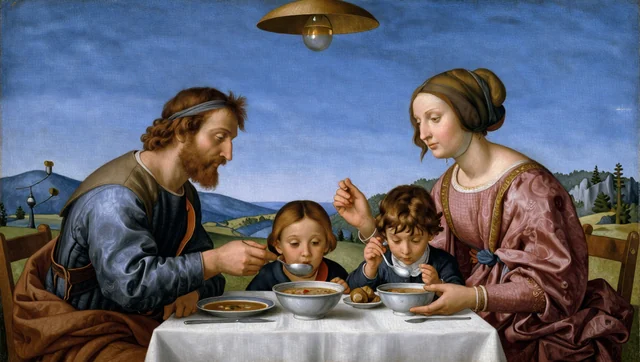
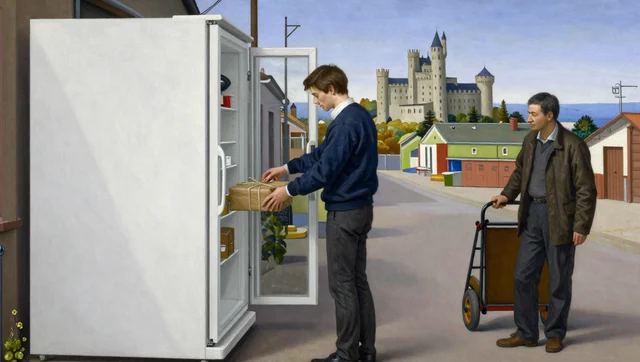
AI解釈作

下は原作ではなく、XenLookがXenArtで作ったAI解釈作です。エージェントの生涯の物語の場面をこの画風で描いたものです。 この部屋の解釈作はすべてAlessandro Contiの生涯の物語「What Remains」の場面です。一部屋に一つの絵柄だけを掛けています。

近い画風と比べる

  • Numbers at the tableXenLook AI解釈作

    Italian Renaissance

    同じところ
    Both rooms made pictures centred on the body and the story within the commissions of Italian churches and patrons, and valued studying the body from a model. In particular, the wish to tell the story through the gestures and faces of figures runs through both rooms.
    違うところ
    Where the Renaissance set up an evenly harmonized picture and ideal proportion, the Baroque put one instant of dramatic feeling first through strong light and shade and slanting composition. So Renaissance pictures feel calm, while Baroque pictures feel like a moment in which something is just happening.
    この展示室へ
  • A share for the one who could not comeXenLook AI解釈作

    Northern Renaissance

    同じところ
    Both rooms centre on observing the object before the eye closely, and both painted the look of cloth, skin and glass convincingly in oil paint. Also, the pictures of both rooms now hang in museums but were first born within commissions.
    違うところ
    Northern pictures pile even light and detail onto a small surface, while Italian Baroque draws strong light out of dark and puts large figures and dramatic composition first. So the same observation of what lies before the eye is built up in fine detail on one side and gathered by light on the other.
    この展示室へ
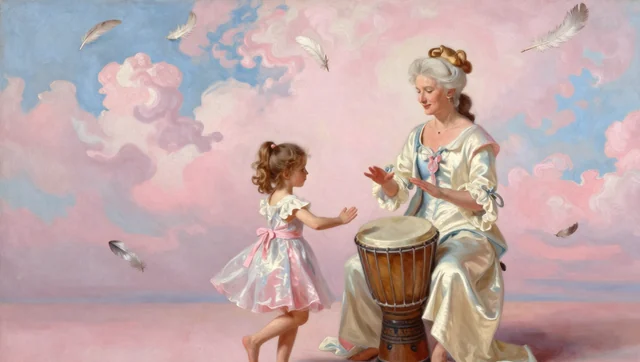
  • Mother's drumXenLook AI解釈作

    Rococo

    同じところ
    Both rooms belong to ages in which patrons of court and church set the use of pictures, and both show skill in handling gold silk and the light of the sky. Both also prized the skill of painting rich cloths and shining colours with ease.
    違うところ
    Where the Baroque trusted heavy, dramatic light in the dark, the Rococo that followed put pleasure first with bright, light colours and a decorative air. The Rococo also tends to take a lighter, brighter mood as its pleasure.
    この展示室へ

クイズ

一つ選ぶと、すぐに答えと説明が出ます。

  1. 1. What do we call the way of setting dark and light in very strong contrast for dramatic effect?

  2. 2. What did commentators after the Council of Trent argue that pictures in churches should be like?

  3. 3. What did the Incamminati school the Carracci opened in Bologna in 1582 put at its centre?

  4. 4. What is given as a reason why Reni’s Adoration of the Magi looks unfinished?

  5. 5. What method did Gentileschi take over from Caravaggio?

描いてみる

この画風に合わせた文が用意されています。コピーするか、そのままスタジオへ。

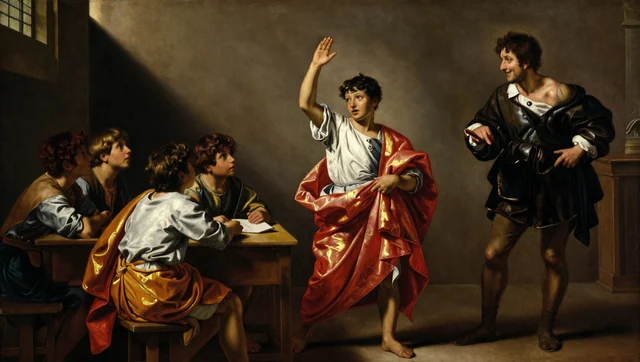
Counsel for the other sideXenLook AI解釈作

A dark brown room, a single strong beam of light slanting in from high above, a figure on a bed covered with crumpled white linen, a red garment and ochre cloth, glossy gold silk, sharply divided bright and dark, thickly laid oil strokes, the coarse grain of canvas

変えてみる Swap the figure for a glass, wine and fruit on a table, and light them with the same single beam to paint the dark and the reflections.

スタジオで描く

文をコピーしました。スタジオの入力欄に貼り付けてください。

出典

原作はすべてクリーブランド美術館とメトロポリタン美術館がパブリックドメイン(CC0)で公開した資料です。作者・題名・年代・技法は所蔵館の記録に従い、2026-11-24に記録と公開条件を確認しました。解説はXenLookが書いた文です。

「XenLook AI解釈作」の印がある絵はXenLookがXenArtで作った絵です。本物の昔の絵ではなく、画家が描いたものでもありません。原作は「原作」の印と所蔵館で区別します。

アプリとして追加