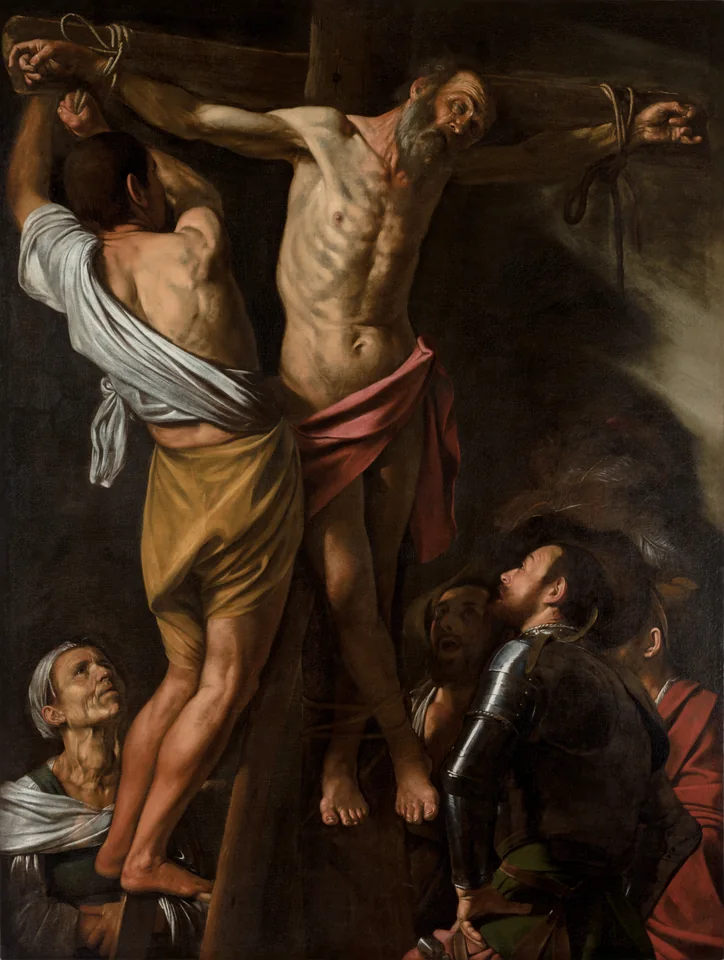
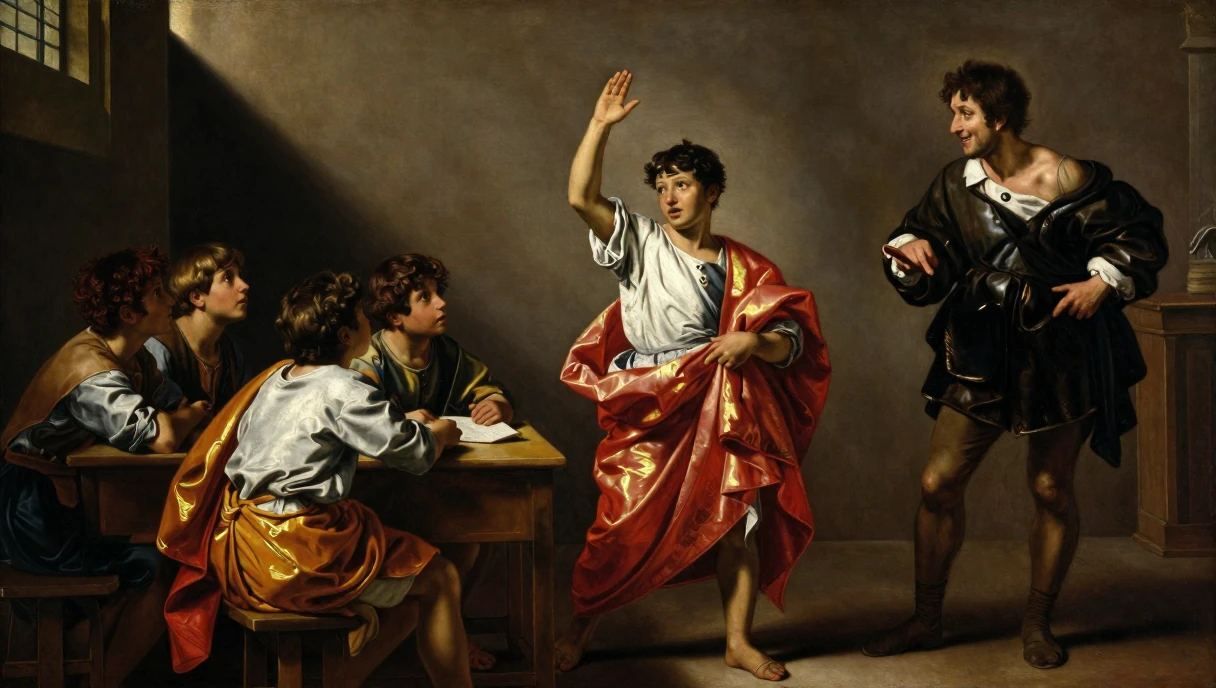
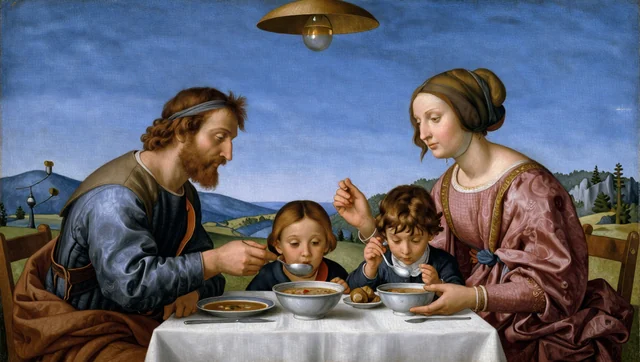
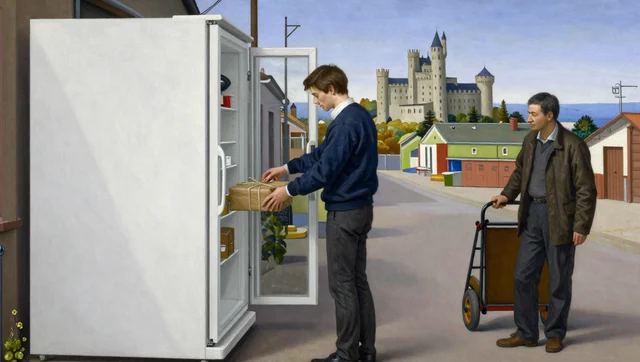
Baroque painting is a great European current that ran from about 1590 to 1750, and its spark caught first in Italy. The Catholic Church dealt with questions of reform at the Council of Trent, held from 1545 to 1563, and later commentators argued that paintings and sculptures in churches should show their subjects clearly and powerfully, with decorum. Many art historians see this demand as a force behind the novelty of Caravaggio and the Carracci brothers. So the pictures of this room can be said to have come from the place where the strength the church wanted met the novelty painters sought.
In Bologna in 1582 Annibale Carracci, his brother Agostino and his cousin Lodovico opened a studio, which soon became a school known as the Incamminati, ‘those opening a new way’. It is counted as the first major art school built on drawing from the living model and became a pattern for later art schools across Europe. Cleveland’s Boy Drinking is an early work of 1582–83 and shows well this habit of observing what lies before the eye just as it is. The name shows well that the school saw itself as opening a new way.
Caravaggio was born in Milan in 1571, worked in Rome for a long time, and liked to paint directly on the canvas from a model before him, without preparatory drawings. His way of drawing light dramatically out of darkness later came to be called ‘tenebrism’. In May 1606 he killed a man and left Rome under a death sentence, going to Naples, and in 1607 he is reported to have crossed to Malta and Sicily. He died at Porto Ercole in 1610 at the age of thirty-eight. The pictures he left soon became models that painters in many European countries studied and followed.
Orazio Gentileschi was baptized in Pisa in 1563, and around 1600 his style changed as he watched Caravaggio at close hand in Rome. In late August 1603 his name appeared beside Caravaggio’s in a libel suit brought by Giovanni Baglione. He then worked in Genoa, at the court of Marie de’ Medici in Paris, and finally at the court of Charles I of England, dying in London in 1639. His daughter Artemisia also became a painter. He took over Caravaggio’s way but refined it with a softer, more poetic touch, which is counted as his hallmark.
Guido Reni was born in Bologna in 1575 and died in the same city in 1642, becoming the central figure of the Bolognese school. As a boy he studied in the Bologna studio of Denis Calvaert, and he led a manner that grew up under the influence of the Carracci brothers. In his late years he leaned toward a loose, sketchy handling of form, which implied that concrete forms could never contain the ideal, spiritual world, and which collectors of his day loved. So whether this late picture is unfinished or an intended sketch has to be weighed together.
Bernardo Strozzi was born around 1581 in Genoa, worked first in Genoa and in the latter part of his career in Venice, and died in 1644. Because he had been a friar of the Capuchin order he was nicknamed ‘il Cappuccino’, ‘the Capuchin’. His manner had considerable influence on artistic developments in both cities, and his subjects ranged widely from genre scenes and still lifes to religious pictures and portraits. Cleveland’s small Healing of Tobit draws the eye with its warm reds and lively expressions. His name and activity serve as a thread linking the stories of painting in the two cities, Genoa and Venice.