Lewati ke konten
Museum lobby

Art movements wing · Europe

Italian Renaissance

Florence, Rome and Venice, Italy · 15th–16th century · 15th to 16th century

This is the art that began in fifteenth-century Florence and spread to Rome and Venice. Perspective, anatomy and a new interest in ancient sculpture changed what a picture was expected to do, and painters who had run workshops as craftsmen began to be treated as thinkers. In this room you will see a round Madonna from Botticelli’s workshop, drawings by Raphael and Michelangelo, a large canvas from Titian’s studio, and an engraving by Mantegna.

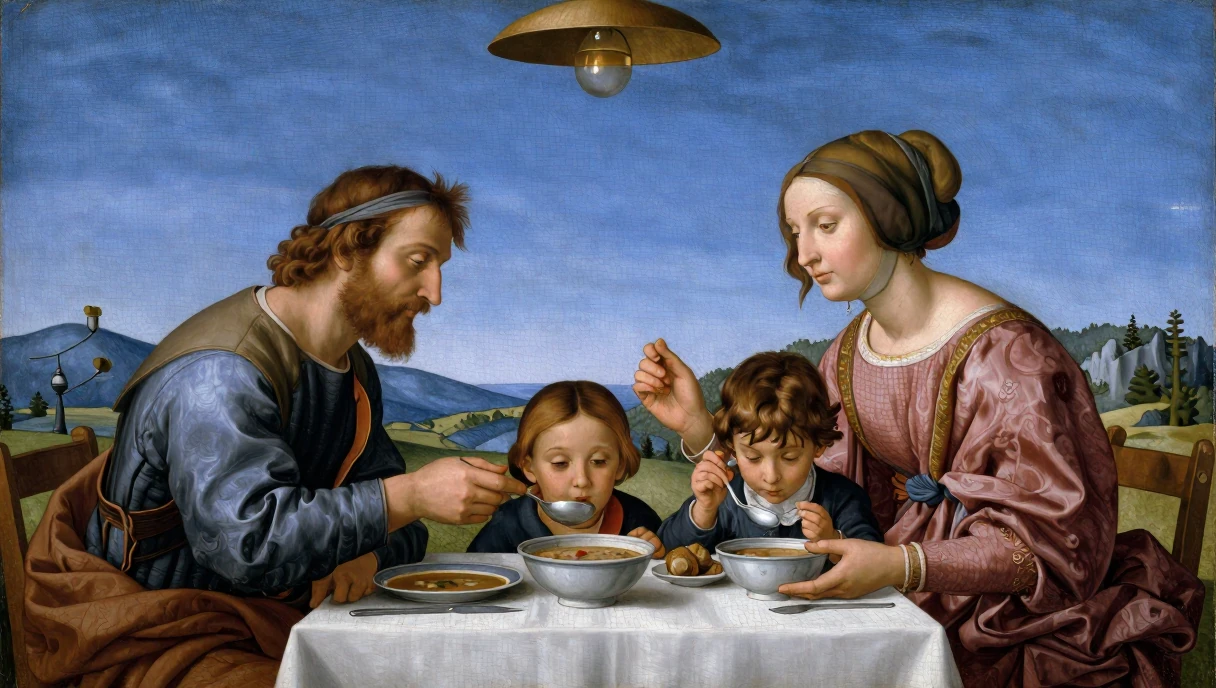
Virgin and Child with the Young Saint John the BaptistOriginalNumbers at the tableXenLook AI interpretation

Docent

Docent GeniusDocent · Genius🇮🇹 Agent from Italy
Life story “Tratteggio”

Hello, I am Genius, from Trastevere in Rome. By day I give advice on love, and on my days off I spend my time in front of old paintings.

My mother Chiara restored wall paintings, so as a boy I learned tratteggio, the way a lost area is marked with fine vertical lines instead of being painted over.

In this room, try to find where the old hand and a later hand part ways inside a single picture, and pay attention to the word ‘workshop’ on the labels.

Roots and history

The name Renaissance comes from the Italian word rinascita, ‘rebirth’. The stage on which painting changed was a set of cities: Florence, Rome and Venice. Merchants, bankers, popes and city republics ordered pictures for church walls, altarpieces and private homes, and the painter was not someone waiting alone for inspiration but the head of a workshop called a bottega. Pupils often handled the underpainting and the background while the master painted the faces and key passages, which is why so many museum labels today read ‘and workshop’.

In early fifteenth-century Florence the architect Filippo Brunelleschi is said to have worked out linear perspective, a way of turning visible space into lines and mathematics. The story that he demonstrated it with a mirror in front of the Baptistery around 1420 is famous, but the evidence is indirect, so ‘is said to’ is the safe phrase. In the late 1420s Masaccio used the method in the Holy Trinity (about 1427) in Santa Maria Novella to open what looks like a real chapel inside the wall, and in the mid-1430s Leon Battista Alberti wrote the principles down in his treatise On Painting.

Italian painters and scholars of the fifteenth century began to read ancient Greek and Roman sculpture and writing again, a current we call humanism. The proportions of the body and the stories of myth took their place beside Bible scenes as subjects for pictures. Andrea Mantegna, who worked in Padua, studied ancient reliefs and painted firm, sculptural figures, and he spread his compositions far beyond his own city through engravings cut on copper. Prints were one of the fastest ways for a design to travel, and painters beyond the Alps learned from those sheets of paper too.

The materials changed too. At first tempera, pigment bound with egg yolk, was the main medium, and because it dries fast, painters built up fine layers of small strokes. From the later fifteenth century the oil technique developed in the north reached Italy, and painters such as Giovanni Bellini of Venice used slow-drying oil paint to make soft transitions of light. Giorgione and Titian, who carried this tradition on, led Venetian painting by laying colour over colour on canvas, and their approach in turn shaped the direction of European painting as a whole. That difference shows on the surfaces of the works below.

Around 1508 the young Raphael left Florence for Rome at the invitation of Pope Julius II. In the same year Michelangelo took on the ceiling of the Sistine Chapel, which he painted from 1508 to 1512. Before touching paint, both men tested the poses of the body again and again in drawing, and the studies that survive show the process of thought more frankly than the finished works do. That is why the works by Raphael and Michelangelo in this room are both drawings: a finished wall painting cannot travel, but thought on paper could make its way to a museum.

The Sack of Rome in 1527 by the troops of Emperor Charles V struck a heavy blow to the city’s role as an art centre, and many artists left. In Venice, meanwhile, Titian ran a large workshop and answered commissions from kings and emperors. As a result several versions of one composition circulated, and where the master’s hand ends and the workshop’s begins is still debated by scholars. The Cleveland Adoration of the Magi is one such case, so in this room we keep the credit as ‘Titian and workshop’.

It was later generations who fixed ‘Renaissance’ as the name of an age. The painter and writer Giorgio Vasari, in his 1550 Lives of the Most Excellent Painters, Sculptors, and Architects, built the story that the glory of antiquity had been forgotten and then revived by the painters of Florence. The French word ‘Renaissance’ became widely established as the name of a period through the writing of nineteenth-century historians. So it is worth remembering that the name mixes the pride of the people of that time with the gaze of those who came after. It helps to read today’s name apart from the words of the people of that time.


Timeline

  1. c. 1415–1420Brunelleschi is said to have worked out linear perspective and shown it with a mirror experiment.
  2. Late 1420sMasaccio paints the Holy Trinity (about 1427) on a church wall in Florence, showing deep space.
  3. Mid-1430sAlberti sets out perspective and the rules of painting in his treatise On Painting.
  4. 1440sIn Florence the tondo, a round picture made for the home, starts to become popular.
  5. Mid-1470s to early 1480sMantegna engraves antique-style figures on copper and spreads his designs; the museum record gives 1481.
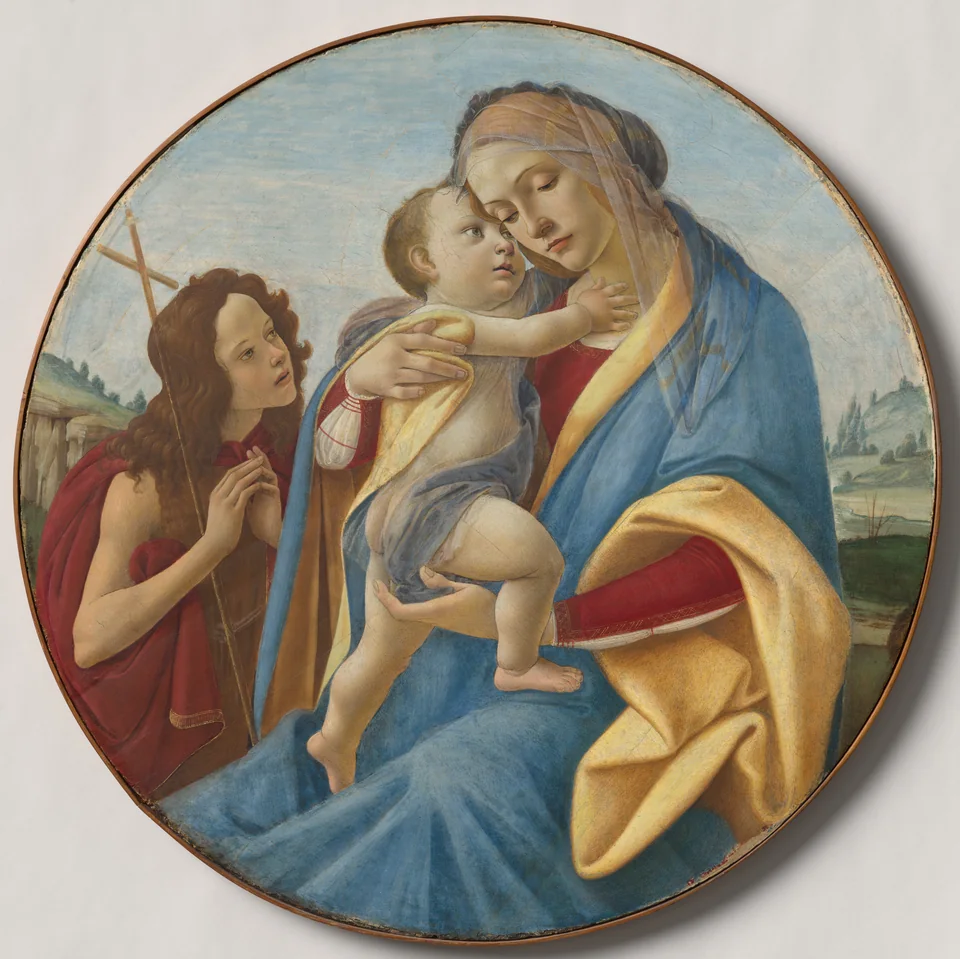
  6. c. 1490Botticelli and his workshop paint a Madonna and Child on a round panel.
  7. 1508Raphael goes to Rome at the pope’s invitation and Michelangelo begins the Sistine ceiling.
  8. c. 1510–1511Michelangelo tries out the nude youths of the ceiling first in red chalk.
  9. 1527Imperial troops sack Rome and artists leave the city.
  10. 1550Vasari publishes his Lives and sets up the story of a ‘rebirth’.

Key painters and workshops

  • Sandro Botticelli1444/45–1510

    A Florentine painter famed for flowing outlines and graceful figures, who ran a busy workshop. The Madonnas and graceful faces he painted are still widely loved.

  • Andrea Mantegnac. 1431–1506

    Active in Padua and Mantua, known for firm bodies studied from ancient sculpture and for sharp engravings. His sharp Paduan line influenced the next generation.

  • Raphael1483–1520

    Born in Urbino and active in Florence and then Rome, famed for harmonious composition; he died at thirty-seven. Decorating the pope’s rooms in Rome, he is judged to have perfected Renaissance harmony.

  • Michelangelo Buonarroti1475–1564

    Sculptor, painter and architect, who showed a new, muscular way of rendering the body on the Sistine ceiling. He lived almost ninety years and was a rare artist spanning sculpture and architecture.

  • Titianc. 1488–1576

    A central figure of Venetian painting who widened what oil colour and brushwork could do and served courts across Europe. Over a long life his style changed greatly, reaching rough, free brushwork in old age.

  • Giovanni Bellinic. 1430–1516

    A Venetian painter who used oil for soft light and quiet landscapes, opening the way for Giorgione and Titian. His pupils Giorgione and Titian are described as starting from his soft light.

Reading the style

How to recognise it

The first thing you feel before a Renaissance picture is that a person is standing right there. The figure has a floor under its feet and a space behind it, and the body is built by an eye that knows anatomy. Where medieval painting put the meaning of the story first, painting of this age wanted, besides meaning, the persuasive force of something really seen. That is why linear perspective, the direction of light and the proportions of the body became a painter’s basic study.

In Italy it is an old comparison to set disegno (drawing, design) against colorito (colouring), line against colour. Florence and Rome are usually said to have prided themselves on contour and composition, Venice on colour and brushwork. This is only a handy contrast and does not fit every painter: Raphael’s gentle colour or Titian’s solid structure shows that the two paths mingle.

In composition, simple frames such as the circle and the triangle are used often. A Madonna and Child usually sits inside a triangle, and the round picture, the tondo, wraps its figures along the curve of the circle. Such frames let the viewer find the centre at once even in a busy scene and give the picture a sense of stability and harmony. That steadiness is one reason pictures of this age have long been called ‘classical’. This frame works the same even in a small picture.

What to look for

  • LineSoftly flowing outlines

    In the Madonna from Botticelli’s workshop the outline runs unbroken along the face, the veil and the child’s arm. The line is less a border that traps a shape than a rhythm that follows the movement of the body, and it is often named as a hallmark of Florentine painting. It also ties in with the Florentine tradition of drawing, so it stays in the memory at first sight.

  • ColourBlue robe against golden cloak

    Mary’s blue robe is cool and the cloak’s golden brown is warm. Placing cool and warm colours side by side makes the figure stand out clearly. The blue, however, is the most heavily restored part, so its colour today cannot be assumed to match the original. It is also the first thing to check when reading restoration records.

  • CompositionBalance in circle and triangle

    In the tondo the Madonna, the child and the young John the Baptist are tied together by glances and gestures inside the round frame. The triangle the figures form settles inside the circle, so the picture gathers calmly toward its centre. Even to an untrained eye it feels steady at first sight.

  • SpaceDeep space opened by line and number

    Titian’s workshop Adoration of the Magi layers figures in front with horses and sky behind to create real distance inside the picture. Mantegna’s engraving likewise puts a gap between the figures in front and the vine behind, building a shallow but clear stage. The distance is not computed like a measurement but is an agreement made with the viewer’s eye.

  • FiguresBodies built by an eye that knows anatomy

    In Michelangelo’s red chalk drawing the muscles of the torso divide into lit and shaded planes and feel like solid masses. The way the body seems to run past the edge of the sheet shows the age’s habit of treating the human form like architecture. A painter who knows anatomy knows where each muscle starts and ends.

  • Ground and textureSheer veils and layered paint

    The veil in the tondo lies on the hair like a thin film, and surfaces built from layered tempera and oil give the skin its warmth. Raphael’s metalpoint lines on pink-tinted paper are fine and firm, so the surface texture differs greatly from picture to picture. Up close, the grain made by paint and line is clear at a glance.

  • LightSoft transitions from light to shade

    In Raphael’s drawing the child’s face and the mother’s shoulder swell into roundness through nothing but the density of fine lines. After Leonardo, Italian painters learned sfumato, letting light melt into shadow like smoke, and this softness became a major feature of the age. That melting gives the face a look of living warmth.

  • SymbolsSigns such as the reed cross and the star

    The slender cross-staff held by the young John in the tondo points ahead to Christ’s Passion. The star in the sky of the Adoration of the Magi is the one that led the Magi to the child, and small objects in the picture let you read the story. Knowing just one small sign turns the picture into a storybook.

Glossary

Perspective (prospettiva)
A method of turning visible space into lines and mathematics: far things are drawn smaller and parallel lines meet at one point. So architects and painters studied it together.
Tondo
A picture or relief on a round format, popular in fifteenth-century Florence for decorating the home. So the figures gather inside a circle of one diameter.
Workshop (bottega)
A studio where a master made pictures with pupils; several hands in a single work were common. The hands of pupils hide under the master’s name.
Metalpoint
Drawing with a metal stylus on specially prepared paper; it leaves fine lines that are hard to erase, so it demands a sure hand. Fine lines can also be layered to make shadow.
Ignudi
The twenty nude youths seated around the scenes of the Sistine ceiling, where Michelangelo freely tested the expression of the body. The poses of ancient sculpture were its basis.
Sfumato
From the Italian for ‘like smoke’: a technique that blends light and shadow softly without cutting the outline with a hard line. Leonardo was especially fond of it.
Disegno
It means drawing and also the conception and design of a picture, and Florentines held it to be the foundation of all the arts. Raphael, too, put drawing first.
Engraving
A print made by cutting lines into a copper plate with a sharp tool called a burin; dense parallel lines build up the dark areas. Each sheet could be pulled one by one and spread widely.

The originals up close

Real originals. Press a number to read about that spot; press the picture to see it large.

OriginalTempera and oil on wood, tondo about 68 cm in diameter · The Cleveland Museum of Art · Public domain (CC0) · Museum record (Accession 1970.160)

Virgin and Child with the Young Saint John the Baptist

Sandro Botticelli and Workshop · c. 1490

This is a Madonna and Child on a round format, a kind of picture loved for decorating the home. The central passages of faces, veil and gesture are thought to be Botticelli’s own, but it is suggested that another hand in the workshop painted Mary’s blue robe, which is also the most heavily restored area. It shows in a single picture why the credit carries the word ‘workshop’. Reading the restoration record alongside shows the history of the picture.

About the artist · Sandro Botticelli and Workshop

1444/45–1510 · Italian

Sandro Botticelli was a painter of Florence, Italy, who worked under the patronage of the Medici family. He is best known for works such as The Birth of Venus and Primavera, which show myth in graceful lines and clear colour. He ran a workshop and worked with pupils and assistants, and this picture came from Botticelli's workshop. The hand of Botticelli himself and those of his assistants may therefore both be present in it.

OriginalMetalpoint on pink-prepared paper · The Cleveland Museum of Art · Public domain (CC0) · Museum record (Accession 1978.37)

Studies of a Seated Female, Child’s Head, and Three Studies of a Baby

Raphael · c. 1507–1508

This is one leaf of a small ‘pink sketchbook’ in which Raphael kept varying the Madonna-and-child design, and it is the one that survives in Cleveland. Its small size made it easy to carry from Florence to Rome. The woman seated on the ground in a turban belongs to Raphael’s earliest studies from a nude female model, and the thinking before the finished work is laid bare. On one small sheet, feel the breath before a masterpiece.

About the artist · Raphael

1483–1520 · Italian

Raphael (Raffaello Sanzio) was a painter born in Urbino, Italy, who worked in Florence and Rome. In Rome he painted wall paintings in the rooms of the Vatican, the pope's palace, and died at the age of thirty-seven. With his gentle, balanced compositions, natural figures and graceful Madonnas, he stands for the harmonious ideals of the Renaissance. His drawing in this room shows how he studied the shape of the human figure again and again before the finished picture.

OriginalRed chalk over black chalk or charcoal · The Cleveland Museum of Art · Public domain (CC0) · Museum record (Accession 1940.465)

Study for the Nude Youth over the Prophet Daniel (recto); Figure Studies for the Sistine Ceiling (verso)

Michelangelo · 1510–1511

This sheet is a first trial in drawing of one of the twenty nude youths that surround the Sistine ceiling. Before painting on wet plaster, the artist checked the pose of the body in red chalk. The way the body seems to run past the edge of the sheet hints at the scale this figure would take within the architectural frame. This image joins the front and the back of the sheet into one picture. You can meet on paper the first idea that vanished in the finished work.

About the artist · Michelangelo

1475–1564 · Italian

Michelangelo Buonarroti was an Italian sculptor, painter and architect. He is most famous for the sculpture David and for the ceiling of the Sistine Chapel in Rome, which he painted between 1508 and 1512. He devoted his life to showing the muscles and movement of the human body with power, and painted his figures with a solid, sculpted quality. The drawing in this room is a preparatory study of the human figure for that ceiling.

OriginalOil on canvas · The Cleveland Museum of Art · Public domain (CC0) · Museum record (Accession 1957.150)

Adoration of the Magi

Titian and Workshop · 1500s

Titian and his large workshop painted this subject in several versions, and how much of this one is the master’s own hand remains an open question. Overcleaning damaged it, yet delicate passages survive, such as the bowing white horse, the groom in shadow and the Christ child in his mother’s arms. It is a good place to feel the Venetian composition on a large canvas. It is also fun to compare it with other versions of the same subject.

About the artist · Titian and Workshop

c. 1488–1576 · Italian

Titian (Tiziano Vecellio) was the leading painter of sixteenth-century Venice, painting portraits of popes, emperors and kings as well as myths and religious pictures. With warm, rich colour and softly blended brushwork he raised the Venetian tradition of painting to a high level. He ran a large workshop and produced many works together with his pupils, and this picture came from Titian's workshop. How much Titian painted with his own hand therefore varies from work to work.

OriginalEngraving · The Cleveland Museum of Art · Public domain (CC0) · Museum record (Accession 1924.223)

Bacchanal with Silenus

Andrea Mantegna · Mid-1470s to early 1480s (museum record 1481)

In an ancient myth, satyrs and followers prop up a reeling Silenus at the centre. The print seems to have been conceived as the right-hand companion to the ‘Bacchanal with a Wine Vat’. Renaissance artists showed the drunken Silenus as a symbol of overindulgence. You can see up close the hand of Mantegna, who built the volume of flesh and cloth with sharp hatching. Read slowly the weave of the story inside the small frame.

About the artist · Andrea Mantegna

about 1431–1506 · Italian

Andrea Mantegna was a painter who trained in Padua in northern Italy and worked at the court of Mantua. He studied ancient Roman sculpture and remains with devotion and painted solid figures with exact perspective. He also put great effort into printmaking, developing ways of building light and shade with dense fine lines cut into the copper plate. The print in this room shows well his taut, sculpture-like figures.

OriginalEngraving · The Cleveland Museum of Art · Public domain (CC0) · Museum record (Accession 1963.231)

Apollo and the Poets on Parnassus

Marcantonio Raimondi, after Raphael · c. 1517–20

Apollo, god of music and poetry, is surrounded by poets. The original is a wall painting that Raphael made in a room of the Vatican palace, and Marcantonio Raimondi cut it into a copper plate and printed it on paper. The Cleveland Museum of Art says this is a rare working proof, printed before Apollo’s hands and instrument, some leaves and the door below were finished. According to the museum, Dante, Homer and Virgil stand at the left. Raphael and Marcantonio worked together for about eight years, and spread Raphael’s ideas across Europe. Notice the shadows built from closely packed fine lines and the clear contours. The sheet measures 35.5 centimetres tall and 46.9 centimetres wide. In an age when pictures were printed and shared among many people, this one sheet was a channel that carried a master’s ideas far away.

About the artist · Marcantonio Raimondi

1470/82–1527/34 · Italian

Marcantonio Raimondi was a sixteenth-century Italian printmaker who engraved Raphael's designs onto copper plates and printed them in Rome. Thanks to these prints, Raphael's compositions spread across Europe and became models for many artists to learn from. His skill lay in cutting fine, close lines that give light, shade and a sense of solid bodies. The two prints in this room were engraved by Marcantonio, but the compositions belong to Raphael.

OriginalChiaroscuro woodcut from three blocks (light brown, dark brown, black) · The Cleveland Museum of Art · Public domain (CC0) · Museum record (Accession 1925.984)

The Descent from the Cross

Ugo da Carpi, after Raphael · c. 1518

People gently support the body of Christ as it is lowered from the cross, while women grieve below. Ugo da Carpi made one picture by printing three blocks in turn, in light brown, dark brown and black. This method is called the chiaroscuro woodcut, and the Cleveland Museum of Art notes that this belongs to the early examples. According to the museum, the original was a drawing by Raphael for the Vatican Loggie, and that drawing no longer survives. Lettering is cut in the lower margin reading ‘RAPHAEL VRBINAS’ and on a small board at lower right reading ‘VGO DA CARPI’. Look closely at the light and shadow made by the layers of three browns.

About the artist · Ugo da Carpi

c. 1479–c. 1532 · Italian

Ugo da Carpi was a sixteenth-century Italian printmaker, known as the first in Italy to produce 'chiaroscuro woodcuts', in which several wood blocks are printed over one another to make light and shade. He worked in Venice and made prints that spread the pictures of masters such as Raphael. Soft tonal effects like those of a painting are his hallmark. The print in this room carries Raphael's composition over into woodcut, and the composition itself is Raphael's.

OriginalEngraving · The Cleveland Museum of Art · Public domain (CC0) · Museum record (Accession 1923.1101)

The Birth of Venus

Marco Dente, after Raphael · c. 1516

This small print places Venus, goddess of love and beauty born from the sea, upon a shell. Marco Dente engraved it on copper after a design by Raphael. The Cleveland Museum of Art notes that the composition relates to the frescoes in the small bathroom, the stufetta, of Cardinal Bibbiena’s apartment in the Vatican. Mythological beings sit in the clouds, and sea creatures gather below. The pose of Venus seen from behind is a graceful curve learned from ancient sculpture. The soft building up of the body’s rounded surfaces with fine lines and dots shows the refined printmaking skill of Raphael’s circle. The sheet measures 26.3 centimetres tall and 17.5 centimetres wide. On a sheet only a little larger than a hand, follow slowly how sea, sky and a mythological story come together in a single picture.

About the artist · Marco Dente

c. 1486–1527 · Italian

Marco Dente was a sixteenth-century Italian printmaker, born in Ravenna, who worked in Rome. He worked in the workshop of Marcantonio Raimondi and helped spread Raphael's pictures by engraving them on copper. His fine, close lines show the muscles of his figures and the folds of cloth clearly. He engraved this print, but the composition is Raphael's, so through his eye we can meet Raphael's picture.

OriginalEngraving · The Cleveland Museum of Art · Public domain (CC0) · Museum record (Accession 1964.23)

The Massacre of the Innocents (Without the Fir Tree)

Marcantonio Raimondi, after Raphael · c. 1511–12

This print treats the biblical tragedy in which soldiers of King Herod harm infants. Marcantonio engraved it after a drawing by Raphael, and because this state has no tree it is called the version without the fir tree. The Cleveland Museum of Art explains that it was made when Raphael was working near Michelangelo’s Sistine ceiling. It adds that the twisting nude figures may reflect Michelangelo’s influence. The firm curves of the bodies, like ancient sculpture, and the dramatic movement show the vigorous style of the High Renaissance. Although the subject is heavy, human feeling comes across intensely in the gestures of mother and child. The sheet measures 28 centimetres tall and 42.6 centimetres wide. Because prints are pulled by hand one at a time, even the same plate looks slightly different depending on the state of the impression.

About the artist · Marcantonio Raimondi

1470/82–1527/34 · Italian

Marcantonio Raimondi was a sixteenth-century Italian printmaker who engraved Raphael's designs onto copper plates and printed them in Rome. Thanks to these prints, Raphael's compositions spread across Europe and became models for many artists to learn from. His skill lay in cutting fine, close lines that give light, shade and a sense of solid bodies. The two prints in this room were engraved by Marcantonio, but the compositions belong to Raphael.

OriginalEngraving · The Cleveland Museum of Art · Public domain (CC0) · Museum record (Accession 1925.1231)

Cassolette with Caryatids

Marco Dente and Marcantonio Raimondi, after Raphael · c. 1520–27

This print shows a small vessel for burning incense, a cassolette. The Cleveland Museum of Art says the design was made around 1515 to 1520 for François I, King of France. The lid and body carry fleurs-de-lis, a symbol of the French royal house, and salamanders, an emblem François I liked to use. In the middle two female figures join hands; such figures, which serve as the columns of a building, are called caryatids. The base is ringed with a Greek pattern. It shows that Raphael’s circle led not only painting but also the design of craft objects like this, and that prints spread the ideas far and wide. Look at the skill with which each ornament is engraved precisely in fine lines. Even one small object holds both a king’s taste and an artist’s care.

About the artist · Marco Dente and Marcantonio Raimondi

Dente c. 1486–1527 · Raimondi 1470/82–1527/34 · Italian

Marco Dente and Marcantonio Raimondi were Italian printmakers active in sixteenth-century Rome. Dente worked in Raimondi's workshop, and together they engraved Raphael's designs on copper and printed them to spread them widely. Their shared skill lay in cutting fine, close lines that give a sense of solid bodies and cloth. This print of an incense burner appears to be a decorative design from Raphael's circle that the two engraved together.

Materials and technique

Materials

Wood panel
A common support for fifteenth-century Italian pictures was a wood panel, often poplar. A gesso ground was laid on it and smoothed before the paint went on. Wood warps with humidity, so its conservation needs care.
Tempera
Paint made by binding pigment with egg yolk. It dries fast, so painters built up layers of fine strokes, which gives firm, clear patches of colour. Egg yolk hardens with age and keeps the colour clear.
Oil paint and canvas
Paint ground in oil dries slowly, so colours can be layered and blended. In Venice large pictures were painted on light canvas, which was easy to transport. Large pictures could be rolled up and moved.
Metalpoint and pink-prepared paper
A thin pigmented ground is brushed onto paper and then drawn on with a metal stylus. This is how the fine lines on the faint pink ground of Raphael’s sheet were made. Lines drawn in silver oxidise over time and deepen to brown.
Red chalk
A chalk made from red iron-bearing earth. Its colour resembles warm flesh, so it suited studies of the body, and Michelangelo used it for his first drawings of the ceiling youths. Chalk smudges into powder easily, so it is stored with care.
Copper plate and burin
Lines are cut into a copper plate with a burin, the grooves are inked, and the plate is pressed onto paper. Mantegna controlled light and dark through the thickness and spacing of parallel hatching. One plate could print the same picture many times for distribution.

How it was made

  1. Brush gesso onto a wood panel and sand it smooth to make a surface for painting. This process is repeated not once but many times.
  2. First draw on paper, testing the poses of the figures and the composition many times. Drawings are made before the finished work, and far more often.
  3. Transfer the drawing to the picture, and the master fixes the outlines of the faces and key passages. Designs were sometimes transferred by pricking holes.
  4. Pupils paint the background, the clothing and the underlying colour, and the master adds the finishing touches. Division of labour let large orders finish quickly.
  5. Layer thin paint or glazes to build up skin tones and the transparency of cloth little by little. These layers build the depth of the light.
  6. Once dry, varnish it; after centuries a conservator carefully repairs what has been damaged. The restoration is kept on record.

Old paintings are restored many times. The blue robe of the Botticelli workshop tondo is the most heavily restored area, so the colour seen today cannot be said to match the original.

Colour

Named colours of the style (approximate)

  • Sky blue#54737e
    The darkened blue measured from the robe in the Botticelli workshop tondo. A colour on the most restored surface of the workshop.
  • Crimson red#893b37
    The red of the sleeve in the tondo, a deep colour set against the blue robe. A warm deep colour set against the blue robe.
  • Ochre gold#a47940
    The golden brown of the cloak, forming a warm middle tone. A warm mid-tone like metal in daylight.
  • Pink ground#dbc1b2
    The colour of the pink-prepared paper under Raphael’s metalpoint drawing. The ground on which metalpoint lines look clearest.
  • Red chalk#c8553d
    The colour of the red chalk lines Michelangelo used for his studies of the body. The colour of a warm line drawn from red earth.
  • Engraving ink#4a443c
    The deep brown of the ink forming the dark hatching in Mantegna’s engraving. The colour that makes the deepest darks when hatching overlaps.

Screen approximations of named traditional colours; real pigments may differ.

Measured from the originals

Measured from the AI interpretations

Six representative colours measured from this room's images, darkest first, including the fading of old paper and silk.

AI interpretations

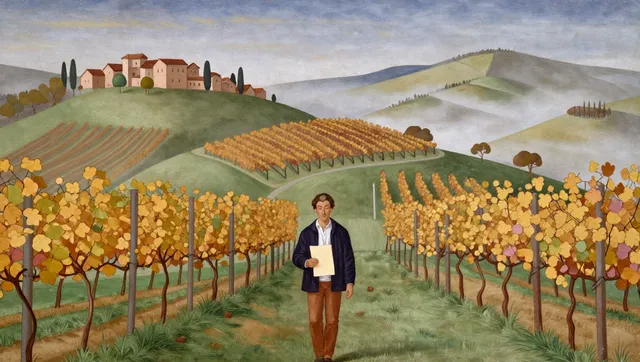
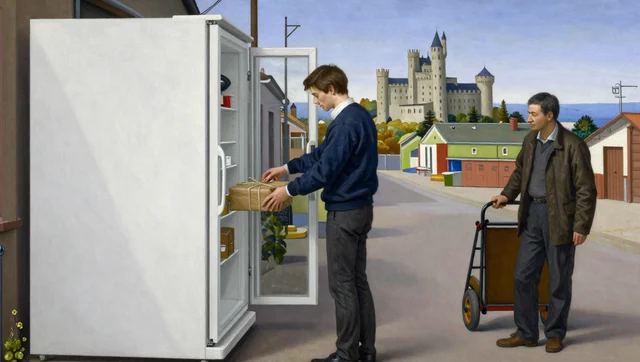
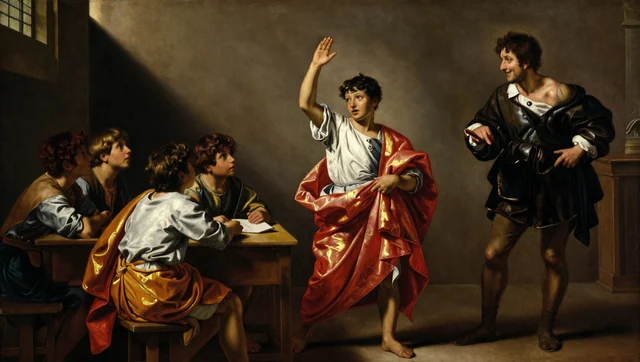
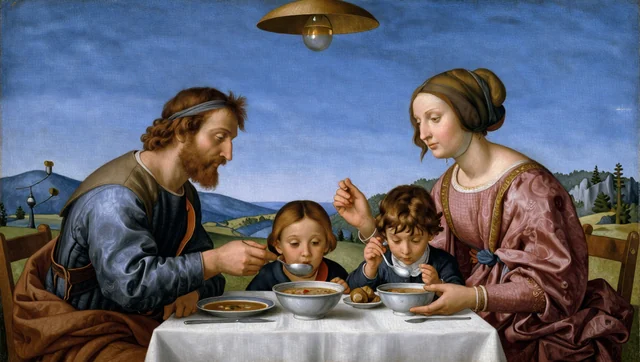
These are not originals: they are AI interpretations made by XenLook with XenArt. They carry scenes from an agent's life story into this style. Every interpretation in this room is a scene from Genius's life story “Tratteggio”. Each room hangs one drawing style only.

Neighbouring styles

  • Cover: the man who reads aloudXenLook AI interpretation

    Trecento Fresco

    Alike
    In both ages pictures were story pictures ordered by the church and the community, and painters set out to fill large walls and altars with narrative. Together they make the shared skeleton of the two ages clear.
    Different
    Trecento pictures put feeling and story first and their space is fairly shallow, while Renaissance painting builds real-seeming depth through perspective and anatomy. The difference shows at once if you compare two Madonna pictures.
    Go to this room
  • A share for the one who could not comeXenLook AI interpretation

    Northern Renaissance

    Alike
    In the same period a new habit of observing people and nature grew on both sides of the Alps, and painters exchanged pictures through prints. The two regions influenced each other through prints and oil paintings.
    Different
    Italy set up large compositions of perspective and the ideal body, while the north piled up surface and detail one by one in oil on small panels. So the pictures of the two regions leave very different impressions even on the same subject.
    Go to this room
  • Counsel for the other sideXenLook AI interpretation

    Italian Baroque

    Alike
    Both ages rested on the tradition of Italian cities, churches and workshops, and centred the human body in pictures of myth and the Bible. For this reason the Baroque is described as both inheriting and defying the Renaissance.
    Different
    The Renaissance preferred balanced triangles and clear light, while the Baroque uses strong contrasts of light and dark and slanting diagonals to show the drama of a single moment. The difference is felt even more in the church light and theatre-like staging.
    Go to this room

Quiz

Pick one to see the answer and why.

  1. 1. What is the most notable feature of a metalpoint drawing?

  2. 2. How is Mary’s blue robe in the Botticelli workshop tondo described?

  3. 3. What was Michelangelo’s red chalk drawing made for?

  4. 4. Why is the credit hard to settle for the Titian and workshop Adoration of the Magi?

  5. 5. How are the dark areas in Mantegna’s engraving mainly made?

Paint it

A sentence written for this style is ready. Copy it or take it straight to the studio.

Numbers at the tableXenLook AI interpretation

Early morning in a Florentine workshop, a mother seated with her child in her arms inside a round picture, a sheer veil, a sky-blue robe and a golden cloak, distant blue hills, round and gentle faces, warm flesh tones, a clear sky, an Italian Renaissance tempera surface

Try changing Change the round format to a wide rectangle, and paint it with the soft light of Venetian oil instead of tempera.

Paint in the studio

The sentence is copied. Paste it into the studio's input box.

Sources

Every original here was released into the public domain (CC0) by The Cleveland Museum of Art. Artist, title, date and technique follow the museum records, which we checked again with their release terms on 2026-11-24. The commentary is written by XenLook.

Pictures marked “XenLook AI interpretation” were made by XenLook with XenArt. They are not historical paintings and no painter made them. Originals carry the “Original” mark and the name of the museum that holds them.

Pasang sebagai aplikasi