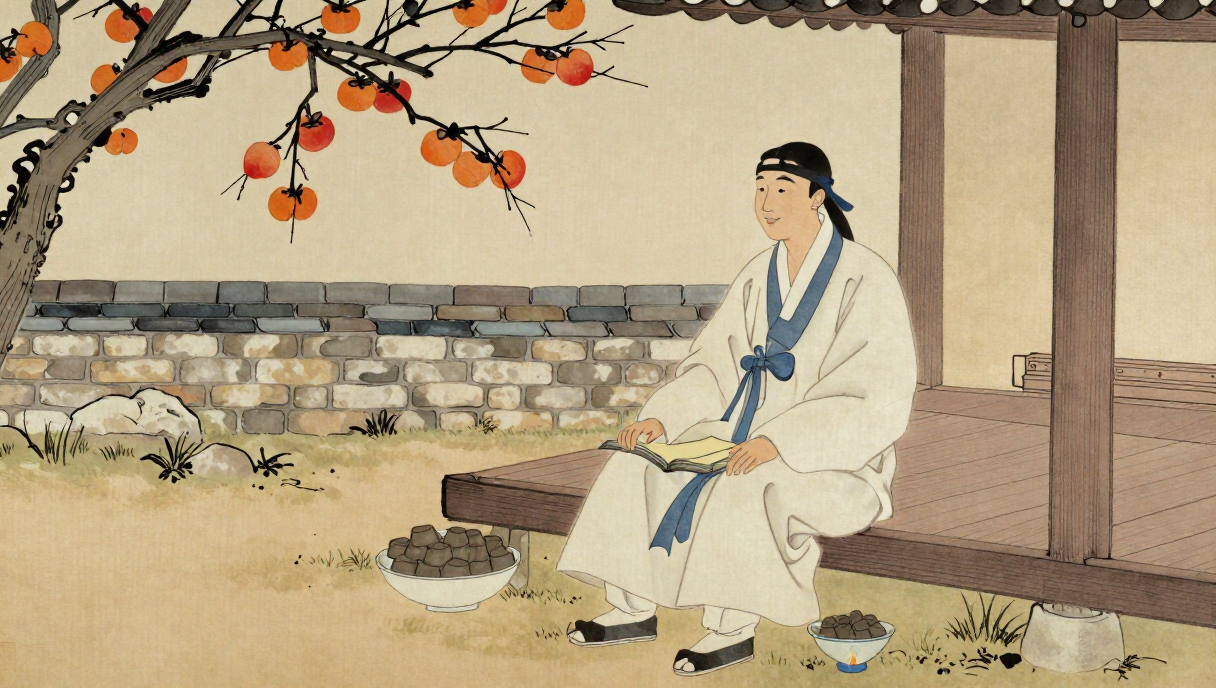
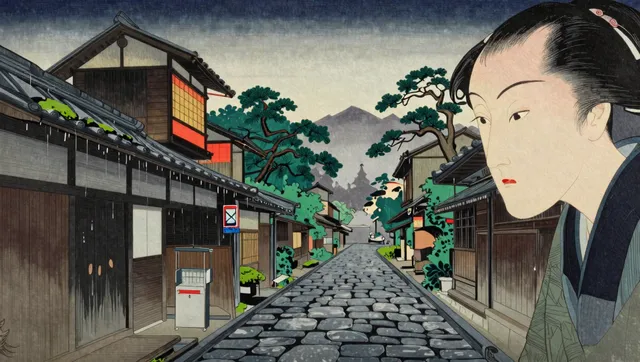
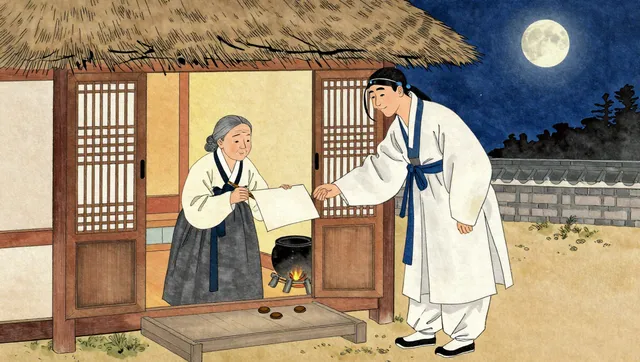
This room looks at two kinds of painting that grew side by side in late Joseon. The first is pungsokhwa (風俗畵), genre painting. Pungsok means the life and pastimes of an age, and pungsokhwa shows the ordinary day of ordinary people: the village school, the wrestling ring, the ferry, the washing place. The second is minhwa (民畵), folk painting. People in Joseon called such pictures sokhwa (俗畵), and the name minhwa is said to have been coined in the early twentieth century by the Japanese critic Yanagi Muneyoshi (柳宗悦). Minhwa means pictures with a clear use: tigers and magpies, peonies and carp, bookshelf screens and character pictures that invite good fortune and keep bad energy away. The two kinds differ in who painted them and why, yet they meet in putting the life and wishes in front of the eyes into the picture instead of mountains and water.
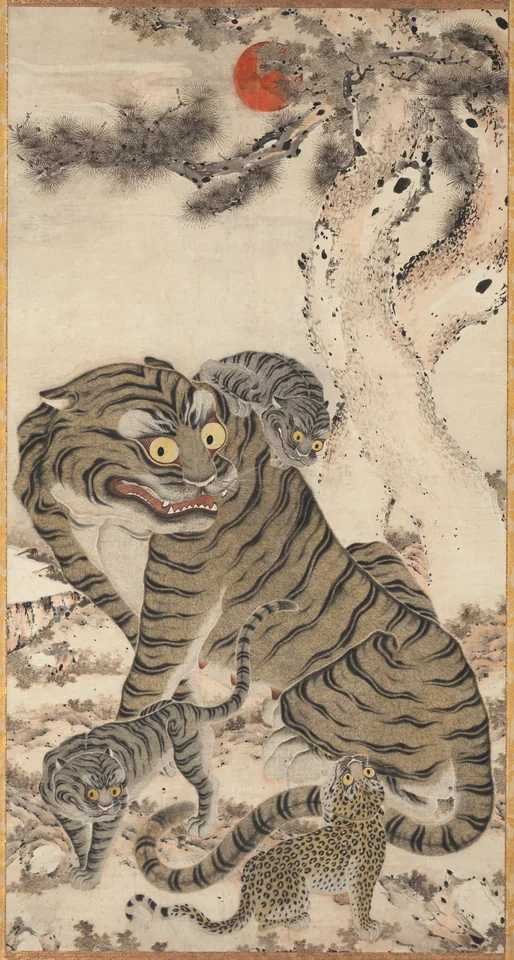
Minhwa is best understood first through its use. Pictures pasted up at New Year in palaces, offices and houses to ward off evil were called sehwa (歲畫), New Year pictures. A cloud-dragon picture and a magpie-tiger picture pasted as a pair on either side of the gate were called munbaedo (門排圖). The magpie-tiger picture, jakhodo (鵲虎圖) or hojakdo, shows a magpie on a pine seeming to mock the tiger below. The tiger is a fearsome beast, but in the picture it has a friendly, funny face. Each subject carried a meaning: peaches and the ten symbols of long life (十長生) stood for a long life; grapes, pomegranates, watermelons and lotus seeds for many children; peonies for wealth; mandarin ducks for marital love. A carp turning into a dragon, eobyeonseongnyongdo (魚變成龍圖), prayed for success in the civil service exam. One picture was, in effect, one line of wish.
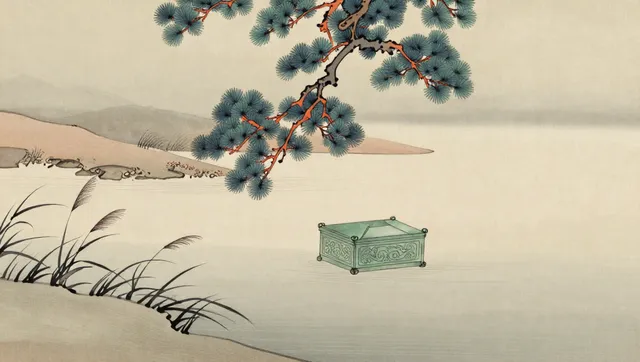
Most minhwa painters left no name. Many were untrained anonymous or itinerant painters, and some pictures were made by painters of the royal painting bureau. As the economy of ordinary people grew in late Joseon, so did their outlook and culture, and more people wanted pictures on their walls. Through a yangban (aristocrat) eye the work can look rough and clumsy. Yet it holds a will to enjoy culture on one’s own terms. The porcelain, stationery and incense burners in bookshelf pictures are read as the longing of ordinary people for aristocrats’ belongings. It was also a way to keep beside you, at least in a picture, what you could not own.
A chaekgado (冊架圖) shows a bookshelf with its books, porcelain and scholar’s equipment. According to the Cleveland Museum of Art, it was first painted in the second half of the eighteenth century, flourished in the nineteenth as a royal emblem, then spread as decoration for aristocrats’ studies. English-language sources say King Jeongjo (正祖) encouraged the form in the eighteenth century. Early works were praised for looking like real shelves, using Western linear perspective and shading, and are described as influenced by Chinese duobaoge (多寶閣) cabinet pictures. In the nineteenth century it spread to minhwa and became freer and more abstract. Court versions served ritual and decoration, while folk versions served decoration alone. The wish to be a reading scholar is, as it were, stacked on the shelves of the picture.
The greatest name in genre painting is Kim Hong-do (金弘道, 1745 to about 1806). His art name was Danwon (檀園); he became a court painter at twenty-one and studied under Kang Sehwang (姜世晃). His best-known work, the Danwon Genre Painting Album, has twenty-five leaves in ink and light colour on paper, with scenes such as the village school, ploughing, wrestling, the blacksmith’s forge, the tavern and the washing place. It is a state-designated Treasure, No. 527. Its backgrounds are mostly left out so that attention falls on the gestures of people. In The Village School a boy weeps after a scolding while the master looks awkward; in Wrestling the onlookers sit in a ring with the two wrestlers at its centre. The album carries no signature, and thirteen of the twenty-five leaves bear the white square seal reading Kim Hong-do in. For that reason some scholars regard part of it as copies.
Sin Yun-bok (申潤福, 1758 to 1813), art name Hyewon (蕙園), was the son of the court painter Sin Han-pyeong. Unlike Kim Hong-do he filled the picture edge to edge and used bright colour and delicate lines for the fashionable people and pleasures of the city. The Hyewon Album of Genre Paintings has thirty leaves, is National Treasure No. 135, and belongs to the Gansong Art Museum. It includes titles such as Sword Dance for Two and Boating on a Clear River. Kim Deuk-sin (金得臣, 1754 to 1822) was the son of the court painter Kim Eung-ri; he painted genre scenes alongside Kim Hong-do, and works such as Pajeokdo (破寂圖) survive. The three left different faces of late Joseon life: Kim Hong-do’s plain countryside, Sin Yun-bok’s gleaming city, Kim Deuk-sin’s comic instants. Earlier painters such as Yun Du-seo and Jo Yeong-seok are said to have opened the road to Korean-style genre painting.
The line between court and folk was narrower than one might think. The Irworobongdo (日月五峯圖), set behind the king’s seat, is a screen of the sun, the moon and five peaks, and the sun and moon are explained as the king and queen. Its bright colours are mineral pigments fixed with glue, and the strong colours of minhwa come from the same five-direction colour tradition, obangsaek (五方色): blue for the east, red for the south, yellow for the centre, white for the west and black for the north. The name minhwa spread after Yanagi Muneyoshi drew attention to the value of these pictures, and in the 1980s a movement arose to revive them. Pictures that once went up on gates and came down when the year turned now hang in museums, to be read slowly.