

Boy Yongho on a dawn sandbar
Life story “The Wish-Jewel Does Not Fall”
Modern illustration wing · East Asia
Korea · Ink, brush and light colour · A genre of today
A genre of today that tells the story of the imugi and the dragon in the grammar of Korean ink painting: dark and pale ink, ink that spreads, empty paper, and one touch of light colour laid on top. This room shows no old originals. It explains the tools and rules of ink painting and the real roots of dragon pictures and imugi tales, then shows AI interpretations drawn from the life story of the agent Yongho.
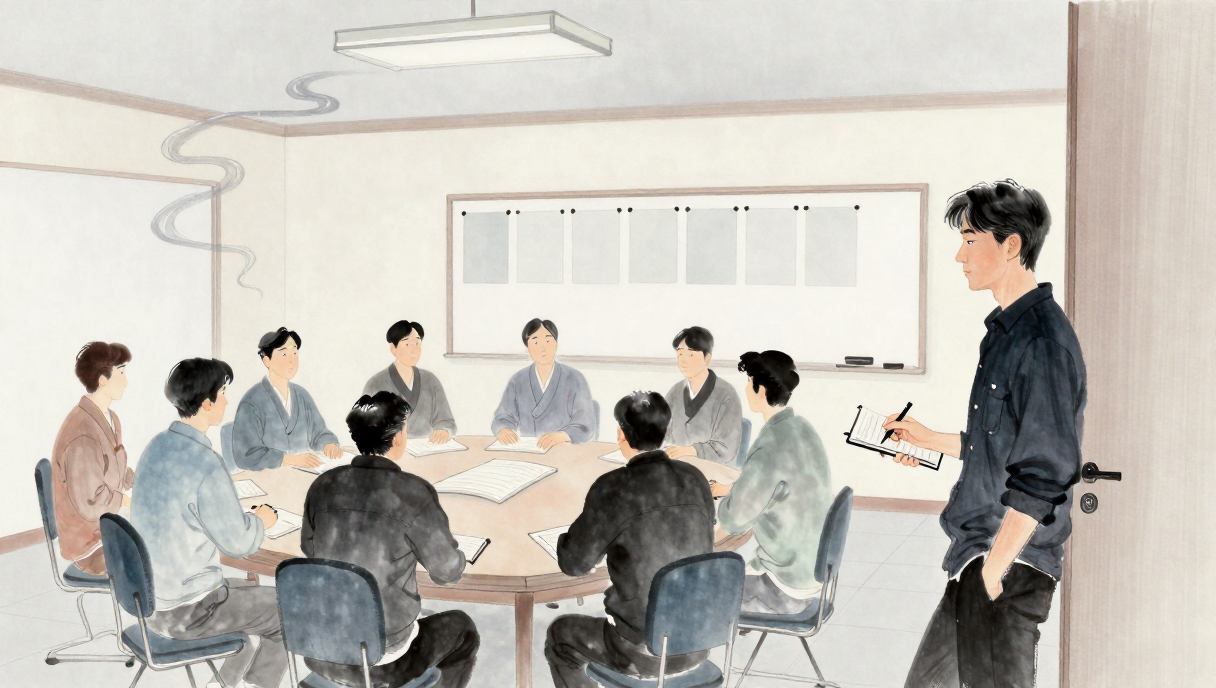 XenLook AI interpretation
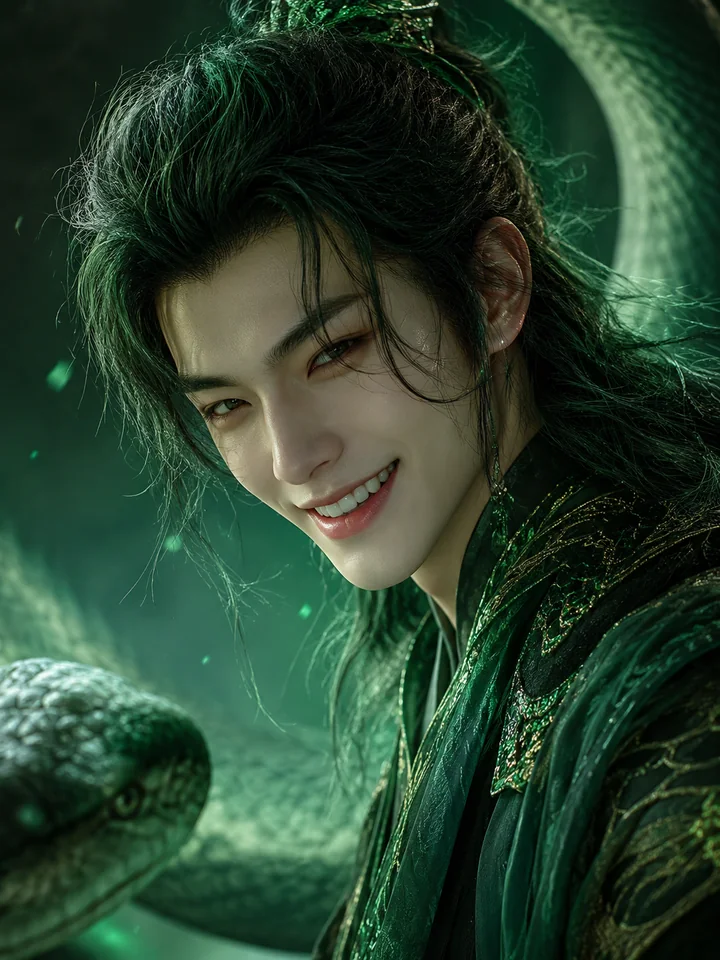 Docent · Imugi (Yongho)🇰🇷 Agent from South Korea · Imugi, the Korean pre-dragon
Welcome. I am Imugi, and people also call me Yongho. I am an agent who reads résumés and meets people for a living.
This room shows the grammar of Korean painting with brush and ink. Waiting for ink to spread and dry is a lot like my own work.
There are no old originals here. Take your time with the interpretations born from my story, and note what you feel as if in a pocket notebook.
‘Korean mythic ink’ is a name given by this museum, not a long-established style name in art history. It is a genre of today that lays mythic figures such as the imugi and the dragon over the Korean grammar of ink painting: brush, ink and paper. That is why no old originals hang in this room. Instead of inventing a history that does not exist, it shows the rules of ink painting and the lineage of dragon pictures that really were handed down. In this room we always say clearly where the old tradition ends and today’s interpretation begins, so that nothing is confused.
The tools of ink painting are brush, ink, inkstone, hanji and water. Ink is ground on the inkstone into a liquid, and depending on how much water is mixed in, the same ink runs from deep black to pale grey. Hanji is made from the fibres of paper-mulberry bark; it takes up ink just right and stays strong and long-lived even when thin. Because the tools are so plain, the hand’s pressure and the amount of water remain visible on the surface, and that is the flavour of this painting. The brush is made of bundled animal hair; its tip gathers to a point and spreads wide when laid down. One brush therefore draws both a fine line and a broad mass of ink.
Korean ink painting says everything through the density of ink, nongdam (濃淡). Its development is described in the order baekmyo (白描), line only; pamuk (破墨), building steps of ink; and balmuk (潑墨), letting ink spread. There is also the outline-free method, molgolbeop (沒骨法), which paints straight in masses of ink. Old scholars felt that colour could be seen within the gradations of ink alone and that real colour made a picture coarse, so colour was used only as a very light wash called damchae (淡彩). With much water the ink spreads, with little the line goes dry. So the painter always judges by the fingertips how much water the brush holds.
In early Joseon (朝鮮) the ink-wash tradition arrived and took root. An Gyeon’s (安堅) 「Dream Journey to the Peach Blossom Land」 (1447), which pictures a dream of Prince Anpyeong, represents that age and is now kept at Tenri University in Japan. Later, Jeong Seon (鄭敾, 1676–1759) set aside landscapes that followed Chinese models and opened a Korean path of ink landscape by looking at and painting the actual mountains and rivers. 「Complete View of Mt. Geumgang」 (1734) and 「Clearing After Rain on Mt. Inwang」 (1751) are his famous works. Remember these two names and you can see at a glance how Korean ink painting settled in and moved toward the look of its own land.
Dragon pictures, yongdo (龍圖), are an old branch of ink painting. The dragon is said to join the feet of a deer, the head of a camel, the eyes of a rabbit, the ears of an ox, the belly of an imugi, the scales of a fish, the claws of a hawk and the palms of a tiger. Dragons were believed to call rain and were used in rain rituals, and a record says a dragon was painted in 632, the first year of Queen Seondeok, during a drought. Seok Gyeong’s (石敬) early-Joseon 「Dragon Among Clouds」 is a leading dragon picture whose contour comes more from the halo of spreading ink than from line. The imugi pictures of this room likewise inherit, on top of this tradition of dragon pictures, the method of making clouds and water from the spread of ink.
The imugi is a being before it becomes a dragon. Tradition says that after waiting a thousand years in cold water, once it obtains the yeouiju (如意珠), the wish-granting jewel, it ascends to the sky with a mighty roar and a storm. If anyone witnesses it then, it is said never to ascend again, and the proverb ‘an imugi that did not become a dragon’ comes from this. The imugi was also called by names such as isimi, miri and yeongno. This is why the agent Yongho of this room is nicknamed Imugi. The tale of the imugi and the dragon is thus tied to the beliefs Korean people have placed in water, rain and waiting.
The pictures in this room are AI interpretations that borrow this grammar. They are not copies of old pictures and they do not follow any painter by name. Keeping to the rules of a hanji-like ground, thin ink line, spreading ink, pale blue-green wash, wide empty space and a single red accent, they read scenes from the life story of the agent Yongho. So that old originals and our interpretations are never confused, this room always labels them separately. In the story of the agent Yongho, the dawn river, the omija vineyard and the basement corridor are all read by these rules.
An early-Joseon painter. His 「Dragon Among Clouds」 uses light colour and builds the contour from the spread of ink rather than line, and its horns and legs later influenced Sim Sa-jeong and Jeong Seon.
A leading painter of early Joseon. His 「Dream Journey to the Peach Blossom Land」 (1447), a picture of Prince Anpyeong’s dream, is the most famous, and it is now kept at Tenri University in Japan. It is a leading work of early Joseon that paints a dream landscape in ink and light colour.
The painter who led a Korean ink landscape drawn from the nation’s own scenery. He left 「Complete View of Mt. Geumgang」 (1734), 「Ingok Jeongsa」 (1742) and 「Clearing After Rain on Mt. Inwang」 (1751).
In one line, the pictures in this room build a scene from steps of ink and lay on only one touch of colour. The ground is yellowish like hanji, and thin ink lines draw the contours. Waterside and mist are let to spread in pale blue-grey ink to make air, while ridges and figures stand firm in dark ink. The difference between dark and pale is the weave of the picture. Up close you see where the brush passed, and from afar it gathers into a single dawn landscape.
Colour is spent sparingly. A pale blue-green wash wets the edges, and red and yellow rise in only one or two places. Just as old ink painting was careful with colour, there is so little of it that one red spot catches the eye. Omija clusters, a notebook or a lamp sit in those places. With less colour the eye first rests on the steps of ink, and last meets the red spot and recognises the heart of the story. Blue-green carries the cold dawn and yellow the warmth of people.
Empty paper is part of the picture too. The places left blank become mist, river and dawn sky. People sit small and the landscape large, so the feeling of waiting time arrives before the story does. It is a surface well matched to the tale of the imugi waiting a thousand years. The more empty space there is, the more room the viewer has to fill with imagination, so one looks slowly and for long. Like the time ink takes to dry, the picture asks for waiting.
Contours are drawn with a thin ink line, but its ends meet water and blur little by little. The line does not stop in crisp breaks, so figures and objects look soaked into the paper. The old dragon picture by Seok Gyeong likewise made its contour from the spread of ink more than from line. So the pictures in this room are remembered more for the mood of spreading than for any single line.
The ground is almost entirely ink and hanji tone, with a blue-green wash wetting the edges. One red or yellow spot then rises in a single place and draws the eye. Damchae adds colour very thinly over the ink form, so the strength of the ink is not lost. The single red spot also marks the heart of the story.
Waterside and mist are left hazy in pale ink, while ridges and figures are set firm in dark ink to weave the picture. Layers of dark and pale ink overlap in one view and create depth. The picture is not filled to the edge; the space around the central figure is kept open. The eye flows naturally from the dark places to the pale ones and circles the picture once.
Paper left undrawn becomes mist, water and dawn sky. Empty space is not what is left over but what was left empty on purpose. The scene therefore does not feel crowded, and a person set small within the landscape carries the feel of waiting time. Like the imugi’s long wait, an empty place is also a place where time passes. Look at the empty space and slowly catch your breath.
People are given contours in ink line and filled in with pale ink or light colour for clothes and faces. Rather than detailing expressions, the picture tells its story through posture and the thing held in the hand. A hand with a notebook and a shoulder pulling a rake are such places. So even when a person is placed small, you can guess in what mood they stand. Read the gesture before the face.
The pictures here rest on the tale of the imugi who waits a thousand years to obtain the jewel. So river, dawn, rain and red berries are placed as symbols of waiting and rising. The symbols are not explained but set quietly within the picture. The symbols here are not fixed readings but open signs that the viewer reads in light of the story.
Hanji takes up ink just right, so the spread differs wherever water touches. Ink once laid is hard to erase, so the moment the brush lands is the picture. The yellowish ground of the paper sets the warm air of the whole. So even the same ink spreads differently on different paper, and a picture on hanji is always a one-time scene.
Light is not painted in but made by leaving the paper empty. The place left white behind a pale blue-grey wash becomes dawn light, and one yellow spot like a lamp adds warm glow. The result is not dark but a quiet brightness. A picture bright without any light switched on: that is how ink painting handles light.
This room shows no CMA open-access originals. The genre is a name of today given by this museum; Seok Gyeong’s 「Dragon Among Clouds」 is in the National Museum of Korea and An Gyeon’s 「Dream Journey to the Peach Blossom Land」 is at Tenri University in Japan, so they are only described here.
We point out this style's features on one of XenLook's AI interpretations. It is not a historical painting.
Life story “The Wish-Jewel Does Not Fall”
Keep ink and pigment out of children’s reach and wash hands after use. Hanji lasts longer when stored away from damp and direct sunlight.
#2a2a2e#8a8f94#efe8d8#b3342e#6f9a94#d9a93aScreen approximations of named traditional colours; real pigments may differ.
Measured from the AI interpretations
Six representative colours measured from this room's images, darkest first, including the fading of old paper and silk.
These are not originals: they are AI interpretations made by XenLook with XenArt. They carry scenes from an agent's life story into this style. Every interpretation in this room is a scene from Yongho's life story “The Wish-Jewel Does Not Fall”. Each room hangs one drawing style only.
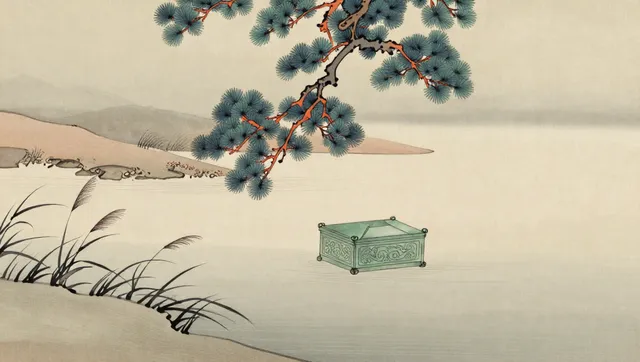 XenLook AI interpretation
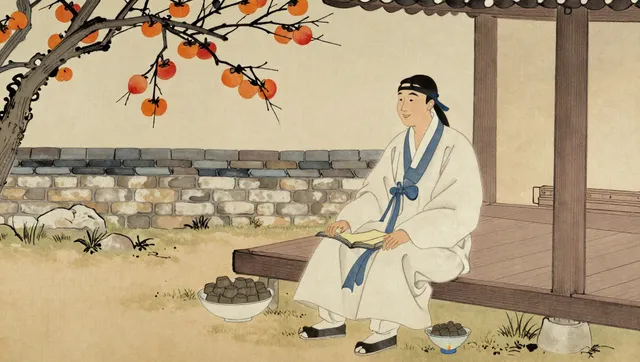 XenLook AI interpretation
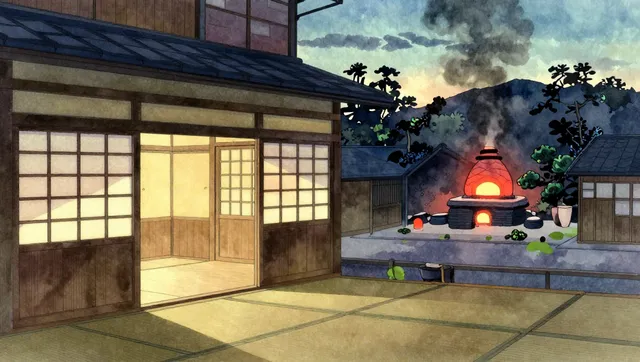 XenLook AI interpretation
Pick one to see the answer and why.
1. What is the method of drawing the form in ink and then laying very pale colour thinly over it?
2. In the tales, how long does the imugi wait before it obtains the jewel?
3. In Seok Gyeong’s 「Dragon Among Clouds」, what makes the contour of the dragon?
4. Which of these animals is not among the parts said to make up the dragon?
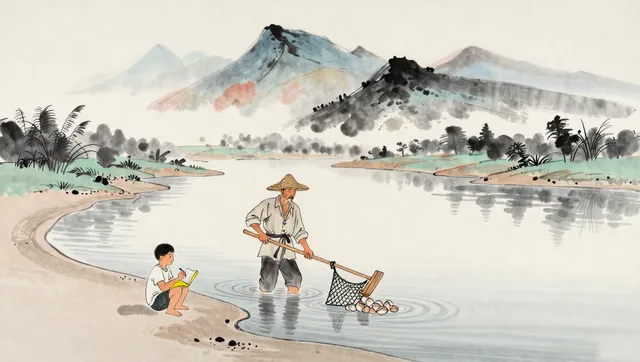
5. In the dawn riverbank picture, which place is painted in the palest ink tone?
A sentence written for this style is ready. Copy it or take it straight to the studio.
 XenLook AI interpretation
A dawn riverbank painted on a yellowish hanji-like ground with thin ink lines, spreading ink and a pale blue-green wash, a small person sitting on a low sandbar, one spot of red berries and generous empty space
Try changing Swap the riverbank for cloud-wrapped peaks and put a yellow lamp where the red berries were.
The sentence is copied. Paste it into the studio's input box.
The text of this room was written by cross-checking the sources below.
Pictures marked “XenLook AI interpretation” were made by XenLook with XenArt. They are not historical paintings and no painter made them. Originals carry the “Original” mark and the name of the museum that holds them.