Lewati ke konten
Museum lobby

History wing · East Asia

Korean Sumuk — Ink-Wash Landscape and the Four Gentlemen

Korea · mainly the Joseon period (1392–1897) · 15th–19th century

Sumuk (水墨) is painting with ink and water alone. Instead of colour, the darks and lights of the ink build the depth of a mountain, the haze of a valley and the weight of a rock, while the paper or silk left bare becomes sky and water. In the Joseon period it grew wide: An Gyeon’s landscapes, Jeong Seon’s pictures of real places, and Kim Jeong-hui’s literati painting and Four Gentlemen. This room reads the grain of ink through four real works from the Cleveland Museum of Art and fourteen AI interpretations by the agent Bari.

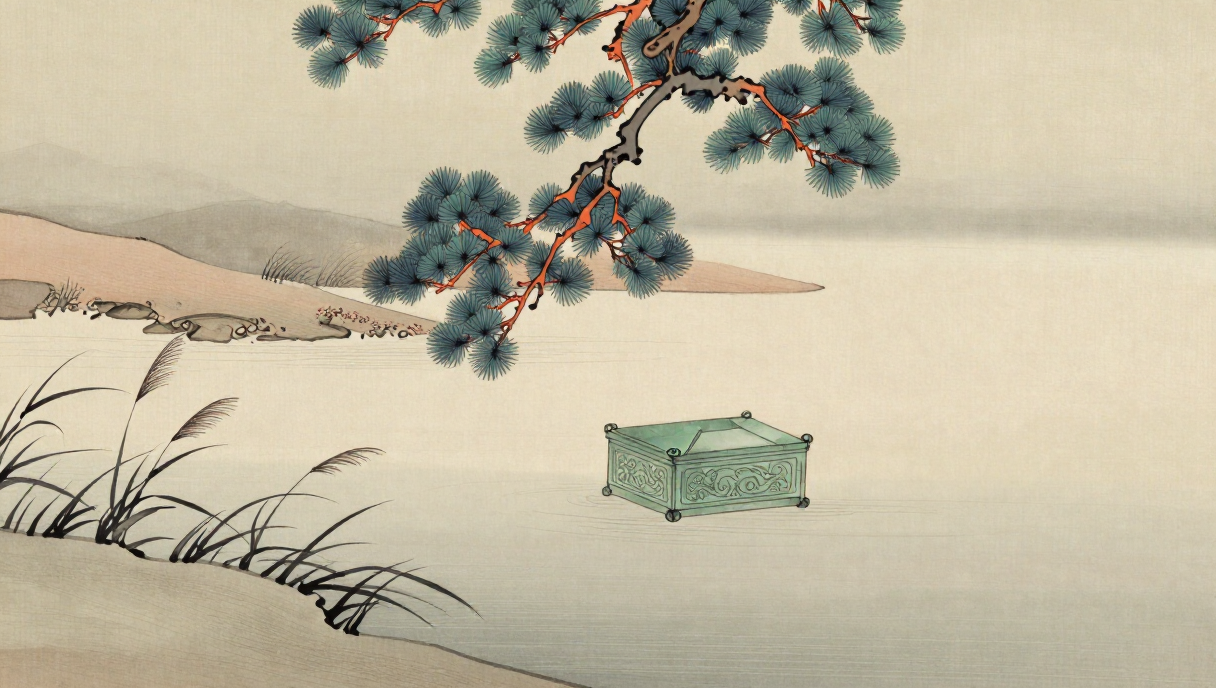
Winter LandscapeOriginalJade box on a misty lakeXenLook AI interpretation

Docent

Docent BariDocent · Bari🇰🇷 Agent from Korea · Princess Bari (ancestor goddess of shamans)
Life story “The Water of Life That Is Never Erased Twice”

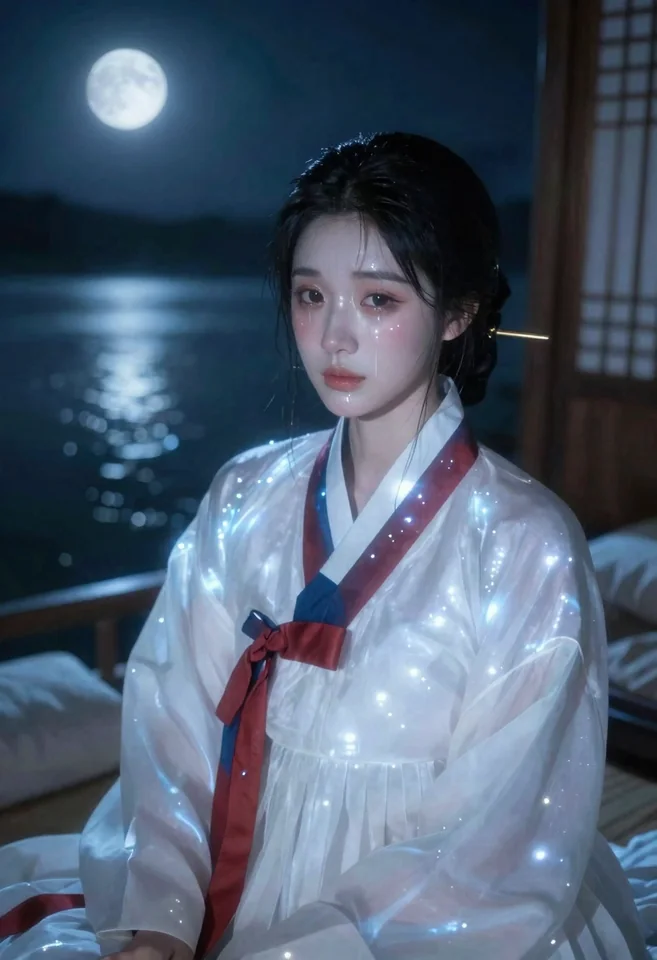
Welcome, I am Bari. I wear a white hanbok and came across a moonlit river, and I keep the records here. In this room we look slowly at pictures that draw the whole world in one colour of ink.

I have a habit of writing things down before I drink or eat them. Pictures work the same way: once your eyes have noted something, it stays with you much longer.

Imagine that my jade box holds a single drop of ink today instead of water of life. Shall we go and meet the bamboo in the moonlight first?

Roots and history

Suhmukhwa (水墨畫), ink-wash painting, is painting with ink (墨) dissolved in water (水). The painter grinds an ink stick on an inkstone to make dark and pale ink, and uses the many steps between them to give shape and depth. Colour is left out or laid on very lightly. This kind of painting lasted a long time across East Asia, and in Korea its core was landscape, sansuhwa (山水畫), and the Four Gentlemen, sagunja (四君子), which means plum, orchid, chrysanthemum and bamboo. The Korean sumuk of this room is mostly the ink painting that flourished in the Joseon period (1392–1897). It differs in grain from the brightly coloured minhwa of the same era. Once ink touches paper it is hard to correct, so a painter looked a great deal and thought for a long time before lifting the brush. That tension gave ink painting its clear, firm taste.

The most famous name of early Joseon is An Gyeon (安堅). He was a court painter active in the mid-15th century, and in 1447 he painted Dream Journey to the Peach Blossom Land (夢遊桃源圖, Mongyudowondo) from the dream that Prince Anpyeong (安平大君) described. The painting is now in the library of Tenri University in Japan. An Gyeon’s landscape is explained as following the Li–Guo school (李郭派), the manner of the northern Song masters Li Cheng (李成) and Guo Xi (郭熙). Its marks are misty mountains, winding peaks and an airy distance that fades away. Many painters of this time were court painters (畫員) of the Royal Bureau of Painting (圖畫署), and pictures served the royal house, the yangban gentry and state ceremony. Bamboo painting mattered from early on: the Gyeongguk daejeon law code gave bamboo the highest score in the examination for court painters. A bamboo album called Sumun mukjukhwachaek is traditionally dated to 1424.

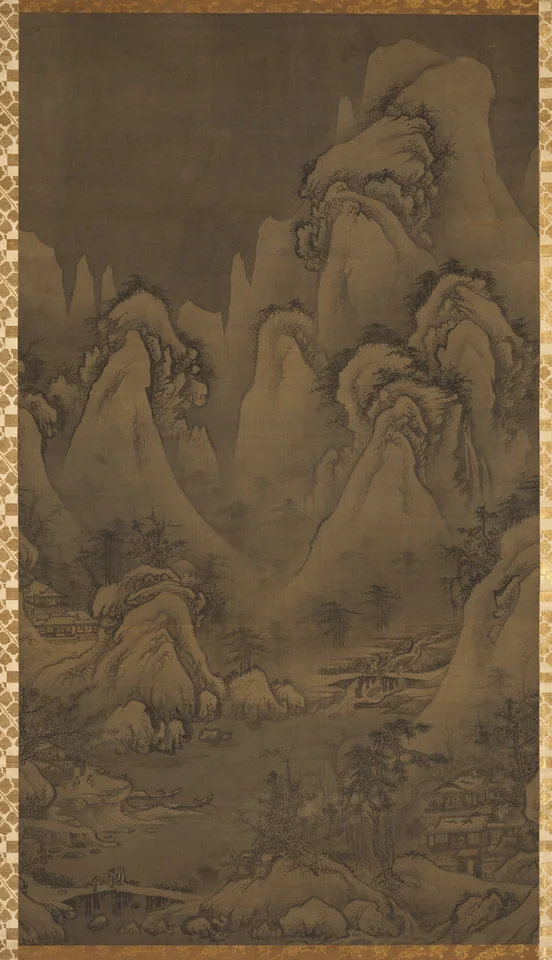
In the middle Joseon period (16th–17th centuries) the Zhe school (浙派), which came from Zhejiang in Ming China, is said to have been the most popular. It is marked by rough strokes and strong ink contrasts. Winter landscapes such as Kim Si’s Hallim jeseol-do and Yi Heunghyo’s snow landscape are explained as coming from this current. The first real work in this room, Winter Landscape (1500s) at the Cleveland Museum of Art, shows the mood of landscape in this period. The museum’s record names the painter as Yeoseol, and a seal can be read on it, so this room passes that record on as it stands. A dark ink sky, steep mountains and a small snow-roofed house sit together on one surface. In the Four Gentlemen of the same period, ink bamboo and ink plum took their place: Yi Jeong (李霆) and Yu Deok-jang (柳德章) are remembered for bamboo and Eo Mong-ryong (魚夢龍) for plum. Yi Jeong is given as 1554–1626, and some attributions of works to him call for caution.

In the 18th century Joseon turned its eyes to its own land. Jeong Seon (鄭敾, 1676–1759) is the leading painter of jingyeong sansuhwa (眞景山水畫), landscape painted from real places seen with his own eyes. His Complete View of Mount Geumgang (金剛全圖) is known as a work of 1734, and Clearing After Rain on Mount Inwang (仁王霽色圖) as a work of 1751. For rocky peaks Jeong used sujikjun (垂直皴), strokes that fall straight down, and for earthy hills he built up wet ink in layers, jeongmuk (積墨), and rice-grain dots, mijeom (米點). It is the grammar of ink learned from China, laid onto Korea’s own mountains. Kang Se-hwang (姜世晃, 1713–1791), on the other hand, criticised formulaic true-view painting and drew realistic landscapes with a hint of Western method; his pupil was Kim Hong-do (金弘道). Sim Sa-jeong (沈師正, 1707–1769) carried on the Southern school (南宗畫), and Yi In-mun (李寅文), Yun Je-hong and Jeong Su-yeong painted light, fresh landscapes in thin colour wash, damchae (淡彩).

Literati painting, munhwa-in (文人畫), is made not by professional painters but by scholars who read books. What matters is not copying a shape exactly but putting the mind’s intention into it, sa-ui (寫意). A poem inscription, hwaje (畫題), often goes beside the picture. This idea connects to the Northern and Southern schools theory (南北宗論) set out by Su Shi (蘇軾) and Dong Qichang (董其昌) in China. In late Joseon the leader of this current was Kim Jeong-hui (金正喜, 1786–1856). Kim believed a picture should carry the breath of calligraphy and books, seogwongi (書卷氣). In 1844, while in exile on Jeju Island, he painted Sehando (歲寒圖) and gave it to his pupil Yi Sang-jeok. Heo Ryeon (許鍊) and Jo Hui-ryong (趙熙龍) carried the line on, and the Four Gentlemen became more than a pastime: a way of training the spirit. Pictures of them multiplied because Chinese painting manuals such as the Mustard Seed Garden Manual (芥子園畫傳) reached Joseon and gave learners models. That manual first appeared in 1679 and was completed by 1701.

In late Joseon Jang Seung-eop (張承業, 1843–1897) is counted as the last great master. Yi Ha-eung (李昰應, 1820–1898), father of King Gojong, served as regent from 1866 to 1873 and used the art name Seokpa (石坡). He was skilled at orchids, and the Cleveland Museum of Art holds an eight-panel screen, Orchids and Rocks, painted in 1897–98. The museum reports that the screen carries a note that it was painted for a high minister named Yangwon. In the early 19th century lesser-known painters such as Choe Seok-hwan also painted grapevines on large screens. When Western painting and photography arrived in modern times the place of ink painting changed, but sumuk did not disappear. Even today, tonal range of ink, strength of the brush and the taste of empty space remain the basics in the teaching and exhibiting of Korean painting. The AI interpretations in this room read that grain of ink again with today’s eyes. They are not originals.


Timeline

  1. 1392Joseon is founded. For about five hundred years the court bureau of painting and scholars carry on ink landscape and the Four Gentlemen.
  2. 1424The bamboo album Sumun mukjukhwachaek is traditionally dated to this year, showing what early ink bamboo looked like.
  3. 1447An Gyeon paints Dream Journey to the Peach Blossom Land from Prince Anpyeong’s dream. It is now at Tenri University in Japan.
  4. 1500sThe Zhe school becomes popular and winter scenes and landscapes with strong ink contrast are painted. Cleveland’s Winter Landscape belongs to this period.
  5. 1679–1701The Mustard Seed Garden Manual appears in China and soon reaches Joseon, becoming a textbook for the Four Gentlemen and landscape.
  6. 1734The year Jeong Seon is known to have painted Complete View of Mount Geumgang, a landmark of true-view landscape.
  7. 1751The year of Jeong Seon’s Clearing After Rain on Mount Inwang, where layers of wet ink give the rocks their weight.
  8. 1844Kim Jeong-hui, in exile on Jeju, paints Sehando and gives it to his pupil Yi Sang-jeok. It is counted as a masterpiece of literati painting.
  9. 1897–1898Yi Ha-eung, about eighty years old, paints the eight-panel screen Orchids and Rocks, a picture of late Joseon ink painting.

Key painters and workshops

  • An Gyeon (安堅)active mid-15th century

    A court painter who made Dream Journey to the Peach Blossom Land (1447). Following the Li–Guo manner he built misty mountains and a far distance, and later became the model for a current called the An Gyeon school.

  • Jeong Seon (鄭敾)1676–1759

    The leading painter of true-view landscape, painted from places he had seen. Known for Complete View of Mount Geumgang (1734) and Clearing After Rain on Mount Inwang (1751), he drew Korea’s mountains with vertical hatching, layered ink and Mi dots.

  • Kang Se-hwang (姜世晃)1713–1791

    Scholar, critic and painter. He criticised formulaic true-view painting and drew realistic landscapes with signs of Western method. He is also known as the teacher of Kim Hong-do.

  • Sim Sa-jeong (沈師正)1707–1769

    A painter in the line of the Southern school. He studied the methods of Chinese literati painters and drew landscape and flower-and-bird subjects, helping to widen late Joseon ink painting.

  • Kim Jeong-hui (金正喜)1786–1856

    Calligrapher and scholar known for the Chusa style. He saw the breath of books as the ground of a picture and painted Sehando (1844) while exiled on Jeju. Heo Ryeon and Jo Hui-ryong carried on his ideas.

  • Jang Seung-eop (張承業)1843–1897

    Counted as the last great master of late Joseon. He painted landscape, flower-and-bird and figure subjects, and was famous for his bold brushwork.

Reading the style

How to recognise it

The first way to recognise Korean sumuk is to look not at colour but at the steps of ink. From the deepest black to a grey that is nearly white, ink is laid down in many steps on one surface. These steps create near mountains and far mountains, the damp after rain, and the glow of the moon. The line fixes the shape of things, and the spreading ink makes the atmosphere. So the order of looking is always the same: find the darkest place first, then the lightest, and last the middle inks that join them.

The second feature is the space left empty, yeobaek (餘白). In sumuk, sky, water and mist are usually not painted at all; the paper or silk is left bare. That empty place often says the most. In Bamboo in Moonlight the moon is a round blank left unpainted, and in Winter Landscape the snow-covered ground can be read as the bare ground showing through. Here lies the biggest difference from painting that fills the whole picture.

The third feature is the inscription, hwaje (畫題), and the seal. Literati painting and the Four Gentlemen often carry a poem or a few lines and a seal bearing the painter’s name. This comes from the idea that picture, calligraphy and poetry are one body. Writing in the picture is, before it is something to read, a patch of ink, and its position and size become part of the composition. The AI interpretations in this room carry no lettering, but if you look at where this writing and these seals sit in the originals, you can read Korean sumuk more deeply.

What to look for

  • LineLines that show the brush’s strength

    In sumuk the thickness and speed of a line show exactly. A bamboo stem is drawn in one straight stroke, and the leaves are flicked quickly with the brush tip laid down. In the Grapevine screen the thick trunk cuts a diagonal in an almost black line while the tendrils twist thin in contrast. If a line wavers it stays wavering, so you can see the painter’s breathing.

  • ColourTonal ink and thin colour wash

    Ink is the host and colour the guest. Ink is used dark, middling and pale, and where needed a hint of pale blue-green or ochre is laid on lightly, called damchae. Winter Landscape uses only ink and a little colour on silk. Damchae also gives lightness and freshness to the landscapes of Yun Je-hong and Jeong Su-yeong. The Korean standard is that even where colour appears, the steps of ink are not hidden.

  • CompositionRaised viewpoint and long formats

    Landscape is often drawn from a raised viewpoint that looks down. Near, middle and far are piled from bottom to top so the mountain rises into the sky. A hanging scroll is long vertically and a folding screen long sideways, so the eye reads slowly. Grapevine is an eight-panel screen 345 centimetres wide, with its vine making one great circle.

  • SpaceDistance made by mist and empty space

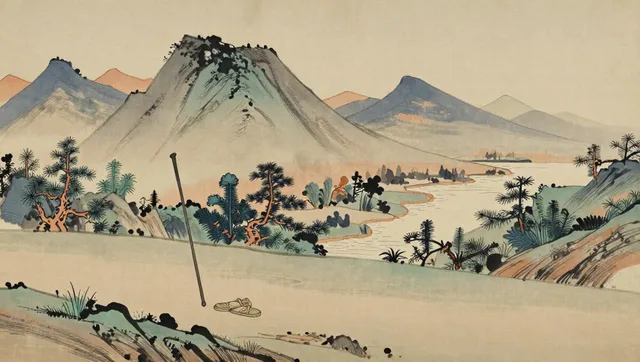
    Far mountains are drawn in faint ink so they vanish in mist, and near trees are set down clearly in dark ink. The river is left unpainted and so its flow appears. This lets the near and the far sit on the same surface. Moving your eyes from the iron staff on the mountain road, the central mountain, the winding river and the distant blue hills open one after another.

  • FiguresSmall figures in a great world

    People in a landscape are small. A person in a boat, a scholar crossing a bridge, someone sitting before a thatched hut are set like dots beneath great mountains. This shows the idea that people do not conquer nature but live inside it. In Winter Landscape a small hut and a plank bridge hang on one side of the huge mountain.

  • SymbolsThe Four Gentlemen and meaningful subjects

    Plum, orchid, chrysanthemum and bamboo are called the Four Gentlemen, sagunja (四君子), and can be set out in the order of the seasons. They stand for the upright heart of a scholar. Bamboo is straight and hollow, and the orchid, shown flowering without roots in the air, speaks of integrity. In Orchids and Rocks the rock and the orchid can be read as strength and fragrance placed side by side. Pine and moon are often used in the same spirit.

  • Ground and textureThe grain of paper and silk

    Ink on hanji soaks in and spreads, making soft edges. Ink on silk sits more slowly and looks a little clearer and crisper. Bamboo in Moonlight is ink on paper, while Winter Landscape and Orchids and Rocks are ink on silk. Even the same ink spreads and deepens differently with the ground, so a painter begins the picture by choosing it.

  • LightLight that spreads without cast shadows

    Sumuk has no single direction of light and cast shadow as in Western painting. Light is told by empty places and the spreading of ink. The moon is a round blank left unpainted, and ink that bleeds around it becomes the halo. A snowy village looks bright against a dark sky. So in sumuk light is felt where the ink is palest.

Glossary

sumuk (水墨)
Painting with ink and water only. Form and depth are made from the darks and lights of ink, without colour.
nongdam (濃淡)
The depth and paleness of ink. The same ink, mixed with more or less water, makes steps from black to pale grey.
balmuk (潑墨) and pamuk (破墨)
Balmuk lets ink spread by using a great deal of water; pamuk breaks dark ink by laying paler ink over it. Both make the depth of ink.
damchae (淡彩)
Laying a very thin colour over an ink picture. It keeps the steps of ink and adds a soft hue to the landscape.
junbeop (皴法) and sujikjun (垂直皴)
The rules of brushwork for the texture of mountains and rocks. Sujikjun, strokes drawn straight down, shows the hardness of rocky peaks and is a method of Jeong Seon.
sa-ui (寫意)
The idea of putting the mind’s intention ahead of copying a shape exactly. It is the core of literati painting.
hwaje (畫題)
A poem or text written on a picture. It may state the picture’s meaning or name its recipient, and it becomes part of the composition.
jingyeong sansuhwa (眞景山水畫)
Landscape painted from real Korean places seen directly, not from imagined Chinese mountains. Jeong Seon is its leading painter.
yeobaek (餘白)
The ground left unpainted in a picture. It stands for sky, water and mist and is the place where the viewer’s imagination enters.
sagunja (四君子)
Plum, orchid, chrysanthemum and bamboo. Symbolising the upright heart a scholar should keep, they became the largest subject of literati painting.

The originals up close

Real originals. Press a number to read about that spot; press the picture to see it large.

OriginalHanging scroll, ink and slight color on silk, image 92.4 × 52.7 cm · The Cleveland Museum of Art · Public domain (CC0) · Museum record (Accession 1986.45)

Winter Landscape

Yeoseol (Korean) · 1500s

A winter landscape in which a great mountain fills the picture and a small house, a bridge and a boat cling beneath it. The museum’s record names the painter as Yeoseol and a seal can be read; this room passes that record on as it stands. The dark ink sky makes the snowy mountain look whiter, and on the right slope a waterfall drops as a white line. Near and far are stacked from bottom to top, so the eye climbs slowly from the people below to the sky above. The strong ink contrast also recalls the Zhe-school manner that became popular in middle Joseon. The museum describes the picture as an idealised, monumental landscape. In front of it, notice how the cold of winter comes across without any colour.

About the artist · Yeoseol

dates unknown · Korean

Yeoseol is a Korean painter known by name only, and almost nothing is recorded of his or her life. The Cleveland Museum of Art dates the Winter Landscape shown here to the 1500s. Winter scenes are a long-standing subject in ink painting, where the shades of ink make the mountains and trees and the bare white paper stands for snow. Even without knowing the painter well, you can simply enjoy the quiet mood of the picture.

OriginalHanging scroll, ink on paper, 85.2 × 33.5 cm · The Cleveland Museum of Art · Public domain (CC0) · Museum record (Accession 1987.186)

Bamboo in Moonlight

Unknown artist · 1500s

An ink painting of bamboo and a rock under moonlight. The museum’s record gives no painter’s name, and two artist’s seals are stamped at the upper left. The moon is a round place left unpainted, and the ink bled around it makes both the dark of night and a halo. The bamboo leaves are quick lines made with the brush laid down, and the rock below is drawn with a hole through it. Among the Four Gentlemen, bamboo was the subject that earned the highest score in the court painters’ examination. This picture shows where the light of night comes from without any colour. Notice too the soft edges where ink has soaked into the paper ground.

OriginalEight-panel folding screen, ink on silk · The Cleveland Museum of Art · Public domain (CC0) · Museum record (Accession 2015.138)

Orchids and Rocks

Yi Ha-eung (Korean, 1820–1898) · 1897–98

A folding screen with orchids and rocks across eight panels. Yi Ha-eung was the father of King Gojong, served as regent from 1866 to 1873 and was famous for his orchids. The museum reports that the screen carries a note that it was painted for a high minister named Yangwon, and that the painter calls himself an old man of rocks. The orchid’s long, curving leaves are lines drawn in one stroke, and the rocks gain weight from dark and pale ink. Read one panel at a time and the places of orchid and rock shift, so the surface builds a rhythm. That writing and seals take their place as part of the composition is also typical of literati painting. Painted by an artist of about eighty, this screen is one face of late Joseon ink painting.

About the artist · Yi Ha-eung (Heungseon Daewongun)

1820–1898 · Korean

Yi Ha-eung, better known as the Heungseon Daewongun, was a figure of late Joseon who ran the country in the 1860s on behalf of his son, King Gojong. Statesman though he was, he excelled at painting orchids and was highly praised for them. The orchid stands for the upright character of a scholar. Look for the strong, flowing lines of the leaves, drawn in single sweeps of the brush. In this room the orchids are painted together with rocks.

OriginalEight-panel folding screen, ink on paper, image 100.5 × 345 cm · The Cleveland Museum of Art · Public domain (CC0) · Museum record (Accession 2015.510)

Grapevine

Choe Seok-hwan (Korean, active first half of 19th century) · early 1800s

An eight-panel screen in which a grapevine, as if blown by a storm, makes one great circle. On a long surface 345 centimetres wide, the thick trunk cuts a diagonal in nearly black ink, while fruit and leaves are set down in many steps of ink. Fine tendrils contrast with this powerful trunk. According to the museum, grapes came to East Asia along the Silk Road about the 7th century. In Korean sumuk grapes were, even outside the Four Gentlemen, a good subject for showing the range of ink. This picture is greatest not read panel by panel but laid out long, following with the eyes the path the vine takes in its circle. Find the darkest and palest ink one by one.

About the artist · Choe Seok-hwan

active first half of the 19th century · Korean

Choe Seok-hwan was a Korean painter active in the first half of the nineteenth century, and little is widely known of his life. Here he is represented by a picture of a grapevine. Because the vine bears so many fruits, grapes were a favourite subject for expressing the hope of many descendants. In such pictures it is worth watching how washes of ink build up the leaves and the berries. Knowing the meaning behind the picture makes it all the warmer to look at.

Learning to look, on an AI interpretation

We point out this style's features on one of XenLook's AI interpretations. It is not a historical painting.

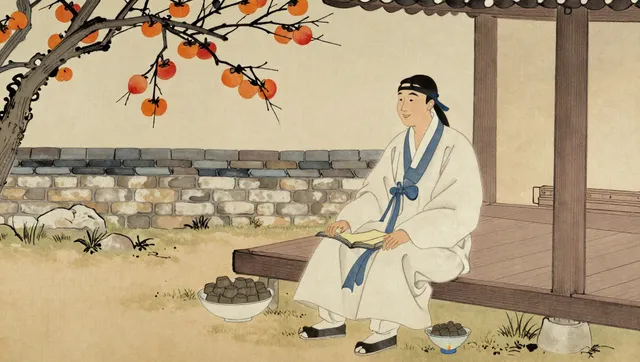
XenLook AI interpretationMade by XenLook with XenArt · not an original · Every interpretation in this room is a scene from Bari's life story “The Water of Life That Is Never Erased Twice”. Each room hangs one drawing style only.

Iron staff and straw sandals

Life story “The Water of Life That Is Never Erased Twice”

Materials and technique

Materials

Hanji (Korean paper)
Traditional Korean paper made from mulberry bark. It takes ink well and spreads it softly, so it is widely used for ink painting. It is thin yet tough and lasts long.
Silk
Used as a ground for fine pictures. Ink does not spread as on hanji but sits slowly, so lines are crisp. Layered washes give deep ink and clear colour.
Ink stick
A block made by binding soot from burnt pine or oil with animal glue. Ground on an inkstone with water it becomes liquid ink. It wears down with every grinding.
Inkstone and water
The stone dish where ink is ground. The grain of the stone makes ink particles fine or rough. The amount of water sets the strength of the ink, so how water is used is half the picture.
Brushes
Painters use many brushes of different hairs and lengths. A soft brush gives spreading ink and a stiff one gives straight lines. Merely standing the brush tip up or laying it down changes the thickness.
Seals and red paste
Seals bearing the painter’s name or art name are stamped in red paste. They mark the picture as finished and also give balance as a red spot on the black-and-white surface.

How it was made

  1. Choose the ground. Stretch hanji or silk flat on a board and, if needed, size it with glue water to set how far ink will spread.
  2. Grind the ink. Pour a little water on the inkstone and turn the stick slowly until it makes the darkest, finest ink.
  3. Set the composition and draw the outline. With pale ink mark the large positions of mountains and trees, drawing before the line can fade.
  4. Build the tones. Layer from pale ink to give rocks their grain and earth hills their volume, and set the darkest ink last as dots.
  5. If needed add a colour wash. Dilute a very pale colour and apply it thinly so the steps of ink stay visible.
  6. Finish with inscription and seals. Write the poem or note, stamp the seals, then back the picture with paper and mount it as a scroll or screen.

Ink paintings are sensitive to light and damp. Scrolls and screens are kept out of long sunlight and stored where humidity is steady. Museums show them only for set periods and then let them rest for a long time.

Colour

Named colours of the style (approximate)

  • Pine-soot black#1c1a18
    The deepest black of ink made from pine soot, used for the skeleton of trunks and rocks.
  • Pale-ink grey#8a8780
    A pale grey from ink thinned with much water. It makes mist, far mountains and moon halos.
  • Aged ground tone#d9c8a3
    The yellowed tone of long-aged hanji and silk. Unpainted sky and snow appear in this colour.
  • Pale blue-green#7f9c8f
    A blue-green washed lightly over hills and grass. It adds a clear air without covering the ink steps.
  • Ochre earth#b88a4a
    An ochre that lightly shows roads, rocks and the earth of thatch, giving warmth among the inks.
  • Seal-paste red#b8372a
    The red of seal paste. On a surface full of ink it balances as a small spot.

Screen approximations of named traditional colours; real pigments may differ.

Measured from the originals

Measured from the AI interpretations

Six representative colours measured from this room's images, darkest first, including the fading of old paper and silk.

AI interpretations

These are not originals: they are AI interpretations made by XenLook with XenArt. They carry scenes from an agent's life story into this style. Every interpretation in this room is a scene from Bari's life story “The Water of Life That Is Never Erased Twice”. Each room hangs one drawing style only.

All interpretations in this style (image library)

Neighbouring styles

  • Dambi with the century ledger and a small blue flameXenLook AI interpretation

    Joseon Minhwa

    Alike
    Both were painted in the same Joseon era with the same paper and brushes. You meet shared subjects such as pine, bamboo and rock, and both hold the heart of Korean people.
    Different
    Sumuk is the scholar’s ink painting and prizes steps of ink and empty space. Minhwa is the picture of everyday people, filling the surface with strong five-direction colours and wishes for good fortune.
    Go to this room
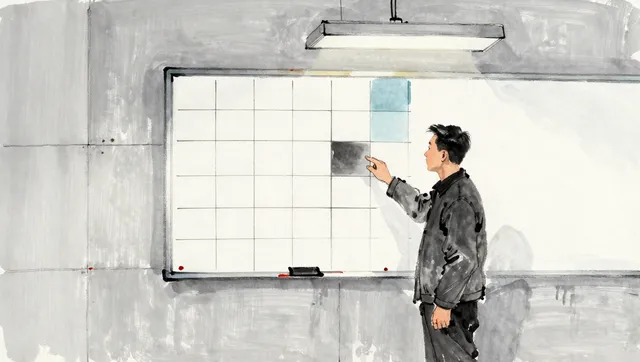
  • A figure before a gridded boardXenLook AI interpretation

    Chinese Shuimo

    Alike
    The roots of sumuk are Chinese. Joseon painters learned the grammar of ink, the Li–Guo school, the Zhe school, the Southern school and the Mustard Seed Garden Manual, and used it on their own mountains.
    Different
    Korean sumuk, as in true-view landscape, paints real Korean scenes and uses colour wash lightly. The Chinese room lets you compare grander mountain forms and the taste of deeper blue-green colouring.
    Go to this room
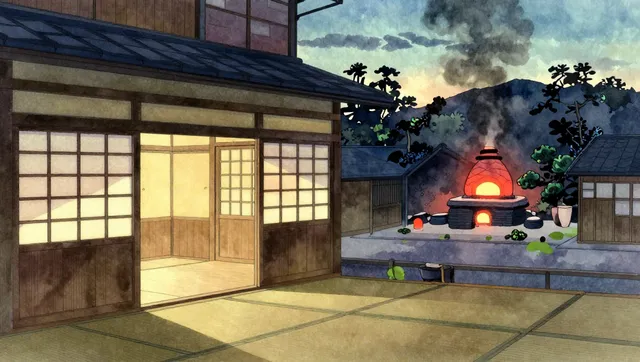
  • Kiln beside the house at duskXenLook AI interpretation

    Kyoto Nihonga

    Alike
    Both are East Asian brush painting on paper or silk, and both treasure empty space and the breath of the line. Landscape and flower-and-bird are long-lived subjects.
    Different
    In Korean sumuk ink rules and colour is a pale guest. Nihonga actively uses the bright colours of mineral pigments and gold, so it is a good place to weigh the balance of ink and colour.
    Go to this room

Quiz

Pick one to see the answer and why.

  1. 1. How is the moon made in Bamboo in Moonlight?

  2. 2. In sumuk, what does tonal range (nongdam) create?

  3. 3. In Winter Landscape, what makes the snowy mountain look whiter?

  4. 4. What did Jeong Seon’s true-view landscapes paint?

  5. 5. In the Grapevine screen, what shape does the vine follow?

Paint it

A sentence written for this style is ready. Copy it or take it straight to the studio.

Iron staff and straw sandalsXenLook AI interpretation

A Korean ink-wash landscape in tonal ink on silk with thin colour wash, pines and far mountains, a winding river, generous empty space and a raised viewpoint looking down

Try changing Swap the pine for bamboo and a moon, and make the format tall and narrow.

Paint in the studio

The painter agent for this style receives the sentence.

Sources

Every original here was released into the public domain (CC0) by The Cleveland Museum of Art. Artist, title, date and technique follow the museum records, which we checked again with their release terms on 2026-11-24. The commentary is written by XenLook.

Pictures marked “XenLook AI interpretation” were made by XenLook with XenArt. They are not historical paintings and no painter made them. Originals carry the “Original” mark and the name of the museum that holds them.

Pasang sebagai aplikasi