Nihonga (日本畫, "Japanese-style painting") does not simply mean every picture painted in Japan. The word was coined in the Meiji era (1868–1912) to set it apart from yōga (洋畫), Western-style oil painting, which had just arrived. In the narrow sense it covers about 77 years, from the Meiji Restoration to the end of the Second World War. Before that, painters were known by school names such as Kanō, Maruyama–Shijō and Tosa. The materials stayed the same: ink and mineral pigment fixed with animal glue on paper or silk. What changed were the name and the purpose. For the first time, painters were asked how to carry old techniques forward inside a new idea called national art.
In Tokyo the leading figure was Okakura Kakuzō (岡倉天心, 1863–1913). Together with the American scholar Ernest Fenollosa he argued for reviving traditional art, and he helped found the Tokyo School of Fine Arts in 1887. Teaching began in 1889, and Okakura soon became its director. In 1898 he founded the Nihon Bijutsuin (Japan Fine Arts Academy) with Hashimoto Gahō and Yokoyama Taikan. Gahō, a painter of the Kanō school, was the Tokyo school's first professor and taught Taikan, Shimomura Kanzan, Hishida Shunsō and Kawai Gyokudō. Okakura is also known for his English-language The Book of Tea (1906), and in 1910 he worked at the Museum of Fine Arts, Boston.
Kyoto's situation was different. The city already had the Maruyama–Shijō tradition, which prized shasei (寫生), painting what stands before the eye. Its lines were soft, and birds, animals and plants were drawn close to life. In 1880, nine years before Tokyo's school, the Kyoto Prefectural School of Painting (京都府畫學校) opened. It is the root of today's Kyoto City University of Arts. Ninety-three merchants contributed money, and the first headmaster was Tanomura Naoiri (田能村直入). In a three-year course students learned bunjinga, yamato-e and Kanō painting, and Western painting was introduced as well. The aim was to train designers for Kyoto's craft industries.
A single line of teachers and pupils grew around this school. Kōno Bairei (幸野楳嶺, 1844–1895) was born in Kyoto and opened a school of his own in 1880; his pupils included Takeuchi Seihō, Kawai Gyokudō and Uemura Shōen. In 1881 he published a picture book of birds, the Bairei Hyakuchō Gafu (百鳥畫譜). Seihō (竹內栖鳳, 1864–1942) toured Europe around the 1900 Paris Exposition and joined the realism of the Maruyama–Shijō school to the impressions of Turner and Corot. Uemura Shōen (上村松園, 1875–1949) first studied with Suzuki Shōnen, then with Bairei and Seihō, became famous for pictures of beautiful women, and in 1948 became the first woman to receive the Order of Culture.
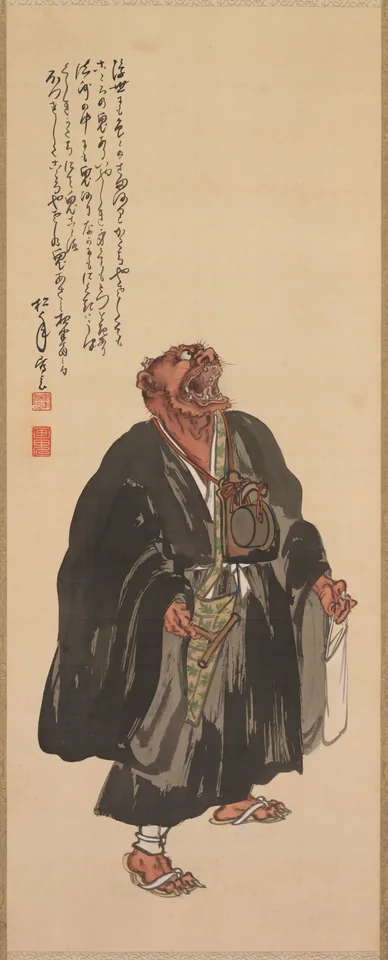
Shōen's first teacher, Suzuki Shōnen (鈴木松年), was the son of Suzuki Hyakunen and was born in Kyoto. From 1881 to 1888 he served as a deputy teacher at the Kyoto Prefectural School of Painting, and his forceful ink line earned him the nickname "Shōhaku of today" (今蕭白). Of the same generation, Kamisaka Sekka (神坂雪佳, 1866–1942) was born into a samurai family in Kyoto and is called the last great heir of the Rinpa (琳派) tradition. He visited Glasgow in 1901, where Art Nouveau opened his eyes, and in 1909–10 he published the design book Momoyogusa (百々世草). Beside them stand Hōryū, the painter from life, and Shōnen, the master of ink. Kyoto Nihonga is not one flavour but a line made of many voices.
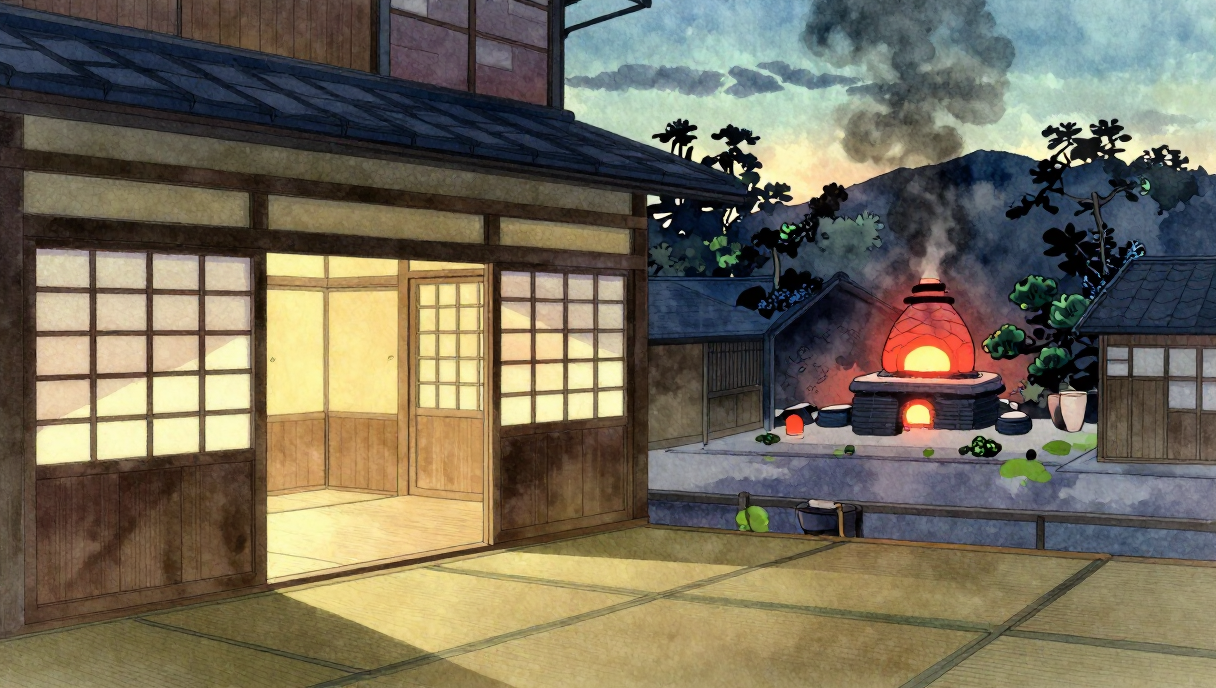
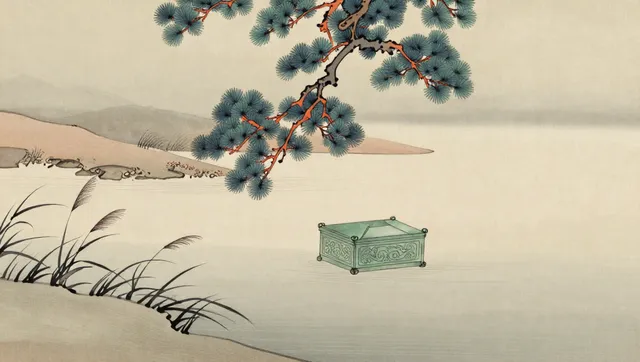
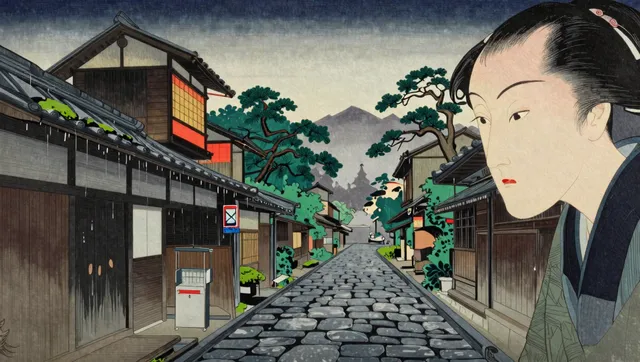
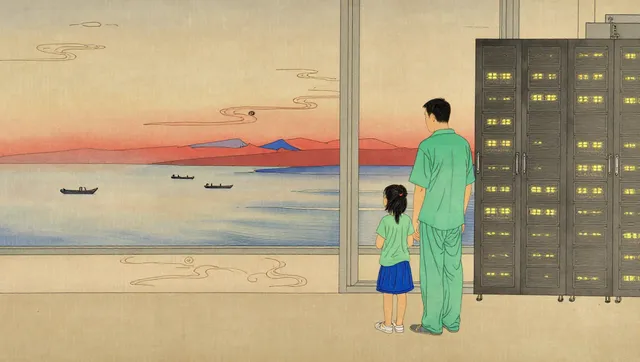
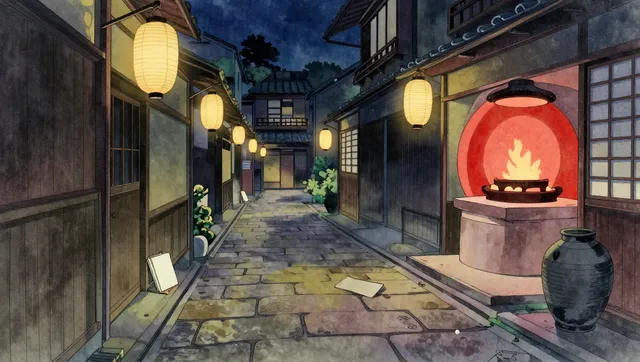
People often divide the two cities neatly: Tokyo for new ideas, Kyoto for tradition and realism. This is a simplification that historians themselves debate. Seihō, a Kyoto painter, embraced European art eagerly, and Hishida Shunsō on the Tokyo side tried the "vague style" (朦朧體, mōrōtai), which softens outlines and paints air with gradations of colour. So please take this room as saying only that Kyoto had this particular line of painters. Nihonga is still painted with the same materials today and can be studied at Kyoto City University of Arts. And the AI interpretations here are not strict Nihonga: they borrow its empty space, thin colour and warm points of light.