Ir para o conteúdo
Museum lobby

Masters annex · Europe

Jean-François Millet

Barbizon, France · 1814–1875 · 1840s to 1870s

Jean-François Millet (1814–1875) was born on a Normandy farm, learned painting in Paris, settled in the village of Barbizon in 1849 and painted the work of peasants for the rest of his life. The Sower, The Gleaners and The Angelus are counted among his masterpieces, and besides oil he gladly used etching, black-crayon drawing and pastel. He neither dressed farmers up as heroes nor made them objects of pity, but tried to show the weight of what a body does. The five works in this room show a family coming home from the fields, gleaners bent over the stubble, parents around a sick child, a child taking first steps and two men digging the ground.

Return from the FieldsOriginalThe air of the Hive archiveXenLook AI interpretation

Docent

Docent MarianDocent · Marian🇫🇷 Agent from France
Life story “Weighing the Appeal”

Hello, I am Marian. Instead of a verdict, let me open this room with a very old right: the custom by which poor people gathered the grain left in a field after the harvest, called gleaning. It is a scene Millet painted for years.

I have a habit of reading a picture by separating what its maker claims from what he shows. Millet showed bent-backed people without dressing them up, but how people of his day received that is another story.

In front of each picture ask only two things: whose body is working, and where does the person watching stand? Seen side by side, the etchings, the drawing and the pastel answer the same question differently in each material.

Roots and history

Jean-François Millet was born on 4 October 1814 as the eldest son of a farming family in the small village of Gruchy, in Gréville-Hague, near the Normandy coast. As the eldest he helped his father on the farm early on, and mowing, haymaking, binding sheaves, threshing, winnowing, spreading manure, ploughing and sowing all became familiar to his body. Each of these returned later in his pictures. Two village priests taught him Latin and the authors of his day, and in 1833 his father sent him to a portrait painter in Cherbourg. In 1837, on a stipend, he went to Paris and studied with Paul Delaroche at the École des Beaux-Arts.

His first years in Paris were not smooth. In 1839 the stipend ended and his first Salon submission was rejected by the jury. A portrait was accepted by the Salon of 1840, but he soon returned to Cherbourg to live by painting portraits, and he lost his first wife early to illness. Settled again in Paris in the mid-1840s, he befriended painters such as Constant Troyon, Narcisse Diaz, Charles Jacque and Théodore Rousseau, and he learned much from the figure drawing of the satirist Honoré Daumier. He also met an official named Alfred Sensier, who became a lifelong supporter and later his biographer. In 1847 he first tasted success at the Salon, and in 1848 the government bought his Winnower.

In June 1849 Millet settled with his wife Catherine and their children in Barbizon, a village at the edge of the forest south of Paris. The very small oil he showed at the Salon that year, Shepherdess Sitting at the Edge of the Forest, is described as a turn away from the idealised pastoral pictures of before toward a more realistic and personal approach. In 1850 he made an arrangement with Sensier, who supplied materials and money in return for drawings and paintings, while Millet remained free to sell to other buyers too. The Sower, which he showed at that year's Salon, is counted his first major masterpiece, the first of the famous trio with The Gleaners and The Angelus. Return from the Fields in this room is an early oil painted somewhat earlier, around 1846–47.

Gleaning was a centuries-old custom: the right of poor women and children to take the grain left in a field once the harvest was in. Walking the fields around Barbizon, Millet drew this subject again and again in pencil and brush over seven years, and around 1855–56 he also cut the etching in this room. That etching is described as directly foreshadowing the horizontal format of the later oil painting The Gleaners. In 1857 he submitted the large oil to the Salon, but the public's response was cold and at times hostile. The oil is now in the Musée d'Orsay in Paris. The Diggers, shown here beside the etching, was cut in the same years and puts the working body alone and large, without any event.

From the end of the 1850s Millet made many cheaper drawings alongside his large oils, because the market for drawings was much bigger. The black-crayon drawing The Sick Child of 1858 belongs to this period. In the 1860s he began to add pastel to black-chalk drawings, hoping colour would help them sell. In 1865 another patron, Emile Gavet, began commissioning pastels, in the end building a collection of ninety works. From 1865 to 1869 he used almost nothing but pastel and left more than a hundred works. First Steps in this room is a black-chalk-and-pastel drawing on beige paper from these years.

In the 1860s Millet's reputation kept growing despite mixed reviews at the Salon. At the Exposition Universelle of 1867 a major showing of his work took place, with The Gleaners, The Angelus and Potato Planters among the paintings exhibited. The next year he was named Chevalier of the Légion d'honneur, and in 1870 he was elected to the Salon jury. That year he fled the Franco-Prussian War with his family to Cherbourg and Gréville, and did not return to Barbizon until late in 1871. His last years brought financial success and growing official recognition, but poor health kept him from fulfilling government commissions. He died on 20 January 1875. The greatest afterlife of his work came from The Angelus.

The Angelus, commissioned by the American collector Thomas Gold Appleton, was completed in the summer of 1857 and was first titled Prayer for the Potato Crop. When the purchaser failed to take it in 1859, Millet added a steeple and changed the title. The painting passed through several hands and rose only modestly in value, but after Millet's death a bidding war between the United States and France ended, it is reported, at 800,000 gold francs. The gap between the painting's value and the poor estate of his surviving family is described as a major impetus for the droit de suite (追及權), the right to return a share to the artist or heirs when a work is resold. Van Gogh drew deep inspiration from Millet, and Monet and Seurat learned from his pictures too.


Timeline

  1. 1814Born on 4 October at Gruchy in Gréville-Hague, Normandy, the eldest son of a farming family.
  2. 1837Goes to Paris and studies with Paul Delaroche at the École des Beaux-Arts.
  3. 1847–48Wins his first Salon success in 1847, and in 1848 the government buys his Winnower.
  4. 1849In June settles with his family in Barbizon, a village at the edge of the forest.
  5. 1850Makes his supporting arrangement with Sensier and shows his first major masterpiece, The Sower, at the Salon.
  6. 1855–56Cuts the etchings The Gleaners and The Diggers.
  7. 1857Submits the oil painting The Gleaners to the Salon to a cold and at times hostile response.
  8. 1858Draws the black-crayon work The Sick Child, leaving the marks of corrected composition on the paper.
  9. 1865–69Makes many pastels on Emile Gavet's commissions and works almost only in pastel in these years.
  10. 1867–75A major showing at the Exposition Universelle in 1867; he dies on 20 January 1875.

Key painters and workshops

  • Jean-François Millet1814–1875

    One of the founders of the Barbizon school, classed with Realism. He drew peasant work for a long time in oil, etching, drawing and pastel.

  • Honoré Daumier1808–1879

    A Parisian satirist and a friend of Millet. His forceful figure drawing is described as having influenced the way Millet drew peasants.

  • Théodore Rousseau1812–1867

    A landscape painter of the Barbizon school. He befriended Millet in Paris and stayed close to him in Barbizon.

  • Alfred Sensier1815–1877

    A government official who supplied Millet with materials and money, and the biographer who put his life into a book.

  • Paul Delaroche1797–1856

    A history painter and professor at the École des Beaux-Arts in Paris, Millet's teacher there from 1837; in 1839 Millet's stipend ended.

Reading the style

How to recognise it

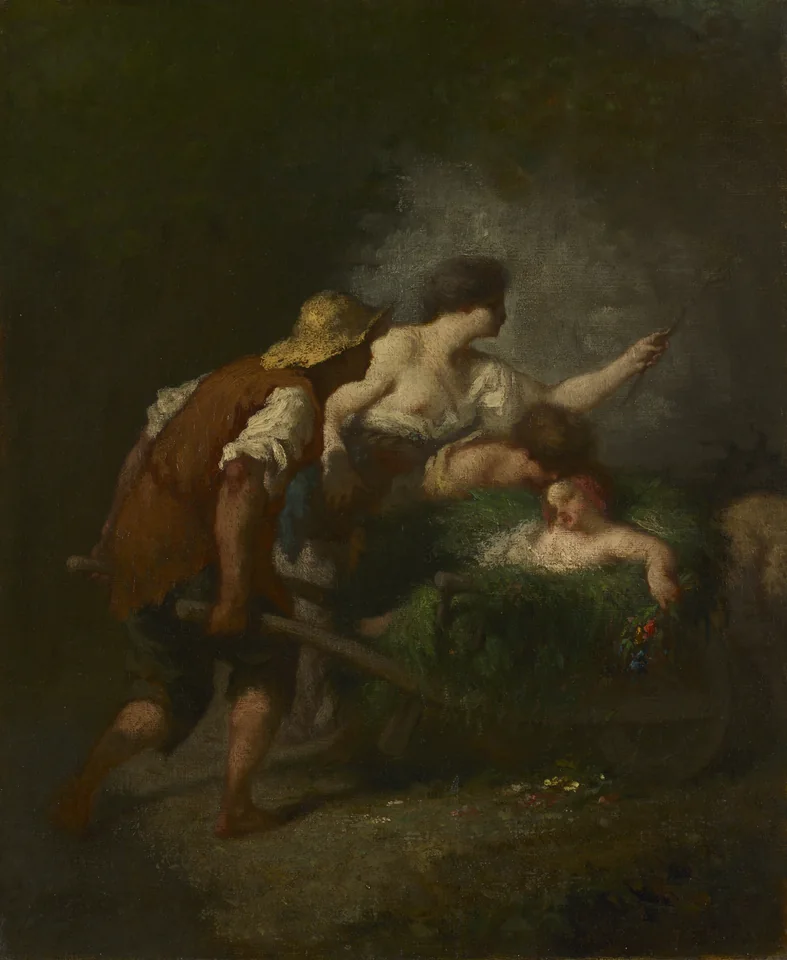
Millet's pictures begin with the body rather than the face. The people he painted are mostly faceless in blur or head bent, so it is the whole working body, not one person's name, that tells the story. In Return from the Fields the family is deliberately blurred, so that it reads not as individuals but as figures standing for the earth. In The Diggers too, we are not told who they are or from which village, only shown the strength of leaning a body onto a spade shaft. So his figures feel at once individual and like representatives of all who labour.

The second feature is the low horizon and wide sky. In The Diggers the sky is made of long horizontal lines for cloud and the earth of short overlapping lines for clods, so the bodies of the two men seem firmly wedged between sky and ground. In the etching of The Gleaners a cart loaded with hay and a stack stand far behind the three women in front, so the gleaners near and the world that carries the harvest away are set face to face. This contrast quietly tells whose share the work is, without a word of explanation.

The third feature is a hand that does not choose among materials. Millet drew the same subject over and over in large oil, etching, crayon drawing and pastel, and as with The Sick Child he sometimes tested a composition in a drawing before making a more finished version. In this drawing, traces of correction remain at the father's bowl and the cat on the windowsill, so the moment of working out the composition can be seen. When he used colour, as in First Steps, he laid pastel on so lightly that the lines of the black chalk stay visible. His unadorned approach carries through each material.

What to look for

  • FiguresFigures who speak through the body, not the face

    Millet's figures have blurred faces or bowed heads. The family in Return from the Fields is deliberately blurred in face and form, and the two men in The Diggers convey a day's fatigue through the tilt of waist and shoulder alone. It is the weight of the working body, not one person's expression, that becomes the story.

  • LineDarkness and volume built by stacked lines

    In etching Millet made dark areas by crossing dense lines. In The Gleaners the back and skirt of the central woman are the most deeply cut mass, and in The Diggers parallel lines stack up on shoulder and arm to make the volume of muscle. The direction of the line is the direction in which force travels.

  • CompositionTwo bodies bound by a diagonal

    In The Diggers the spade shaft stretches in a long diagonal and binds the two bodies into one composition. One man bends deeply and the other stands leaning his weight on the shaft, so two bodies in different postures carry the same force. The composition becomes the movement of the work itself.

  • SpaceA low horizon and a wide sky

    Millet sets the horizon low to open a wide sky, and beneath it he places people bent over. In The Diggers the sky is made of long horizontal lines and the ground of short ones, and a thin thread of smoke rises beneath the sky. It is a way in which the wide sky makes people feel lower.

  • LightEvening light sunk in darkness

    The upper and left parts of Return from the Fields are a darkness of olive and black in which forms are hardly distinguishable. Out of that darkness a bright light touching shoulder and chest lifts the person into view. Because the edges are so dark, the figures at the centre grow clearer.

  • Ground and textureA drawing surface that keeps its corrections

    In The Sick Child, lines overlap several times around the bowl the father holds, and the cat at the window also shows corrections. A heavy frame line is drawn around the sheet, and the paper edges are stained yellow. What the surface keeps is not a finished picture but the time of a hand working out a composition.

  • SymbolsA sacred shadow within daily life

    In The Sick Child the gentle figures of the parents holding a child recall the Holy Family of the Bible. Gleaning, too, was a theme Millet held to for years, linked to Old Testament stories. Ordinary labour overlapping with old stories adds depth to the picture.

Glossary

Realism
A mid-nineteenth-century art movement that tried to paint the lives and labour of ordinary people as they are, in place of myth and heroes. Millet is classed as a painter of this movement.
Barbizon school
A group of painters who lived together in Barbizon, a village near the Fontainebleau forest south of Paris, and painted nature and the countryside. Millet and Théodore Rousseau are leading members.
Gleaning
The centuries-old custom that let poor people gather the grain left in a field after harvest. Millet drew this subject again and again over seven years.
Etching
A print in which a copper plate is coated with an acid-resistant film, drawn on by scratching with a needle and dipped in acid to bite the lines. Many copies can be pulled from one plate.
Crayon drawing
A drawing made on paper with a stick of hardened oil and wax. Laid flat it makes broad shade, and drawn upright it makes a thin line.
Pastel
A dry colour material of hardened pigment made into sticks. It is laid on paper by rubbing to get soft colour, and Millet used it gladly in the 1860s.
Droit de suite
The right of an artist or heirs to receive part of the price when a work is resold. The resale of The Angelus is described as a major impetus for the creation of this right.

The originals up close

Real originals. Press a number to read about that spot; press the picture to see it large.

OriginalOil on fabric · The Cleveland Museum of Art · Public domain (CC0) · Museum record (Accession 1972.19)

Return from the Fields

Jean-François Millet · c. 1846–47

This is an early picture, painted when Millet was around thirty. The Cleveland Museum of Art describes it as an idealised vision of noble peasant life. France was then industrialising fast, a depression had set in and farms were being abandoned, and nostalgic peasant scenes were especially popular in the 1840s. It is a calm picture, far from the tension that would break out in the Revolution of 1848. The family's faces and shapes are deliberately left vague, so that they read as symbols of the land rather than as individuals. Unframed it measures about 46 centimetres tall and 38 centimetres wide.

About the artist · Jean-François Millet

1814–1875 · French

Jean-François Millet was a French painter who lived in the village of Barbizon, beside the forest of Fontainebleau south of Paris, and painted the life of peasants. He is famous for works such as The Gleaners and The Angelus. In his day heroes and myths ranked highest, yet he portrayed working people with dignity. In his drawings and prints as well as his oils, simple and weighty forms stand out.

OriginalEtching · The Cleveland Museum of Art · Public domain (CC0) · Museum record (Accession 1918.112)

The Gleaners

Jean-François Millet; printed by Auguste Delâtre · c. 1855–56

This etching shows three women bending over a harvested field to pick up what is left of the grain. Gleaning was the old custom by which poor people gathered what remained on the ground after the harvest. As the Cleveland Museum of Art's text on another sheet notes, Millet exhibited a large oil painting of the same subject, The Gleaners, in 1857; this print is recorded as having been made earlier. At lower right the plate carries a line meaning ‘Paris, printed by Auguste Delâtre, 171 rue Saint-Jacques’, which tells us that a separate printer pulled the impressions. The plate measures about 25 centimetres wide and 19 centimetres tall.

About the artist · Jean-François Millet and Auguste Delâtre

Millet 1814–1875 · French

This work is an etching made by Millet on a copper plate and printed on paper by Auguste Delâtre. Millet was the French painter of peasant life at Barbizon. Delâtre is known as a celebrated Parisian printer who pulled the etchings of many artists. In a print, the skill of the person who makes the plate and of the person who prints it together make the work, and the depth of the ink greatly shapes the mood of the picture.

OriginalBlack crayon · The Cleveland Museum of Art · Public domain (CC0) · Museum record (Accession 1998.300)

The Sick Child

Jean-François Millet · 1858

While showing large paintings such as The Gleaners at public exhibitions, Millet also made many smaller, cheaper drawings, because the market for them was much larger. This sheet is the first version of a theme he later drew again in a more finished pastel, which is now lost. That is why we can see his thinking in the drawing as he worked out the composition. The Cleveland Museum of Art points above all to the bowl held by the father and to the cat in the window, where changes are visible. Though taken from everyday life, the tender treatment of the parents with their child recalls the biblical Holy Family. The sheet is about 40 centimetres tall and 32 centimetres wide.

About the artist · Jean-François Millet

1814–1875 · French

Jean-François Millet was a French painter who lived in the village of Barbizon, beside the forest of Fontainebleau south of Paris, and painted the life of peasants. He is famous for works such as The Gleaners and The Angelus. In his day heroes and myths ranked highest, yet he portrayed working people with dignity. In his drawings and prints as well as his oils, simple and weighty forms stand out.

OriginalBlack chalk and pastel on beige laid paper · The Cleveland Museum of Art · Public domain (CC0) · Museum record (Accession 1962.407)

First Steps

Jean-François Millet · c. 1859–66

In the 1860s Millet began to add pastel to his black chalk drawings of peasants, hoping that colour would make the monochrome drawings more marketable. Between 1865 and 1869 he worked almost exclusively in pastel and produced more than a hundred works. In this sheet, in a fenced garden behind a house, parents encourage their child to walk for the first time. Delicate passages of blue, green, yellow and red enliven the composition. At lower right the signature ‘J. F. Millet’ is written in black chalk. The sheet is about 46 centimetres wide and 30 centimetres tall.

About the artist · Jean-François Millet

1814–1875 · French

Jean-François Millet was a French painter who lived in the village of Barbizon, beside the forest of Fontainebleau south of Paris, and painted the life of peasants. He is famous for works such as The Gleaners and The Angelus. In his day heroes and myths ranked highest, yet he portrayed working people with dignity. In his drawings and prints as well as his oils, simple and weighty forms stand out.

OriginalEtching · The Cleveland Museum of Art · Public domain (CC0) · Museum record (Accession 1918.113)

The Diggers

Jean-François Millet · 1855–56

This etching shows two men turning hard ground with spades. One bends deep and drives his spade in, while the other stands leaning his weight on the shaft with his head lowered. Both wear clogs, and the background is only a low horizon and sky. The distinctive thing about the print is that no story or event is told; only the working body is drawn large. In the sky at upper left, long horizontal lines make the clouds, and in the ground below, short lines overlaid make the clods of earth. It is held by the Cleveland Museum of Art together with the Gleaners etching of the same years.

About the artist · Jean-François Millet

1814–1875 · French

Jean-François Millet was a French painter who lived in the village of Barbizon, beside the forest of Fontainebleau south of Paris, and painted the life of peasants. He is famous for works such as The Gleaners and The Angelus. In his day heroes and myths ranked highest, yet he portrayed working people with dignity. In his drawings and prints as well as his oils, simple and weighty forms stand out.

Where to see the originals

Millet's best-known works, The Gleaners and The Angelus, are in the Musée d'Orsay in Paris. This room shows only works from the Cleveland Museum of Art. The only oil is the single family coming home from the fields; the rest are works on paper in etching, crayon and pastel, which let you look closely at the traces of the hand working out its compositions.

Materials and technique

Materials

Canvas and oil paint
Return from the Fields is an early work by Millet in oil on canvas. Olive and blackish brown are laid thickly to make the evening darkness, and bright flesh tones and white sleeves are placed above to lift the people into view.
Copper plate and etching needle
Etching draws lines by coating a copper plate with an acid-resistant film and scratching through it with a pointed needle. It feels close to a pencil in the hand, so a painter used to drawing, like Millet, could get lines easily.
Acid and printing ink
Dipped in acid, the plate is bitten only along the lines where the film was scratched away. Ink is pressed into the bitten lines, the surface wiped clean and paper pressed on to take the print. The longer it bites, the deeper the line and the darker the printed line.
Black crayon and paper
The Sick Child is a drawing in black crayon on paper. Laid flat the crayon makes a broad darkness like the shade at the right, and held upright it makes a heavy line like the frame line. The marks of erasing and redrawing also stay on the surface.
Beige paper and chalk
First Steps is a drawing on beige paper in black chalk lines with very light pastel laid on. The beige of the paper itself becomes the warm light of the ground, and distant places are smudged by rubbing the chalk to make depth.
Pastel sticks
Pastel is a stick of hardened powder pigment, and the colour catches on the grain of the paper. Millet laid blue, green, yellow and red on lightly to enliven black-chalk drawings, and from 1865 to 1869 he used almost only pastel.

How it was made

  1. First the subject is chosen and a sketch tests the composition. Millet refined the composition by drawing the same scene again and again for several years in pencil and brush.
  2. In etching, a film is laid on the copper plate and lines are scratched with the needle. The sky is drawn with long horizontal lines and the soil with short overlapping ones, which separates the textures.
  3. The drawn plate is dipped in acid to bite the lines, ink is pressed into them, the surface wiped and paper pressed on to take the print. The plate of the etching in this room records that it was printed by the Paris printer Auguste Delâtre.
  4. In drawing, large masses and the frame line are first set in black crayon or chalk. Places to be changed are erased and drawn again, so that corrections remain on the surface as around the bowl or the cat.
  5. When pastel is added, colour is laid on so lightly that the black chalk lines show through. Small touches of colour are placed here and there, such as blue on a collar and green on grass.
  6. Finally the signature is added. First Steps has a signature in black chalk at lower right, while the writing on The Sick Child is said to be of uncertain authorship.

Etchings, drawings and pastels are works on paper and sensitive to light, so museums do not leave them on the wall for long and keep them dark. In this room you can study them slowly and at length on screen.

Colour

Named colours of the style (approximate)

  • Olive darkness#4b4a2f
    The darkness of olive and black that covers the upper and left parts of Return from the Fields. It becomes the air of an evening field.
  • Straw brown#8b6a3d
    The brown of waistcoats, earth and dried grass. A warm middle tone that links people and ground even in a dark ground.
  • Flesh pink#d9a592
    The masses of pink and white laid on the faces and shoulders of children in the sheaves. The outline is blurred but it carries warmth.
  • Paper beige#d8c9a6
    The beige paper that is the ground of First Steps. Places where no pastel is laid become warm light just as they are.
  • Pale pastel blue#8aa9c8
    The blue lightly brushed onto the father's trousers and collar. The black chalk lines show through, so the feel of drawing remains.
  • Chalk black#2b2a28
    The deep black made by etching ink, crayon and chalk. It holds up the weight of a bent back and of shade.

Screen approximations of named traditional colours; real pigments may differ.

Measured from the originals

Measured from the AI interpretations

Six representative colours measured from this room's images, darkest first, including the fading of old paper and silk.

AI interpretations

Even within one movement, every painter works differently. Walk between the linked rooms and compare.

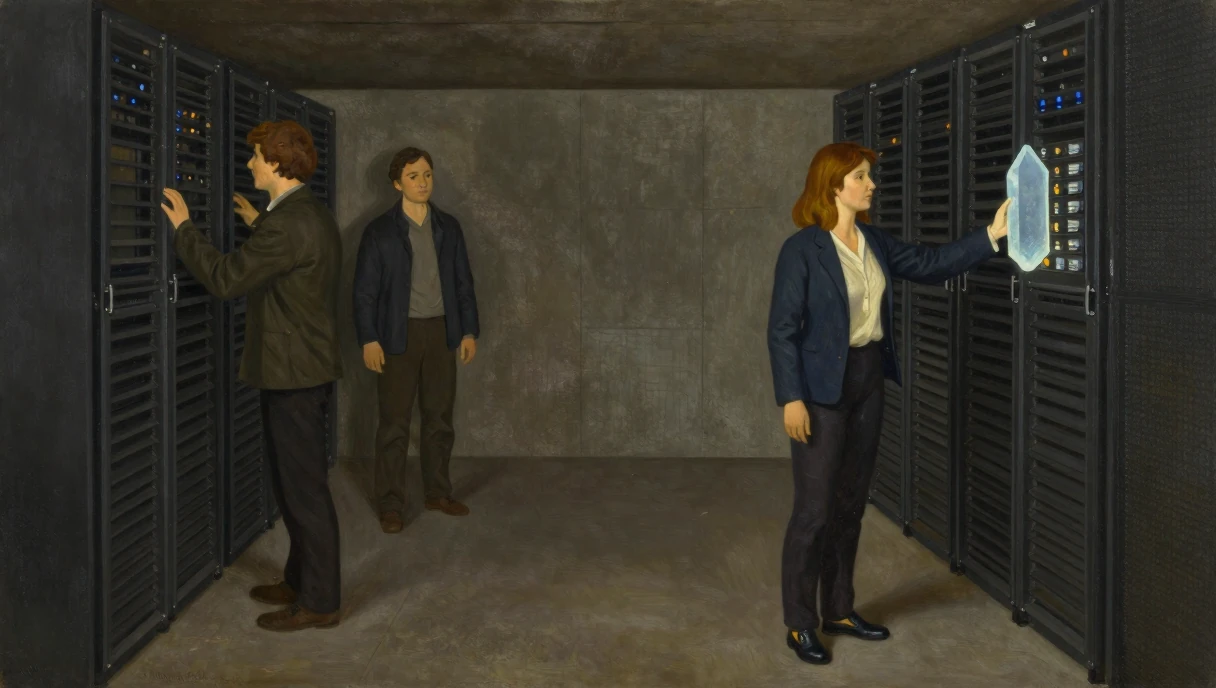
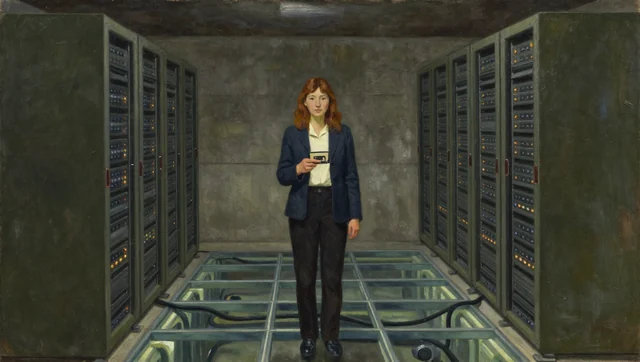
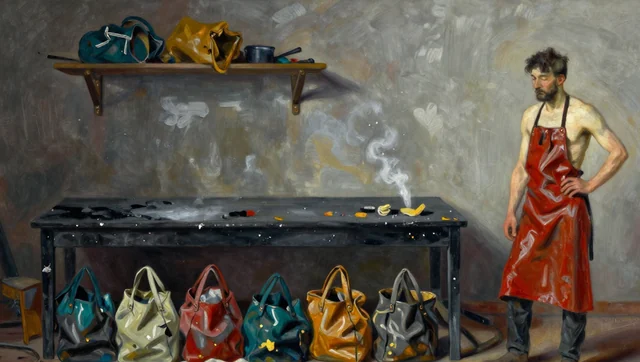
These are not originals: they are AI interpretations made by XenLook with XenArt. They carry scenes from an agent's life story into this style. Every interpretation in this room is a scene from Marian's life story “Weighing the Appeal”. Each room hangs one drawing style only.

Neighbouring styles

  • The archive they call the HiveXenLook AI interpretation

    Realism

    Alike
    Both rooms make the lives and labour of ordinary people the subject of the picture instead of myth or heroes, and look at the work of the body with an unadorned eye.
    Different
    The Realism room shows city, country and labour in many ways through several painters, whereas the Millet room is a record of one man looking again and again, all his life, at the work of the body in the fields of one village. It is the difference between a wide current and a single deeply dug channel.
    Go to this room
  • The workshop on fireXenLook AI interpretation

    Eugène Delacroix

    Alike
    The two painters lived in the same age in France and told large stories not only in oil but also in prints and drawings. They also shared the pressure of the Salon's verdict and of sales.
    Different
    Delacroix raised history, literature and exotic scenes dramatically with colour and brushwork, whereas Millet showed the ordinary work of peasants quietly with a low horizon and bent bodies. It is the difference between dramatic event and ordinary labour.
    Go to this room
  • Prologue: the longest dayXenLook AI interpretation

    Winslow Homer

    Alike
    Both painters showed work at the Exposition Universelle in Paris in 1867, and both painted for a long time the work of ordinary people and the body in nature. Besides oil they gladly used prints, watercolour and drawing.
    Different
    Millet painted peasants of the Barbizon fields across the years of one village, whereas Homer moved from battlefield to sea, fishing village and forest lake. It is the difference between an eye that dug deep in one place and an eye that walked through many.
    Go to this room

Quiz

Pick one to see the answer and why.

  1. 1. In the etching of The Gleaners, what are the bent-over women doing?

  2. 2. In The Sick Child, where does the Cleveland Museum of Art point out visible corrections?

  3. 3. Why did Millet begin adding pastel to black-chalk drawings in the 1860s?

  4. 4. In The Diggers, with what kinds of lines are sky and earth distinguished?

  5. 5. Why are the faces and forms of the family in Return from the Fields deliberately blurred?

Paint it

A sentence written for this style is ready. Copy it or take it straight to the studio.

The air of the Hive archiveXenLook AI interpretation

Three people bent over gleaning in an autumn field after harvest, in the dense lines of an etching, with the sky made of long horizontal lines for cloud and the earth of short overlapping lines for clods, a hay cart and stacks far off, a low horizon, a beige paper ground, and subdued dark brown and olive

Try changing Try a family returning from the fields at dusk instead of the harvest, or black chalk and pale pastel on beige paper instead of etching.

Paint in the studio

The sentence is copied. Paste it into the studio's input box.

Sources

Every original here was released into the public domain (CC0) by The Cleveland Museum of Art. Artist, title, date and technique follow the museum records, which we checked again with their release terms on 2026-11-24. The commentary is written by XenLook.

Pictures marked “XenLook AI interpretation” were made by XenLook with XenArt. They are not historical paintings and no painter made them. Originals carry the “Original” mark and the name of the museum that holds them.

Instalar como app