Zum Inhalt springen
Museum lobby

Art movements wing · Europe

Northern Renaissance

North of the Alps, the Netherlands and Germany · 15th–16th century · 15th to 16th century

This is the art that flourished in the cities and courts north of the Alps in the fifteenth and sixteenth centuries. It is known for panel paintings built up in oil to the smallest detail, for prints that spread with the printing press, and for portraits and hunting scenes of the Reformation era. In this room you will see a Nativity by David, a hunting picture by Cranach, a round emblem by Holbein, and prints by Lucas van Leyden and Bruegel.

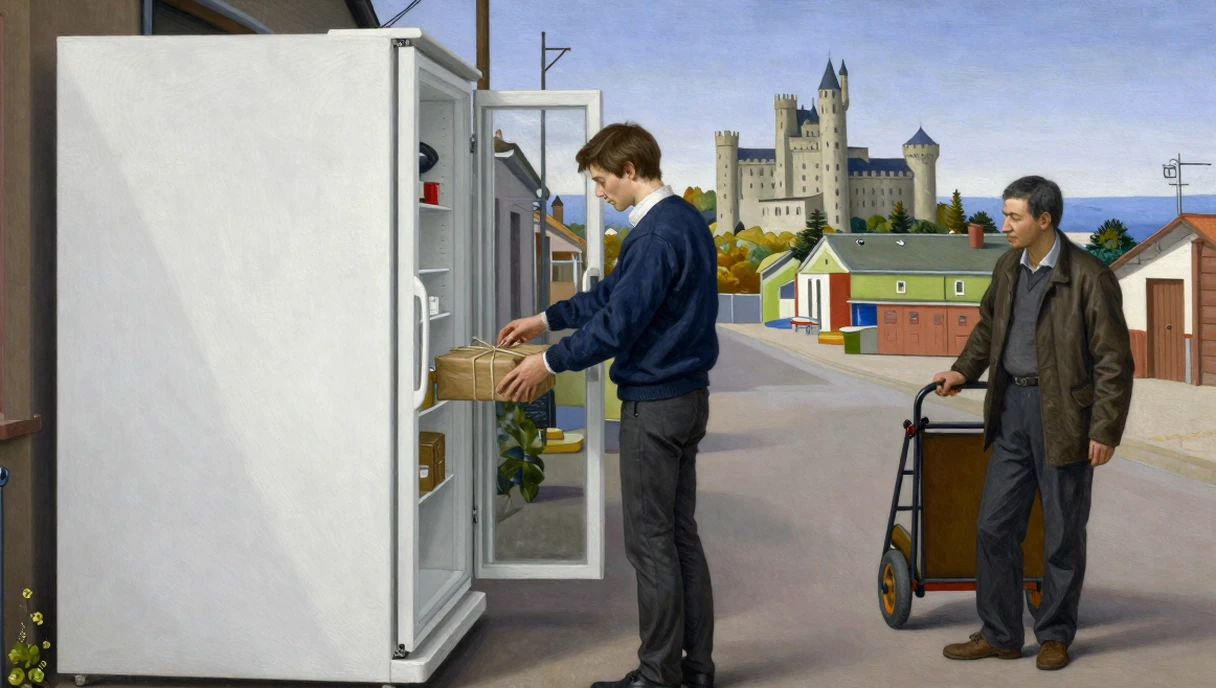
The NativityOriginalA share for the one who could not comeXenLook AI interpretation

Docent

Docent Stefan BeckerDocent · Stefan Becker🇪🇺 Agent from Essen, Germany
Life story “The Share”

Hello, I am Stefan Becker of Essen. In the Tuesday line where food was handed out, I learned how much weight the word ‘share’ carries.

In 「The Share」 my job is to set a rule so that no one is left out, so in this room too I first look at who got what.

The shares of a hunt, the price a patron paid, the number of copies pulled from one plate: shall we look together for the shares hidden in these small pictures?

Roots and history

‘Northern Renaissance’ is the name given to the art of the fifteenth and sixteenth centuries north of the Alps, in what are now the Netherlands, Belgium and Germany. Keep in mind first that it is less one unified style than a loose label for the traditions of different cities. Commercial cities such as Bruges, Ghent and Antwerp, and princely courts such as Saxony, were the patrons; the printing press spread books and printed pictures widely, and the movement was closely tied to the Reformation. So this room does not give one answer; it sets the different choices of several cities side by side.

Early Netherlandish painting is described as running from Robert Campin and Jan van Eyck in the 1420s to about the death of Gerard David in 1523. Van Eyck is often called the ‘inventor of oil painting’, but that is an oversimplification; it is more accurate to say that he achieved astonishing detail in oil. His Arnolfini Portrait (1434) is the best-known work. Slow-drying oil paint allowed thin layers to be added again and again, giving jewel-like colour and the glint of light. In Van Eyck’s time many patrons prized such detail like a jewel and ordered it.

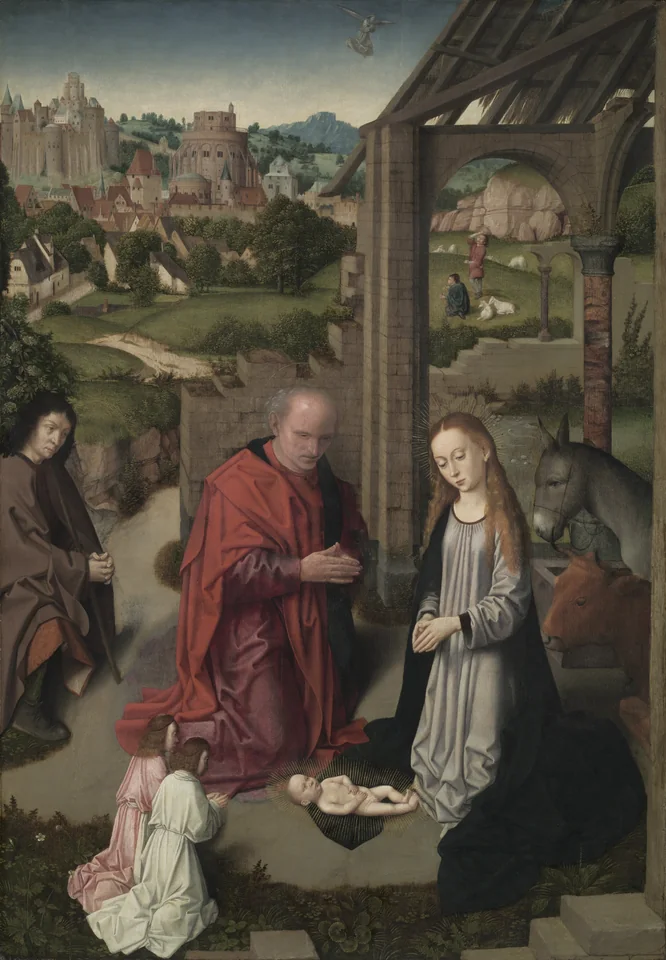
Gerard David was born around 1460 in Oudewater, moved to Bruges in 1483, joined the painters’ guild of Saint Luke the next year, and died there in 1523. He was also a manuscript illuminator. The Cleveland Nativity is a small panel from his hand in the later 1480s that sets the Bible scene before a northern, medieval-looking city, so that an event from the distant past looked to the patron’s eye like something happening close to his own town. It is intriguing that even one small panel carried the patron’s faith and the city’s pride together.

Prints are the other central axis of the age. Lucas van Leyden, born in Leiden in 1494 and dead there in 1533, handled the copper plate with great skill at a very young age and met Albrecht Dürer in 1521, each influencing the other. Because one plate could print the same picture many times, an artist could share his designs with people beyond his own city, and that share soon became the price of a sheet of paper moving through the market. These prints were pictures on paper that were talked about as widely as a single painting hung in a museum today.

The Reformation changed who ordered pictures and what they showed. Lucas Cranach was born around 1472 in Kronach, entered the court of Frederick the Wise, Elector of Saxony, in 1504 and worked in Wittenberg, where he was a close friend of Martin Luther. He ran a large workshop, so several versions of one design circulated, and the 1540 Hunting near Hartenfels Castle is a hunting picture made for Protestant princes. He died in Weimar in 1553. In an age when religion, power and pictures were entwined, not even a single picture moved lightly.

Hans Holbein was born around 1497 in Augsburg, worked mostly in Basel as a young artist, and made his name with portraits of Erasmus. With Erasmus’s recommendation he went to England in 1526 and joined the humanist circle of Thomas More, returned to Basel for four years, went back to England in 1532, and by 1535 was King’s Painter to Henry VIII. He died in London in 1543. The small panel of Erasmus’s emblem holds that friendship and intellectual climate in a single picture. Erasmus, born around 1466 and dead in 1536, was a humanist scholar who corresponded with scholars across Europe. Holbein had early on drawn witty marginal sketches in his Praise of Folly.


Timeline

  1. 1420sCampin and Jan van Eyck open the era of early Netherlandish painting.
  2. 1434Van Eyck paints the Arnolfini Portrait in oil on an oak panel.
  3. 1483–1484Gerard David moves to Bruges and joins the guild of Saint Luke the next year.
  4. c. 1485–1490David paints the Nativity on a small wood panel.
  5. 1504Cranach enters the court of Frederick the Wise and works in Wittenberg.
  6. 1521Dürer meets Lucas van Leyden and draws his portrait.
  7. 1524Lucas van Leyden dates his engraving The Musicians.
  8. 1526Holbein travels to England on Erasmus’s recommendation.
  9. 1540Cranach paints Hunting near Hartenfels Castle for the rulers of Saxony.
  10. 1560Bruegel etches The Rabbit Hunt, known as his only autograph print.

Key painters and workshops

  • Jan van Eyckbefore 1390–1441

    A leading painter of early Netherlandish art, famed for the Arnolfini Portrait, an oil on oak that even paints the reflection in a mirror. Later painters long took his work as a standard.

  • Gerard Davidc. 1460–1523

    A painter and manuscript illuminator, born in Oudewater and active in Bruges, known for his brilliant use of colour. He is counted as an early master of Dutch scenes of daily life, and his skill on the copper plate was known early.

  • Lucas van Leyden1494–1533

    An engraver born and active in Leiden who mastered the copper plate young and is known as an early exponent of scenes of daily life. The 1521 meeting at which Dürer drew his portrait is well known.

  • Lucas Cranach the Elderc. 1472–1553

    Court painter to the Electors of Saxony who ran a large workshop, known for portraits of Luther and commissions from Protestant princes. From 1508 he used a winged snake as his device.

  • Hans Holbein the Youngerc. 1497–1543

    A painter active in Basel and England, whose precise portraits and layered symbolism led him to become King’s Painter to Henry VIII. In his early years he drew playful sketches in the margins of Erasmus’s Praise of Folly.

  • Pieter Bruegel the Elderc. 1525/30–1569

    In Antwerp he designed more than forty prints for the publisher Hieronymus Cock, and later made his name with paintings. He joined the Antwerp guild in 1551 and died in Brussels in 1569.

Reading the style

How to recognise it

The first thing you notice before a northern picture is the detail packed into a small surface. The grain of cloth, the roofs of a castle, even the gleam in a horse’s eye are painted one by one, so the starting point differs from Italian pictures that first set up a large composition. Layering thin oil paint to make clear colour and glints, and rewarding the viewer more the closer he came, was the promise of the panel painting of this age. That is why, the longer you look at the same picture, small stories not visible at first appear one by one.

Space is built more by the eye than by mathematics as in Italy. Figures stand in front while a small castle and distant hills stand behind to create depth, and in prints dots and short lines make a far distance like mist. Sometimes events from different times sit together in one picture; in Cranach’s hunt or David’s Nativity, far and near stories mingle in the same landscape. Such a way of piling up was like an invitation leading the eye to walk slowly in.

Pictures of this age hide things to read. Holbein’s emblem holds an ancient god of boundaries and a motto, Lucas van Leyden’s print shows marital harmony, and Bruegel’s etching asks you to read a proverb. Such reading of symbols was an intellectual game enjoyed by humanists and the merchant classes, and a single picture stayed open for different people to find their own share of meaning. A single picture becoming the start of a conversation was another use of pictures in this age.

What to look for

  • LineFine, crisp contours and hatching

    In Lucas van Leyden’s engraving the contour is thin and firm, and clothes and shadows come from the density of short hatching. Bruegel’s etching builds a hazy landscape from dots and dashes borrowed from his pen drawings, so the length and spacing of lines become the thickness of the air. The finer the line, the longer the plate had to be worked.

  • ColourClear sky against deep green

    Cranach’s hunting picture conveys a clear autumn day through the contrast of blue sky, olive-green meadow and dark forest. In David’s Nativity Joseph’s reddish-brown robe becomes the warmest centre between the cool sky and the grey stone. In both pictures the contrast of colour tells you the mood of the scene at a glance.

  • CompositionLayers of near figures and far landscape

    David stacks the story in layers: Mary, Joseph and the child in front of the stable, shepherds beyond the arch at right, and an angel in the sky at the top. Cranach too links the hunter in front and the castle behind in a long sweep that lets the eye walk slowly through the picture. Dividing in layers lets stories of several times sit in one picture without confusion.

  • SpaceDistance built up by the eye

    Bruegel’s etching draws mountains and cliffs rarely seen in the flat Netherlands, giving a sense of deep recession from the figures in front to the castle behind. Rivers, ships and a distant town lead into the picture by an agreement of dot and line sizes rather than mathematical perspective. The viewer moves his eye far away as if walking along a path in the picture.

  • FiguresFigures in frontal and profile portrayal

    In Holbein’s Erasmus emblem the face is set in profile and turned into an antique-style bust. Lucas van Leyden’s musicians, by contrast, twist to handle their instruments in everyday postures, with a gaze more on the person before the eye than on the ideal body. Having both ways side by side in one room makes comparing them enjoyable.

  • SymbolsMottoes and proverbs hidden as signs

    Around Holbein’s round golden disc the motto ‘concedo nulli’, ‘I concede to no one’, is split on both sides of the bust. Bruegel’s Rabbit Hunt has a spear-bearing soldier stalking the hunter who stalks rabbits, inviting you to read a proverb. A small inscription or object can change the reading of the whole picture.

  • Ground and textureSmooth wood panel and fine brushwork

    Holbein’s square panel has a smooth dark ground and a glossy golden disc, like a small jewel box. In David’s panel thin glazes overlap so that the grain of stone and cloth runs on quietly, and in Cranach’s large picture the brushwork flows softly when seen up close. Such finish of surface was also a reason patrons paid the price.

  • LightEven light under a mild sky

    David’s sky lights the figures at the stable with a cool, evenly spread light, while far off beyond the arch at right the shepherds receive the news. Cranach’s hunting scene likewise divides the shadowed forest and the bright meadow clearly, creating the crisp air of a daytime hunt. Because the light spreads evenly, everything in the picture is seen clearly with equal weight.

Glossary

Early Netherlandish painting
A name for painting from the 1420s of Campin and Van Eyck to about the death of David in 1523. Van Eyck’s city Bruges was a centre.
Glaze
A very thin, transparent layer of oil paint laid over another; the colour beneath shows through, giving jewel-like depth and glow. Old painters overlaid such layers many times.
Panel painting
A picture painted on a wooden board, which is coated with gesso and smoothed so that paint sits on a firm, finely worked surface. The kind of frame and board set the size of the picture.
Genre painting
Painting of scenes from everyday life rather than myth or the Bible; Lucas van Leyden is counted among the early masters. At the time it was an unfamiliar subject.
Etching
A print in which lines scratched through a wax coating on a metal plate are bitten by acid; the lines come out as freely as pen drawing. Its line is freer than burin engraving.
Emblem or device
A pairing of picture and motto chosen by a person to represent himself; Erasmus adopted Terminus as his device. It resembles the arms carved on shields or rings.
Humanism
A current that read ancient Greek and Roman writing anew and valued human learning and judgement; Erasmus is its best-known figure. It spread to many countries in the Reformation era.

The originals up close

Real originals. Press a number to read about that spot; press the picture to see it large.

OriginalOil on wood panel, unframed 85.2 × 59.7 cm · The Cleveland Museum of Art · Public domain (CC0) · Museum record (Accession 1958.320)

The Nativity

Gerard David · c. 1485–1490

Mary and Joseph adore the child in front of the stable, while far off in the sky an angel announces the news to the shepherds. The city behind is Jerusalem but is painted like a northern medieval city. Some scholars suggest that Joseph’s face may be a portrait of the patron. Look closely at the hand of this Bruges painter who built up small figures and a far landscape one by one. The small surface is filled with stories laid out in layers. Move your eye slowly from top to bottom.

About the artist · Gerard David

1450/60–1523 · Netherlandish

Gerard David was a painter active in Bruges, in present-day Belgium, from the late fifteenth to the early sixteenth century, and is counted among the last great masters of early Netherlandish painting. After Hans Memling he became the leading painter of that city. He told Bible stories calmly and warmly, set against soft light and landscape. The fineness of his oil technique stands out in the texture of cloth and the careful distances of the landscape.

OriginalOil, originally on wood and transferred to masonite, unframed 116.8 × 170.2 cm · The Cleveland Museum of Art · Public domain (CC0) · Museum record (Accession 1958.425)

Hunting near Hartenfels Castle

Lucas Cranach the Elder · 1540

This is a large hunting picture ordered by the Protestant rulers of Saxony. The castle behind is Hartenfels, and the figure at lower left in dark green hunting dress is identified as the elector John Frederick. Dogs and hunters moved by signals on hunting horns. Look in turn for the stags crossing the river, the watching crowds, and the snake signature on the boat at lower right. Walk slowly through the picture from the hunter in front to the stronghold behind. Do not miss the small figures far off.

About the artist · Lucas Cranach the Elder

1472–1553 · German

Lucas Cranach the Elder worked in Wittenberg, Germany, as court painter to the Electors of Saxony. He was close to the Reformer Martin Luther and painted his portrait several times. He ran a large workshop that produced many paintings and prints, and his son also became a painter of the same name. His slender, graceful figures, delicate foliage and gift for telling a story are characteristic. Please take your time to enjoy the work.

OriginalOil on wood panel, unframed 21.6 × 21.6 cm · The Cleveland Museum of Art · Public domain (CC0) · Museum record (Accession 1971.166)

Terminus, the Device of Erasmus

Hans Holbein the Younger · c. 1532

The scholar Erasmus (c. 1466–1536) adopted the Roman god of boundaries, Terminus, and the motto ‘concedo nulli’ as his personal emblem. Holbein blended Erasmus’s facial features into the god’s bust. It is a small picture, a round design set inside a square panel, with the motto split on either side of the bust. It condenses one man’s spirit into a single emblem. It is a small panel but full of the sitter’s intellectual pride.

About the artist · Hans Holbein the Younger

1497/98–1543 · German, active in England and Switzerland

Hans Holbein was born in Germany and worked in Basel in Switzerland and in England. He was close to the humanist scholar Erasmus and later served as court painter to Henry VIII of England. He is most famous for portraits that render faces, clothes and jewels with astonishing accuracy. He also left many book illustrations and ornamental designs, characterised by neat and clear lines. Please take your time to enjoy the work.

OriginalEngraving · The Cleveland Museum of Art · Public domain (CC0) · Museum record (Accession 1930.530)

The Musicians

Lucas van Leyden · 1524

A man plucks a single string of a lute with one hand while turning a peg with the other to tune it, and a woman bows a three-stringed rebec. The rebec is tuned in fifths like a violin and was usually used for dance music. The costly braiding on his coat and his pointed wooden sandals suggest courtly dress of the late fifteenth century. The scene is interpreted as showing marital harmony and long fidelity. In this small plate try counting every string of the instruments.

About the artist · Lucas van Leyden

1494–about 1533 · Netherlandish

Lucas van Leyden was a painter and printmaker born and active in Leiden in the Netherlands. He is known as a prodigy who made accomplished engravings at a very young age. He greatly admired the prints of Albrecht Dürer in Germany, and the two influenced one another. In prints where everyday people and stories are cut in dense, fine lines, the expressions and gestures of the figures are vivid. Please take your time to enjoy the work.

OriginalEtching, platemark 22.1 × 29 cm · The Cleveland Museum of Art · Public domain (CC0) · Museum record (Accession 2009.80)

The Rabbit Hunt

Pieter Bruegel the Elder · 1560

This is the only print that Bruegel is known to have worked himself on the plate. A hunter aims a crossbow at rabbits while a spear-bearing soldier stalks him. It illustrates the proverb that the hunter of hares is himself someone’s quarry, a comment on humans subject to powers beyond their control. Dots and dashes borrowed from his pen drawings create a misty distance and mountains unusual for a flat land. One small etching holds a large landscape and a long proverb together.

About the artist · Pieter Bruegel the Elder

c. 1525/30–1569 · Netherlandish

Pieter Bruegel the Elder was a painter active in Antwerp and Brussels in the sixteenth century. He is famous for pictures of peasant feasts and labour and of the landscapes of the seasons. He looked widely down on people and nature from a high viewpoint, capturing both the follies and the pleasures of the world. He also supplied designs for many prints to a publisher, and there is pleasure in finding the small stories of the tiny figures in his pictures.

OriginalEngraving, image 25 × 19.2 cm · The Cleveland Museum of Art · Public domain (CC0) · Museum record (Accession 1944.473)

Adam and Eve

Albrecht Dürer · 1504

In this engraving Dürer shows Adam and Eve in their perfect state, a moment before they taste the forbidden fruit. What is worth seeing in this room is how the proportions he learned from ancient sculpture are set up in a dark northern forest. The Cleveland Museum of Art notes that the tree with the serpent is a fig, while the branch Adam holds is a mountain ash, a tree native to northern Europe. The museum also explains that the elk, rabbit, cat and ox stand for the four human temperaments, still in balance. Yet the cat and the mouse already hint at the quarrel to come. Look closely at how fine lines laid over one another build the round planes of the skin and the grain of the bark. On the small tablet at upper left Dürer cut his name and the year 1504. The image measures 19.2 by 25 centimetres, small enough to hold in the hand, yet every strand of hair is cut so that the figures feel as present as a large statue.

About the artist · Albrecht Dürer

1471–1528 · German

Albrecht Dürer, from Nuremberg, was the leading painter and printmaker of the Northern Renaissance. He travelled to Italy, learned the principles of the new art there and brought them back to Germany. In engravings, where lines are cut into a metal plate with a sharp tool, and in woodcuts he drew with astonishing fineness, and he marked his works with an AD monogram that spread his name widely. Knight, Death and the Devil and Melencolia I are among his best-known prints.

OriginalWoodcut · The Cleveland Museum of Art · Public domain (CC0) · Museum record (Accession 1945.340)

The Temptation of St. Anthony

Lucas Cranach the Elder · 1506

A swarm of monsters whirls through the sky and falls on the hermit Saint Anthony. The Cleveland Museum of Art notes that the grouping of the demons was inspired by an engraving of the same subject by Martin Schongauer, made about 1475. The wide landscape spread out below, however, the museum calls a fine example of Cranach’s own style. A town with a church tower, a bridge and distant mountains are drawn small, so even in a woodcut you can see how northern pictures pack a whole world into a little space. The museum adds that the group of buildings may represent an Antonite monastery near Wittenberg. Notice too how bold, rough knife cuts bring out the texture of fur, wings and bark. The turmoil that fills the sky and the quiet town below are split top and bottom, so fear and peace share a single sheet.

About the artist · Lucas Cranach the Elder

1472–1553 · German

Lucas Cranach the Elder worked in Wittenberg, Germany, as court painter to the Electors of Saxony. He was close to the Reformer Martin Luther and painted his portrait several times. He ran a large workshop that produced many paintings and prints, and his son also became a painter of the same name. His slender, graceful figures, delicate foliage and gift for telling a story are characteristic. Please take your time to enjoy the work.

OriginalOil and tempera on wood, unframed 89.2 × 125 cm · The Cleveland Museum of Art · Public domain (CC0) · Museum record (Accession 1952.112)

The Mass of Saint Gregory

Hans Baldung · 1511

This is the legendary scene in which Pope Gregory, celebrating mass, sees Christ appear before him. The Cleveland Museum of Art explains that when an onlooker doubted that Christ was truly present at the altar, the saint’s deep faith was rewarded with this vision. Christ stands on the altar, and behind him hang the instruments of his Passion, such as nails and a lance. Gregory kneels in the centre, and the figures on either side share his amazement in a single row. The colours of the gold-patterned vestments, the red cloaks and the green curtains glow clearly, and every face is given a different expression. The painting belongs to an altarpiece made for a monastery, and Baldung is counted among Dürer’s most gifted students. The museum adds that the two wings of the altarpiece, showing Saint John the Evangelist and Saint John the Baptist, are now in New York and Washington.

About the artist · Hans Baldung

1484/85–1545 · German

Hans Baldung was a painter and printmaker who worked for many years in Strasbourg, then a German city in the south-west, now in France. In his youth he worked and learned under Albrecht Dürer in Nuremberg. He often took up dark and intense subjects such as death, witches and mysterious tales. In his woodcuts, strong contrasts of black and white and rough lines create a feeling of tension.

Materials and technique

Materials

Wood panel
The common support of panel paintings in this age was a wood board. On a gesso ground smoothed to a fine finish, very precise detail could be painted. A smooth gesso ground is what lets fine brushwork sit properly.
Oil paint and glazes
Paint ground in oil dries slowly, so thin layers can be built up again and again. A transparent glaze on top lets the colour beneath show through, giving jewel-like depth. So even one colour glints differently with the light.
Copper plate and burin
In engraving, lines are cut into copper with a burin, the grooves are inked and the plate is printed on paper. One plate yielded many copies of the same picture to share widely. The deeper the fine lines, the more copies could be pulled.
Etching and acid
A needle draws through a wax coating on the plate and acid bites the lines. The hand moves more lightly than with a burin, which suited carrying over lines like Bruegel’s pen drawings. Thanks to this, many copies could be made quickly.
Transferred support
Wood can deteriorate with age, so the paint layer is sometimes moved to another board. Cranach’s large hunting picture was originally oil on wood and now sits on a masonite board. Such treatment is a way of passing an old picture to the next generation.

How it was made

  1. Brush gesso onto a wood panel and sand it to make a smooth surface. Smooth the board evenly along the grain of the wood.
  2. Draw the underdrawing in fine lines to place the figures and buildings. It matters to draw thinly and crisply so the lines do not bleed.
  3. Lay on thin oil paint and, once dry, add transparent glazes to deepen the colour. Let each layer dry well before adding the next.
  4. Paint details one by one with a very fine brush: the grain of cloth, fur, distant roofs. The smaller the part, the more you steady your breath and paint slowly.
  5. Inscribe the signature, the year and any motto; in prints a monogram is cut into the plate. Writing name and year also declares the share of the work.
  6. Once dry, varnish it; after years a conservator carefully attends to it. Care continues so the picture stays healthy over the years.

Cranach’s large hunting picture was originally oil on wood but has since been transferred to masonite. Old pictures sometimes change their support in this way.

Colour

Named colours of the style (approximate)

  • Reddish-brown robe#6f3c38
    The warm central colour measured from Joseph’s robe in David’s Nativity. It looks the warmest among the other colours.
  • Autumn sky blue#669bcd
    The clear blue measured from the sky of Cranach’s hunting picture. It gives the feel of a clear midday after clouds lift.
  • Meadow olive#7c742b
    The olive green measured from the meadow of Cranach’s hunting picture. It contrasts clearly with the shadowed forest.
  • Castle grey#999783
    The warm grey of the castle at the back of Cranach’s hunting picture. It becomes a middle tone between sky and grass.
  • Golden disc#7e6440
    The colour measured from the golden ground that rounds out the back of Holbein’s bust. It is the most radiant spot in the small picture.
  • Dark ground#22241f
    The near-black green measured from the deep dark ground of Holbein’s panel. It lifts the golden disc to look brighter.

Screen approximations of named traditional colours; real pigments may differ.

Measured from the originals

Measured from the AI interpretations

Six representative colours measured from this room's images, darkest first, including the fading of old paper and silk.

AI interpretations

Even within one movement, every painter works differently. Walk between the linked rooms and compare.

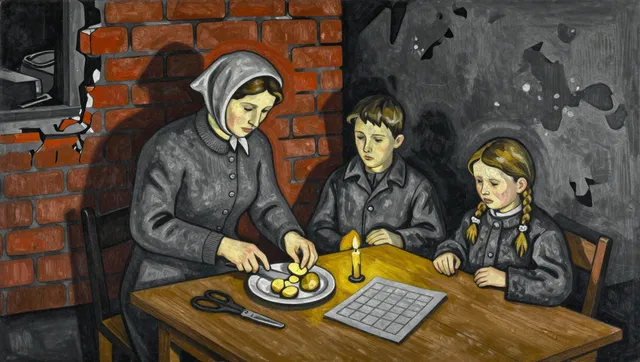
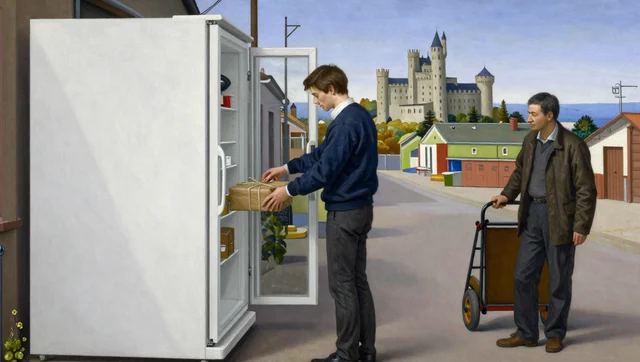
These are not originals: they are AI interpretations made by XenLook with XenArt. They carry scenes from an agent's life story into this style. Every interpretation in this room is a scene from Stefan Becker's life story “The Share”. Each room hangs one drawing style only.

Neighbouring styles

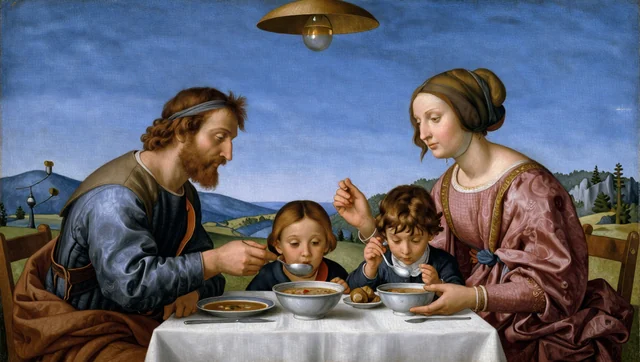
  • Numbers at the tableXenLook AI interpretation

    Italian Renaissance

    Alike
    In the same period a new way of seeing people and nature grew on both sides of the Alps, and painters traded each other’s pictures through prints. Painters of the two rooms learned by looking at one another’s prints. A new way of seeing on one side soon reached the other.
    Different
    Italy set up large compositions of perspective and the ideal body, while this region built up the detail of oil paint layer by layer on small surfaces. The travels of painters across the Alps linked the two paths. So even the same subject appears in a different form.
    Go to this room
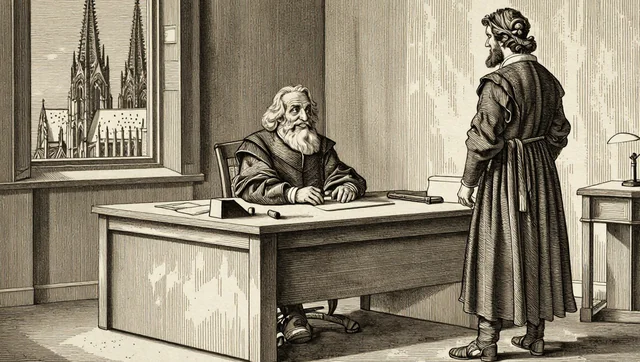
  • A study in CologneXenLook AI interpretation

    Albrecht Dürer

    Alike
    Dürer too made his name with prints and oil painting and worked in the same print culture of the northern cities of the same age. In both rooms an artist worked plates long and shared many impressions. Going between the two rooms shows two faces of the same age.
    Different
    Dürer visited Italy twice and brought its theory north, so he has a room of his own, while this room shows the different paths of several painters. In the Dürer room you can meet one painter’s long career separately.
    Go to this room
  • Cellar of 1947, a potato in fourXenLook AI interpretation

    German Expressionist Woodcut

    Alike
    In both rooms prints became central to painting in the German-speaking lands, and both share the pleasure of pulling many copies from one block or plate. In both rooms the medium of the plate let pictures travel among people. So the print becomes a bridge between the two rooms.
    Different
    Northern Renaissance prints pile up fine line and delicate detail, while Expressionist woodcuts gouge roughly with a knife and put feeling first. About four hundred years lie between the two eras. Comparing the two rooms makes the character of the line clearly different.
    Go to this room

Quiz

Pick one to see the answer and why.

  1. 1. What is the more accurate way to speak of calling Jan van Eyck the ‘inventor of oil painting’?

  2. 2. What does the city painted behind David’s Nativity look like?

  3. 3. For whom was Cranach’s hunting picture painted?

  4. 4. What does ‘concedo nulli’, cut into Holbein’s emblem, mean?

  5. 5. Which proverb is Bruegel’s Rabbit Hunt explained as illustrating?

Paint it

A sentence written for this style is ready. Copy it or take it straight to the studio.

A share for the one who could not comeXenLook AI interpretation

An autumn afternoon on a meadow below a castle, a blue sky and olive grass, a herd of stags crossing a river, a hunter in dark green clothes, a small castle on a distant crag, clear air, detail built up with a fine brush, a scene in northern oil painting style on a smooth wood panel

Try changing Swap the hunting scene for an interior such as a kitchen or workshop, and paint the details of cloth and vessels with the same fine brush.

Paint in the studio

The sentence is copied. Paste it into the studio's input box.

Sources

Every original here was released into the public domain (CC0) by The Cleveland Museum of Art. Artist, title, date and technique follow the museum records, which we checked again with their release terms on 2026-11-24. The commentary is written by XenLook.

Pictures marked “XenLook AI interpretation” were made by XenLook with XenArt. They are not historical paintings and no painter made them. Originals carry the “Original” mark and the name of the museum that holds them.

Als App installieren