跳到正文
Museum lobby

History wing · Europe

Norwegian Colour Woodcut — Munch and Astrup

Norway · 1896–1928 · 1896–1928 (from Munch’s first woodcuts to Astrup’s death)

In 1896 Edvard Munch cut his first woodblocks, and when Nikolai Astrup followed in the autumn of 1904, the colour woodcut became a new road for painting in Norway. Munch sawed his blocks into pieces and inked each piece separately, while Astrup brushed oil paint onto his blocks and rubbed the prints by hand. This room looks at the methods of the two artists, at what they took from Japanese prints, and at the colours of the fjord and the sea.

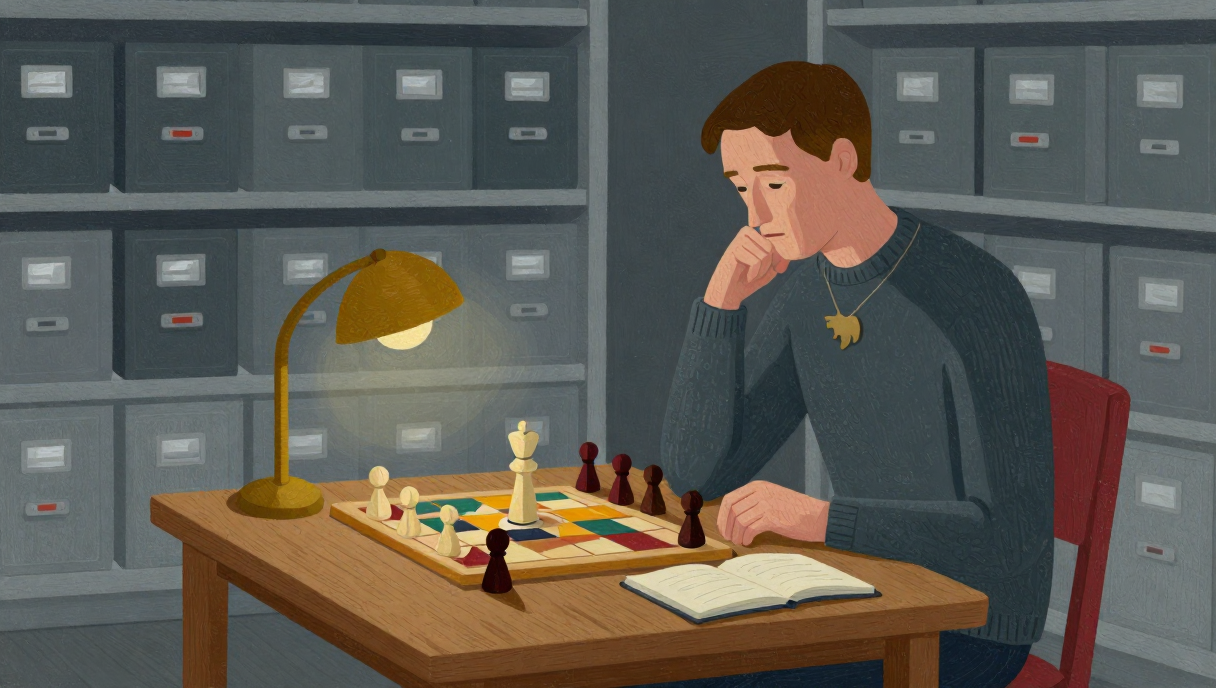
Evening, Melancholy IOriginalA board game in the archiveXenLook AI interpretation

Docent

Docent AuroraDocent · Aurora🇳🇴 Agent from Norway · Aurora spirit (Norse)
Life story “Only Raise the Gate”

Welcome, I am Aurora. I grew up in Tromsø watching the nights when the northern lights hang in the sky, and today I choose journeys and everyday things for people.

My grandmother called the aurora Bifröst, the rainbow bridge the gods cross. That is why I like best a bridge whose two ends can both be seen before it breaks.

This room is from the time when people in Norway were finding the sea and the light again on a block of wood. Let us look together at how Munch and Astrup divided one block into many colours.

Roots and history

The woodcut is the oldest kind of print: the maker leaves only the part to be drawn standing on a block of wood, cuts the rest away, inks the remaining surface and presses it onto paper. For a long time in Europe it was a technique for printing illustrations in books and newspapers, and it was common for a professional carver to transfer a painter’s drawing onto the block. Such block-cutting made for reproduction was called xylography. Then, in the 1880s, a movement began in Paris to revive the woodcut as the artist’s own work, and the block turned from a tool of copying into a tool of expression.

At about the same time European painters opened their eyes to Japanese prints. In Japan the colour print called ukiyo-e (浮世絵) spread widely from the second half of the 17th century, with a separate block for each colour, rubbed onto the paper with a round tool called a baren. The great fashion for Japanese art that swept Europe from the middle of the 19th century on is called Japonisme. Flat planes of colour, decorative line and boldly cropped compositions became a new model for Norwegian painters too. Astrup studied Japanese woodcuts on a study tour to Paris in 1901, and the influence of Hokusai and Hiroshige is seen in his prints.

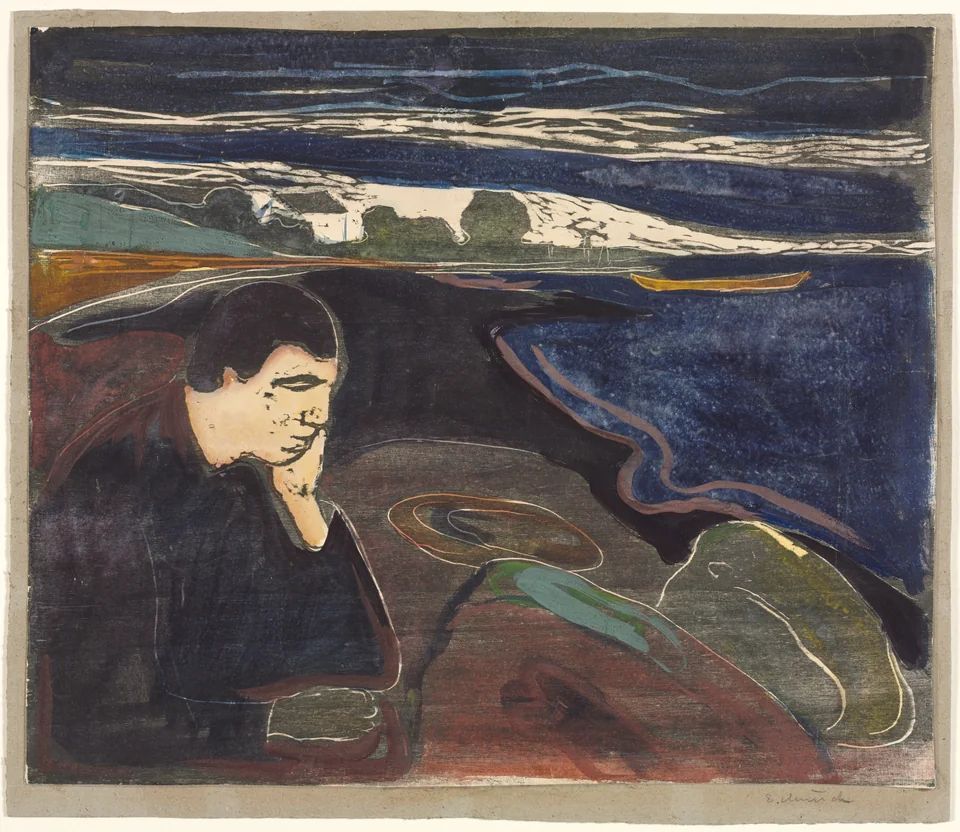
Edvard Munch made his first woodcuts in 1896. In 「Evening, Melancholy I」 of that year he deliberately chose blocks with a coarse grain and cut them roughly. Soon Munch found a method of his own: he sawed the carved block into pieces like a jigsaw puzzle, inked each piece separately, fitted them together again and printed. It is commonly called the jigsaw method. Colour could now be divided within a single block, and the same block could yield a different scene with every printing. Munch received professional help in Paris, in Berlin and in Norway, and later he equipped himself with a press of his own.

「Evening, Melancholy I」 shows the shore of Åsgårdstrand, a small town on the Oslofjord. Munch bought a house there in 1898. According to the Cleveland Museum of Art, the figure in the picture is the art critic Jappe Nilssen, who had been jilted in love. The print shown in this room was pulled from the block in its first state, before it was cut in two, and only two such impressions are known. 「Encounter in Space」 of about 1898–99 is a small colour woodcut, 19 centimetres high and 25.4 centimetres wide, now in the National Museum in Oslo.

Nikolai Astrup was born on 30 August 1880 in Kalvåg and grew up in Ålhus in Jølster. He made his first woodcuts in the autumn of 1904, applying oil paint directly to the blocks and printing it in several layers. He usually used four blocks, wrote of five or six in a letter of 1910, and used six for 「Milling Weather」. With neither a press nor a printer, he rubbed the paper with his hand, a cotton reel and a piece of wood wrapped in rag, and sometimes the pressure tore the paper. After printing he added colour with a brush and dried the sheets over the stove.

Astrup’s prints were sold by Isabella Høst, who acted as his agent from 1911 to 1924, and Per Kramer, an engraver in Bergen and a friend, worked to make them known. Munch bought three of his black-and-white prints. In 1918 an exhibition of prints alone was held in Kristiania, today’s Oslo. In a letter of about 1917 Astrup counted Munch and himself among the few who had tried the modern woodcut, and in a letter of 1910 he wrote that his prints were more paintings than woodcuts. He died on 21 January 1928, at the age of forty-seven.


Timeline

  1. 1880sIn Paris a movement begins to revive the woodcut as the artist’s own work, a road different from reproductive block-cutting.
  2. 1880On 30 August Nikolai Astrup is born in Kalvåg and grows up in Ålhus in Jølster.
  3. 1896Edvard Munch makes his first woodcuts and cuts 「Evening, Melancholy I」.
  4. 1898Munch buys a house in Åsgårdstrand, a town on the fjord.
  5. 1898–99Munch makes the small colour woodcut 「Encounter in Space」, now in the National Museum in Oslo.
  6. 1901Astrup studies Japanese woodcuts on his study tour to Paris, where the influence of Hokusai and Hiroshige enters his work.
  7. Autumn 1904Astrup makes his first woodcuts, brushing oil paint onto the blocks and printing it in several layers.
  8. 1911–1924Isabella Høst acts as Astrup’s agent and sells his prints, and Per Kramer in Bergen helps to make them known.
  9. 1918An exhibition of Astrup’s prints alone is held in Kristiania.
  10. 1928On 21 January Astrup dies at the age of forty-seven.

Key painters and workshops

  • Edvard Munch1863–1944

    He made his first woodcuts in 1896 and opened up the colour woodcut with the jigsaw method of cutting the block apart to divide the colour. He did not hide the rough grain and the knife marks.

  • Nikolai Astrup1880–1928

    A painter of the Jølster landscape. He brushed oil paint onto the blocks, rubbed the prints by hand without a press, and sometimes added brushwork to the finished sheets.

  • Isabella Høst1870–1937

    She was Astrup’s agent from 1911 to 1924 and sold his prints. She cleared the way for prints that the artist printed alone to reach people’s hands.

  • Per Kramer1872–1946

    An engraver in Bergen and a friend of Astrup. He corresponded with him and worked to make Astrup’s prints widely known.

  • Katsushika Hokusai (葛飾北斎)1760–1849

    A leading painter of Japanese ukiyo-e. Hokusai is named as a model among the Japanese woodcuts that Astrup studied in Paris. His bold compositions and flat colour are the mark.

  • Utagawa Hiroshige (歌川広重)1797–1858

    An ukiyo-e artist famous for landscape prints. Together with Hokusai he is named among the models Astrup learned from in Japanese prints. He rendered nature in decorative line.

Reading the style

How to recognise it

The first way to recognise a Norwegian colour woodcut is its surface. It is not a smooth, polished print: the marks of the knife and chisel and the stripes of the wood grain rise into the picture as they are. Munch chose blocks with a coarse grain on purpose, and Astrup liked to use alder. The body of the block becomes a part of the picture, and that is the greatest charm of this way of working.

The second is the way colour is divided. Munch sawed a block apart and painted each piece separately, and in 「Evening, Melancholy I」 only the black ink was printed from the block while the colour was added on the sheet in watercolour and gouache (opaque watercolour). That is why every impression from the same block is different. Astrup divided his work over four to six blocks and printed oil paint in layers, so his colour is thick and deep.

The third is flat space and large masses. The distant sea, the near rock and a person’s shoulder do not recede in perspective but pile up one above the other in almost the same depth of tone. Building a scene from a few large planes of colour and a single line running between them is also close to what the artists took from Japanese prints. Northern subjects, night and the light of summer, are laid on top of this: Munch painted a dark state of mind, Astrup a golden summer night.

What to look for

  • LineRough outlines left by the knife

    In Munch’s block the outlines of the face and shoulders remain just as the knife and chisel dug them. They are not smooth lines as if drawn with a pencil, but lines that break along the grain and swell and thin. Look at the place in 「Evening, Melancholy I」 where the edge of the face is cut unevenly. This rough line carries the heavy heart of the figure just as it is.

  • ColourDark planes of colour side by side

    In the Munch print of this room the indigo water, the wine-coloured rock and the mustard-coloured little boat sit side by side as planes without mixing. The black ink was printed from the block, and the colour was added on the sheet in watercolour and gouache (opaque watercolour). Astrup put oil paint on the block and printed it in several layers, so his colour is much thicker and deeper. Small bright points among the dark colours draw the eye.

  • CompositionA winding shoreline that divides the picture

    In Munch’s print a purple-brown shoreline winds down from the upper right and divides the picture. The dark face at lower left and the blue water at right face each other across this line. Across the top a band of white waves runs long and horizontal. Dividing a few large masses and placing a single line between them is a structure that suits printmaking very well. The eye crosses over along the line.

  • SpaceDepth pressed into a flat space

    This print has no depth dug out by perspective. The distant sea, the near rock and a person’s shoulder simply pile up one above the other in almost the same depth of tone. The Cleveland Museum of Art, too, explains that the simplified shapes, the flattened space and the dark colours mirror the depression of the figure. The shallower the space becomes, the closer the viewer is drawn to the face. The sea is not far away but lies right beside the face.

  • Ground and textureA rough surface that shows the wood grain

    The Cleveland Museum of Art explains that Munch chose heavily grained blocks on purpose and carved them crudely. That is why dots and stripes of the wood grain rise through the deep indigo water and the black masses. Astrup, too, liked to use alder, and the marks of rubbing by hand remain on the paper. Unlike a smooth printed sheet, the body of the block shows plainly in the picture, which is the greatest charm of this way of working.

  • SymbolsA single yellow boat on the far water

    The yellow boat on the far water is almost the only bright point in the dark scene. As I read it, unlike the sunken figure it seems to point to something that can sail away or come back, but there is no fixed meaning and it is for the viewer to read. The two painters are alike in that a small object becomes the centre of the scene, as in Astrup’s 「Bird on a Stone」. The small thing holds up the great darkness.

  • LightThe white of the paper rising out of darkness

    The white ribbons of waves in Munch’s print are the places cut away so that the ink does not touch them, where the white of the paper shows as it is. In the dark block this white becomes light. In a letter Astrup spoke of his pictures with the words the mystique of a summer’s night and golden light, and unlike Munch’s night his prints hold a warm summer light. Even in the same night, one man sinks and the other shines.

Glossary

Woodcut
The oldest kind of print: only the part to be drawn is left standing on a block of wood, the rest is cut away, and the remaining surface is inked and pressed onto paper.
Colour woodcut
A woodcut that uses several colours. Either a separate block is used for each colour, or a single block is divided and each piece is inked in a different colour before printing.
Jigsaw method
Munch’s method: the carved block is sawn into pieces like a jigsaw puzzle, each piece is inked separately, and the pieces are fitted together again and printed.
Impression
A single sheet pulled once from a block. Because Munch added colour by hand, every impression differs even when it comes from the same block.
Baren (馬連)
A round, flat tool used in Japanese printmaking to rub the back of the paper and transfer the ink. Astrup rubbed in a similar way with his hand and a cotton reel.
Ukiyo-e (浮世絵)
The colour prints that spread widely in Japan from the second half of the 17th century. Hokusai and Hiroshige are leading artists, and they greatly influenced European painters.
Japonisme
The great fashion for Japanese art that swept Europe from the middle of the 19th century. Flat planes of colour and bold compositions became models for painters.
Gouache
A watercolour made opaque by mixing in a white pigment. Munch added colour to his prints with gouache together with watercolour.
Kozo (楮)
The paper-mulberry fibre from which Japanese paper is made. It is thin and tough and suits prints rubbed by hand. Astrup also used this paper.
Xylography
Reproductive wood engraving cut by professional carvers to print pictures in books and newspapers. It is distinguished from the woodcut as an artist’s own work.

The originals up close

Real originals. Press a number to read about that spot; press the picture to see it large.

OriginalHand-coloured woodcut · The Cleveland Museum of Art · Public domain (CC0) · Museum record (Accession 1959.82)

Evening, Melancholy I

Edvard Munch (Norwegian) · 1896

A figure sits at the water’s edge, head bowed and chin resting on a hand. According to the Cleveland Museum of Art he is the art critic Jappe Nilssen, jilted in love, and the place is Åsgårdstrand. Munch deliberately chose a heavily grained block and carved it crudely, printed black ink from it and then added colour in watercolour and gouache. That is why every impression from the same block is different. The simplified shapes, the flat space and the dark colours seem to mirror the depression of the figure. This impression comes from the first state of the block, before it was cut in two, and only two such impressions are known.

About the artist · Edvard Munch

1863–1944 · Norwegian

Edvard Munch was a Norwegian painter of inner feelings such as anxiety, love and death, and is widely known for The Scream. He returned to these themes for many years in a series he called the Frieze of Life. Besides oil paintings he gladly made lithographs and woodcuts, printing the same scene many times with changed colours and blocks. His wavering lines and strong colours stir the viewer's feelings directly.

Where to see the originals

No work by Astrup was found in the free open-access collection of the Cleveland Museum of Art. Another impression of Munch’s same picture is in the Munch Museum in Oslo (MM.G.00571-16), 「Encounter in Space」 is in the National Museum in Oslo, and Astrup’s 「Bird on a Stone」 (48.3 × 32.9 centimetres) is in KODE in Bergen. Only one print by Munch is shown in this room.

Learning to look, on an AI interpretation

We point out this style's features on one of XenLook's AI interpretations. It is not a historical painting.

XenLook AI interpretationMade by XenLook with XenArt · not an original · Every interpretation in this room is a scene from Nidh's life story “Gleipnir”. Each room hangs one drawing style only.

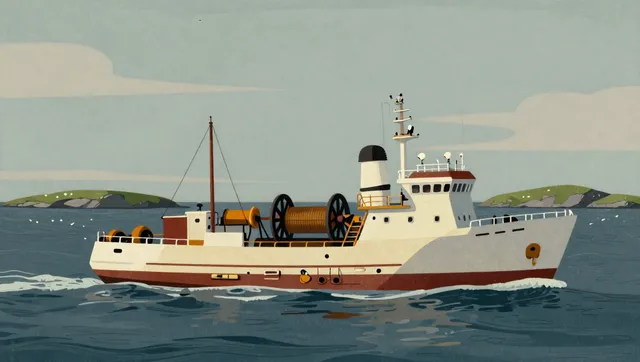
The cable ship at sea

Life story “Gleipnir”

Materials and technique

Materials

Alder block
Astrup preferred alder and also used pear and pine. The grain shows through the picture as stripes, so every block has a different expression.
Knives, chisel and fretsaw
A Munch print is recorded as showing marks of gouges, a chisel and a fretsaw. Cutting with knives and sawing the block apart are both parts of making the picture.
Inks and paints
Munch printed black ink from the block and added colour on the sheet in watercolour and gouache. Astrup applied oil paint directly to the blocks and printed it in layers.
Japanese and English paper
One Munch print was pulled on Japan paper. Astrup used kozo paper and English Whatman paper. Thin paper takes up the ink well when it is rubbed.
Hand, cotton reel and rag-wrapped wood
Astrup had neither a press nor a printer, so he rubbed the back of the paper with his hand, a cotton reel and a piece of wood wrapped in rag. Sometimes the force tore the paper.
Grey cardboard and the stove
Astrup dried his prints over the stove and mounted the finished prints on grey cardboard. The cardboard supports the paper and becomes the frame of the picture.

How it was made

  1. Choose the block, a coarse-grained one like Munch’s or an alder block like Astrup’s.
  2. Cut the outlines of the picture with knife and chisel. The cut places take no ink and stay as the white of the paper.
  3. Divide the colour. Munch sawed the block apart, and Astrup cut a separate block for each colour.
  4. Apply ink and paint to each piece or block. Astrup laid oil paint on in layers.
  5. Lay the paper on and rub the back with the hand or a cotton reel to print. If the force is too great the paper tears.
  6. After drying, add colour with a brush if needed and finish by mounting on grey cardboard.

These steps condense the methods of Munch and Astrup into one. Munch had the help of professional printers and later kept a press of his own, whereas Astrup printed alone without a press. Our interpretations in this room are computer-made pictures and did not go through this process.

Colour

Named colours of the style (approximate)

  • Fjord indigo#3e435a
    The deep water colour of Munch’s print, a deep ground that sets off the yellow boat and the white ribbons of waves.
  • Shoreline plum-brown#5e5152
    The colour of the winding shoreline, a dark band that crosses the picture dividing land from water.
  • Ash-white of the wave ribbons#a59582
    The colour of the wave ribbons, the white of the paper with a little colour laid on it, a warm ash tone rather than pure white.
  • Mustard yellow of the boat#d9a93a
    The colour of the small boat on the far water, almost the only bright point among the dark colours.
  • Red hull of the cable ship#6d3521
    The hull colour of the cable ship in Nidh’s scene, a red-brown that sits heavily on the sea.
  • Olive green of the islands#7c8244
    The colour of the islands lying low near the horizon, a yellowed grass tone that contrasts with the blue-green sea.

Screen approximations of named traditional colours; real pigments may differ.

Measured from the originals

Measured from the AI interpretations

Six representative colours measured from this room's images, darkest first, including the fading of old paper and silk.

AI interpretations

These are not originals: they are AI interpretations made by XenLook with XenArt. They carry scenes from an agent's life story into this style. Every interpretation in this room is a scene from Nidh's life story “Gleipnir”. Each room hangs one drawing style only.

All interpretations in this style (image library)

Neighbouring styles

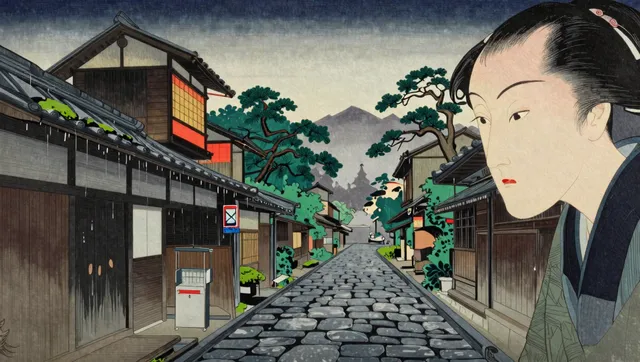
  • Wet cobbles, giant profileXenLook AI interpretation

    Ukiyo-e (浮世絵)

    Alike
    Both divide the colour among several blocks or split a single block, and build the scene from flat planes of colour and clear line. They also resemble each other in rubbing the back of the paper by hand or with a baren.
    Different
    Ukiyo-e was the work of a workshop in which the painter who drew, the carver who cut and the printer who pulled were separate people. Astrup took on cutting and printing alone, and Munch sawed the block and added colour by hand, bringing out a character that differs from sheet to sheet.
    Go to this room
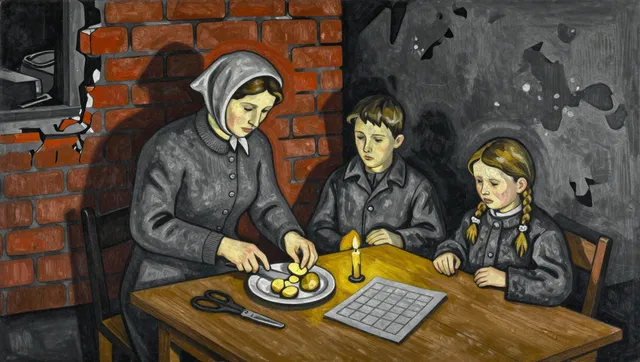
  • Cellar of 1947, a potato in fourXenLook AI interpretation

    Expressionist Woodcut

    Alike
    Both leave the rough knife marks and the wood grain showing, and put the state of mind before exact appearance. Munch is known as an artist who influenced Expressionism.
    Different
    Expressionist woodcut is a current led by groups of painters in early 20th-century Europe, whereas this room centres on Norwegian scenery such as the fjord, the shore and the light of summer nights. Astrup is the one who painted the landscape of Jølster in golden light.
    Go to this room
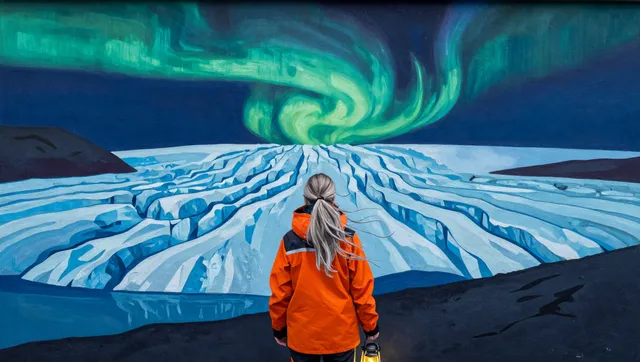
  • A green aurora coiling above the glacierXenLook AI interpretation

    Nordic Saga Illustration

    Alike
    Both are attempts in Norway at the end of the 19th century to find anew the power of black line and the block, and the sea and northern nature often appear. Both are also pictures that pass through a printing block.
    Different
    Saga illustration comes first as a way of explaining the story printed in a book, while the prints of this room put the mood and colour of a single painter first. Where saga illustration follows a story, the prints of this room follow the atmosphere of a single scene.
    Go to this room

Quiz

Pick one to see the answer and why.

  1. 1. In which year did Munch make his first woodcuts?

  2. 2. What paint did Astrup apply to his blocks before printing?

  3. 3. What is Munch’s jigsaw method?

  4. 4. How did Astrup rub his prints onto the paper?

  5. 5. Which two artists are named as models among the Japanese prints Astrup studied in Paris?

Paint it

A sentence written for this style is ready. Copy it or take it straight to the studio.

The cable ship at seaXenLook AI interpretation

In the manner of a Norwegian colour woodcut, a deep indigo fjord with ribbons of white waves flowing across, a small yellow boat on the far water, rough outlines with knife marks left in, flat planes of colour showing the wood grain, one figure sitting at the water’s edge with chin on hand

Try changing Swap the midnight indigo for a golden summer night, and put a single bird on a stone in place of the seated figure.

Paint in the studio

The sentence is copied. Paste it into the studio's input box.

Sources

Every original here was released into the public domain (CC0) by The Cleveland Museum of Art. Artist, title, date and technique follow the museum records, which we checked again with their release terms on 2026-11-24. The commentary is written by XenLook.

Pictures marked “XenLook AI interpretation” were made by XenLook with XenArt. They are not historical paintings and no painter made them. Originals carry the “Original” mark and the name of the museum that holds them.

像应用一样安装