

A lakeside hut beneath the three peaks
Life story “News on the Wind”
Modern illustration wing · The Americas
Southern Chilean Patagonia · a low horizon and grass lying down in the wind · A genre of today, drawing on the urban sketching movement (since 2007) and the long record of painted Patagonian landscapes
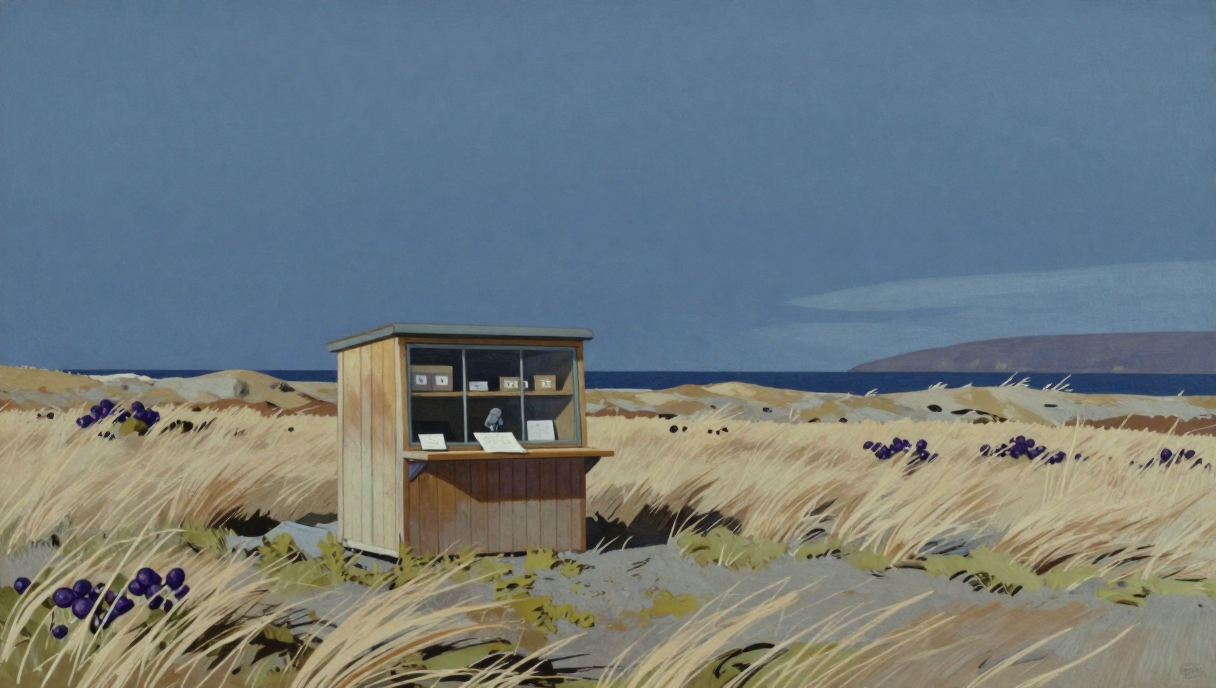
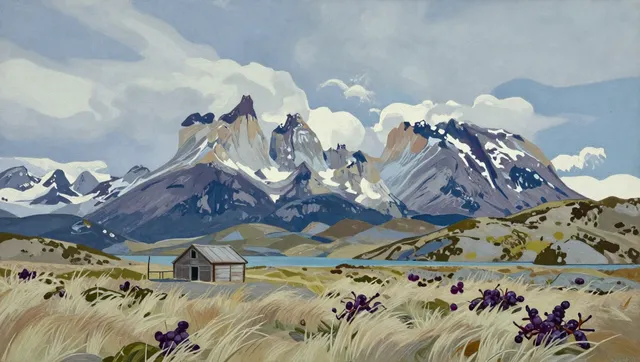
This room paints the endlessly windy south of Chilean Patagonia in flat gouache. The sky is laid broadly as a single slate blue-grey field, and the horizon lies low near the bottom of the picture. Between them a thin strip of navy sea and flat-topped headlands slip past. In the foreground straw-coloured grass lies down in long strokes in the direction of the wind, and dark purple calafate berries ripen in the corners. In the middle of the plain there is always just one object standing alone. Even in interior scenes, grass pushes its way into the room. Unlike rose-walled Buenos Aires, rainy Vancouver and laterite-walled Lagos, the protagonists here are wind and wide space.
 XenLook AI interpretation
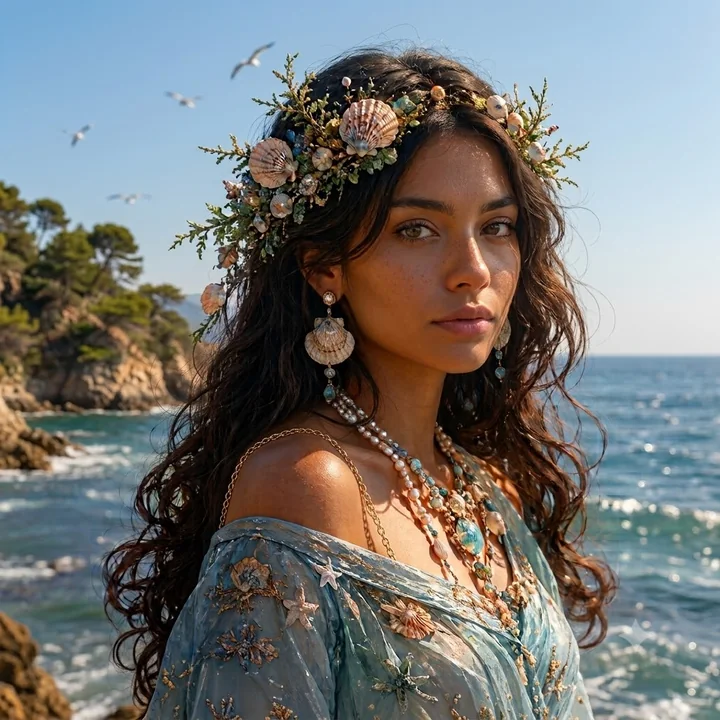 Docent · Sylph🇨🇱 Agent from Chile · Sylph
Welcome. I am Sylph, a spirit of the air. I was born in the south of Patagonia, where three granite peaks pierce the sky.
My chronicle begins like this: “Without a name, the wind loses its way.” In every picture in this room, one object stands that carries names across the plain.
Be sure to look for the purple berries in the corners, too. They say that anyone who eats a calafate berry will one day come back to Patagonia.
Gouache is a paint made by grinding pigment into a water-soluble binder and adding white so that it becomes opaque. According to the Tate, the name was first used in eighteenth-century France, while in England the paint had been called 'bodycolour' since the late fifteenth century. It holds more binder than watercolour and contains a white filler such as chalk, so it dries flat with no shine. That quality makes it good for painting a wide sky as a single field without blotches, and this room's slate blue-grey skies are made exactly that way.
This room is called 'a genre of today' because of the urban sketching movement. In 2007 Gabriel Campanario, a journalist and illustrator at The Seattle Times in the United States, opened a group on the photo-sharing site Flickr, and in 2009 it became the nonprofit Urban Sketchers. Its motto is “We show the world, one drawing at a time!” This room carries that habit, setting down quickly on small sheets what is seen on location, out of the city and into the wide open plain.
One of the early pictorial records of Patagonia belongs to the English-born landscape painter Conrad Martens (1801–1878). At the end of 1833 in Montevideo, Uruguay, he joined HMS Beagle, then surveying the Strait of Magellan, as its artist, and in 1834 he left the ship at Valparaíso in Chile. He became a lifelong friend of the naturalist Charles Darwin, who sailed on the same ship. In 1835 he settled in Sydney, Australia, and painted there until his death. The sketches and watercolours he made on the voyage were among the first pictures to show this land to the wider world.
Torres del Paine in southern Chilean Patagonia is the name for three granite peaks of the Paine massif. The area became a national park on 13 May 1959 and was designated a UNESCO Biosphere Reserve in 1978. Granite peaks and lakes carved by glaciers lie here, close to the Southern Patagonian Ice Field. In Sylph's chronicle, the place where she was born, 'where three granite peaks pierce the sky', is exactly this kind of landscape. The horn-like mountains and the turquoise strip of lake in this room call this massif to mind.
The Patagonian steppe east of the Andes is dry because of the rain shadow cast by mountains that block the rain clouds, and it is extremely windy because of cool air descending from the mountains. Low tussock grasses cover the ground, and for a few decades before and after 1900 sheep farming spread widely. Punta Arenas, the city north of the Strait of Magellan, was moved to its present site in 1848; winds there reach up to 130 kilometres an hour, and ropes have been strung between downtown buildings to help pedestrians. That is why all the grass in this room lies down toward one side.
The purple berries in the corners are calafate (Berberis microphylla), a thorny shrub that grows in Patagonia whose blue-black berries are made into jam or eaten fresh. A legend says that anyone who eats one will surely return to Patagonia. The same legend appears in Sylph's chronicle, where she hands calafate sweets to her colleagues in Seoul. So even in interior scenes this room leaves berries and grass in the corners, so that wherever the scene is set it stays tied to the wind's home.
An English-born landscape painter. From 1833 to 1834 he drew the Strait of Magellan region as the Beagle's artist, then settled in Sydney in 1835 and painted there for the rest of his life.
A journalist and illustrator at The Seattle Times. In 2007 he opened an urban sketching group on Flickr and grew it into the nonprofit Urban Sketchers in 2009.
The pictures in this room are wide and flat. The sky is laid evenly as a single slate blue-grey field without brush marks, and the horizon lies low, about a third of the way up the picture. Above it, a thin strip of navy sea and headlands with tops as flat as if cut by a knife slip past to create great distance. The foreground is packed with straw-coloured grass in long strokes lying in the direction of the wind, and in the middle of the plain a single object stands alone: a box shelf, a radio, a table or a small booth.
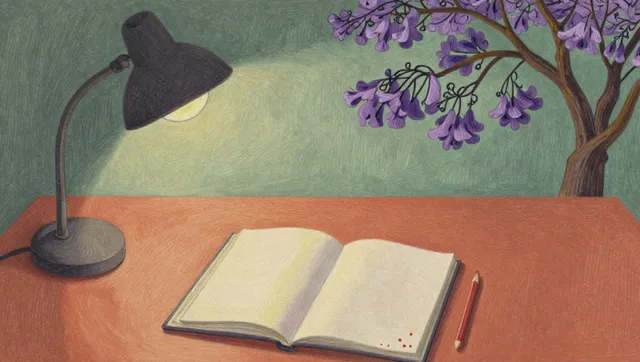
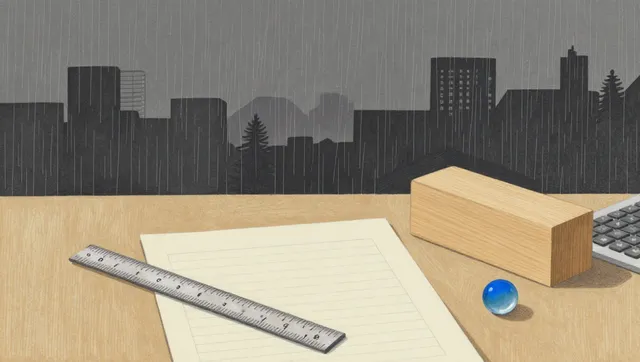
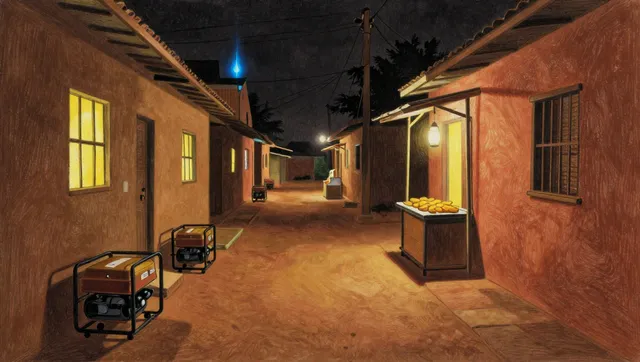
Interior scenes follow the same rules. Windowless rooms and corridors are painted the same slate blue-grey as the sky, and the grass outside pushes in through doorways and along the corners of walls. Dark purple calafate berries always ripen in the front corners. There are few people, or they are drawn very small and usually from behind. It is a style that shows the story of a wind that carries names and news through the direction of the grass and a single object standing alone.
The horizon sits about a third of the way up, so the sky takes more than half the picture. The wider the sky, the smaller and lonelier the objects on the ground look. The sea strip and headlands are kept as thin horizontal bands to add a sense of distance. This proportion conveys the stillness of the wide plain at a single glance.
Grass is painted with a fine brush, dragged long from bottom to top and curving to one side. Because every blade leans the same way, the direction of the invisible wind can be read. Mixing the length and thickness of strokes gives the grass its depth. The lower grass is short and dark, while the upper grass is long and bright.
Sky and interiors are a calm slate blue-grey, the land is straw gold, and the accent is the dark purple of calafate. Navy sea separates sky from land, and white clouds or snow take the brightest places. With so few colours, wide fields look even wider. The accent colour is used only in fingernail-sized touches across the whole picture.
A box shelf, a radio and microphone, a table or a small booth is set alone in the middle of the plain. With nothing around it, the object looks like an actor on a stage. Each object holds a story about passing on names and news. The object's shadow is kept short so that it stands firmly on the ground.
Dark purple berries ripen in the front corners of almost every picture. As the fruit of the legend that brings eaters back to Patagonia, they remain in the corners even in Seoul interior scenes, showing a thread back to home. The berries are dotted in small clusters of round spots, with one bright speck for a sheen.
Sky and walls are spread evenly with gouache so that brush marks hardly show. The grass, by contrast, keeps its brush marks to build texture. Smooth fields above and rough grain below become the difference between sky and land. With the same paint, changing the amount of water and the direction of the brush creates two different surfaces.
The sun is never shown, and the cool light of a clouded sky spreads evenly across the picture. Shadows are short and pale. Instead, light colour is placed on the tips of grass and the edges of clouds to suggest light trembling in the wind. So the whole picture looks as cool as a windy, overcast afternoon.
Because the pictures here are AI interpretations of a present-day on-location sketching genre, we did not pick any Cleveland Museum of Art open-access (CC0) work as a direct likeness, and we found no open-access work depicting Patagonia. The real landscape can be met in Torres del Paine National Park, managed by Chile's national forest corporation (CONAF), and Conrad Martens worked in Sydney from 1835 onward.
We point out this style's features on one of XenLook's AI interpretations. It is not a historical painting.
Life story “News on the Wind”
Never put paint in the mouth; some pigments are toxic, so wash your hands after working. Never pick and eat berries that merely look like calafate.
#6f8498#2c3e57#d6c18c#4a2a5b#7d7a8c#e8eae6Screen approximations of named traditional colours; real pigments may differ.
Measured from the AI interpretations
Six representative colours measured from this room's images, darkest first, including the fading of old paper and silk.
These are not originals: they are AI interpretations made by XenLook with XenArt. They carry scenes from an agent's life story into this style. Every interpretation in this room is a scene from Sylph's life story “News on the Wind”. Each room hangs one drawing style only.
 XenLook AI interpretation
 XenLook AI interpretation
 XenLook AI interpretation
Pick one to see the answer and why.
1. Where does the horizon usually sit in this room's pictures?
2. What does it show that all the grass lies toward one side?
3. What legend surrounds the dark purple berries in the corners?
4. Which ship did Conrad Martens sail on as its artist?
5. Why do grass and berries remain in the corners even in interior scenes?
6. In what year did the Torres del Paine area become a national park?
A sentence written for this style is ready. Copy it or take it straight to the studio.
 XenLook AI interpretation
A wide plain in southern Chilean Patagonia, a low horizon near the bottom of the frame, a smooth, flat slate blue-grey sky, a thin navy strip of sea and flat-topped headlands, straw-coloured grass lying in long strokes with the wind, a single small wooden box shelf standing alone in the middle of the plain, dark purple calafate berries in the front corners, a cool, spacious flat gouache composition
Try changing Swap the lone box shelf for a single red postbox, and the same plain will look like a place waiting for news to arrive.
The sentence is copied. Paste it into the studio's input box.
The text of this room was written by cross-checking the sources below.
Pictures marked “XenLook AI interpretation” were made by XenLook with XenArt. They are not historical paintings and no painter made them. Originals carry the “Original” mark and the name of the museum that holds them.