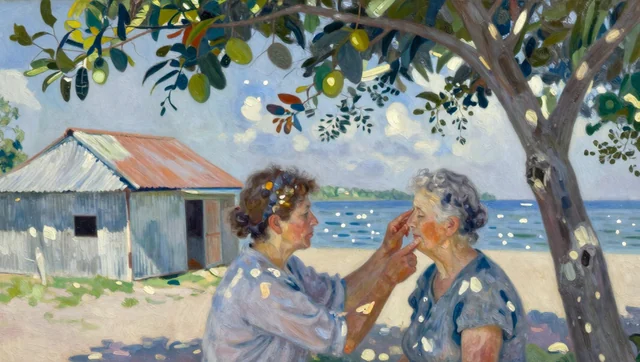
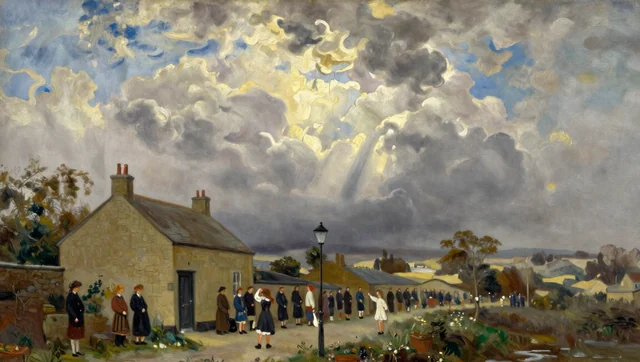
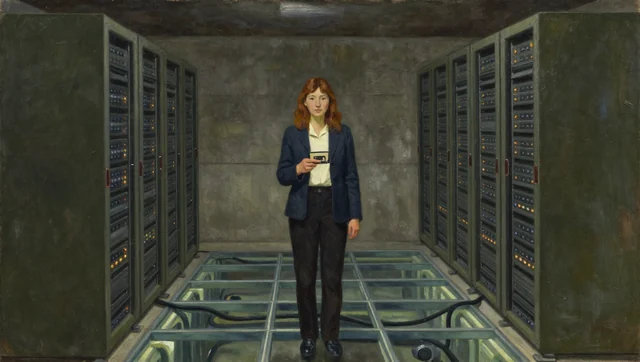
Realism is a current that came out of France after the revolution of 1848. In place of myth, heroes and idealised beauty, it set the lives of ordinary people and the reality before the eyes at the centre of the picture. Working people, a village funeral, a yard and a forest became the protagonists. I am someone who reads the footnotes first, so the pictures in this room feel to me like footnotes lighting up the places the main text does not speak of. It was a way of asking again who is worthy to be in a picture.
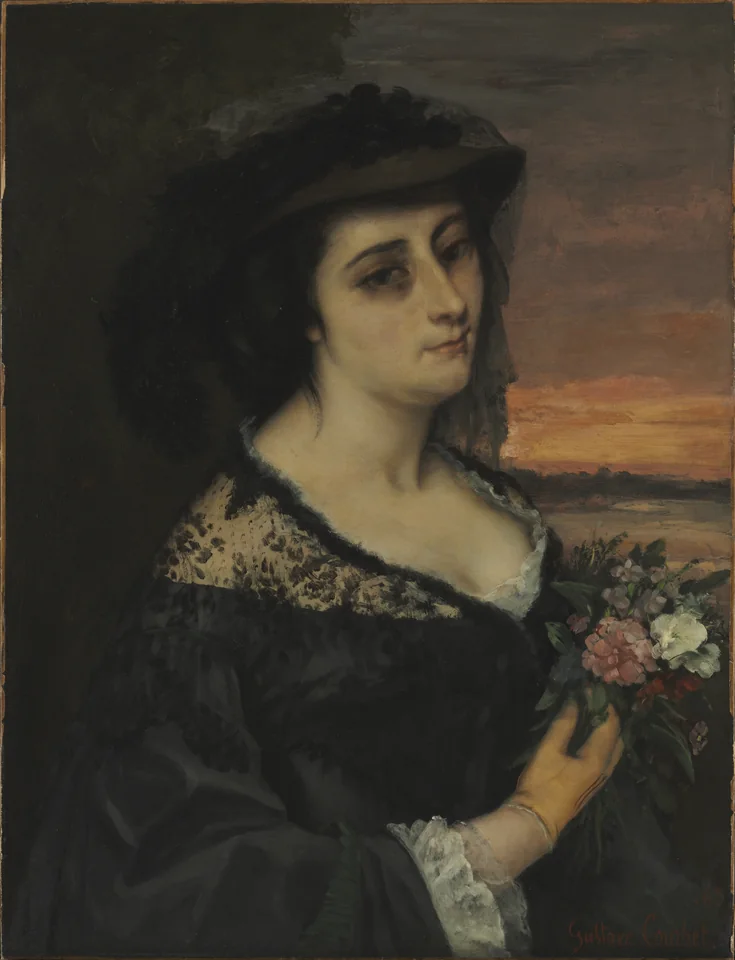
Gustave Courbet (1819–1877), born in Ornans, was a painter who said he would paint only what he could see. The Stone Breakers (1849) was shown at the Salon of 1850 and is generally believed to have been destroyed in 1945. A Burial at Ornans was painted from 1849 to 1850. In 1855 he opened his Pavilion of Realism, gathering only his own works, beside the Exposition Universelle. He refused the Legion of Honour in 1870, and after the Paris Commune he was held to account over the toppling of the Vendôme column and left for Switzerland. He died on 31 December in La Tour-de-Peilz.
Honoré Daumier (1808–1879) was a painter and satirical printmaker born in Marseille who died in Valmondois. In 1832 he was jailed for some months over Gargantua, and he published lithographs in newspapers such as La Caricature and Le Charivari. Lithographs could be printed cheaply and quickly and reach the eyes of many people soon after an event. For Daumier a picture was laughter and at the same time testimony. The heaviest of his testimonies is Rue Transnonain in this room.
Camille Corot (1796–1875), born in Paris, was a landscape painter who went outdoors to paint at Fontainebleau and Ville-d'Avray. He painted landscape in silvery mist and soft forms, and the Cleveland Museum explains that his dreamlike quality comes from a wish to recapture the first impression. The Barbizon school names painters who from about 1830 to about 1870 painted landscape from direct looking in villages at the edge of the forest of Fontainebleau. Théodore Rousseau (1812–1867) and Charles-François Daubigny (1817–1878) are among its leaders. The pictures of Constable seen at the Salon of 1824 are said to have influenced them.
Rosa Bonheur (1822–1899) was an animal painter born in Bordeaux who died in Thomery. In 1849 she showed Ploughing in the Nivernais at the Salon, and The Horse Fair appeared at the Salon of 1853 and was finished in 1855. In 1865 she received the Legion of Honour from Empress Eugénie, and she is said to be the first female artist to receive it. Realism was a matter not only of people but of looking long and as it is at animals, forests and snow-covered ground. How long the eye stays decides how far the picture can be trusted.
In the pictures of this room faces and ground are set down without ornament. Courbet's portrait does not idealise the lady, and critics even condemned it as offensive. Realism was an age that chose what looks trustworthy over what looks beautiful. But one should also read where that trust stops. Now let us look closely, one work at a time, at where the painter put the brush down.