跳到正文
Museum lobby

Art movements wing · Europe

Realism

What is seen, as it is seen: France after 1848 · c. 1848 to the 1870s

After the revolution of 1848, French painters set ordinary people and the land before their eyes in the place of myth and idealised heroes. Courbet said he would paint only what he could see, Daumier bore witness to an event in a single lithograph, and Corot and the Barbizon painters painted the silvery air of forest and pond from direct looking. Read eleven real originals up close and see the picture as a record.

Mme L . . . (Laure Borreau)OriginalThe archive they call the HiveXenLook AI interpretation

Docent

Docent MarianDocent · Marian🇫🇷 Agent from Born in Lille, France; raised in Brussels, Belgium
Life story “The Weighing of an Appeal”

Hello, I am Marian, who reads treaties and case law one over the other in the archive called the Hive. I was born in Lille and raised in Ixelles in Brussels, and when my father opened his briefcase he read the footnotes at the very back before the main text.

Realism is the time when painting set out to become a record. I will guide you through this room with an eye for who saw what and how far the testimony can be trusted.

Looking closely at one work at a time, let us find what the painter did not embellish and where the hand stopped. I will read the small traces first, as one reads a footnote.

Roots and history

Realism is a current that came out of France after the revolution of 1848. In place of myth, heroes and idealised beauty, it set the lives of ordinary people and the reality before the eyes at the centre of the picture. Working people, a village funeral, a yard and a forest became the protagonists. I am someone who reads the footnotes first, so the pictures in this room feel to me like footnotes lighting up the places the main text does not speak of. It was a way of asking again who is worthy to be in a picture.

Gustave Courbet (1819–1877), born in Ornans, was a painter who said he would paint only what he could see. The Stone Breakers (1849) was shown at the Salon of 1850 and is generally believed to have been destroyed in 1945. A Burial at Ornans was painted from 1849 to 1850. In 1855 he opened his Pavilion of Realism, gathering only his own works, beside the Exposition Universelle. He refused the Legion of Honour in 1870, and after the Paris Commune he was held to account over the toppling of the Vendôme column and left for Switzerland. He died on 31 December in La Tour-de-Peilz.

Honoré Daumier (1808–1879) was a painter and satirical printmaker born in Marseille who died in Valmondois. In 1832 he was jailed for some months over Gargantua, and he published lithographs in newspapers such as La Caricature and Le Charivari. Lithographs could be printed cheaply and quickly and reach the eyes of many people soon after an event. For Daumier a picture was laughter and at the same time testimony. The heaviest of his testimonies is Rue Transnonain in this room.

Camille Corot (1796–1875), born in Paris, was a landscape painter who went outdoors to paint at Fontainebleau and Ville-d'Avray. He painted landscape in silvery mist and soft forms, and the Cleveland Museum explains that his dreamlike quality comes from a wish to recapture the first impression. The Barbizon school names painters who from about 1830 to about 1870 painted landscape from direct looking in villages at the edge of the forest of Fontainebleau. Théodore Rousseau (1812–1867) and Charles-François Daubigny (1817–1878) are among its leaders. The pictures of Constable seen at the Salon of 1824 are said to have influenced them.

Rosa Bonheur (1822–1899) was an animal painter born in Bordeaux who died in Thomery. In 1849 she showed Ploughing in the Nivernais at the Salon, and The Horse Fair appeared at the Salon of 1853 and was finished in 1855. In 1865 she received the Legion of Honour from Empress Eugénie, and she is said to be the first female artist to receive it. Realism was a matter not only of people but of looking long and as it is at animals, forests and snow-covered ground. How long the eye stays decides how far the picture can be trusted.

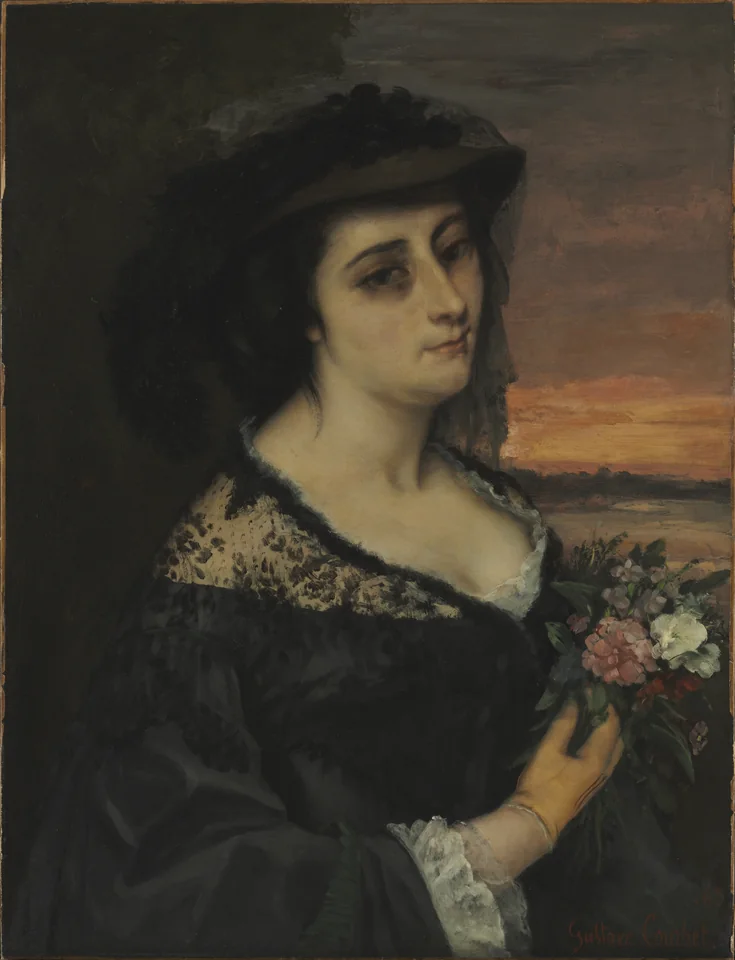
In the pictures of this room faces and ground are set down without ornament. Courbet's portrait does not idealise the lady, and critics even condemned it as offensive. Realism was an age that chose what looks trustworthy over what looks beautiful. But one should also read where that trust stops. Now let us look closely, one work at a time, at where the painter put the brush down.


Timeline

  1. 1832Daumier is jailed for some months over Gargantua and then makes his name through newspaper lithographs.
  2. 15 April 1834An event takes place on Rue Transnonain in Paris, and Daumier leaves it in a single lithograph.
  3. 1848The revolution breaks out in France, and the ground for a Realism that paints ordinary people is prepared.
  4. 1849–1850Courbet paints The Stone Breakers and A Burial at Ornans, and shocks the Salon.
  5. 1853–1855Rosa Bonheur's The Horse Fair is shown at the Salon of 1853 and finished in 1855.
  6. 1855Courbet opens the Pavilion of Realism, gathering only his own works, beside the Exposition Universelle.
  7. 1865Rosa Bonheur becomes the first female artist to receive the Legion of Honour, from Empress Eugénie.
  8. 1870Courbet refuses the Legion of Honour.
  9. December 1877Courbet dies in Switzerland, and his Alpine landscape is left unfinished.

Key painters and workshops

  • Gustave Courbet1819–1877

    A French painter born in Ornans who said he would paint only what he could see. He painted portraits, labour and landscape without idealisation, in thick paint.

  • Honoré Daumier1808–1879

    A satirical painter and printmaker born in Marseille. He lit up politics and society in newspaper lithographs and also left pictures that bear witness to the victims of an event.

  • Camille Corot1796–1875

    A landscape painter born in Paris who went outdoors to paint at Fontainebleau and Ville-d'Avray. His silvery, misty landscapes are said to have influenced the Impressionists.

  • Rosa Bonheur1822–1899

    An animal painter born in Bordeaux. She became famous for The Horse Fair and is said to be the first female artist to receive the Legion of Honour, in 1865.

  • Théodore Rousseau1812–1867

    A landscape painter who represents the Barbizon school. He painted the trees, rocks and sunsets of the forest of Fontainebleau from direct looking.

  • Charles-François Daubigny1817–1878

    A landscape painter of the Barbizon school known for rivers and waterside scenes. There is no original of his in this room, and he joins only by name.

Reading the style

How to recognise it

Realism does not choose a beautiful scene but a trustworthy one. Idealisation is stripped from the face, and clothes and ground are given weight by thick paint and earthy darkness. In place of mythic heroes, ordinary people and a corner of a farm or forest sit at the centre of the picture. The painter lays out what was seen rather than embellishing a story.

Yet not all Realism is rough and dark. Corot's pond trembles quietly in silver mist, and Bonheur's snowy forest breathes with amber sunlight. A lithograph by Daumier holds both testimony and anger in one sheet. In this room the honesty of the eye hangs in different faces. Look for where the painter trusts the eye and where he stops.

What to look for

  • FiguresFaces and bodies without idealisation

    The figures of Realism do not strike the graceful pose of a hero. Courbet's portrait does not polish the lady's face, and Daumier's lithograph hides neither bare feet nor disordered clothes. Bodies are set down with the weight of real people rather than a mythic ideal. Look for where the face has not been embellished.

  • ColourEarth colours and a dark ground

    Colour starts from earth tones such as brown, olive green and ink black. In Courbet's portrait the black silk dress becomes the largest darkness in the picture, and in Rousseau's forest only the sunset glows warm between dark trees. The deeper the darkness, the larger one spot of light appears. Look for the darkest place and the warmest place side by side.

  • Ground and textureThe thickness of paint and the palette knife

    The surface of Realism does not hide the traces of the hand piling up what the eye saw. The Cleveland Museum explains that Courbet painted his Alpine landscape with a palette knife. Thickly laid paint lets one feel the roughness of rock and the weight of snow. Look for the place where the paint looks thickest.

  • LightLight before the eyes, an unembellished sky

    Light is not theatre lighting but the air of that day and that place. In Corot's pond the sky blooms into the water as silvery mist, and in Courbet's Alps clouds brush the snowy peaks. Light does not embellish the story but tells the place. See where the sky is most lightly painted.

  • CompositionComposition cutting a corner of everyday life

    Realist composition is not erected like a monument but seems cut from a corner of everyday life. In Daumier's lithograph the floor and bedding of a room run across the picture, and in Bonheur's the snowy forest path opens at an angle. It is fine for the centre not to lie in the middle. See where the edge of the picture cuts a person.

  • SpaceGround one can walk into

    The landscape of Realism is not a backdrop to admire but ground one can walk into. Rousseau's path leads from the forest edge toward the sunset, and beside Corot's pond a cow and a person are set. Small people and animals on the ground tell the distance. Walk with your eyes to see how far the foot reaches.

Glossary

Realism
A current that came out of France after the revolution of 1848, painting ordinary people and unidealised reality.
Barbizon school
A group of painters who from about 1830 to about 1870 painted landscape from direct looking in villages at the edge of the forest of Fontainebleau.
Salon
The official art exhibition held in France. Whether a work was accepted decided the name of a painter.
Palette knife
A flat knife for mixing paint or applying it to the picture. It leaves thick, flat marks unlike those of a brush.
Lithograph
A print drawn with greasy crayon on stone. Daumier printed cartoons and testimony pictures for newspapers quickly in this way.
Caricature
A picture that exaggerates the features of a person or event to criticise and amuse. Daumier made his name in this way.
Plein air
The way of painting from direct looking outdoors rather than indoors. It became an important method for Corot and the Barbizon painters in painting landscape.

The originals up close

Real originals. Press a number to read about that spot; press the picture to see it large.

OriginalOil on fabric · The Cleveland Museum of Art · Public domain (CC0) · Museum record (Accession 1962.2)

Mme L . . . (Laure Borreau)

Gustave Courbet · 1863

A portrait Courbet painted in 1863. It measures about 81 centimetres tall and 61.2 centimetres wide. The Cleveland Museum explains that this is the fourth and last portrait of Laure Borreau. Behind a woman in a black silk dress with lace and a hat, golden and violet sunset light spreads, and the woman is not idealised. One critic wrote that in nature she may be pretty but in Courbet's picture she is nothing less than offensive, and Courbet is said to have said he was in love with a splendid lady, the driving force behind his triumph. See where the face has not been embellished.

About the artist · Gustave Courbet

1819–1877 · French

Gustave Courbet was a French painter who led the Realist movement, with its idea of painting things just as they are seen. He astonished contemporaries by painting the country people and landscape of his native Ornans on large canvases of the size usually given to heroes and myths. He was active in politics too, and went into exile in Switzerland in his last years. Paint laid on thickly with the palette knife gives landscape and figures a weighty presence.

OriginalOil on fabric · The Cleveland Museum of Art · Public domain (CC0) · Museum record (Accession 1964.420)

Panoramic View of the Alps, Les Dents du Midi

Gustave Courbet · 1877

A large landscape Courbet painted in 1877. It measures about 151.2 centimetres tall and 210.2 centimetres wide. The Cleveland Museum explains that he was still working on it when he died in December 1877 and that it was intended for the Paris Universal Exposition of 1879. A work from his exile in Switzerland after his condemnation over the Commune, it looks over Lake Geneva toward the peaks of Les Dents du Midi. It was painted with a palette knife, and the lower right is said to be unfinished. Look closely at the place left unfinished.

About the artist · Gustave Courbet

1819–1877 · French

Gustave Courbet was a French painter who led the Realist movement, with its idea of painting things just as they are seen. He astonished contemporaries by painting the country people and landscape of his native Ornans on large canvases of the size usually given to heroes and myths. He was active in politics too, and went into exile in Switzerland in his last years. Paint laid on thickly with the palette knife gives landscape and figures a weighty presence.

OriginalLithograph · The Cleveland Museum of Art · Public domain (CC0) · Museum record (Accession 1924.809)

Rue Transnonain, April 15, 1834

Honoré Daumier · 1834

A lithograph Daumier made in 1834. The image measures about 28.6 centimetres tall and 44 centimetres wide. The Cleveland Museum explains that Louis-Philippe's government oppressed workers and that the rebellion of the Lyon silk weavers spread into a sympathetic revolt in Paris. Sniper fire came from a house on Rue Transnonain, and soldiers retaliated by massacring residents, it says. Daumier turned his eye to the suffering and innocence of the victims. Philipon published it in L'Association Mensuelle, and censors approved publication but seized it when it was exhibited in a print shop. Read slowly the bare feet and the traces of the disordered room.

About the artist · Honoré Daumier

1808–1879 · French

Honoré Daumier was a French artist who drew thousands of satirical lithographs on politics and society for Parisian newspapers. He was even imprisoned for pictures that mocked those in power. He also left oil paintings that look warmly on poor and working people. His gift is to convey a person's feelings and circumstances at once with just bold lines and deep contrasts of light and shade. Please take your time to enjoy the work.

OriginalOil on fabric · The Cleveland Museum of Art · Public domain (CC0) · Museum record (Accession 1944.80)

Pond at Ville-d'Avray

Camille Corot · Late 1860s

A landscape Corot painted in the late 1860s. It measures about 58.1 centimetres tall and 99.4 centimetres wide. The Cleveland Museum explains that its features are soft, hazy forms and silvery light. It carries a longing that follows direct study of nature, and it is said to have influenced the Impressionists. The dreamlike quality is said to come from Corot's wish to recapture the first impression. Follow with your eyes where the trees and sky by the pond melt into the colour of the water.

About the artist · Camille Corot

1796–1875 · French

Camille Corot was a French landscape painter who learned the craft by travelling in Italy and painted nature all his life. He wrapped woods and lakes in silvery greys and greens so that they look softly misty. He liked ponds and trees around Fontainebleau, Barbizon and the outskirts of Paris, and he influenced the Impressionists. In the pond picture here too you can see the quiet harmony of trembling leaves and water.

OriginalOil on wood panel · The Cleveland Museum of Art · Public domain (CC0) · Museum record (Accession 1980.231)

Wild Boars in the Snow

Rosa Bonheur · c. 1872–1877

A small oil painting Rosa Bonheur made between 1872 and 1877. It measures about 21 centimetres tall and 30.8 centimetres wide. The Cleveland Museum record gives no separate commentary, so here we read only the scene that can be seen. Wild boars walk one behind another along a snowy forest path, and amber sunlight falls between the trees. Bonheur is said to be the first female artist to receive the Legion of Honour, from Empress Eugénie in 1865. Follow with your eyes from the step of the lead boar to the group behind.

About the artist · Rosa Bonheur

1822–1899 · French

Rosa Bonheur was a French painter who made her name with pictures of animals. She went to horse markets and slaughterhouses to observe animal anatomy at first hand. At a time when women painters were rare she gained wide recognition, and she was the first woman to receive the Legion of Honour for her art. Her pictures are marked by accurate fur and muscle on horses, cattle and wild boar, so that they seem to move. Please take your time to enjoy the work.

OriginalOil on fabric · The Cleveland Museum of Art · Public domain (CC0) · Museum record (Accession 1983.70)

Leaving the Forest, Fontainebleau: Setting Sun

Théodore Rousseau · 1851

A landscape Théodore Rousseau painted in 1851. It measures about 109.1 centimetres tall and 130.2 centimetres wide. The Cleveland Museum record gives no separate commentary, so here we read only the scene that can be seen. A path opens between the trees and rocks of a dark forest, and the setting sun glows warm beyond the branches. Rousseau is a leading landscape painter of the Barbizon school, and he is known to have painted the forest of Fontainebleau from direct looking. Walk with your eyes to the line of sunset in the darkness.

About the artist · Théodore Rousseau

1812–1867 · French

Théodore Rousseau was a French landscape painter who led the Barbizon School. Living near the forest of Fontainebleau south of Paris, he painted great trees, rocks and the light of sunset after long observation. It was new that he made the forest itself, not just a backdrop, the subject of the picture. His weighty, deep scenes contrast dark tree shadows with the glow of the setting sun. Please take your time to enjoy the work.

OriginalOil on canvas · The Metropolitan Museum of Art · Public domain (CC0) · Museum record (Accession 29.100.129)

The Third-Class Carriage

Honoré Daumier · 1864

An oil painting of people packed into a third-class railway carriage. The Metropolitan Museum of Art dates it to 1864 and gives its size as about 90 centimetres wide and 65 centimetres high. On the left a young mother nurses her baby, in the middle an old woman in a hood looks straight out with a basket in her lap, and on the right a boy sleeps curled up. What makes it Realism is that the story is not dramatised: only the weariness and body warmth of the third-class passengers are left. Browns and blacks lie thickly, bright light enters only at the windows, and some places are left as outline alone, giving a feeling of being unfinished. Notice too that the people in one compartment each turn their minds in a different direction.

About the artist · Honoré Daumier

1808–1879 · French

Honoré Daumier was a French artist who drew thousands of satirical lithographs on politics and society for Parisian newspapers. He was even imprisoned for pictures that mocked those in power. He also left oil paintings that look warmly on poor and working people. His gift is to convey a person's feelings and circumstances at once with just bold lines and deep contrasts of light and shade. Please take your time to enjoy the work.

OriginalOil on canvas · The Cleveland Museum of Art · Public domain (CC0) · Museum record (Accession 1927.1984)

The Biglin Brothers Turning the Stake

Thomas Eakins · 1873

An oil painting of a famous rowing race held on the Schuylkill River in Philadelphia in May 1872. The Cleveland Museum of Art explains that it shows the brothers Barney and John Biglin rounding the stake that marks the turning point, with their rivals lagging in the middle distance on the right, and that the brothers won this race and became the most celebrated oarsmen of their day. It adds that Eakins, trained in the United States and France, spent almost his entire career in his hometown of Philadelphia and is known for unsentimental realism. Unframed it measures about 151 centimetres wide and 101 centimetres high. Instead of heroic poses, tense arms and shoulders, calm ripples and onlookers gathered on the bank are placed in exact perspective. Compare how the eye of French Realism carried on across the Atlantic.

About the artist · Thomas Eakins

1844–1916 · American

Thomas Eakins was an American painter, photographer and teacher who worked in Philadelphia. After studying art in Paris he returned home and painted ordinary people just as they were. He studied human anatomy and movement closely, and he captured scenes such as rowing athletes with precision. His plain and honest description and his rendering of clear sunlight are characteristic. The picture in this room shows two brothers rowing on a river.

OriginalOil on canvas · The Metropolitan Museum of Art · Public domain (CC0) · Museum record (Accession 40.175)

Young Ladies of the Village

Gustave Courbet · 1851–52

A large oil painting in which three smartly dressed young women on a country hillside hand something to a barefoot girl. The Metropolitan Museum of Art dates it to 1851–52 and gives its size as about 261 centimetres wide and 195 centimetres high. A canvas on this scale was normally given to myth or history, but Courbet set ordinary village people and cows on land known as the country around his hometown of Ornans. The pink and yellow dresses, the blue sky, and the rocky cliff and grass are thickly painted, and the figures do not act out a story but stand just as they walk. It shows what Realism chose as the hero of a picture. Remember that putting ordinary people on so large a canvas was in itself a kind of statement in its day.

About the artist · Gustave Courbet

1819–1877 · French

Gustave Courbet was a French painter who led the Realist movement, with its idea of painting things just as they are seen. He astonished contemporaries by painting the country people and landscape of his native Ornans on large canvases of the size usually given to heroes and myths. He was active in politics too, and went into exile in Switzerland in his last years. Paint laid on thickly with the palette knife gives landscape and figures a weighty presence.

OriginalTransfer lithograph · The Cleveland Museum of Art · Public domain (CC0) · Museum record (Accession 2021.141)

Washerwomen Descending a Quai Staircase

Alexandre Lunois, after Honoré Daumier · 1888

A lithograph by Alexandre Lunois that reinterprets Honoré Daumier's canvas of 1850, Washerwomen of the Quai d'Anjou. The Cleveland Museum of Art explains that Lunois followed Daumier's painting closely but changed some details, such as the shadows on a face, to stress the strain of the labour. The image is about 57 centimetres high and 42 centimetres wide, and it was made in 1888. On a staircase beside the Seine one woman comes down carrying a bundle of washing, and further up another walks with a great load on her back. Soft crayon-like greys spread across the sky and the stone steps, showing that lithography can dissolve like pencil. A pencil signature appears at lower right. If you ever have the chance to set it beside the original, look for what has changed.

About the artist · Alexandre Lunois, after Honoré Daumier

1863–1916 · French

Alexandre Lunois was a French painter and printmaker. This work follows an earlier piece by Honoré Daumier, taking over his composition of washerwomen at a Paris quay on the Seine. Daumier was a satirical artist who looked warmly on working people. See how Lunois carried over the original's deep shading and the weighty movements of the women descending the steps.

OriginalLithograph · The Cleveland Museum of Art · Public domain (CC0) · Museum record (Accession 1923.206)

The Legislative Belly

Honoré Daumier · 1834

A lithograph Daumier made in 1834, the eighteenth image of The Monthly Association. The Cleveland Museum of Art explains that it was published in the special edition of the satirical paper La Caricature, The Monthly Association for the Freedom of the Press. The image is about 28 centimetres high and 43 centimetres wide. Deputies sit in four rows on semicircular benches; every face differs, yet they doze, look away or sit with bellies thrust out. The lines below introduce the scene mockingly as the ministerial benches of the chamber of 1834. If the Rue Transnonain print of the same series bore witness to a tragedy, this one aims at power with laughter. See how exaggerating only expressions and bodies lets a single lithograph stand in for a page of newspaper.

About the artist · Honoré Daumier

1808–1879 · French

Honoré Daumier was a French artist who drew thousands of satirical lithographs on politics and society for Parisian newspapers. He was even imprisoned for pictures that mocked those in power. He also left oil paintings that look warmly on poor and working people. His gift is to convey a person's feelings and circumstances at once with just bold lines and deep contrasts of light and shade. Please take your time to enjoy the work.

Materials and technique

Materials

Oil paint and canvas
Paint ground in oil dries slowly, so it can be laid thin or thick. Courbet's portrait used this method to set the deep darkness of the black dress beside the light of sunset. Realist painters loaded even large canvases with the weight of everyday life.
Palette knife
Pressing paint on with a palette knife makes thick, flat areas a brush cannot produce. The Cleveland Museum explains that Courbet used this tool in his Alpine landscape. It conveys firmly the rough feel of rock and snow.
Lithographic stone and greasy crayon
Drawing on stone with a greasy crayon leaves the force of the hand as it was. Daumier used this method to make pictures for newspapers quickly. Many impressions could be pulled from one drawn stone, so an event could be made widely known.
Wood panel and small oil study
A small wood panel is easy to carry outdoors and good for moving the scene before the eyes quickly. Bonheur's Wild Boars in the Snow was painted on a wood panel of about 21 by 30.8 centimetres. Even when it is not a study for a larger work it becomes a finished picture in itself.
Outdoor sketching and pencil
A pencil and a small sketchbook are tools for catching on the spot what was seen in forest and by pond. Corot and the Barbizon painters are known to have carried what they saw this way into larger pictures in the studio. The sketch plays the part of the first line of the record.

How it was made

  1. First the shapes of the ground and the places of trees and sky are sketched quickly outdoors in pencil.
  2. In the studio, the large masses of dark and light are laid first on the canvas in thin paint.
  3. Paint is gradually laid thicker to build up the weight of rock, trunk and ground, and pressed on with a palette knife where needed.
  4. One steps back to check whether the light of the whole picture is right and refines the soft colours of the sky and the far ground.
  5. Last the signature is left and the paint is allowed to dry. Even a place left unfinished remains as part of the record.

Realist painters built up with the hand what they had looked at for long with their own eyes.

Colour

Named colours of the style (approximate)

  • Silk black#1e1b1a
    The deep darkness formed by the black silk dress in Courbet's portrait. It is the heaviest area in the picture.
  • Forest olive#5a5a35
    The olive green seen in Rousseau's forest and around Corot's pond. It is the calm colour of grass and leaf close to earth tones.
  • Silver mist#b9bfb4
    The gray-green of the silvery mist spreading over Corot's pond. It binds sky and water in one breath.
  • Sunset amber#c88a3a
    The warm amber seen in Rousseau's sunset and the sunlight of Bonheur's forest. Even one spot on darkness becomes the centre.
  • Snow white#ece9e2
    The warm white seen in Courbet's Alpine peaks and Bonheur's snowy ground. The grain of thick paint conveys the weight of snow.
  • Earth brown#6b4a32
    The earthy brown seen in rocks, ground and path. It is the colour where the eye of Realism stays longest.

Screen approximations of named traditional colours; real pigments may differ.

Measured from the originals

Measured from the AI interpretations

Six representative colours measured from this room's images, darkest first, including the fading of old paper and silk.

AI interpretations

Even within one movement, every painter works differently. Walk between the linked rooms and compare.

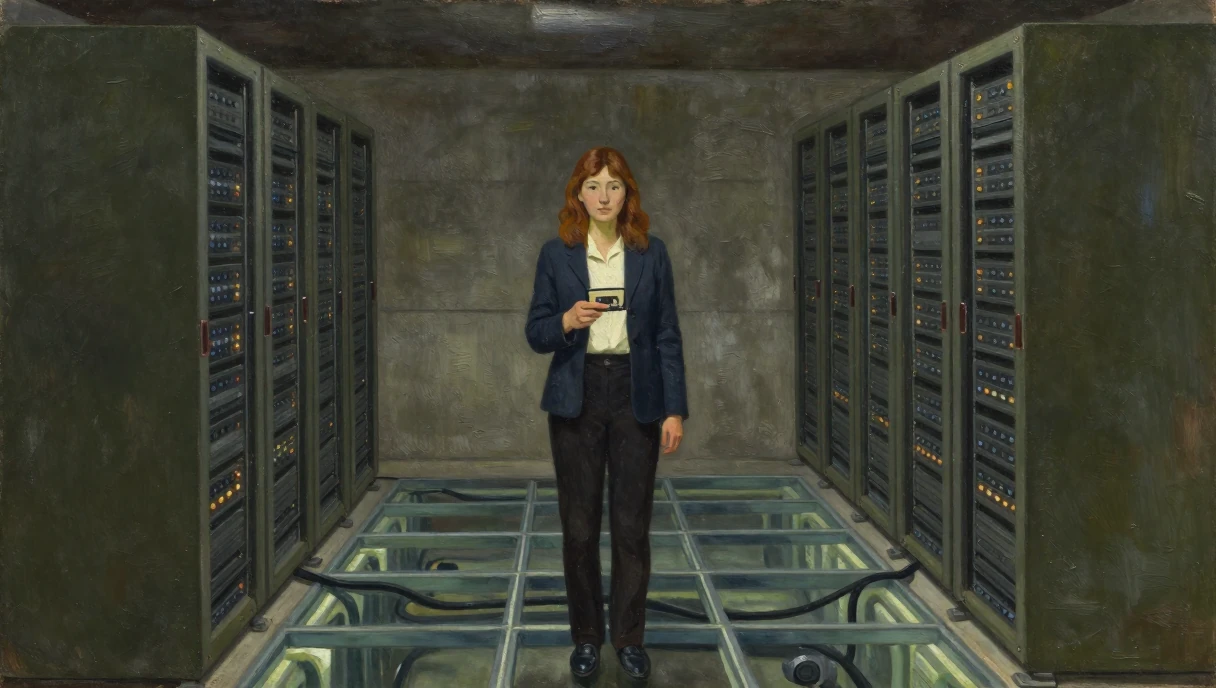
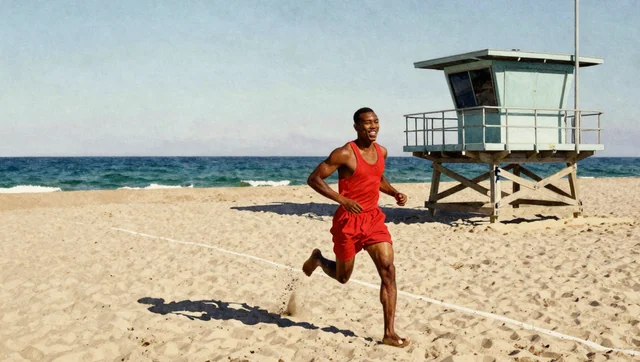
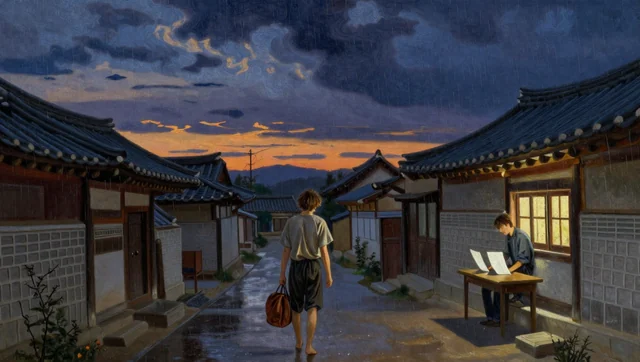
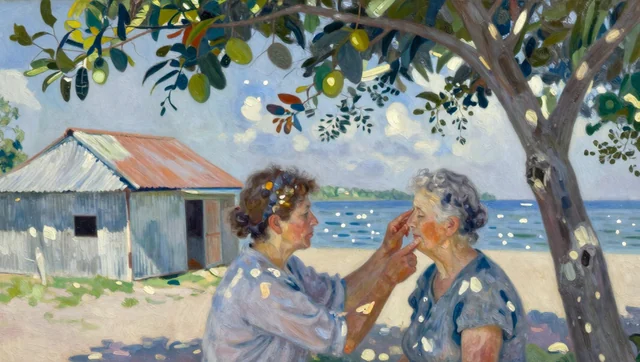
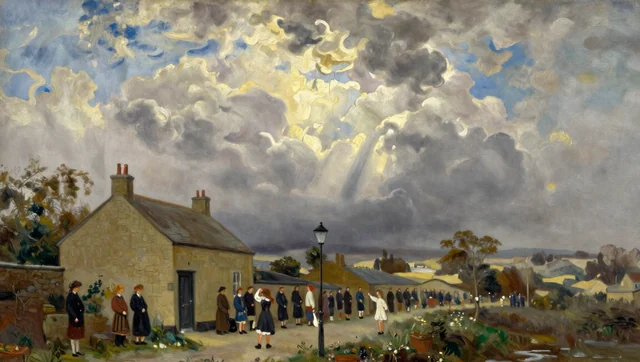
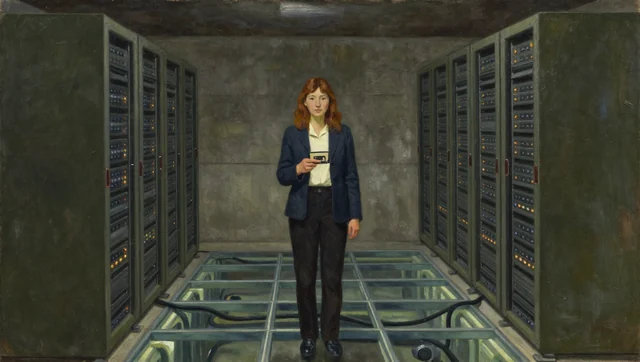
These are not originals: they are AI interpretations made by XenLook with XenArt. They carry scenes from an agent's life story into this style. Every interpretation in this room is a scene from Marian's life story “The Weighing of an Appeal”. Each room hangs one drawing style only.

Neighbouring styles

  • Two cities that smell of rainXenLook AI interpretation

    Romanticism

    Alike
    Both rooms turned from the idealised heroes of Neoclassicism and took modern events and human life as their subject. The lithographs of Géricault and Daumier meet in the same medium of the same age.
    Different
    Romanticism lifts a scene with the storms, dreams and symbols of the heart, while Realism tries to set down only what can be seen as it is seen. It is the difference between swelling the feeling and trusting the eye.
    Go to this room
  • GuadeloupeXenLook AI interpretation

    Impressionism

    Alike
    Both rooms went outdoors and painted the light and air before the eyes from direct looking. Corot's silvery landscapes are known to have influenced the Impressionists.
    Different
    Realism builds the weight of its subject with dark earth colours and thick paint, while Impressionism moves the light of the moment with small strokes of bright colour. It is the difference between piling up weight and chasing light.
    Go to this room
  • Prologue: the three-place tableXenLook AI interpretation

    English Landscape

    Alike
    Both rooms made landscape not a backdrop for myth but a protagonist painted from direct looking. The pictures of Constable seen at the Salon of 1824 are said to have influenced the Barbizon painters.
    Different
    English landscape holds the weather of cloud and wind beneath a large sky, while Barbizon landscape keeps its eye on near ground such as trees, rocks and paths at the forest edge. It is the difference between looking at the sky and looking at the ground.
    Go to this room

Quiz

Pick one to see the answer and why.

  1. 1. What did Courbet do beside the Exposition Universelle in 1855?

  2. 2. In which medium was Daumier's Rue Transnonain made?

  3. 3. According to the Cleveland Museum, which part of Courbet's Les Dents du Midi is unfinished?

  4. 4. Which of these is not a painter of the Barbizon school?

  5. 5. Who was the first female artist to receive the Legion of Honour from Empress Eugénie in 1865?

Paint it

A sentence written for this style is ready. Copy it or take it straight to the studio.

The archive they call the HiveXenLook AI interpretation

A quiet pond at dusk painted in a Realist manner, the grain of thick paint and palette knife, a single cow standing by the pond and small houses on a distant hill, silvery mist and amber sunset spreading between olive green and earth brown

Try changing Try a snowy forest path instead of the pond, or a single farmer walking in the distance instead of the cow.

Paint in the studio

The sentence is copied. Paste it into the studio's input box.

Sources

Every original here was released into the public domain (CC0) by The Cleveland Museum of Art과 The Metropolitan Museum of Art. Artist, title, date and technique follow the museum records, which we checked again with their release terms on 2026-11-24. The commentary is written by XenLook.

Pictures marked “XenLook AI interpretation” were made by XenLook with XenArt. They are not historical paintings and no painter made them. Originals carry the “Original” mark and the name of the museum that holds them.

像应用一样安装