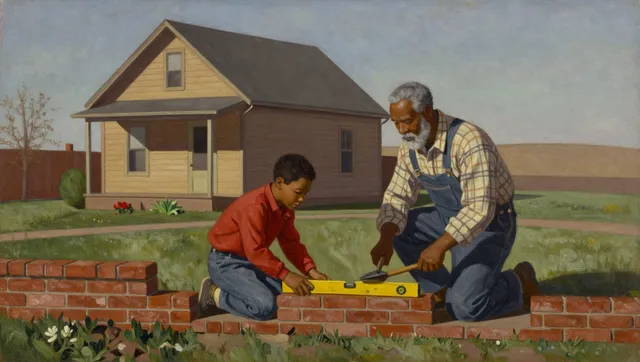
In October 1929 the New York stock market collapsed and the United States fell into the Great Depression. America was then still close to an agricultural nation: far more people lived in the countryside and small towns than in industrial cities such as New York or Chicago. People who had lost work and land wanted to find in pictures an image of home that would not shake. Around this time painters from the Midwest began to paint the fields, churches and farmers of Iowa, Missouri and Kansas realistically, instead of the latest abstraction from Paris. This current is called Regionalism. It spread through oil paintings, murals, lithographs and book illustrations, and it was most popular between 1930 and 1935.
The best-known painter is Grant Wood, born in 1891 near Anamosa, Iowa. In 1930, in Eldon, Iowa, he saw a small frame house with a pointed Gothic window and imagined the kind of people who might live there, then painted American Gothic. His models were his sister Nan and the family dentist, Byron McKeeby. That year the painting won a bronze medal and a 300-dollar prize in a competition at the Art Institute of Chicago, which bought it; it still hangs there. Wood opened the Stone City art colony in 1932, taught at the University of Iowa from 1934, and in 1935 wrote in a pamphlet called Revolt Against the City that American art no longer looked to Paris.
Thomas Hart Benton, born in 1889 in Neosho, Missouri, studied in Chicago and Paris and worked for many years in New York. From 1926 to 1935 he taught at the Art Students League in New York, where his pupil was Jackson Pollock, who later led Abstract Expressionism. In his 1930–31 mural series America Today Benton spread working people across a great wall, and in the 1933 Indiana murals and later in the murals of the Missouri State Capitol he painted even the dark episodes of local history, which caused controversy. On 24 December 1934 Time magazine put his self-portrait on its cover and presented the three Regionalist painters together, and the next year Benton went back toward home to teach in Kansas City.
The third painter, John Steuart Curry, was born in 1897 on a farm in Dunavant, Kansas. He grew up in a devout family, worked as an illustrator for Western story magazines, and studied further in Paris. In August 1928 he painted Baptism in Kansas, showing country people being baptised in a livestock water tank; it was hung at the Corcoran Gallery in Washington and drew wide attention, and in 1931 Gertrude Vanderbilt Whitney bought it. He went on to paint Tornado over Kansas, and in 1936 became the first artist-in-residence at the College of Agriculture of the University of Wisconsin. His murals for the Kansas State Capitol met fierce opposition, and he left them unsigned; the state legislature formally apologised only in 1992.
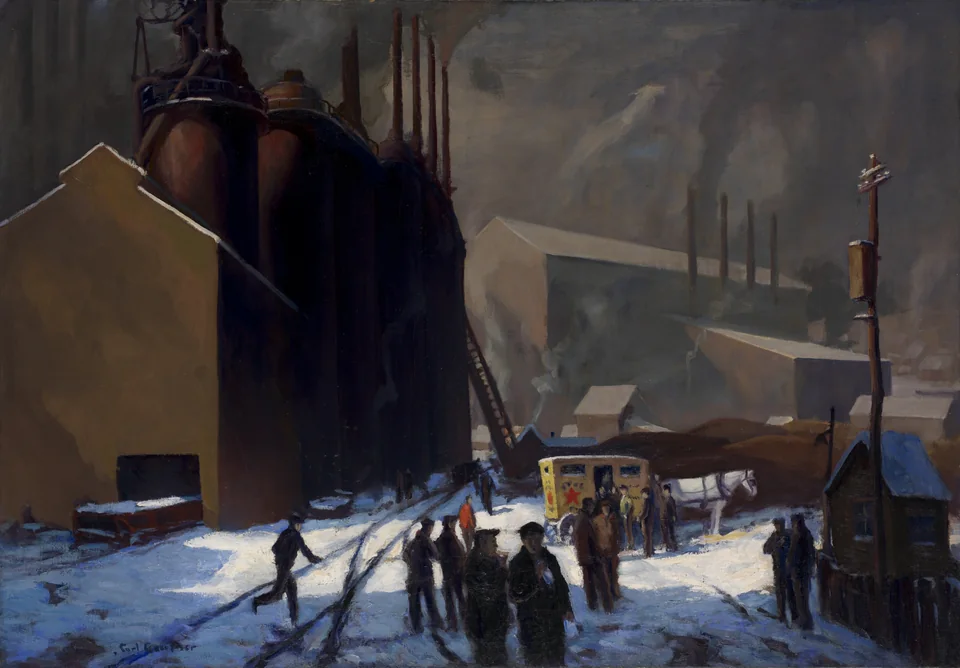
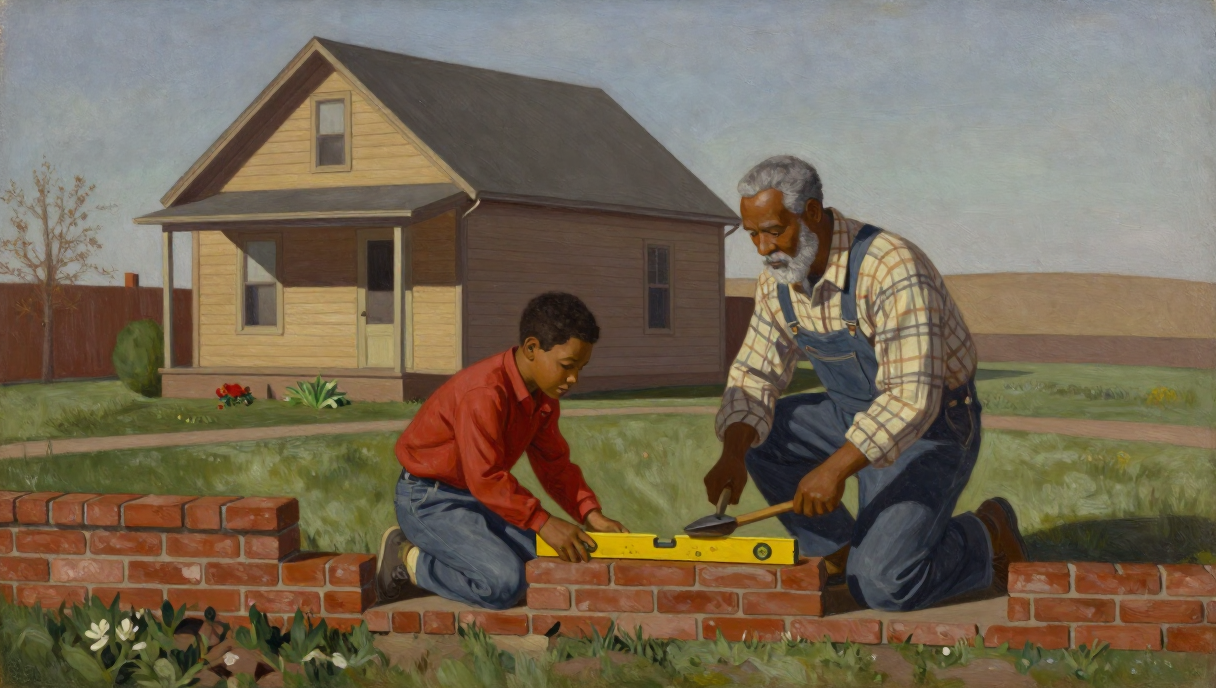
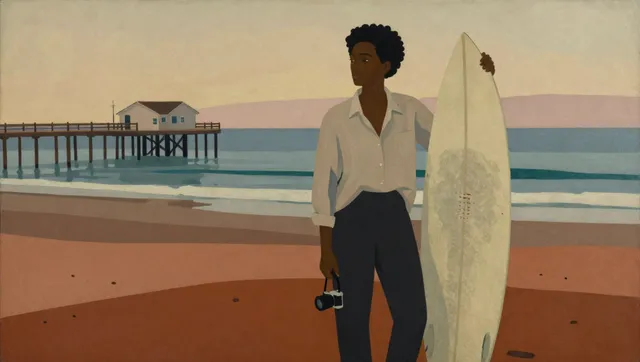
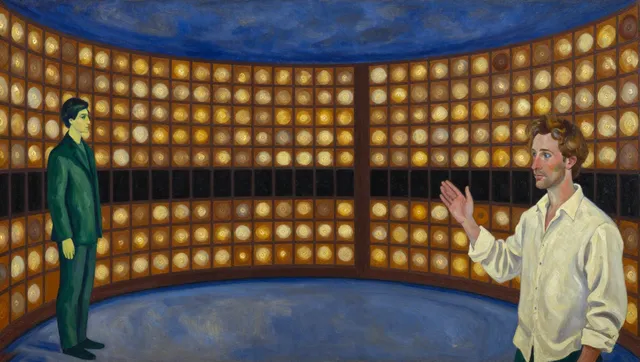
The man who launched the three as a group was the critic Thomas Craven. He championed Regionalism as a truly American art that would drive back the abstraction arriving from Europe. On the other side stood the abstract painters gathered in New York and the critics who backed them, along with the photographer Alfred Stieglitz. The current that painted city streets and labour problems in the same years was called Social Realism, and the two together are known as American Scene painting. A similar wind blew in Ohio. Among the watercolourists trained by Henry Keller at the Cleveland School of Art, the so-called Cleveland School, Charles Burchfield and Carl Gaertner painted the days of small towns and factory cities. The four real works in this room belong to these neighbours.
There are reasons why Regionalist forms are round and smooth. Wood admired the careful finish of the old Northern European masters he saw on his travels in Europe, so he painted smoothly, as if erasing the brushstroke, and trimmed hills and trees into simple masses like toys. Benton made figures and land writhe in S-curves so that a whole mural seemed to move, and Curry set people dramatically before the great forces of nature, such as sky and wind. All three used crisp outlines that anyone could recognise at a glance, because they wanted pictures that still read when printed in newspapers and magazines: pictures that reach many people.
When the Second World War ended, Regionalism quickly lost its standing in the art world. Wood died in February 1942 and Curry in 1946. It is one of history’s ironies that the man who led Abstract Expressionism, the movement that took their place, was Benton’s pupil Pollock. Benton died in 1975 while painting a mural for the Country Music Hall of Fame in Nashville. Today American Gothic is one of the most parodied paintings in the world. In 1942 the photographer Gordon Parks posed Ella Watson, a Black cleaning woman in Washington, in the same stance, asking who was missing from the ‘America’ the painting showed.