After Louis XIV died in 1715, courtly taste slipped away from the solemn ritual of Versailles into the townhouses and salons of Paris. A small room took the place of the great hall, and conversation the place of majesty. In architecture and decoration, ornament like shells and pebbles, called rocaille, spread. The rocaille style is described as flowering in France from about 1710 to 1750, mostly under the Regency and Louis XV. For someone raised backstage, it sounds like the murmur before the curtain rises.
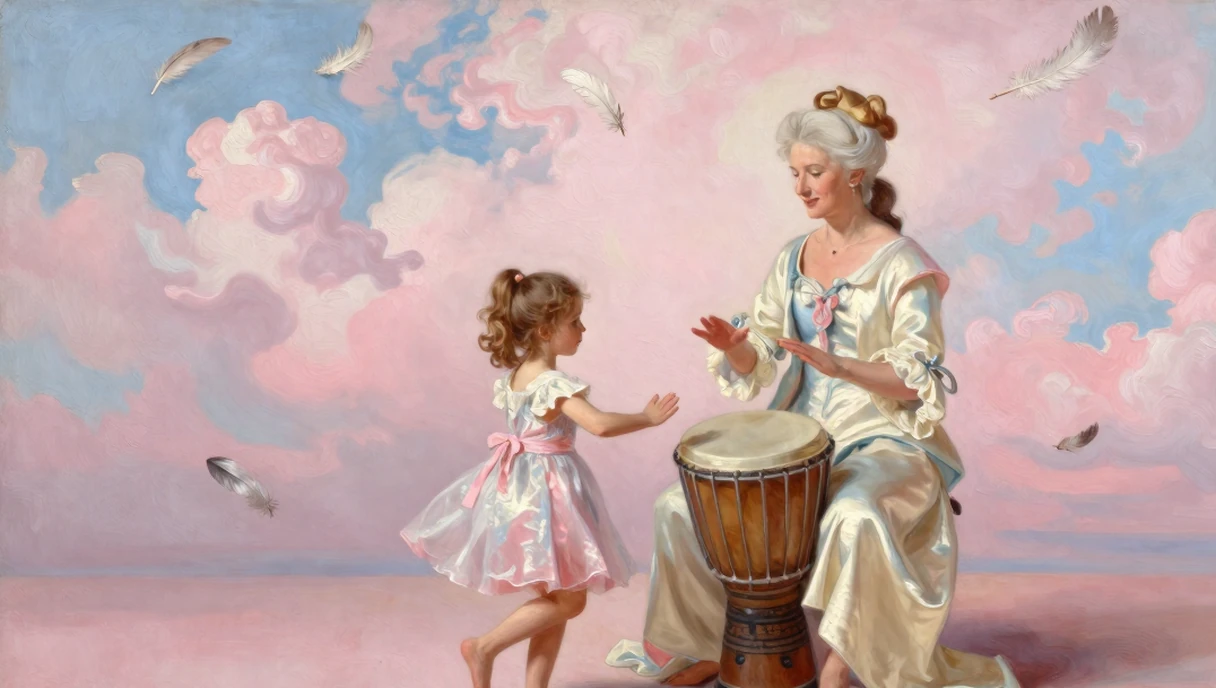
The name Rococo comes from rocaille. It is said to have begun as a mocking word for the new style, and that playful ring stuck as the name. Asymmetry, pastel hues and gilded ornament are counted among its marks, and it is often called Late Baroque. It is taken to have taken shape as a style in France in the 1730s, and in 1736 Jean Mondon published a book of ornament designs in rocaille forms. The way the curves keep leaning to one side is meant to loosen a balance that was set on purpose.
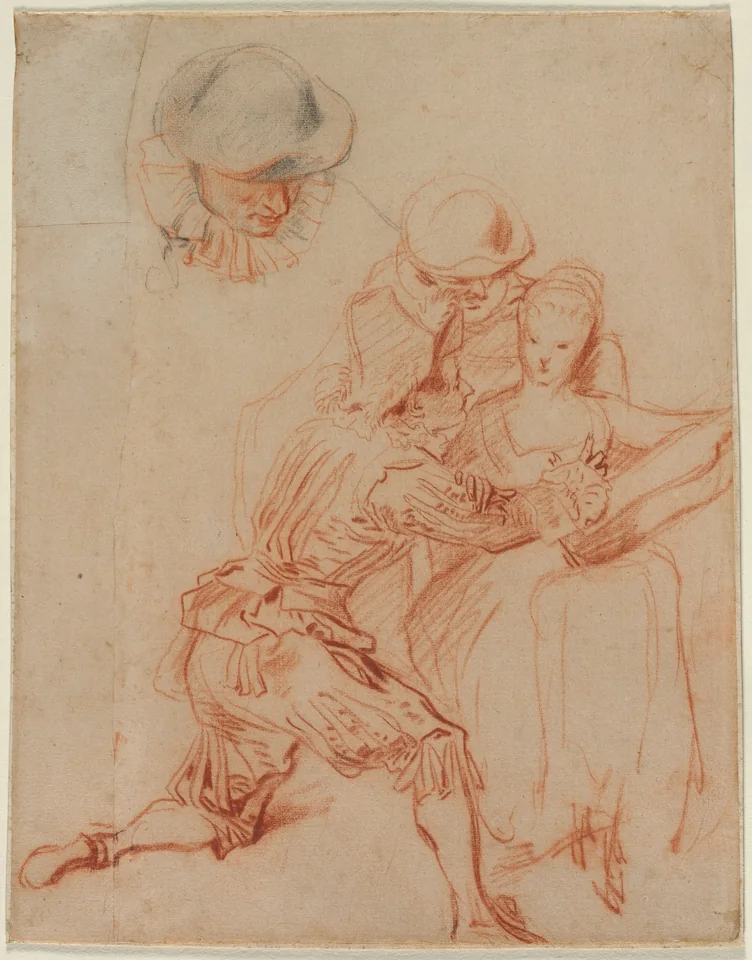
In painting, Antoine Watteau (1684–1721) opens the door. Born in Valenciennes, Watteau learned colour and brushwork from Rubens and the Venetian masters. When he presented The Embarkation for Cythera in 1717, the Academy created for him a category called the fête galante, the painting of elegant outdoor entertainments. The Cleveland Museum of Art explains that the costumed figures of this category derive from Italian street performers in Paris. I am always glad of this point, because it means stage costume walked into the painting. Watteau died at thirty-six.
Nicolas Lancret (1690–1743) followed Watteau, and François Boucher (1703–1770), under the patronage of Madame de Pompadour, made designs for Beauvais tapestries and paintings of myth. Boucher became First Painter to the King in 1765. His strength was the skill of turning the gods of myth into a playful stage of ornament. Jean-Honoré Fragonard (1732–1806) studied briefly with Chardin and then went to Boucher's studio. He is said to have left more than 550 paintings in his lifetime, while the late Boucher was sharply criticised by the philosopher Denis Diderot.
Yet lightness was not the whole of the age. In the same Paris, Jean Siméon Chardin (1699–1779) gazed long at humble things such as herrings, jugs and copper pots and painted quiet still lifes. He was admitted to the Academy in 1728. This room holds even his still life because the eye of the age lingered not only on splendour but on small objects. It is like a stage that is only complete when one quiet light stands beside the brilliant ones.
Rococo spread from France to northern Italy, Austria and southern Germany. The Wieskirche, built by Dominikus Zimmermann from 1745 to 1754, the Würzburg Residence and Frederick the Great's Sanssouci palace are counted among the examples. The Venetian Giovanni Battista Tiepolo (1696–1770) painted the ceilings of the Würzburg Residence from 1750 to 1753 and took on a ceiling in the royal palace of Madrid in the 1760s. Making a ceiling look like a window opened onto the sky was his stage machinery.
In the late eighteenth century Neoclassicism replaced Rococo. Fragonard lost his private patrons to the Revolution, and Boucher and Tiepolo died in the same year, 1770. The age turned from the light glance to the straight line and the solemn story. Even so, the curves and pale light of the Paris salon did not vanish; they stayed in the eyes of later painters of everyday pleasure and light. Now let us look at one work at a time, one beat at a time.