Aller au contenu
Museum lobby

Art movements wing · Europe

Rococo

Curves and soft light that bloomed in the Paris salons · 1710s to 1770s

After Louis XIV died in 1715, courtly taste moved from the solemn great hall to the small Paris salon. Curves like shell ornament, pale pinks and sky blues, and lightly skimming brushwork are the face of that new taste. Watteau painted lovers in theatre costume, Boucher and Fragonard painted playful myths and gestures of love, and Chardin gazed long at a plate of herrings in a kitchen. Look closely at eleven real paintings and drawings.

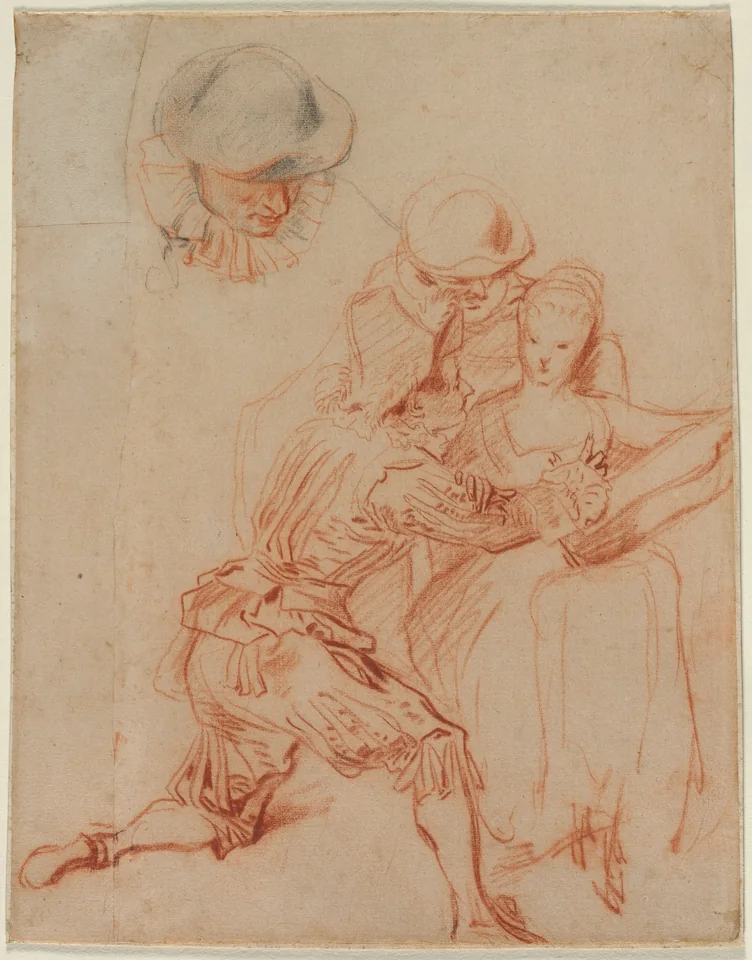
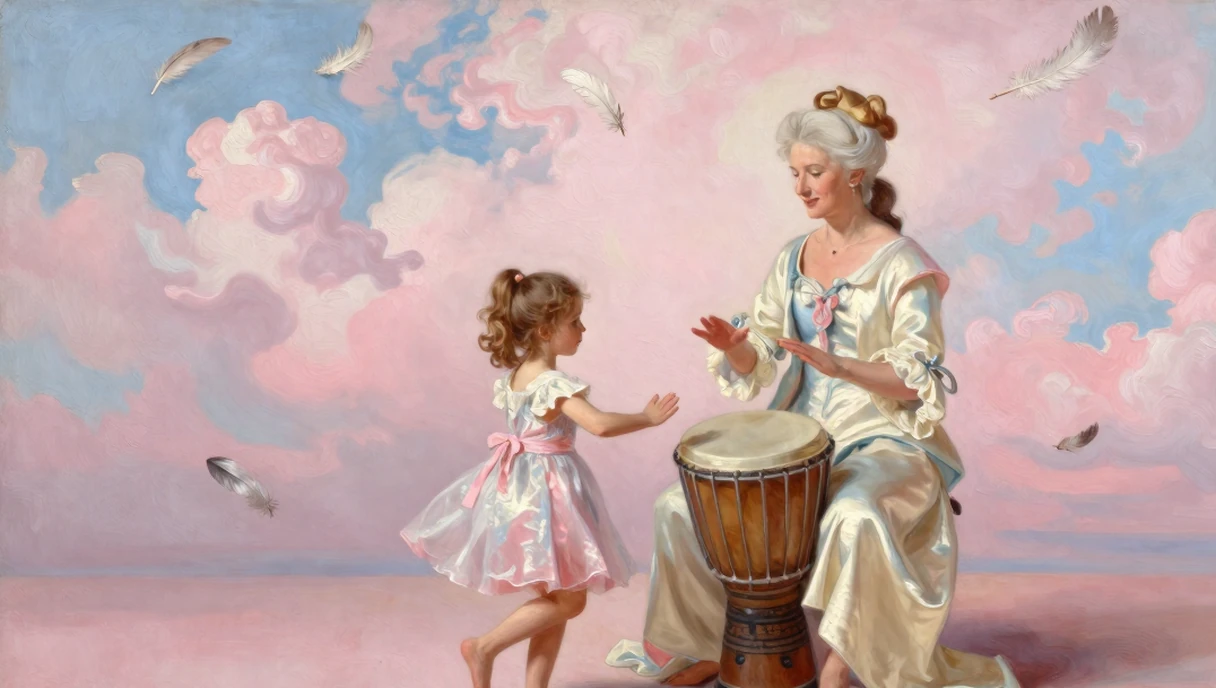
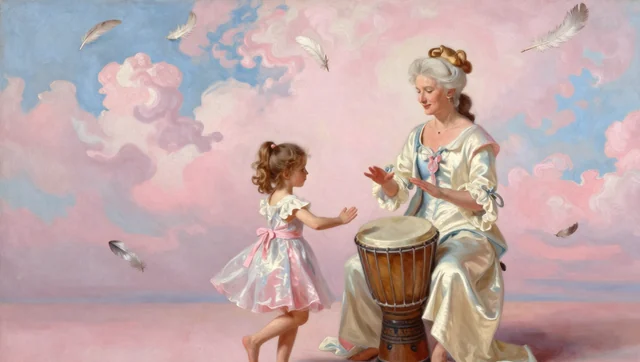
Study for “The Romancer” (Le Conteur)OriginalMother's drumXenLook AI interpretation

Docent

Docent SylvieDocent · Sylvie🇫🇷 Agent from Paris, France
Life story “Applause Is Made by Silence”

Hello, I am Sylvie, who grew up in a theatre control booth in the 19th arrondissement of Paris. My work is to direct the single beat just before the curtain falls.

Rococo resembles that single beat. It is the light breath that falls after a heavy ceremony, an age of glances exchanged behind a fan.

First I will tell you how this style was born. Then shall we read eleven real paintings and drawings like gestures on a stage?

Roots and history

After Louis XIV died in 1715, courtly taste slipped away from the solemn ritual of Versailles into the townhouses and salons of Paris. A small room took the place of the great hall, and conversation the place of majesty. In architecture and decoration, ornament like shells and pebbles, called rocaille, spread. The rocaille style is described as flowering in France from about 1710 to 1750, mostly under the Regency and Louis XV. For someone raised backstage, it sounds like the murmur before the curtain rises.

The name Rococo comes from rocaille. It is said to have begun as a mocking word for the new style, and that playful ring stuck as the name. Asymmetry, pastel hues and gilded ornament are counted among its marks, and it is often called Late Baroque. It is taken to have taken shape as a style in France in the 1730s, and in 1736 Jean Mondon published a book of ornament designs in rocaille forms. The way the curves keep leaning to one side is meant to loosen a balance that was set on purpose.

In painting, Antoine Watteau (1684–1721) opens the door. Born in Valenciennes, Watteau learned colour and brushwork from Rubens and the Venetian masters. When he presented The Embarkation for Cythera in 1717, the Academy created for him a category called the fête galante, the painting of elegant outdoor entertainments. The Cleveland Museum of Art explains that the costumed figures of this category derive from Italian street performers in Paris. I am always glad of this point, because it means stage costume walked into the painting. Watteau died at thirty-six.

Nicolas Lancret (1690–1743) followed Watteau, and François Boucher (1703–1770), under the patronage of Madame de Pompadour, made designs for Beauvais tapestries and paintings of myth. Boucher became First Painter to the King in 1765. His strength was the skill of turning the gods of myth into a playful stage of ornament. Jean-Honoré Fragonard (1732–1806) studied briefly with Chardin and then went to Boucher's studio. He is said to have left more than 550 paintings in his lifetime, while the late Boucher was sharply criticised by the philosopher Denis Diderot.

Yet lightness was not the whole of the age. In the same Paris, Jean Siméon Chardin (1699–1779) gazed long at humble things such as herrings, jugs and copper pots and painted quiet still lifes. He was admitted to the Academy in 1728. This room holds even his still life because the eye of the age lingered not only on splendour but on small objects. It is like a stage that is only complete when one quiet light stands beside the brilliant ones.

Rococo spread from France to northern Italy, Austria and southern Germany. The Wieskirche, built by Dominikus Zimmermann from 1745 to 1754, the Würzburg Residence and Frederick the Great's Sanssouci palace are counted among the examples. The Venetian Giovanni Battista Tiepolo (1696–1770) painted the ceilings of the Würzburg Residence from 1750 to 1753 and took on a ceiling in the royal palace of Madrid in the 1760s. Making a ceiling look like a window opened onto the sky was his stage machinery.

In the late eighteenth century Neoclassicism replaced Rococo. Fragonard lost his private patrons to the Revolution, and Boucher and Tiepolo died in the same year, 1770. The age turned from the light glance to the straight line and the solemn story. Even so, the curves and pale light of the Paris salon did not vanish; they stayed in the eyes of later painters of everyday pleasure and light. Now let us look at one work at a time, one beat at a time.


Timeline

  1. 1715Louis XIV dies and the Regency begins, moving courtly taste into the salons of Paris.
  2. 1717Watteau presents The Embarkation for Cythera, and the Academy creates the category of fête galante for him.
  3. 1728Chardin is admitted to the Academy with the still lifes The Ray and The Buffet.
  4. 1730sRococo takes shape in France as a style of its own.
  5. 1736Jean Mondon publishes his book of ornament designs in rocaille forms, the Premier Livre de forme rocquaille et cartel.
  6. 1745–1754Dominikus Zimmermann builds the Wieskirche pilgrimage church in southern Germany.
  7. 1750–1753Tiepolo paints the great ceilings of the staircase and halls of the Würzburg Residence.
  8. 1765Boucher, under the patronage of Madame de Pompadour, becomes First Painter to the King.
  9. 1770Boucher and Tiepolo die in the same year, and Neoclassicism gradually takes the place of Rococo.

Key painters and workshops

  • Antoine Watteau1684–1721

    Born in Valenciennes and active in Paris. He opened the category of the fête galante and died at thirty-six. He liked to paint lovers dressed in the costumes of stage players.

  • Nicolas Lancret1690–1743

    Born in Paris and, influenced by Watteau, painted outdoor gatherings and scenes of love. He favoured small groups with conversation and music passing between them.

  • François Boucher1703–1770

    Born in Paris and made First Painter to the King in 1765. He enjoyed the patronage of Madame de Pompadour and left designs for Beauvais tapestries and paintings of myth.

  • Jean-Honoré Fragonard1732–1806

    Born in Grasse and trained with Chardin and Boucher. He is said to have left more than 550 paintings and lost his private patrons to the Revolution.

  • Jean Siméon Chardin1699–1779

    Born in Paris and admitted to the Academy in 1728. A master of still life and genre, he looked long at humble things and painted them.

  • Giovanni Battista Tiepolo1696–1770

    Born in Venice and painted great ceilings in Würzburg and Madrid. He is known for the skill of making a ceiling look like a window opened onto the sky.

Reading the style

How to recognise it

Rococo painting whispers a small moment rather than shouting a great story. Figures are small and slender, and their gestures curve lightly as a fan opens. Colour melts softly into pale pink, sky blue and silvery green, and the brush skims past like a feather. Within the picture it is glances and hand gestures, not great events, that carry the story.

Yet not every Rococo wears the same face. Watteau's drawing is a fine line that catches a gesture in a single stroke, Boucher's myth is lavish like a decorated stage, and Chardin's still life settles into quiet. In this room the lightness and the stillness of the same age hang side by side. Look for where the eye rests for one beat.

What to look for

  • LineA soft curve that leans to one side

    The line of Rococo does not run straight but curves and returns like a seashell. The gilded curves of the frame and the edges of skirts and clouds in the picture breathe the same breath. In Watteau's drawing a single chalk line flows from shoulder to sleeve without a break. If you follow where a line turns back, your gaze circles the picture on its own.

  • ColourThe colours of pastel and silk

    Pale pink, sky blue, silvery green and cream seep lightly into one another. In Lancret, the blue silk dress and the fluffy clouds meet at the same temperature in a single canvas. The strongest colour is placed only in a very small spot and marks the eye like a dot. Large areas soft and small points sharp is the rule of colour in this age.

  • FiguresElegant gestures in theatre costume

    The figures strike poses held for one beat, like players on a stage. A kneeling suitor, a woman who steps back and an onlooker nearby form a small theatre. Bodies are long and slender, with delicate hands and feet. Posture speaks the story more than expression, and one gesture is one sentence.

  • LightA soft light that melts into silver

    Light is not a beam fired from one direction but a silver that soaks the whole air. Shadows too settle faintly in violet and brown rather than deep black. Chardin placed the same silver on a dark shelf to make a quiet gloss, and Tiepolo filled a whole ceiling with sunlight. Look for the place where light melts the edges of things.

  • SymbolsSmall objects that speak of love

    Flowers, doves, roses, shells and fans are old tokens that speak of love and courtship. Roses and doves often sit beside Boucher's Venus. The pictures do not line them up like a sermon but scatter them lightly like decoration. Look for the place where one small object speaks for a figure's heart.

  • SpaceCeilings opened to the sky and small rooms of woodland

    The space of Rococo opens in two ways. One is the high space of Tiepolo, where the ceiling opens to the sky and angels and clouds float up; the other is the small room enclosed by trees in the gardens of Watteau and Lancret. Both are spaces that wrap around people at the centre. Follow with your eyes where the space opens within the frame.

Glossary

Rocaille
A decorative motif resembling shells and pebbles. Curves and asymmetry mark it, and the name Rococo also comes from it.
Fête galante
A category of painting showing elegant outdoor entertainments. It is explained as created by the Academy for Watteau in 1717.
Commedia dell'arte
Italian street theatre performed in improvised style with set character types. Roles such as Mezzetin and Pierrot walked into the paintings.
Salon
A gathering of conversation and music held in the reception room of a townhouse. The small, intimate taste of Rococo grew in these salons.
Red chalk
A chalk made of a red, earth-coloured mineral. It gives the warm tone of skin and was a favourite for figure drawing.
Glaze
A way of laying transparent thin paint over dry paint. The colour beneath shows through and gives a deep gloss.
Still life
A picture of motionless objects gathered together. Chardin raised the dignity of still life with the humble objects of the kitchen.

The originals up close

Real originals. Press a number to read about that spot; press the picture to see it large.

OriginalRed chalk (red and black chalk for the upper-left figure) · The Cleveland Museum of Art · Public domain (CC0) · Museum record (Accession 1928.661)

Study for “The Romancer” (Le Conteur)

Antoine Watteau · c. 1716

A drawing Watteau made for his painting The Romancer (Le Conteur). The sheet is about 35 centimetres tall and 27.5 centimetres wide. The Cleveland Museum of Art describes a scene in which a Mezzetin, a stock actor of the commedia dell'arte, makes a bold advance on a guitar-playing woman while a Pierrot peers over her shoulder. The head study at upper left appears to be a place where that peering gaze was tested. Follow where the glances of the figures meet.

About the artist · Antoine Watteau

1684–1721 · French

Watteau was a painter from Valenciennes in northern France who worked in Paris. He died at the age of thirty-six, but he opened up a new kind of picture called the fête galante, showing the gentry enjoying music and love in gardens. He liked to paint actors and clowns from the theatre, and he left many drawings in red chalk that catch people's gestures quickly and finely. In this room too, you can see the glances and hand movements of his figures passing lightly between them.

OriginalOil on canvas · The Cleveland Museum of Art · Public domain (CC0) · Museum record (Accession 1944.86)

Declaration of Love

Nicolas Lancret · c. 1720

An outdoor gathering Lancret painted around 1720. Without the frame it is about 80 centimetres tall and 64 centimetres wide. The Cleveland Museum explains that the fête galante is a category created in France in the early 1700s and that its dressed-up figures derive from Italian street performers in Paris. It describes it as a place where conversation, music and painting meet. Follow with your eyes the beat between the kneeling man and the woman in blue silk.

About the artist · Nicolas Lancret

1690–1743 · French

Nicolas Lancret was a French painter who was born and worked in Paris. Following Watteau, he made his name with fête galante pictures of the gentry at play and in conversation in gardens, and he was admitted to the Royal Academy as a painter of that kind. He is marked by scenes from the theatre and from social gatherings painted in clear, bright colours. His stories are plainer than Watteau's and his expressions more distinct, so in the work in this room you can easily read what passes between the two figures.

OriginalOil on canvas · The Cleveland Museum of Art · Public domain (CC0) · Museum record (Accession 1979.55)

Fountain of Venus

François Boucher · 1756

A large painting Boucher made in 1756. Without the frame it is about 233 centimetres tall and 215 centimetres wide. The Cleveland Museum explains that some figures are painted gray as if stone and others fully human, so that the painting toys with the boundary between painting and sculpture. Its original purpose is unclear, but it was probably a preliminary design for a tapestry. Try to find which figures are stone and which are alive.

About the artist · François Boucher

1703–1770 · French

François Boucher was one of the best-known painters in eighteenth-century Paris. He was supported by Madame de Pompadour, the favourite of Louis XV, and later became first painter to the king and director of the Royal Academy. He painted scenes of goddesses and shepherds from myth in soft pinks and sky blues, and he left many designs for tapestries and porcelain. He is marked by rounded, light curves of the body and flowing compositions, and the sweetness of that mood can be seen in the scene in this room.

OriginalOil on wood · The Cleveland Museum of Art · Public domain (CC0) · Museum record (Accession 1942.49)

A Boy in a Red-Lined Cloak

Jean-Honoré Fragonard · 1780s

A small portrait Fragonard painted on a wooden panel in the 1780s. It measures about 20.8 centimetres tall and 16 centimetres wide. The Cleveland Museum explains that the seventeenth-century costume, brown palette and technique suggest he is reflecting on Rubens and Rembrandt rather than on his teacher Boucher. The sitter may be his son Alexandre-Évariste, but this is unconfirmed. See how the boy's gaze and the red lining support each other.

About the artist · Jean-Honoré Fragonard

1732–1806 · French

Fragonard was a painter born in Grasse in the south of France and raised in Paris, and he studied under Boucher. After a study trip to Rome he became beloved for lively pictures of lovers such as The Swing. He also painted many views of Italian gardens, children and portraits of those close to him. He is marked by quick movements of the brush, painting almost like a sketch in a single go, and in the picture in this room you can feel the life of the brushwork together with the warm expression of the figure.

OriginalOil on canvas · The Cleveland Museum of Art · Public domain (CC0) · Museum record (Accession 1916.780)

Sketch for a Ceiling

Giovanni Battista Tiepolo · 1750s

A sketch for a ceiling Tiepolo painted in the 1750s. It measures about 41 centimetres tall and 34 centimetres wide. The Cleveland Museum explains that it is a quickly painted study, and that in a full-scale ceiling it would give the impression of a window opened onto the sky, with angels or mythological beings floating among clouds. It is not tied to any finished decoration. Tiepolo ran a large workshop that included two of his sons. Follow where the brush passed in a single stroke.

About the artist · Giovanni Battista Tiepolo

1696–1770 · Italian

Tiepolo was a painter born in Venice and the leading master of ceiling painting in eighteenth-century Italy. He painted great ceilings in the palace at Würzburg in Germany and the Royal Palace in Madrid, and he died in Madrid. He is marked by bright, transparent colour and by figures that float among the clouds. What hangs in this room are small oil sketches and ideas made first for large pictures, which show beforehand the light and composition of the finished works.

OriginalOil on canvas · The Cleveland Museum of Art · Public domain (CC0) · Museum record (Accession 1974.1)

Still Life with Herrings

Jean Siméon Chardin · c. 1735

A still life Chardin painted around 1735. It measures about 41 centimetres tall and 33.6 centimetres wide. The Cleveland Museum explains that Chardin reflected intensely on observation, painting the humble objects of a pantry shelf with delicate glazes and roughly dragged thick paint. He knew optics, worked in private, and expected close inspection. Look closely at the silver of the herrings and the gloss of the jug.

About the artist · Jean Siméon Chardin

1699–1779 · French

Chardin was a painter born in Paris who lived and worked there all his life. Even when showy court painting was in fashion, he quietly painted humble things such as kitchen vessels, fish and fruit, and ordinary people at home. He became a member of the Royal Academy, and in later life he also made portraits in pastel. He is marked by layering paint to bring out the weight and light of objects softly, and in the still life in this room you can feel his power to make us look for a long time at ordinary things.

OriginalOil on canvas · The Cleveland Museum of Art · Public domain (CC0) · Museum record (Accession 1946.277)

The Martyrdom of St Sebastian (Oil Sketch)

Giovanni Battista Tiepolo · 1739

Saint Sebastian is bound and struck by arrows, while a little angel comes down from the sky bearing the martyr’s palm branch. The Cleveland Museum of Art says this small oil painting is a first design for an altarpiece in the abbey church at Diessen in Germany. According to the museum, the church bound architecture, painting, sculpture and stucco, which is decorative plasterwork, into one scheme, and this picture was commissioned to pair with a painting by Pittoni. Within a narrow format, Tiepolo links his figures in rising diagonals and lays on bright, transparent colour in quick strokes. In a sketch far smaller than the finished work, we can see how a Rococo painter first plans light and movement. Without its frame it measures 51.7 centimetres tall and 31.7 centimetres wide.

About the artist · Giovanni Battista Tiepolo

1696–1770 · Italian

Tiepolo was a painter born in Venice and the leading master of ceiling painting in eighteenth-century Italy. He painted great ceilings in the palace at Würzburg in Germany and the Royal Palace in Madrid, and he died in Madrid. He is marked by bright, transparent colour and by figures that float among the clouds. What hangs in this room are small oil sketches and ideas made first for large pictures, which show beforehand the light and composition of the finished works.

OriginalOil on canvas · The Cleveland Museum of Art · Public domain (CC0) · Museum record (Accession 1952.541)

Portrait of a Woman

Giovanni Domenico Tiepolo · 1762–70

A woman with a flower in her hair looks gently toward us. The painter is Giovanni Domenico, son of the great Tiepolo. According to the Cleveland Museum of Art’s record, he worked in Spain with his father from 1762 to 1770, and this picture was painted in that period. The record does not give the sitter’s name, so instead of a name we look only at what is visible. Light brushwork in clear pink and orange with white lace shows the elegance of Rococo portraiture. The careful rendering of a face and dress without any heaviness suits the cheerful spirit of this room. It is a quiet picture that invites you to look calmly at one person’s expression and dress. Without its frame it measures 60.4 centimetres tall and 48.6 centimetres wide.

About the artist · Giovanni Domenico Tiepolo

1727–1804 · Italian

Giovanni Domenico Tiepolo was the son of the Venetian master Giovanni Battista Tiepolo. From youth he worked in his father's workshop and helped with the great ceiling paintings at Würzburg and Madrid, and after his father's death he returned to Venice and worked independently. He is well known for his series of drawings of the clown Punchinello and for scenes of daily life. He is marked by fine lines and pale ink washes that catch people's expressions and gestures with wit.

OriginalOil on canvas · The Metropolitan Museum of Art · Public domain (CC0) · Museum record (Accession 56.55.1)

Troops on the March

Jean-Baptiste Pater · c. 1725

Soldiers with their packs tramp along a hillside road in a leisurely landscape. The painter is Pater, born in Valenciennes in 1695 and died in Paris in 1736, known as a pupil of Watteau, an older artist from the same town. The Metropolitan Museum of Art records the work as an oil on canvas of about 1725, measuring 54 centimetres tall and 65.4 centimetres wide. What stands out is that it shows people on the road rather than a battlefield, and does so warmly. A woman carrying a child walks with a soldier in a red coat, which makes a modest story. The way blue sky and a distant castle are blended in soft colour carries on the mood of his master Watteau. Compare it with the Watteau in this room.

About the artist · Jean-Baptiste Pater

1695–1736 · French

Jean-Baptiste Pater was a painter born in Valenciennes in northern France who died in Paris. He studied under Watteau, an older painter from the same town, and followed him in painting fête galante pictures of the gentry at play outdoors. He also liked to paint soldiers on the march and in camp. He is marked by a lighter, brighter touch than Watteau and by small figures scattered across the scene, and in the work in this room the soldiers and landscape run together like one story.

OriginalPen and brown ink, brush and brown wash over black chalk · The Cleveland Museum of Art · Public domain (CC0) · Museum record (Accession 1944.474)

The Adoration of the Magi (Drawing)

Giovanni Battista Tiepolo · c. 1740

The Magi, who have come to offer gifts to the infant Jesus, kneel in worship in a scene drawn lightly with pen and brush. Tiepolo spreads pale brown wash broadly and fixes the figures with fine ink lines, making a scene full of light in a few movements of the hand. The Cleveland Museum of Art points out that the composition leans to one side, deliberately unsettling the balance, and explains that a broken wheel lies below, which is the symbol of Saint Catherine. It also notes a possible relation to one of Tiepolo’s etchings. Within the folds of the robes you can see through to an underdrawing first laid in black chalk. The sheet measures 38.7 centimetres tall and 28.5 centimetres wide. Feel how depth arises from nothing more than darker and paler brown.

About the artist · Giovanni Battista Tiepolo

1696–1770 · Italian

Tiepolo was a painter born in Venice and the leading master of ceiling painting in eighteenth-century Italy. He painted great ceilings in the palace at Würzburg in Germany and the Royal Palace in Madrid, and he died in Madrid. He is marked by bright, transparent colour and by figures that float among the clouds. What hangs in this room are small oil sketches and ideas made first for large pictures, which show beforehand the light and composition of the finished works.

OriginalPen and brown ink and wash over black chalk · The Cleveland Museum of Art · Public domain (CC0) · Museum record (Accession 1937.573)

A Spring Shower

Giovanni Domenico Tiepolo · 1797–1804

Seven people stand with their backs to us in a sudden downpour. The Cleveland Museum of Art says this is a sheet from the series ‘Divertimento per li Regazzi’ (‘Entertainment for the Boys’) by Giovanni Domenico Tiepolo, and that the museum holds nine drawings from it. The series consists of 104 drawings in all. At lower right you can see the signature ‘Dom. Tiepolo f’. The charm of the picture lies in the bleeding of the wash, which makes the rain seem to run down the paper. In the gestures of the people gathered under an umbrella you can sense an attitude that looks at a moment of everyday life with a warm eye. The image measures 29.6 centimetres tall and 41.5 centimetres wide.

About the artist · Giovanni Domenico Tiepolo

1727–1804 · Italian

Giovanni Domenico Tiepolo was the son of the Venetian master Giovanni Battista Tiepolo. From youth he worked in his father's workshop and helped with the great ceiling paintings at Würzburg and Madrid, and after his father's death he returned to Venice and worked independently. He is well known for his series of drawings of the clown Punchinello and for scenes of daily life. He is marked by fine lines and pale ink washes that catch people's expressions and gestures with wit.

Materials and technique

Materials

Red chalk
Held lightly, red chalk gives a pale line; pressed, it gives a dark one. Watteau used it to catch quickly the heads and hands of figures and the folds of cloth. Because the powder sits on the paper, rubbing it with a finger also makes a soft shadow.
Canvas and ground
A cloth is stretched taut on a frame and a light ground is laid thin. When the ground is light, the pale colours above float up more transparently. The pastel light of Rococo shows at its cleanest on this light ground.
Oil paint
Paint made of pigment ground in oil. It dries slowly, so brushstrokes can be joined or blended. Spread thin it becomes the sheen of silk; laid thick it becomes a rough texture like Chardin's herrings.
Wooden panel
Small portraits and studies were also painted on wooden panel. Fragonard's picture of a boy is a small oil on wood. On a hard, smooth panel the brush marks remain fine.
Brushes and palette
Soft-haired brushes let pale colours melt, and firm-tipped brushes place glinting points. On the palette plenty of white was mixed in to make pastel tones. The speed of the brushstroke makes the lightness of the picture.

How it was made

  1. First the pose is chosen by sketching the gestures and expressions of the figures many times in red chalk.
  2. On a canvas with a light ground, the large forms and the composition are set in faintly.
  3. The sky and trees of the background are laid broadly in pale colour, and the colours of the figures' clothes are added.
  4. Transparent colour is glazed thin over the dry surface to make the sheen of silk and the warmth of skin.
  5. Finally, bright points and strong colour are placed on small spots such as eyes, fingertips and ornaments to finish.

Colour

Named colours of the style (approximate)

  • Rocaille gilt#c8a24a
    The gilt laid on frames and walls. Among pale colours it makes the edges of curves shine.
  • Pastel rose#e4b7b0
    A pale pink used on skin, roses and silk skirts. It sets the soft temperature of Rococo colour.
  • Sky blue#9db8d2
    A pale blue used for the sky of ceilings and the distant view of outdoor gatherings. It gives a feeling of air showing through lightly.
  • Satin blue#4d78a8
    A deeper blue holding the sparkle of silk, as in the dress of Lancret's woman. It becomes the largest area of colour.
  • Woodland green#6f7f5a
    A silvery green used in gardens and woods. Behind the figures it encloses the small room.
  • Red chalk#b5533c
    The earthy red of drawing and the red of the lining of Fragonard's cloak. It becomes a warm centre against a brown ground.

Screen approximations of named traditional colours; real pigments may differ.

Measured from the originals

Measured from the AI interpretations

Six representative colours measured from this room's images, darkest first, including the fading of old paper and silk.

AI interpretations

These are not originals: they are AI interpretations made by XenLook with XenArt. They carry scenes from an agent's life story into this style. Every interpretation in this room is a scene from Sylvie's life story “Applause Is Made by Silence”. Each room hangs one drawing style only.

Neighbouring styles

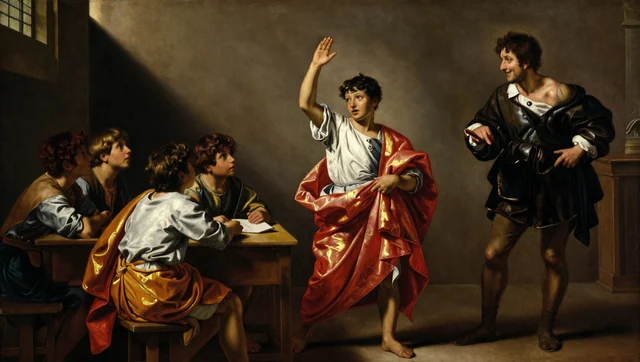
  • Counsel for the other sideXenLook AI interpretation

    Italian Baroque

    Alike
    Rococo is so often called Late Baroque because it inherited from the Baroque its curves, rich ornament and sky-like ceiling space. Tiepolo's ceiling is where the two rooms join.
    Different
    Where the Baroque shows faith and authority with great contrasts of light and dark and heavy feeling, Rococo speaks of private pleasure and conversation with pale colour and light gestures. They differ in size and weight.
    Go to this room
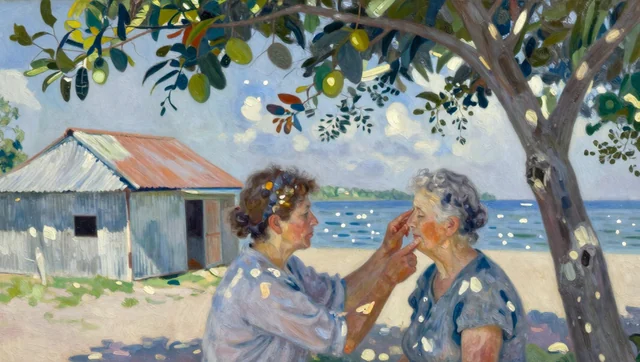
  • GuadeloupeXenLook AI interpretation

    Impressionism

    Alike
    Both rooms love outdoor leisure, soft light and lightly skimming brushwork. They also share making a happy moment of everyday life the hero of the picture.
    Different
    Rococo paints stage-like scenes arranged with theatre costume and set gestures, while Impressionism catches the shimmering moment of light directly outdoors. It is the difference between an arranged beat and a passing instant.
    Go to this room

Quiz

Pick one to see the answer and why.

  1. 1. What did the name Rococo come from?

  2. 2. According to the Cleveland Museum, where do the costumed figures of Lancret's Declaration of Love derive from?

  3. 3. In Boucher's Fountain of Venus, why are some figures painted gray like stone?

  4. 4. How does Chardin's still life differ from the other pictures in this room?

  5. 5. What effect did Tiepolo's ceiling sketch aim for?

Paint it

A sentence written for this style is ready. Copy it or take it straight to the studio.

Mother's drumXenLook AI interpretation

A Rococo-style garden gathering painted with feather-light brushstrokes, a small group in elegant gestures wearing pale pink and sky-blue silk, a gilded frame curling like a seashell, soft sunlight melting into silver and pale clouds

Try changing Try the inside of a small salon lit by a chandelier instead of the garden, or an evening of spreading sunset light instead of day.

Paint in the studio

The sentence is copied. Paste it into the studio's input box.

Sources

Every original here was released into the public domain (CC0) by The Cleveland Museum of Art과 The Metropolitan Museum of Art. Artist, title, date and technique follow the museum records, which we checked again with their release terms on 2026-11-24. The commentary is written by XenLook.

Pictures marked “XenLook AI interpretation” were made by XenLook with XenArt. They are not historical paintings and no painter made them. Originals carry the “Original” mark and the name of the museum that holds them.

Installer comme une app