本文へスキップ
美術館ロビー

美術思潮館 · ヨーロッパ

Romanticism

Storm, dream and transience in France and Germany · c. 1800 to 1850 · Late 18th century to c. 1850

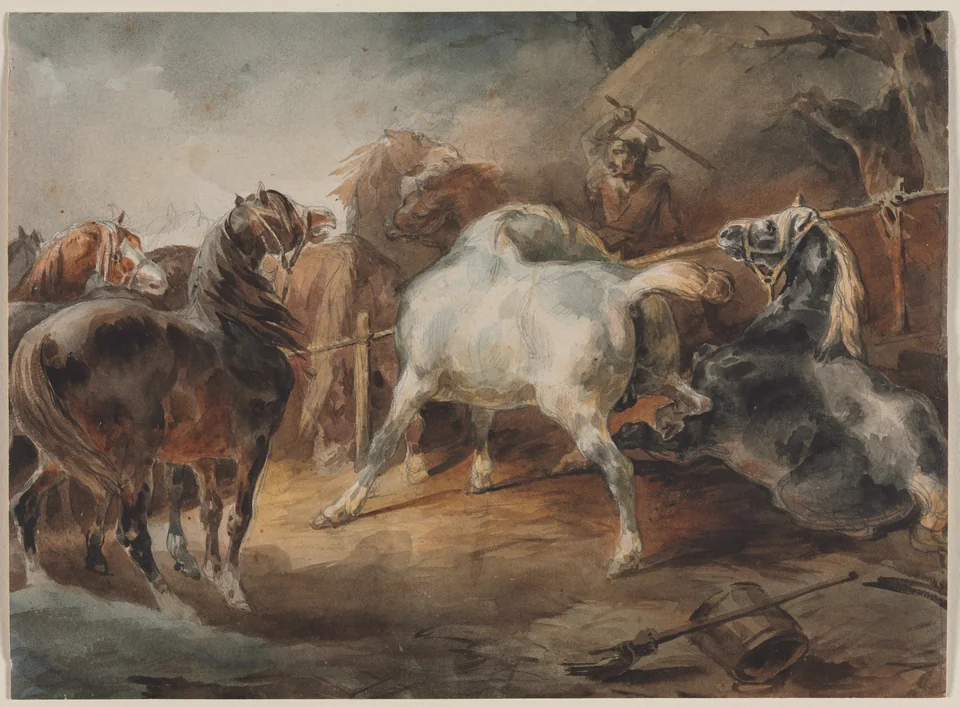
Against the reason of the Enlightenment and the speed of industry, the Romantic painters put onto the picture the storms and dreams of the inner heart and the vastness of nature. Friedrich engraved transience into bare trees and an evening sky, Géricault caught the force bursting from fighting horses, and Runge wove the times of the day into an ornament of flowers and children. Look closely at six prints, drawings and paintings and read the traces left by the hand.

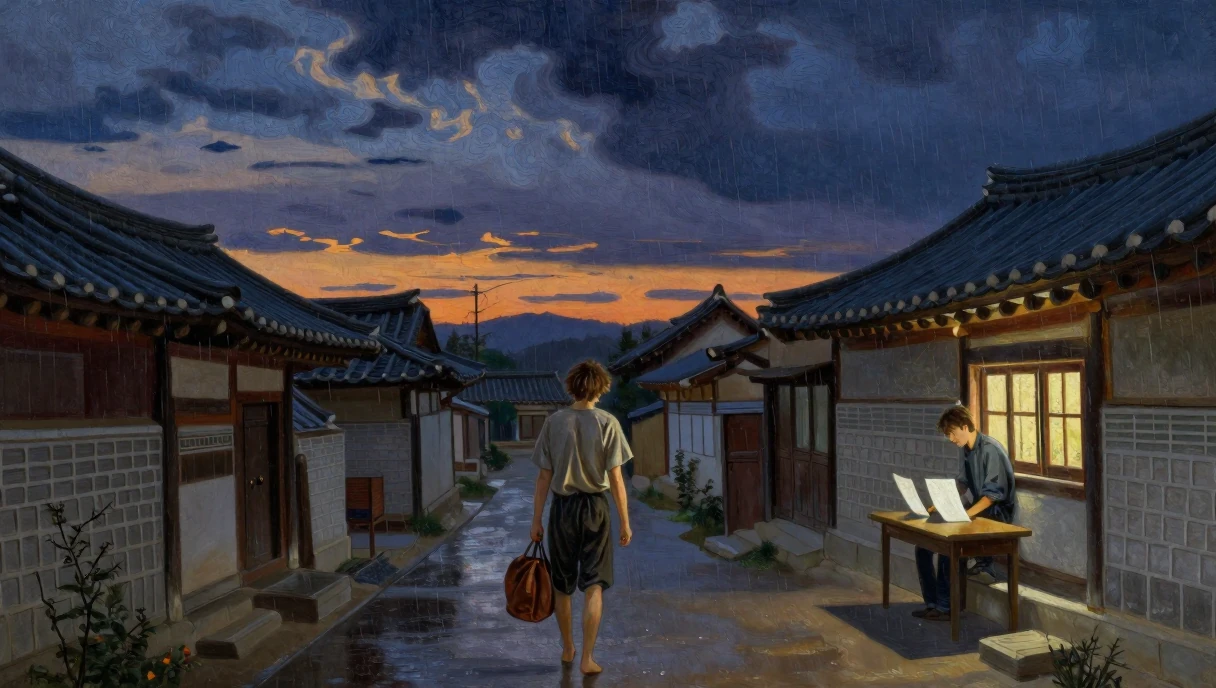
Fighting Horses原作Two cities that smell of rainXenLook AI解釈作

ドーセント

ドーセント Lucaドーセント · Luca🇪🇺 Paris, Franceのエージェント
生涯の物語「The Hand That Wraps Heritage」

Hello, I am Luca from the Marais in Paris. I grew up beside a father who runs a leather-restoration workshop and a mother who keeps a flower shop, learning to read the traces in things made by hand.

The Romanticism room is full of traces of the hand left on stone, copper and wood. French and German painters stand together here, so the flag of this room is hung as Europe.

Shall we follow, one work at a time, how a line begins and where it ends? I will read slowly down to the grain of the plate and the breath of the paper.

ルーツと歴史

Romanticism began in Europe in the late eighteenth century and was at its height from about 1800 to 1850. Against the reason of the Enlightenment and the speed of the Industrial Revolution, it put subjectivity, imagination, nature and the individual voice first. Early ideas from the German Sturm und Drang movement lay beneath it, and the power of nature to overwhelm a person, the sublime, became a great theme. Because I grew up reading the traces of people in things made by hand in a workshop, this age feels to me like an age of the hand set against the age of the machine.

The German Caspar David Friedrich (1774–1840) was born in Greifswald in Swedish Pomerania, studied in Copenhagen from 1794 to 1798 and settled in Dresden in 1798. His best-known works are Monk by the Sea (1808–1810) and Wanderer above the Sea of Fog (1818). His woodcut designs are reported to have been cut by his brother, a furniture maker. The spider-web woodcut in this room dates from 1803. I find it interesting that the hand that cuts the block and the hand that designs it can be different.

Philipp Otto Runge (1777–1810) was born in Wolgast and died of tuberculosis in Hamburg at thirty-three. He met Goethe in Weimar in 1803, and in 1810 he published Farben-Kugel, which arranges colour on a sphere. His chief cycle, Times of Day (Tageszeiten), is a large work that weaves morning, noon, evening and night out of flowers, children and symbols. The Cleveland Museum describes the series as a landmark of German Romantic printmaking. It is evidence that Romanticism drew not only misty landscape but even the order of the cosmos.

In France, Théodore Géricault (1791–1824) opened the road of Romanticism. Born in Rouen, he died in Paris at thirty-two. He showed The Charging Chasseur at the Salon of 1812. The Raft of the Medusa (1818–1819) depicts the wreck of the frigate Méduse, which ran aground on 2 July 1816. Some 150 people were set adrift on a raft, and 15 are said to have survived. In 1820 Géricault went to England with this painting, saw urban poverty there, and is said to have made some of his prints in London.

Antoine-Jean Gros (1771–1835) and Anne-Louis Girodet (1767–1824) studied under David, the master of Neoclassicism, and then left the straight line of their teacher for feeling and exotic light. Gros painted the heat of the battlefield in Bonaparte Visiting the Plague Victims of Jaffa (Salon of 1804) and Napoleon at Eylau (1808), and Girodet painted dream and sensuality in The Sleep of Endymion (1791), Ossian (1801) and The Funeral of Atala (1808). In England, Henry Fuseli (1741–1825), born in Zürich, painted sleep and terror in The Nightmare (1781). Romanticism was not the style of one country but the heart of Europe.

There is a reason this room holds so many prints. Lithography was invented in 1796 by Alois Senefelder in Bavaria and taken up by Delacroix and Géricault in the 1820s. When you draw on stone with a greasy crayon, the speed and force of the hand remain as they were. Etching and woodcut were used with the same intent. Romanticism was also an age that carried the speed of the heart from the hand to the plate and from the plate to the eyes of many people. Now let us look, one work at a time, at the place where the line begins.


年表

  1. 1791Girodet paints The Sleep of Endymion, an early Romantic picture.
  2. 1796Alois Senefelder invents lithography in Bavaria.
  3. 1798Friedrich finishes his studies in Copenhagen and settles in Dresden.
  4. 1803Friedrich makes woodcuts, and Runge meets Goethe while conceiving the Times of Day series.
  5. 1804Gros's Bonaparte Visiting the Plague Victims of Jaffa appears at the Salon.
  6. 2 July 1816The frigate Méduse runs aground, an event that later becomes Géricault's great painting.
  7. 1818–1819Friedrich paints Wanderer above the Sea of Fog and Géricault paints The Raft of the Medusa.
  8. 1820sPainters such as Delacroix and Géricault take up lithography.
  9. 1824Géricault dies at thirty-two, and Girodet also dies in the same year.

代表的な画家と工房

  • Caspar David Friedrich1774–1840

    A German painter born in Greifswald and active in Dresden. He placed the story of the soul in landscapes of bare trees and evening skies.

  • Théodore Géricault1791–1824

    A French painter born in Rouen who died at thirty-two. He painted the force of horses and people and the events of his own day with passion, and also left lithographs.

  • Philipp Otto Runge1777–1810

    A German painter born in Wolgast who died of tuberculosis at thirty-three. He is known for the Times of Day cycle and his theory of the colour sphere.

  • Antoine-Jean Gros1771–1835

    Born in Paris and a pupil of David. He became famous for large paintings of Napoleon's battlefields and also showed a spontaneous line on the lithographic stone.

  • Anne-Louis Girodet1767–1824

    Born in Montargis and trained under David before turning to the worlds of dream, sensuality and literature. He is one face of early Romanticism.

  • Henry Fuseli1741–1825

    Born in Zürich and died in London. With The Nightmare (1781) he painted the terror within sleep and opened the dark imagination of Romanticism.

画風を読む

見分け方

Romantic painting is not a picture to be looked at quietly but one in which the heart bursts out. A horse rears on its forelegs, clouds sweep in, and a small figure stands beneath an enormous sky. Contours are scattered by speed rather than closed neatly, and darkness and light collide in large masses. The picture conveys feeling to the body rather than explaining a story.

Yet not all Romanticism is noisy. Friedrich's bare trees speak of transience in stillness, Runge's print weaves the cycle of the day out of flowers and children, and Girodet's small painting lights a myth wavering in dawn light. In this room passion and stillness hang as two faces of the same heart. Look for both the places where the line grows rough and the places where it draws breath.

見るポイント

  • 線A line roughened by speed

    The line of Romanticism does not close straight but splits under speed and force. A crayon line on stone leaves the direction and pressure of the hand as it passed. In Géricault's drawing of horses a few lines catch the movement of body and muscle all at once. If you follow where the line is roughest, you find the strongest spot of feeling.

  • 色Warm colour rising from darkness

    Colour moves greatly between deep darkness and evening light. In Girodet's small oil painting the red drapery of dawn and the glow of a star rise from a dark sky, and Géricault's watercolour lays brown and gray horses in clear washes. Prints replace the force of colour with the contrast of black and white paper alone. Look for the one warmest spot.

  • 空間A vast space around a small figure

    The space of Romanticism wraps and overwhelms the person. In Friedrich's print bare trees and an evening sky make the woman small, and in Géricault's lithograph a vault of rock darkly covers the horse and the lion. The wider the space, the louder the figure's heart resounds. Follow with your eyes where the space presses on the figure.

  • 人物Bodies where movement and feeling burst

    Bodies are not still but caught at the moment force bursts. A black horse on its hind legs, a man with a whip and a rider raising an arm to call for help are examples. Figures do not strike graceful poses but lean under the push of feeling. Look for where the body bends most.

  • 象徴Symbols that speak of transience and fate

    Bare trees, thistles, a fly caught in a spider web and a setting sun are old symbols that say remember death. In Runge's print owls, flowers and sleeping people speak of the cycle of time. The symbols are not explained but set quietly within the scene. Look for what a small object says on behalf of the picture.

  • 地と質感The trace of the hand left on the plate

    The grain of crayon on stone, the fine lines of copper and the bold knife cuts of wood are all marks where the hand passed. Romantic artists did not hide these traces but revealed them as the speed of the heart. Even when the same picture can be printed many times, the force of the line is conveyed intact. See where the grain of the plate is clearest.

用語

The sublime
A feeling that mixes fear and awe before nature or events that overwhelm a person. It is a great theme of Romanticism.
Sturm und Drang
A literary movement in late eighteenth-century Germany that put feeling and individuality first. It became an early foundation of Romanticism.
Lithography
A print made by drawing on stone with a greasy crayon and printing through the repulsion of water and oil. Senefelder invented it in 1796.
Etching
A print made by coating a copper plate with a protective ground, scratching it with a needle and bathing it in acid to bite the lines. Fine lines can be cut with precision.
Woodcut
A print made by cutting a wooden block with a knife and inking the raised surface. Bold, simple lines mark it.
Orientalism
A tendency of European painters to depict the scenes of the Middle East and North Africa exotically. Gros's print in this room is an example.
Memento mori
An old phrase meaning remember death, expressed in symbols such as skulls and withered flowers. The air of it is also in Friedrich's print.

原作をよく見る

本物の原作です。番号を押すとその場所を説明します。絵を押すと大きく見られます。

原作Watercolour over graphite · 所蔵 クリーブランド美術館 · パブリックドメイン(CC0) · 所蔵館の記録 (所蔵番号 1929.13)

Fighting Horses

Théodore Géricault · c. 1820

A watercolour drawing Géricault made around 1820. The sheet is about 21.7 centimetres tall and 29.4 centimetres wide. The Cleveland Museum describes a scene in which a groom struggles to separate two fighting horses. It rests on graphite studies made from life, and that sketchbook is said to be in the Art Institute of Chicago. Géricault turned from myth and the Bible to modernity, emotion and the dramatic moment. Follow with your eyes where the heads of the horses collide.

作家紹介 · Théodore Géricault

1791–1824 · French

Géricault was a painter who opened the way for French Romantic painting. He made his name with the huge canvas The Raft of the Medusa, showing the survivors of a shipwreck. He loved horses dearly and drew racehorses and fighting horses constantly, studying their anatomy and movement at close hand. He died young, at thirty-two. He is marked by the tension of the moment when forces collide and by dramatic light and shade, and in the horse pictures in this room the quiver of muscle and wild energy come across.

原作Lithograph · 所蔵 クリーブランド美術館 · パブリックドメイン(CC0) · 所蔵館の記録 (所蔵番号 1941.234)

Horse Devoured by a Lion

Théodore Géricault · 1823

A lithograph Géricault made in 1823. He left this plate one year before his death. Lithography was invented in Bavaria in 1796 and taken up in the 1820s by painters such as Géricault and Delacroix. Because one draws on stone with a greasy crayon, the speed and force of the hand remain as they were. The Cleveland Museum record gives no separate commentary, so here we read only the lines and composition that can be seen. Follow the diagonal that runs from the head of the lion to the head of the horse.

作家紹介 · Théodore Géricault

1791–1824 · French

Géricault was a painter who opened the way for French Romantic painting. He made his name with the huge canvas The Raft of the Medusa, showing the survivors of a shipwreck. He loved horses dearly and drew racehorses and fighting horses constantly, studying their anatomy and movement at close hand. He died young, at thirty-two. He is marked by the tension of the moment when forces collide and by dramatic light and shade, and in the horse pictures in this room the quiver of muscle and wild energy come across.

原作Woodcut · 所蔵 クリーブランド美術館 · パブリックドメイン(CC0) · 所蔵館の記録 (所蔵番号 1995.68)

The Woman with the Spider Web between Bare Trees

Caspar David Friedrich · 1803

A woodcut Friedrich made in 1803. The Cleveland Museum describes it as a work that holds the painter's idea of landscape as a place of spirituality. There is an isolated, detailed tree, a spider web and thistles, and a woman gazes at the evening sky. Bare trees, thistles, a fly caught in the web and the setting sun are all said to be symbols pointing to transience. His woodcut designs are reported to have been cut by his brother, a furniture maker. Follow where the woman's gaze is turned.

作家紹介 · Caspar David Friedrich

1774–1840 · German

Friedrich was a leading German Romantic painter, born in Greifswald in northern Germany and working in Dresden. He painted misty seas and mountains, and trees and ruins under the moon, capturing the stillness and awe one feels before nature. He often painted figures standing with their backs turned, gazing at the landscape, which makes the viewer stand in that place too. In the works in this room as well, you can meet a mind looking silently into the distance.

原作Etching on heavy wove paper · 所蔵 クリーブランド美術館 · パブリックドメイン(CC0) · 所蔵館の記録 (所蔵番号 2024.2.4)

Night (from Times of Day)

Philipp Otto Runge · 1803–1805

An etching Runge made from 1803 to 1805. The platemark is about 72 centimetres tall and 48 centimetres wide. The Cleveland Museum explains that Times of Day, a four-part work weaving the times of the day with the seasons and the ages of life, is a landmark of German Romantic printmaking. A female figure may be Mother Nature. The borders contrast eternal time with human time. Goethe is reported to have reacted that it was both beautiful and mad. Move your eyes from the central figure to the flowers of the border.

作家紹介 · Philipp Otto Runge

1777–1810 · German

Philipp Otto Runge was a leading painter of German Romanticism, and he died at the young age of thirty-three. He planned a cycle called Times of Day, picturing the four parts of the day, in which he tried to unite nature, faith and an order of colour. He is also known for delicate work with flowers and plants, drawn in fine lines and cut-out shapes. The works in this room show his delicate line and symbolic mood.

原作Oil on canvas · 所蔵 クリーブランド美術館 · パブリックドメイン(CC0) · 所蔵館の記録 (所蔵番号 2002.101)

Aurora and Cephalus

Anne-Louis Girodet · c. 1810

A small oil painting Girodet made around 1810. It measures about 22.8 centimetres tall and 16.8 centimetres wide. The Cleveland Museum describes a scene in which Aurora, goddess of dawn, seizes the sleeping Cephalus and carries him to the heavens. In the myth Cephalus later begs to return to his wife Procris, and the magic spear Aurora gives him hits every target, killing even Procris, whom he mistakes for an animal. The museum notes that the myth reverses the usual gender dynamic. See how the two form a single curve.

作家紹介 · Anne-Louis Girodet

1767–1824 · French

Girodet was a painter who studied under Jacques-Louis David, the master of French Neoclassicism. On top of his teacher's firm forms he laid the reveries of poetry and myth and a mysterious, moonlike light, opening the road toward Romanticism. His Sleep of Endymion, showing a sleeping youth, is widely known. He is marked by smooth outlines, cool light and elegant gestures, and in the picture of the goddess of dawn in this room that poetic mood can be seen.

原作Lithograph · 所蔵 クリーブランド美術館 · パブリックドメイン(CC0) · 所蔵館の記録 (所蔵番号 1940.1117)

A Mameluke Chief on Horseback Signaling for Help

Antoine-Jean Gros · 1817

A lithograph Gros made in 1817. The Cleveland Museum explains that Gros was famous for large Napoleonic battle paintings and that this Orientalist military subject records the Egyptian campaign. It adds that the print shows how spontaneously he drew on the stone. A rider on horseback raises an arm holding a cloth to call for help, and a fight continues behind. Follow the line that runs from the rider's arm to the fight in the background.

作家紹介 · Antoine-Jean Gros

1771–1835 · French

Antoine-Jean Gros was a pupil of David who followed Napoleon's campaigns and painted their scenes. In large pictures such as The Plague-Stricken of Jaffa and The Battle of Eylau, he showed the heroic figure and the horror of the battlefield together. To his teacher's orderly forms he added feverish colour and movement, and he strongly influenced later Romantic painters such as Géricault and Delacroix. That drive is alive in the scene in this room, where horse and rider rush onward.

原作Oil on canvas (34.9 × 43.8 cm) · 所蔵 メトロポリタン美術館 · パブリックドメイン(CC0) · 所蔵館の記録 (所蔵番号 2000.51)

Two Men Contemplating the Moon

Caspar David Friedrich · c. 1825–30

Romanticism tried to put into paint the quiet tremor one feels before nature, and this small oil shows that feeling at its stillest. On a dim woodland path two men stand with their backs to us, gazing at a crescent moon hung in the evening sky. We cannot see their faces, so we find ourselves standing there beside them. Beside the path a gnarled old tree bends, its roots laid bare, and far off stand dark firs. Friedrich is known to have painted this subject more than once. The Metropolitan Museum of Art records it as made about 1825–30, measuring 34.9 × 43.8 cm, and acquired in 2000 through the Wrightsman Fund. Follow the change of colour as it falls from the pale light of the sky to the darkness of the ground.

作家紹介 · Caspar David Friedrich

1774–1840 · German

Friedrich was a leading German Romantic painter, born in Greifswald in northern Germany and working in Dresden. He painted misty seas and mountains, and trees and ruins under the moon, capturing the stillness and awe one feels before nature. He often painted figures standing with their backs turned, gazing at the landscape, which makes the viewer stand in that place too. In the works in this room as well, you can meet a mind looking silently into the distance.

原作Oil on canvas (42 × 58 cm) · 所蔵 クリーブランド美術館 · パブリックドメイン(CC0) · 所蔵館の記録 (所蔵番号 2019.76)

Feige Waterfall (Feigefossen), Lysterfjord, Norway

Johan Christian Dahl · 1848

Dahl was a friend of Friedrich who worked in Dresden, and a Romantic landscape painter of the nature of his native Norway. This picture shows the Feige Waterfall, famed as one of Norway's grandest natural sights. A white ribbon of water drops from a high cliff while light breaks through the clouds. On the grass below you can see a herd of goats and a seated herder. The Cleveland Museum of Art notes that this was a time when Norwegians were building a national identity, and that Dahl's Norwegian views made him the leading Norwegian painter of his day. He signed it at lower right 'Dahl / 1848', and it measures 42 × 58 cm. Feel the contrast between great nature, whose roar seems almost audible, and small human life.

作家紹介 · Johan Christian Dahl

1788–1857 · Norwegian

Johan Christian Dahl was a painter born in Bergen, Norway, who lived and worked for many years in Dresden in Germany. He was close to Friedrich, and he is called the father of Norwegian landscape painting. He painted waterfalls, fjords and mountain valleys from direct sight, and he is famous for studying clouds and changes of weather over long periods. He is marked by capturing open air and light stretching far into the distance, and in the Norwegian views in this room the vivid feel of water and sky can be seen.

原作Oil on canvas (24.1 × 36.5 cm) · 所蔵 メトロポリタン美術館 · パブリックドメイン(CC0) · 所蔵館の記録 (所蔵番号 2012.447)

View over Hallingdal

Johan Christian Dahl · 1844

This is also a picture by Dahl, but instead of a grand waterfall it shows the evening of a wide valley. The sun sets above Hallingdal in Norway and the sky glows orange. Below, a deep valley with a river spreads out, and at the left a lone spruce stands. On the road a small rider on horseback can be seen. The canvas is small, 24.1 × 36.5 cm, yet it holds distant mountains and a vast sky. The Metropolitan Museum of Art records it as made in 1844 and as given in 2012 by Asbjorn R. Lunde. A small oil like this has the flavour of a study, in which the painter tried to catch quickly the sky he had seen out of doors. Watch how the colour of the sky seeps down into the land.

作家紹介 · Johan Christian Dahl

1788–1857 · Norwegian

Johan Christian Dahl was a painter born in Bergen, Norway, who lived and worked for many years in Dresden in Germany. He was close to Friedrich, and he is called the father of Norwegian landscape painting. He painted waterfalls, fjords and mountain valleys from direct sight, and he is famous for studying clouds and changes of weather over long periods. He is marked by capturing open air and light stretching far into the distance, and in the Norwegian views in this room the vivid feel of water and sky can be seen.

原作Etching (image 8.8 × 14 cm) · 所蔵 クリーブランド美術館 · パブリックドメイン(CC0) · 所蔵館の記録 (所蔵番号 2006.133)

Footbridge with Cross before Trees at a River

Caspar David Friedrich · c. 1803

Friedrich is famed for his oils, but he also made prints for a few years. This small etching shows how he saw landscape through the eyes of faith. The Cleveland Museum of Art explains that landscape was his preferred subject, that being out in nature was for him a transcendent religious experience, and that people appear small beside God's creation. The image is 8.8 × 14 cm, about the size of a palm, on a sheet of 19.9 × 28 cm. Fine, densely layered lines build the darkness of the grove, while the sky is handled in broad strokes for contrast. The museum notes that he made prints for only five years and that only a few impressions of this plate survive. Look as long at a small picture as you would at a large one.

作家紹介 · Caspar David Friedrich

1774–1840 · German

Friedrich was a leading German Romantic painter, born in Greifswald in northern Germany and working in Dresden. He painted misty seas and mountains, and trees and ruins under the moon, capturing the stillness and awe one feels before nature. He often painted figures standing with their backs turned, gazing at the landscape, which makes the viewer stand in that place too. In the works in this room as well, you can meet a mind looking silently into the distance.

材料と技法

材料

Lithographic stone and greasy crayon
One draws directly on smooth limestone with a greasy crayon. The pressure of the hand remains, so both rough and soft grain stay alive. This method, invented by Senefelder in 1796, suited the spontaneous lines of Géricault and Gros.
Copper plate and etching needle
A copper plate is coated with a wax-like ground, drawn on with a needle and bathed in acid to bite the lines. Even a large plate like Runge's Night can be cut with fine ornamental lines. The pressed edge of the plate leaves a platemark.
Woodblock and carving knife
The picture is transferred to a wooden block and the undrawn parts are cut away with a knife. The remaining lines are inked and printed on paper. As in Friedrich's spider-web woodcut, bold simple lines divide darkness from white paper.
Watercolour and graphite
Graphite first catches the movement of the body, and thin watercolour is laid over it. Géricault's Fighting Horses left the muscle and dust of the horses quickly by this method. The blooms made as the water dries add speed.
Oil paint and small canvas
Paint ground in oil dries slowly, so transparent colour can be layered over darkness. As in Girodet's small Aurora and Cephalus, the warmth of dawn can be made to rise from a dark sky.

作る順番

  1. First the picture is drawn directly with a greasy crayon on a smoothly ground stone.
  2. A solution is applied over the drawing so that the drawn parts accept grease and the rest accepts water.
  3. The stone is wetted with water and rolled with greasy ink, and the ink sticks only to the drawn parts.
  4. A damp sheet of paper is laid on the stone and the picture is pressed out in a press.
  5. The paper is peeled off carefully and dried, and one checks whether the grain of the crayon and the traces of the stone are clear.

Because many impressions can be pulled from the same plate, printmaking became a road by which the feeling of Romanticism reached many people.

色

この画風の名のある色(おおよその色)

  • Lithographic black#1f1c1a
    The deep black made by the greasy ink of lithography. The grain of the crayon shows through and the speed of the hand remains.
  • Evening amber#c98a3a
    The warm amber seen in the setting sun and the dawn drapery. Even one spot laid on darkness becomes the centre of the scene.
  • Night indigo#2d3e5c
    The deep indigo of starry skies and distant mist. It stands the figure small within a vast dark space.
  • Horsehair brown#7a4a2e
    The warm brown of the horses in Géricault's watercolour. In wet washes it conveys the movement of muscle.
  • Dawn red#a8442f
    The red seen in the drapery of Girodet's painting. It rises as the strongest colour from a dark sky.
  • Paper white#ebe3d2
    The warm white shining from the paper ground of a print. Between black lines it becomes the place of light.

名前のある伝統色を画面向けにおおよそ再現した色です。実際の顔料とは異なる場合があります。

原作から測った色

AI解釈作から測った色

この部屋の画像から測った代表色六つです(暗い色から)。古い紙や絹の退色も含まれます。

AI解釈作

同じ思潮の中でも、画家ごとに描き方が違います。つながった部屋を行き来して比べてみてください。

下は原作ではなく、XenLookがXenArtで作ったAI解釈作です。エージェントの生涯の物語の場面をこの画風で描いたものです。 この部屋の解釈作はすべてLucaの生涯の物語「The Hand That Wraps Heritage」の場面です。一部屋に一つの絵柄だけを掛けています。

近い画風と比べる

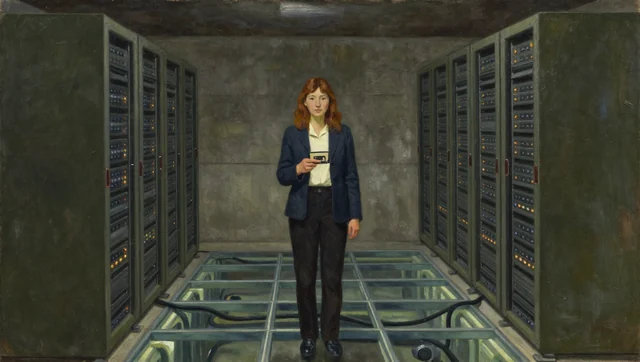
  • The archive they call the HiveXenLook AI解釈作

    Realism

    同じところ
    Both rooms turned from idealised myth and made present reality and human feeling the subject of the picture. The lithographs of Géricault and Daumier meet in the same medium of the same age.
    違うところ
    Romanticism lifts a scene with the storms and dreams of the heart and with symbol, while Realism tries to paint only what can be seen as it is seen. It is the difference between swelling the feeling and trusting the eye.
    この展示室へ
  • Prologue: the three-place tableXenLook AI解釈作

    English Landscape

    同じところ
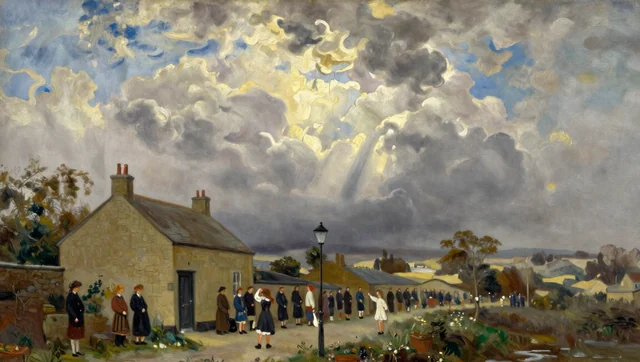
    Both rooms look at nature not as a backdrop but as a protagonist in which the heart moves. Sky and light make the feeling of the picture.
    違うところ
    Friedrich's landscape speaks the story of the soul through bare trees and symbols, while English landscape paints wind, cloud and the air of the field as if lived through directly. It is the difference between speaking by symbol and speaking by weather.
    この展示室へ
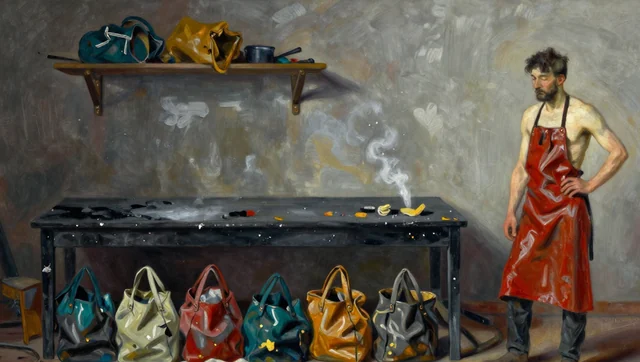
  • The workshop on fireXenLook AI解釈作

    Delacroix

    同じところ
    On the same French Romantic road they took up lithography and enjoyed painting horses, exotic scenes and passion. Following Géricault, Delacroix greatly enlarged the power of colour.
    違うところ
    This room shows a broad current in one place, from Géricault and Gros to Friedrich and Runge, while the Delacroix room follows the colour and brushwork of a single painter in depth. It is the difference between a broad current and the depth of one person.
    この展示室へ

クイズ

一つ選ぶと、すぐに答えと説明が出ます。

  1. 1. Who invented lithography, and when?

  2. 2. Which of these is not a symbol of transience in Friedrich's woodcut?

  3. 3. According to the Cleveland Museum, what lies beneath Géricault's Fighting Horses?

  4. 4. In Runge's Times of Day, what role of the borders does the Cleveland Museum describe?

  5. 5. What is unusual about the myth of Girodet's Aurora and Cephalus?

描いてみる

この画風に合わせた文が用意されています。コピーするか、そのままスタジオへ。

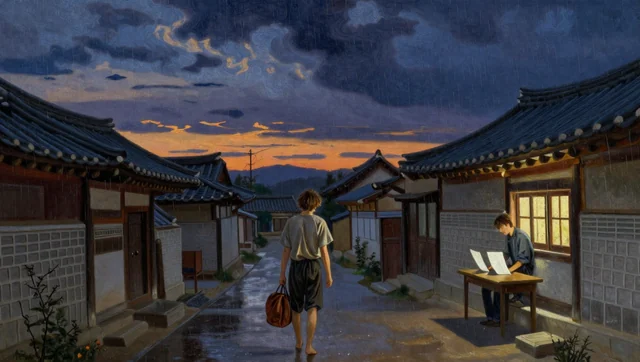
Two cities that smell of rainXenLook AI解釈作

A Romantic-style seaside cliff before a storm, bold rough lithographic crayon lines, a single small figure seen from behind gazing at the distant sky, amber sunset light spreading beneath a deep indigo night sky and swirling clouds

変えてみる Try a misty conifer forest instead of the seaside cliff, or a silver dawn sky instead of the sunset.

スタジオで描く

文をコピーしました。スタジオの入力欄に貼り付けてください。

出典

原作はすべてクリーブランド美術館とメトロポリタン美術館がパブリックドメイン(CC0)で公開した資料です。作者・題名・年代・技法は所蔵館の記録に従い、2026-11-24に記録と公開条件を確認しました。解説はXenLookが書いた文です。

「XenLook AI解釈作」の印がある絵はXenLookがXenArtで作った絵です。本物の昔の絵ではなく、画家が描いたものでもありません。原作は「原作」の印と所蔵館で区別します。

アプリとして追加