Skip to content
Museum lobby

History wing · Europe

Russian Silver Age: Ink, Watercolour and the Fairy Tale

St Petersburg, Russia, and Paris, France · 1898–1920s · Late 19th to early 20th century (c. 1898–1930)

The Russian Silver Age was the period from the late 19th century to around the 1917 revolution when poetry, theatre, music and art flowered together. Its art centred on the World of Art (Mir iskusstva) circle, founded in St Petersburg in 1898. Painters such as Alexandre Benois, Léon Bakst and Ivan Bilibin revived the 18th century and the old fairy tales in magazines, picture books and stage designs, and went on with Diaghilev's Ballets Russes to the stages of Paris. Fine ink lines and clear watercolour are the heart of this room.

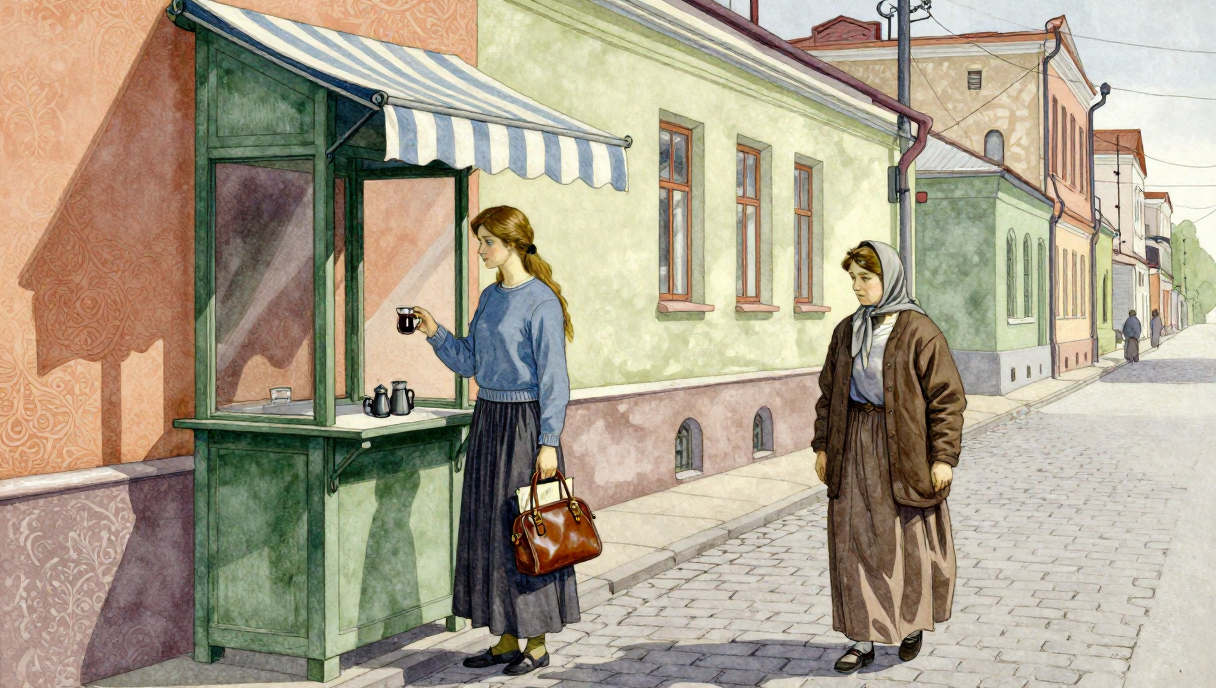
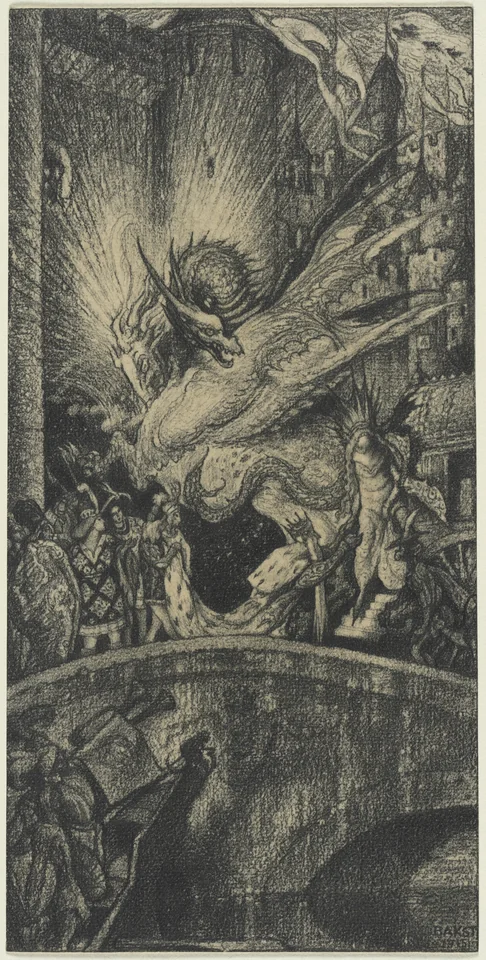
Study for The Sleeping Beauty: The Aged King Pleads with the Good FairyOriginalA kiosk on the Arbat at dawnXenLook AI interpretation

Docent

Docent OlgaDocent · Olga🇷🇺 Agent from Born near the Arbat, Moscow, Russia · a jam workshop in a French lane
Life story “Temperature Before Taste”

Hello, I am Olga. I grew up in a communal flat near the Arbat in Moscow, with my father, a historian, my mother, a piano teacher, and my grandmother, who was a cook.

Stirring jam, my grandmother used to say that everything must be written down: the recipe, the letters, the story of the old samovar. The painters of this room kept the old things in just that way, by drawing them again.

I study food, but I look at temperature before taste. Today, at the pace of a cup of tea, let us slowly follow the lines of the Russian painters who drew fairy tales and the stage.

Roots and history

'Silver Age' is a name for the late 19th and early 20th centuries, set against the 'Golden Age' of Russian literature, the early 19th century of Pushkin. It is said to have been first suggested by the philosopher Nikolai Berdyaev, and it came into wide use by the 1960s. In these years Symbolist poets in Russia wrote a new kind of poetry, and theatre, music and art joined hands. The age is usually taken to end around the 1917 revolution and the civil war that followed. Among all this, the room looks at the painters who decorated books and the stage in ink and watercolour.

In November 1898 in St Petersburg, Alexandre Benois, Konstantin Somov, Dmitry Filosofov, Léon Bakst and Eugene Lanceray formed a circle called the World of Art (Mir iskusstva). From 1899 they published a magazine of the same name together with Sergei Diaghilev, and it ran until 1904. They broke away from the rigid academic tradition of the Peredvizhniki, the Wanderers, who painted social questions as they were, and stood instead for artistic freedom and individual expression. While they welcomed the look of Art Nouveau, they cared greatly about reviving the beauty of earlier ages, such as 18th-century rococo and Russian folk art.

The World of Art painters held six exhibitions between 1899 and 1906, and in 1902 they also set up a publishing house. The circle drifted apart for a while and came together again in 1910. Rather than heavy or emotional subjects they liked to draw masks and marionettes, carnival, puppet theatre, dreams and fairy tales, and even when reviving an earlier age they mixed in playful parody and humour. They thought it as important to make a single book or a single stage beautiful as to make a single painting. Magazine covers and illustrations, and the decorative borders around a page, all came from the painters' hands.

The painter who best shows this room's ink-and-watercolour manner is Ivan Bilibin. He studied at the Ažbe school in Munich in 1898, and from 1898 to 1900 he studied under Ilya Repin at Princess Tenisheva's school. From 1899 he began illustrating books of Russian fairy tales, and his way of filling a thin, even black ink outline with flat watercolour and wrapping the whole in a border of folk pattern became his signature. In 1909 he designed the stage sets for Rimsky-Korsakov's opera 'The Golden Cockerel'.

In 1909 Diaghilev began the performances of the Ballets Russes in Paris, and the company went on until 1929. The sets and costumes were in the hands of World of Art painters. Léon Bakst designed 'Cléopâtre' (1909), 'Scheherazade' and 'Carnaval' (1910), 'Le Spectre de la Rose' (1911), and 'L'après-midi d'un faune' and 'Daphnis et Chloé' (1912), while Benois took on 'Petrushka' (1911). Costumes in fierce colour and Eastern-style pattern astonished Paris audiences and also influenced fashion and interior decoration off the stage.

In 1921 at the Alhambra Theatre in London, Diaghilev staged Tchaikovsky's 'The Sleeping Beauty' under the title 'The Sleeping Princess'. Bakst is said to have designed about 300 costumes for it in two months. Through the revolution and the civil war, many painters left Russia. Bakst died near Paris in 1924, and Bilibin, after years in Egypt and Paris, returned to Leningrad in 1936 but died there in 1942 during the Siege of Leningrad. This room's original, Bakst's pencil study of 1915, also takes up the story of the Sleeping Beauty.

The material Silver Age painters worked with most was paper. Magazine covers, picture books, and stage and costume designs were usually drawn first in pencil, refined with an ink outline, and finished with watercolour or gouache. The AI interpretations in this room chose fine ink lines and clear watercolour to follow this work on paper. Their originals can be seen at the State Russian Museum in St Petersburg, the Tretyakov Gallery in Moscow, the Victoria and Albert Museum in London and the Thyssen-Bornemisza Museum in Madrid, among others.


Timeline

  1. 1898Benois, Somov, Bakst and others form the World of Art circle in St Petersburg.
  2. 1899The magazine 'World of Art' is launched with Diaghilev, and Bilibin begins illustrating fairy-tale books.
  3. 1902The World of Art sets up a publishing house and begins issuing books and picture books itself.
  4. 1904The magazine issues its last number, and Benois's picture book 'Alphabet in Pictures' appears.
  5. 1909The Ballets Russes opens its first season in Paris, and Bakst designs 'Cléopâtre'.
  6. 1910The scattered World of Art circle comes together again, and Bakst designs 'Scheherazade'.
  7. 1911The ballet 'Petrushka', designed by Benois, is staged in Paris.
  8. 1915Bakst draws the pencil study for 'The Sleeping Beauty' that is this room's original.
  9. 1921'The Sleeping Princess', with costumes by Bakst, is performed at the Alhambra Theatre in London.
  10. 1929Diaghilev dies, and the Ballets Russes, which had run for twenty years, comes to an end.

Key painters and workshops

  • Ivan Bilibin1876–1942

    The painter best known for picture books of Russian fairy tales. He filled an even black ink outline with flat watercolour and framed it with a border of folk pattern. He died in 1942 during the Siege of Leningrad.

  • Léon Bakst1866–1924

    Born in Grodno, with the original surname Rosenberg. He made his name with sets and costumes for the Ballets Russes, bringing the dancing body to life with fierce colour and Eastern-style pattern. He died near Paris in 1924.

  • Alexandre Benois1870–1960

    Painter and critic who led the circle. His watercolours of Versailles showed a longing for the 18th century, and he left illustrations for Pushkin's 'The Bronze Horseman', the 'Alphabet in Pictures' (1904) and the designs for the ballet 'Petrushka'.

  • Konstantin Somov1869–1939

    A founding member of the circle. He painted ladies, gardens and masquerades in an 18th-century manner, in a mood both elegant and wistful. His best-known work, 'Lady in Blue' (1897–1900), is in the Tretyakov Gallery.

  • Mstislav Dobuzhinsky1875–1957

    A painter born in Novgorod. He drew city back streets lined with factory chimneys and walls in lonely lines, and also took on book illustration and stage design. In 1924 he moved to Lithuania and worked there.

  • Sergei Diaghilev1872–1929

    Not a painter but an organiser and impresario. He co-published the magazine 'World of Art', and from 1909 until his death in 1929 he led the Ballets Russes, bringing painters, composers and dancers together on one stage.

Reading the style

How to recognise it

In a phrase, a picture in this room is 'an old tale dressed again in a crisp ink line and clear colour'. The painters liked to draw Russian fairy tales, with their kings and princesses, firebirds and dragons and huts in the forest, as well as the gardens and masquerades of 18th-century palaces. Rather than copying a real view as it was, they made scenes polished like a stage. So each picture holds both ornament and the tension of a stage just before the curtain rises.

Another mark is that the pictures were made for books and the stage. Bilibin's picture books bound text, image and decorative border into a single design on the page, and Bakst's costume designs drew even the swing of the hem as the dancer moved. One picture became a page of a book or a costume on the stage. So in this room, 'picture' and 'design' run together as one.

The AI interpretations in this room carry this Silver Age feeling into ink and watercolour. A fine ink line sets the outline crisply, and transparent watercolour lays colours such as crimson, golden ochre, teal and deep indigo down flat. Everyday things such as a wooden kitchen, a samovar and a jam pot are polished into something like a scene from a fairy tale. They are quieter than the stage designs of the originals, but the thinking about line and ornament is the same.

What to look for

  • LineEven, crisp ink outlines

    The line in this room wraps the edge of each thing without a break. In Bilibin's picture books an almost evenly weighted black ink line divides every leaf and every fold of cloth crisply. There are also quickly swung lines, as in Bakst's pencil study. Either way, the line first sets the order of the picture, and colour follows after.

  • ColourClear colour laid flat

    Colour fills the outline flat. Rather than swelling it out with gradations, the painters set colours such as crimson, golden ochre, teal and deep indigo side by side as planes. The influence of the colours of Russian folk crafts and old icons shows through. In Bakst's stage costumes the same colours clash far more fiercely and boldly.

  • CompositionA single stage framed by a border

    The picture often sits inside a decorative border. Bilibin drew folk pattern, twining branches or small scenes around the image and wrapped it like a frame. The hero stands in the middle, and the foreground and background overlap like the curtains of a stage. Turning the page changes the scene, as the curtain changes between acts.

  • SpaceShallow space layered like a stage

    Rather than deep perspective, space is built by layering front, middle and back like stage scenery. Castles, forests and hills stand in rows like flat flats, and figures pass between them. As painters who were also stage designers, they arranged the whole picture like a scene from a play.

  • FiguresFigures who speak through costume and gesture

    Figures tell their story through costume and gesture more than through facial expression. A king is known by his ermine robe and crown, a fairy by a pointed crown and long trailing robes. In Bakst's costume designs, a reaching hand or a twisting body catches a moment of dance. Each pattern on the clothing tells you something about the character.

  • SymbolsFirebird, dragon and the symbols of the tale

    Symbols from the old tales appear often. Motifs such as the firebird, the dragon, the golden cockerel, the hut in the forest and the knight on a white horse return again and again. When they drew the 18th century, masks, fans and clipped garden trees became the symbols. Love for the past and the old tales is held together with a humour that looks on them with a slight smile.

  • Ground and textureA picture surface reaching the page and the costume

    Canvas was not the only surface they painted on. Magazine covers, a page of a picture book, a stage backcloth and a dancer's costume all became picture surfaces. Designs on paper were printed to become books or carried onto cloth to become costumes. So much of what survives is in the form of designs and studies rather than finished paintings.

Glossary

Silver Age
A name for the period from the late 19th to the early 20th century when Russian poetry, theatre and art flowered. It is named in contrast to the 'Golden Age' of Pushkin's time.
World of Art (Mir iskusstva)
The circle formed in St Petersburg in 1898 by Benois, Bakst, Somov and others, and also the name of the magazine they published from 1899 to 1904.
Peredvizhniki (the Wanderers)
Painters of the later 19th century who showed the realities of Russian society as they were. The name comes from taking their exhibitions from city to city, and the World of Art took a different road.
Ballets Russes
The Russian ballet company Diaghilev led from 1909 to 1929. It performed mainly from Paris, and Bakst and Benois designed its sets and costumes.
Decorative border
A band that wraps a picture in pattern or small scenes. In Bilibin's picture books, borders of folk pattern were used as though they were part of the picture.
Study
A picture made before a finished work to try out the composition, the figures or the costumes. Bakst's pencil drawing in this room is also a study for one scene.
Line and wash
A method of drawing the ink outline first with a pen or brush and laying thin watercolour over it once it is dry. It keeps both the crispness of the line and the clarity of the colour.
Rococo
A light, graceful decorative style that spread from 18th-century France. Benois and Somov liked to paint the gardens and court scenes of this age again.

The originals up close

Real originals. Press a number to read about that spot; press the picture to see it large.

OriginalPencil (sheet, 33.5 × 16.8 cm) · The Cleveland Museum of Art · Public domain (CC0) · Museum record (Accession 1979.92)

Study for The Sleeping Beauty: The Aged King Pleads with the Good Fairy

Léon Bakst (Russian, 1866–1924) · 1915

A tall, narrow study drawn in pencil by Léon Bakst in 1915. Its title is 'The Aged King Pleads with the Good Fairy', a scene from the story of the Sleeping Beauty, best known from Tchaikovsky's ballet. At the top a dragon coils in rays of light, on the left courtiers hold halberds, and in the middle a king in a crown and ermine robe reaches out to the right. The museum record does not say which production the study was made for. Six years later, in 1921, Bakst designed the costumes for 'The Sleeping Princess' in London.

About the artist · Léon Bakst

1866–1924 · Russian

Léon Bakst was a stage designer of Russian origin who won fame in Paris. He designed costumes and sets for the Ballets Russes, the Russian ballet company led by Diaghilev, and astonished Western European audiences with productions such as Scheherazade. He is marked by blazing reds and blues and by patterns drawn from the East and from old courts. The work in this room is also a picture made for the ballet stage, painted so that the old king's gesture and the colours of his dress can be read at a glance.

Where to see the originals

The only CMA public-domain (CC0) original in this room is a single pencil study by Léon Bakst. Bilibin's original fairy-tale illustrations, watercolours by Benois and Somov, and Bakst's coloured costume designs can be seen at the State Russian Museum in St Petersburg, the Tretyakov Gallery in Moscow, the Victoria and Albert Museum in London and the Thyssen-Bornemisza Museum in Madrid, among others.
Learning to look, on an AI interpretation

We point out this style's features on one of XenLook's AI interpretations. It is not a historical painting.

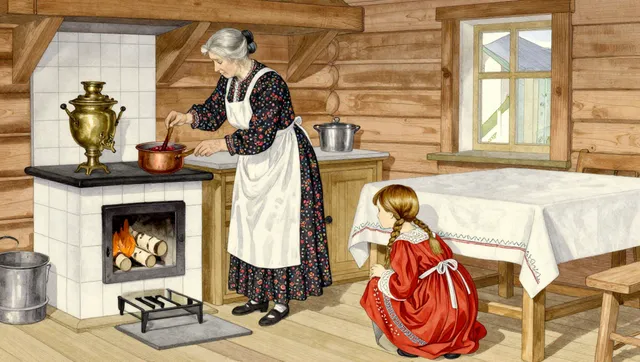
XenLook AI interpretationMade by XenLook with XenArt · not an original · Every interpretation in this room is a scene from Olga's life story “Temperature Before Taste”. Each room hangs one drawing style only.

Grandmother stirring jam

Life story “Temperature Before Taste”

Materials and technique

Materials

Pencil
The first step of every design. Bakst's study of 1915 is drawn in pencil too. Careful parts such as the king's robe and the courtiers' patterns are pressed hard, while parts such as rays of light are brushed lightly, dividing strong from soft.
Pen and black ink
A nib or a fine brush dipped in black ink draws the outline. To keep the weight even, as Bilibin did, the hand must move slowly and with steady pressure. No colour goes on before the ink is completely dry.
Transparent watercolour
Paint thinned with water, which lets the white of the paper shine through for clear colour. In this room's manner, the amount of water is adjusted so the colour fills the outline evenly, and each area is painted in one go to avoid blotches.
Gouache
Watercolour made opaque by adding white pigment. In stage and costume designs it was often used to bring out strong colours clearly or to paint gold-like ornament on top. Its colour turns a little lighter as it dries.
Paper
Most of the originals in this room are on paper. Bakst's study is drawn on a tall, narrow sheet 33.5 cm high and 16.8 cm wide. To use ink and watercolour together, a smooth, thick paper works best.
Fine detail brush
A small brush with a fine, springy tip. It is used to put colour into detailed places, such as the folk pattern of a border or the small flowers on a hem. The tip is always kept shaped to a sharp point.

How it was made

  1. Lightly block in the large masses of the scene and the place for the border in pencil. Put the main figure in the middle.
  2. Slowly draw the outlines in pen and black ink at an even weight. Divide folds of cloth and leaves with line as well.
  3. Once the ink is fully dry, erase the pencil marks and lay in the lightest cream and golden ochre first.
  4. Fill crimson, teal and deep indigo flat inside the outlines. Set them side by side rather than blending them.
  5. With a fine brush, repeat folk-pattern motifs along the hems and the border.
  6. Finally, sharpen the inner line of the border once more so the picture is wrapped like a single stage.

Pencil studies and watercolour or gouache designs fade easily in light, so museums show them briefly under low lighting.

Colour

Named colours of the style (approximate)

  • Cream paper#f0e6cc
    The ground colour of picture-book paper. Between the ink lines and the flat planes of colour, it plays the part of light.
  • Ink black#2b2622
    The black ink that draws the outlines. At an even weight, it sets the order of the whole picture.
  • Crimson#a8322d
    The red of a fairy-tale king's robe and of the stove fire. It anchors the centre of the picture.
  • Golden ochre#c9962e
    The warm yellow of the samovar, the crown and rays of light. A gold tone used in place of real gold.
  • Teal#2f6b6a
    The blue-green of forests and folk-pattern borders. It rests the eye between the warm colours.
  • Deep indigo#2c3e66
    The indigo of night skies and winter windows. It takes the coldest plane in the picture.

Screen approximations of named traditional colours; real pigments may differ.

Measured from the originals

Measured from the AI interpretations

Six representative colours measured from this room's images, darkest first, including the fading of old paper and silk.

AI interpretations

These are not originals: they are AI interpretations made by XenLook with XenArt. They carry scenes from an agent's life story into this style. Every interpretation in this room is a scene from Olga's life story “Temperature Before Taste”. Each room hangs one drawing style only.

All interpretations in this style (image library)

Neighbouring styles

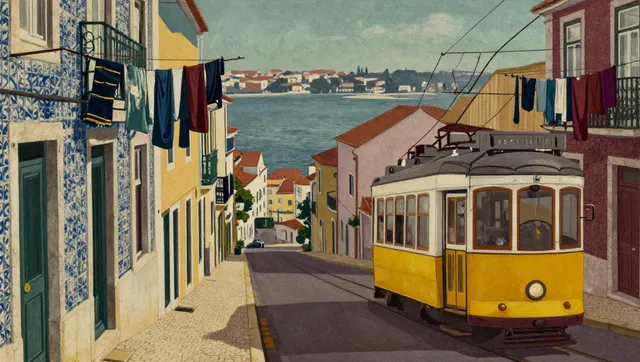
  • Tram under clotheslinesXenLook AI interpretation

    European Symbolist and Art Nouveau Poster

    Alike
    Both are currents that flowered in fin-de-siècle Europe. Both loved a crisp outline, flat colour and a decorative border wrapping the picture, and both were drawn to stories beyond everyday life, such as dreams and myths.
    Different
    The Art Nouveau poster refined long, curving plant lines to advertise goods and shows in the city. The Silver Age painters revived Russian fairy tales and the 18th century, and poured their effort into pictures for books and the ballet stage.
    Go to this room
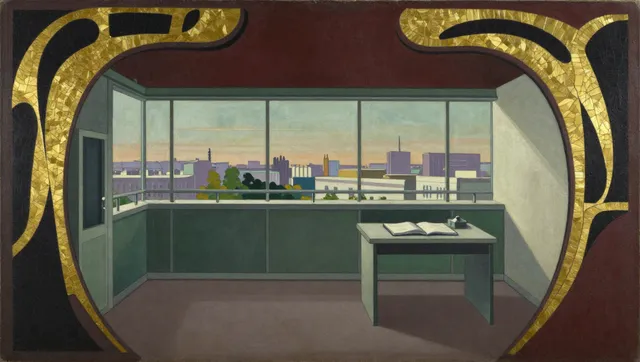
  • Viktor standing at the windowXenLook AI interpretation

    Vienna Secession

    Alike
    In both, painters of the late 1890s formed a group and published a magazine to break away from an old academic tradition. They also share the wish to break down the line between pictures, books, crafts and design.
    Different
    The Vienna Secession dressed the city's new architecture and interiors in gold and geometric pattern. The Silver Age painters put folk pattern, the old tales and a longing for earlier ages first, and went on to the ballet stage in Paris.
    Go to this room
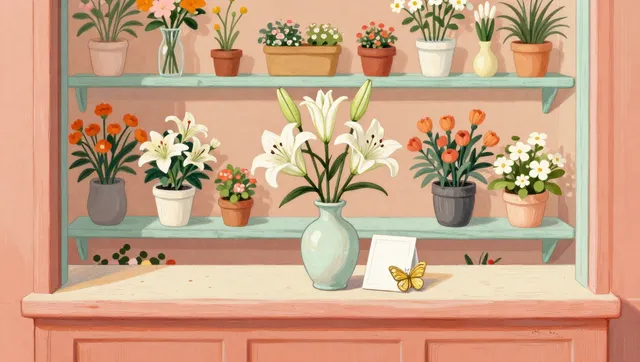
  • Blank card on a flower shelfXenLook AI interpretation

    Picture-Book Gouache: Flat, Warm Colour Fields

    Alike
    Both are pictures seen by turning the pages of a book. They share the way of simplifying a scene into flat planes of colour and unfolding, page by page, a story that children and adults read together.
    Different
    Picture-book gouache gives a soft, warm feeling with thick planes of opaque paint. The Silver Age picture book makes a crisper, more decorative page with a fine ink outline, clear watercolour and a border of folk pattern.
    Go to this room

Quiz

Pick one to see the answer and why.

  1. 1. What was the name of the circle Benois, Bakst and others formed in St Petersburg in 1898?

  2. 2. In Bilibin's fairy-tale books, what wraps around the picture?

  3. 3. Which ballet company began performing in Paris in 1909 and gave its sets and costumes to World of Art painters?

  4. 4. What material was Bakst's 1915 study, this room's original, drawn in?

  5. 5. Which beauty of earlier ages did the World of Art painters want to revive?

  6. 6. For which 1921 production at the Alhambra Theatre in London did Bakst design about 300 costumes?

Paint it

A sentence written for this style is ready. Copy it or take it straight to the studio.

Grandmother stirring jamXenLook AI interpretation

A wooden cottage kitchen in the forest in Russian Silver Age fairy-tale picture-book style, crisp black ink outlines of even weight, a brass samovar and a copper jam pot, flat watercolour planes of crimson, golden ochre, teal and deep indigo, a decorative border painted with folk pattern, a snowy birch forest through the window, cream paper ground, warm light from the stove

Try changing Swap the kitchen for a ballet stage. Put a crowned king and a fairy in long trailing robes where the samovar was, and draw the border like a stage curtain.

Paint in the studio

The sentence is copied. Paste it into the studio's input box.

Sources

Every original here was released into the public domain (CC0) by The Cleveland Museum of Art. Artist, title, date and technique follow the museum records, which we checked again with their release terms on 2026-11-24. The commentary is written by XenLook.

Pictures marked “XenLook AI interpretation” were made by XenLook with XenArt. They are not historical paintings and no painter made them. Originals carry the “Original” mark and the name of the museum that holds them.

Install as an app