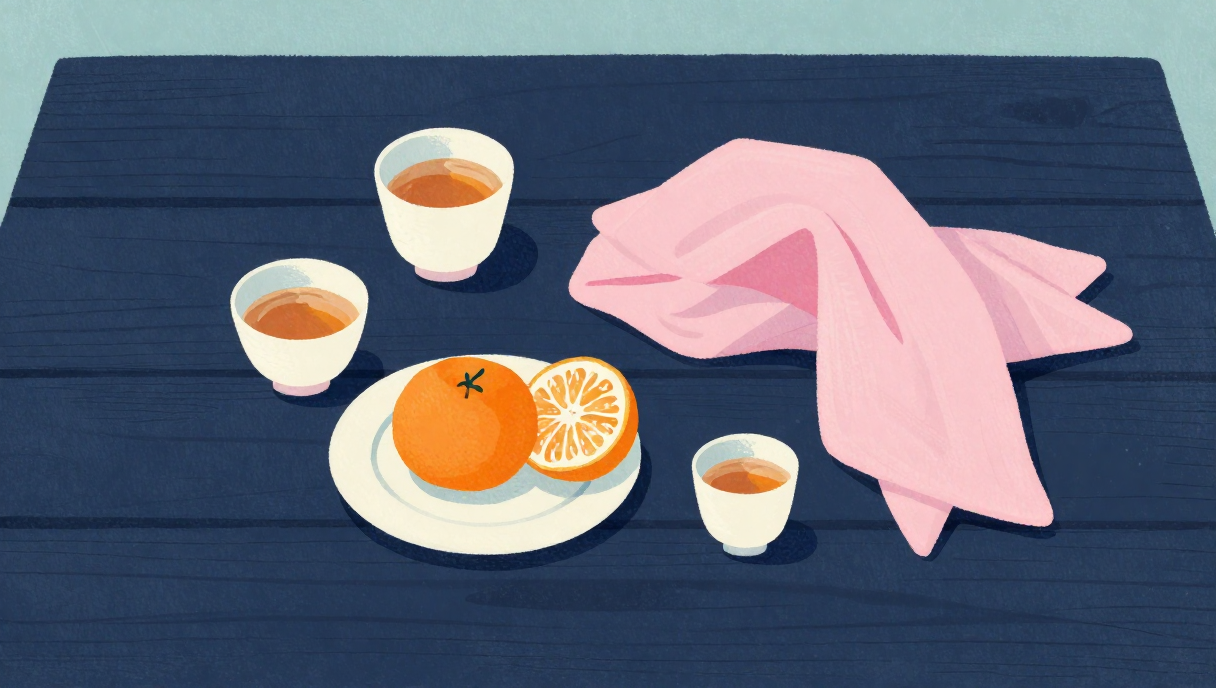
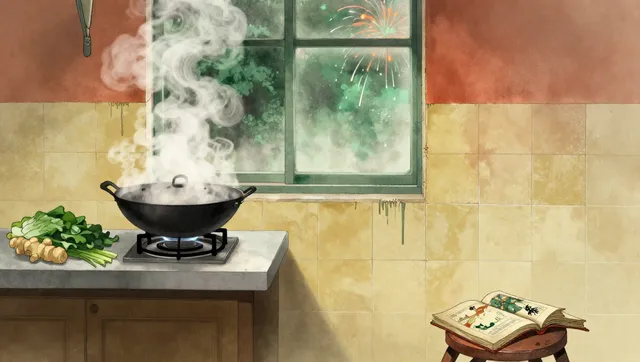
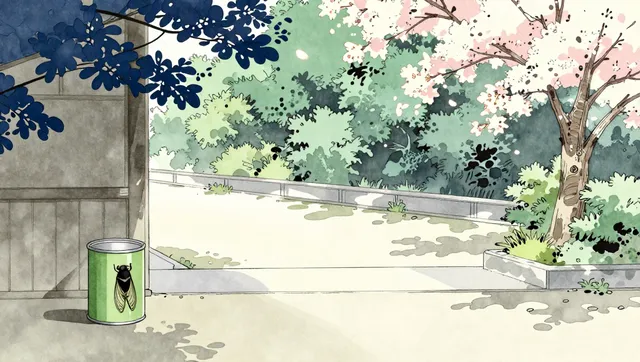
‘Shinjuku Sumi’ is not the name of a real school; it is the name this museum gives to the room. Sumi (墨) is the Japanese word for ink. The pictures here follow a day in the life of Sakura, a translator born and raised in Shinjuku, Tokyo, and they use navy shadows as dark as ink, cherry-blossom pink and green mixed with plenty of water, and a cream ground that resembles washi. Rather than drawing people large, they keep the air of each day in objects and light: teacups, mikan, a dictionary, monitors, a can. This pictorial language did not appear overnight; it stands on more than five hundred years of Japanese ink painting, watercolour and woodblock printing.
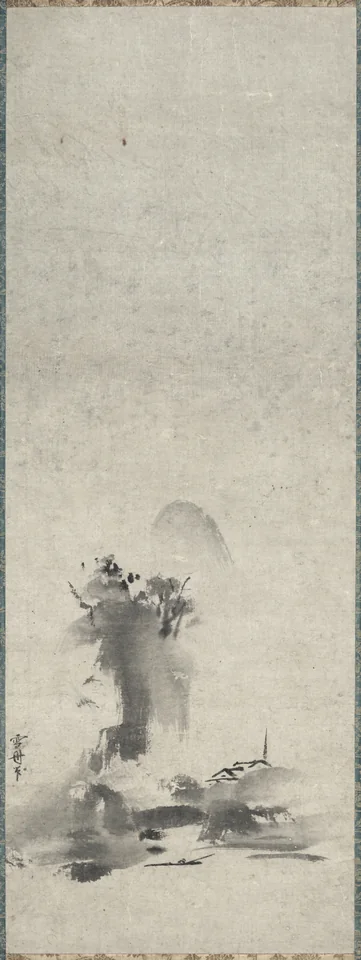
Ink-wash painting flourished in China under the Song dynasty (960–1279) and took root in Japan around the 14th century, carried there by Zen monks. The 15th-century painter-monk Sesshū Tōyō (c. 1420–1506) studied painting under the senior painter-monk Shūbun and in 1467 sailed to Ming China to see its landscapes for himself. After his return he left landscapes in the haboku (破墨) manner, in which ink spreads quickly as if flung onto the paper. His Haboku Landscape of 1495 is now in the Tokyo National Museum, and this room hangs a haboku landscape by Sesshū from the Cleveland Museum of Art as a genuine original.
At the end of the 16th century Hasegawa Tōhaku (1539–1610) left the Pine Trees screens, a pine wood in mist painted only in ink on paper. The Tokyo National Museum presents this National Treasure as a picture that renders mist through rough brushwork and gradations of ink alone. The wide empty paper between the pines is not an unfinished area; it is the mist and the air itself. Japanese aesthetics calls such an empty place ma (間) and treats the intervals and pauses between things as part of the picture. When the pictures in this room leave nearly half the surface empty and keep a window view or a wall as bare cream ground, they come from this tradition.
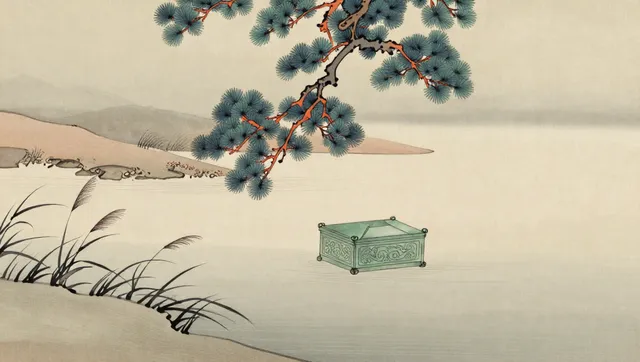
In the 17th century the Kyoto painter Tawaraya Sōtatsu favoured tarashikomi, dropping a second colour onto ink or paint that has not yet dried so that it spreads, and Rinpa painters such as Ogata Kōrin carried the method on. This way of keeping the stains that happen by chance can also be seen in the pools of leaf shadow in this room’s pictures. In the 18th century Yosa Buson (1716–1784), better known as a haiku poet, painted haiga that hold a poem and a picture on one surface, and he widened his self-taught brush from precise landscapes to an ever freer hand. This room’s Snow Landscape warms its mountains and sky with a red glow hidden under the snow.
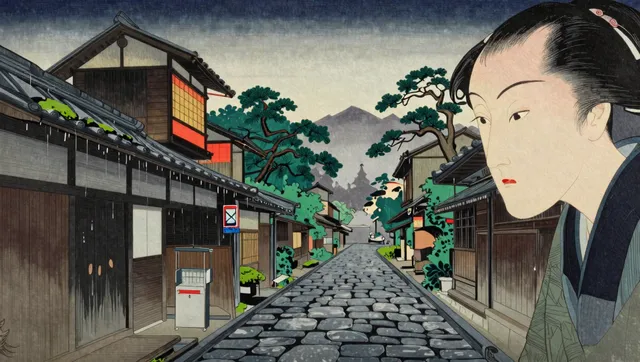
Western watercolour arrived in the Meiji era. After seeing an exhibition of watercolours by British painters in 1892, Ōshita Tōjirō (1870–1911) published the primer Suisaiga no shiori (A Guide to Watercolour, 水彩画之栞) in 1901, founded the magazine Mizue in 1905 and set up the Japan Watercolour Institute in 1907. Around the same time Yoshida Hiroshi (1876–1950), already known for oil and watercolour, made his first woodblock print in 1920, at the age of 44, with the publisher Watanabe Shōzaburō. Shin-hanga, led by Watanabe from around 1915, printed new landscapes in the old way, with work divided among artist, carver and printer. When Watanabe’s shop burned in the Great Kantō earthquake of 1923, Yoshida hired his own carvers and printers and set up his own studio in 1925.
Today’s Shinjuku is a place where tall towers, narrow alleys and a wide garden overlap in one neighbourhood. Shinjuku Gyoen began as land granted to the Naitō family in 1591, became an imperial garden in 1906 and opened to the public as a national garden on 21 May 1949. The park’s foundation records about 1.05 million visitors in the first ten months. The pictures in this room paint that garden’s cicada song, the lobby of a Nishi-Shinjuku hotel, a boarding room in Seoul and an office window with the same brush. Using the old tools of ink shadow, clear watery colour and paper left empty to record the temperature of one person’s heart in the city is the aim of this room.