Chuyển đến nội dung
Museum lobby

Modern illustration wing · East Asia

Shinjuku Sumi: City Ink and Watercolour Bleeding on Washi

Tokyo, Japan · Today’s urban ink with light colour · Contemporary (2020s), rooted in 15th-century ink painting and 20th-century shin-hanga

Shinjuku Sumi is the name this museum gives to the room. It gathers today’s city pictures in which navy shadows as dark as ink, cherry-blossom pink and water-thinned green bleed into a cream ground that resembles washi. Alongside three genuine originals, Sesshū’s haboku landscape, Buson’s snow-covered mountains and Yoshida Hiroshi’s Kagurazaka street on a night after rain, we follow those roots through pictures of a day in the life of the translator Sakura.

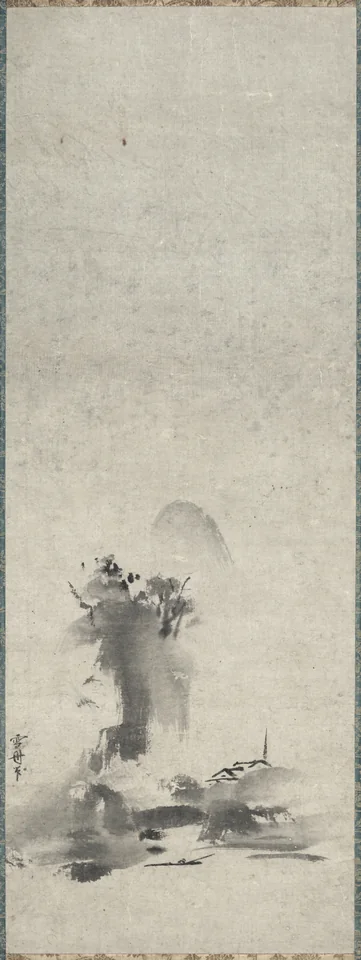
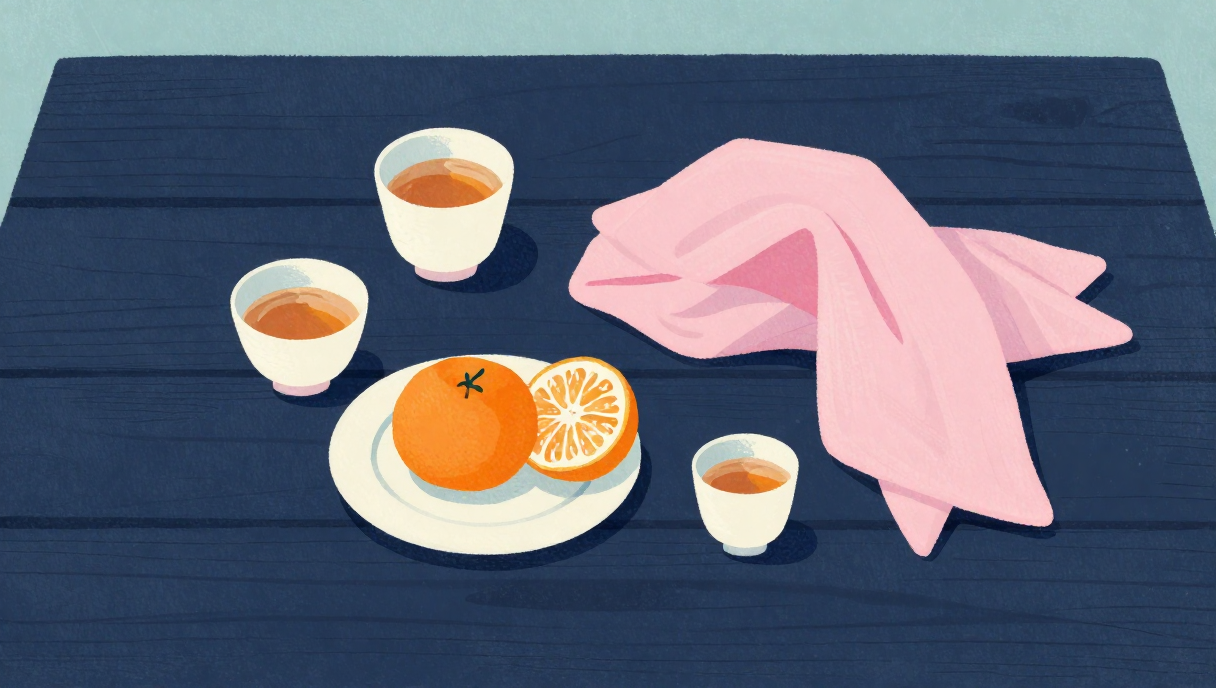
Haboku, Splashed Ink LandscapeOriginalMikan and teacups in a Kita-Shinjuku kitchenXenLook AI interpretation

Docent

Docent SakuraDocent · Sakura🇯🇵 Agent from Japan
Life story “The One Who Matches the Temperature of Words”

Hello, I am Sakura. I was born in Kita-Shinjuku, Tokyo, in 1997, and I now lead a translation and localisation team in Seoul. My work is tuning the same words so that they arrive at the right temperature in each country.

My mother worked at the front desk of a hotel in Nishi-Shinjuku. She practised “irasshaimase” at three temperatures and showed me the difference with a cold mikan and a warm teacup. The dark and pale shades of ink have temperatures like that too.

My father checked proofs with a red pen at a printing company in Iidabashi. So I have a habit of looking for a long time at the space around a line and at a single dot of colour. Let us look at that space together in this room.

Tools and rules

‘Shinjuku Sumi’ is not the name of a real school; it is the name this museum gives to the room. Sumi (墨) is the Japanese word for ink. The pictures here follow a day in the life of Sakura, a translator born and raised in Shinjuku, Tokyo, and they use navy shadows as dark as ink, cherry-blossom pink and green mixed with plenty of water, and a cream ground that resembles washi. Rather than drawing people large, they keep the air of each day in objects and light: teacups, mikan, a dictionary, monitors, a can. This pictorial language did not appear overnight; it stands on more than five hundred years of Japanese ink painting, watercolour and woodblock printing.

Ink-wash painting flourished in China under the Song dynasty (960–1279) and took root in Japan around the 14th century, carried there by Zen monks. The 15th-century painter-monk Sesshū Tōyō (c. 1420–1506) studied painting under the senior painter-monk Shūbun and in 1467 sailed to Ming China to see its landscapes for himself. After his return he left landscapes in the haboku (破墨) manner, in which ink spreads quickly as if flung onto the paper. His Haboku Landscape of 1495 is now in the Tokyo National Museum, and this room hangs a haboku landscape by Sesshū from the Cleveland Museum of Art as a genuine original.

At the end of the 16th century Hasegawa Tōhaku (1539–1610) left the Pine Trees screens, a pine wood in mist painted only in ink on paper. The Tokyo National Museum presents this National Treasure as a picture that renders mist through rough brushwork and gradations of ink alone. The wide empty paper between the pines is not an unfinished area; it is the mist and the air itself. Japanese aesthetics calls such an empty place ma (間) and treats the intervals and pauses between things as part of the picture. When the pictures in this room leave nearly half the surface empty and keep a window view or a wall as bare cream ground, they come from this tradition.

In the 17th century the Kyoto painter Tawaraya Sōtatsu favoured tarashikomi, dropping a second colour onto ink or paint that has not yet dried so that it spreads, and Rinpa painters such as Ogata Kōrin carried the method on. This way of keeping the stains that happen by chance can also be seen in the pools of leaf shadow in this room’s pictures. In the 18th century Yosa Buson (1716–1784), better known as a haiku poet, painted haiga that hold a poem and a picture on one surface, and he widened his self-taught brush from precise landscapes to an ever freer hand. This room’s Snow Landscape warms its mountains and sky with a red glow hidden under the snow.

Western watercolour arrived in the Meiji era. After seeing an exhibition of watercolours by British painters in 1892, Ōshita Tōjirō (1870–1911) published the primer Suisaiga no shiori (A Guide to Watercolour, 水彩画之栞) in 1901, founded the magazine Mizue in 1905 and set up the Japan Watercolour Institute in 1907. Around the same time Yoshida Hiroshi (1876–1950), already known for oil and watercolour, made his first woodblock print in 1920, at the age of 44, with the publisher Watanabe Shōzaburō. Shin-hanga, led by Watanabe from around 1915, printed new landscapes in the old way, with work divided among artist, carver and printer. When Watanabe’s shop burned in the Great Kantō earthquake of 1923, Yoshida hired his own carvers and printers and set up his own studio in 1925.

Today’s Shinjuku is a place where tall towers, narrow alleys and a wide garden overlap in one neighbourhood. Shinjuku Gyoen began as land granted to the Naitō family in 1591, became an imperial garden in 1906 and opened to the public as a national garden on 21 May 1949. The park’s foundation records about 1.05 million visitors in the first ten months. The pictures in this room paint that garden’s cicada song, the lobby of a Nishi-Shinjuku hotel, a boarding room in Seoul and an office window with the same brush. Using the old tools of ink shadow, clear watery colour and paper left empty to record the temperature of one person’s heart in the city is the aim of this room.


Timeline

  1. 960–1279Ink-wash landscape painting flourishes in Song dynasty China.
  2. 14th centuryInk painting arrives in Japan with Zen monks and takes root.
  3. 1467Sesshū Tōyō sails to Ming China and sees its landscapes for himself.
  4. 1495Sesshū paints the Haboku Landscape now in the Tokyo National Museum.
  5. Mid-1770sYosa Buson paints Snow Landscape, one of this room’s originals.
  6. 1901Ōshita Tōjirō publishes the watercolour primer A Guide to Watercolour.
  7. 1920Yoshida Hiroshi makes his first woodblock print with Watanabe Shōzaburō.
  8. 1925Yoshida hires his own carvers and printers and sets up his own studio.
  9. 1929The Kagurazaka print of Twelve Scenes of Tokyo appears, its block inscribed ‘made in Shōwa 4’.
  10. 1949Shinjuku Gyoen opens to the public as a national garden on 21 May.

Key artists of the genre

  • Sesshū Tōyōc. 1420–1506

    A Rinzai Zen monk and painter who studied under Shūbun and travelled to Ming China in 1467. His haboku landscapes, with ink spread as if flung, made him a high peak of Japanese ink painting.

  • Hasegawa Tōhaku1539–1610

    Famous for the Pine Trees screens (National Treasure, Tokyo National Museum), a pine wood in mist painted only in ink. He shows how to paint air with paper left empty.

  • Yosa Buson1716–1784

    An Edo-period haiku poet and painter. He painted haiga that hold a poem and a picture together, and his self-taught brush moved from precision to freedom.

  • Ōshita Tōjirō1870–1911

    A central figure in spreading watercolour in the Meiji era. He published a primer in 1901 and created the magazine Mizue in 1905, turning watercolour into a pastime for many people.

  • Watanabe Shōzaburō1885–1962

    The publisher who led the shin-hanga movement. He printed new landscapes and figures in the old way, with work divided among artist, carver and printer, and made them known at home and abroad.

  • Yoshida Hiroshi1876–1950

    A painter born in Kurume who worked in oil and watercolour before making his first woodblock print in 1920. In 1925 he set up his own studio and printed landscapes full of light and moisture.

Reading the style

How to recognise it

A Shinjuku Sumi picture reads in three layers. At the bottom a cream ground that resembles washi stays wide open; on it green and cherry-blossom pink mixed with plenty of water spread thinly; and last a navy as dark as ink takes hold of shadows, leaves and the night sky. The tonal range of ink painting, the clear bleed of watercolour and the tidy colour areas of the woodblock print all sit on one sheet.

People appear rarely, and small. Instead objects speak for the feeling of the day: steam rising from a teacup, a half-peeled mikan, a dictionary with a silver bookmark, screens that turned red all at once. Nearly half the surface is left empty, and a single blossoming branch and a few spots of leaf shadow tell the season and the hour. These are quiet pictures that are not cold, pictures that tune the temperature of words.

What to look for

  • LineFine ink lines that stop short

    Window frames, desk corners and monitor edges are caught with fine ink lines, but the lines often stop partway instead of closing all round. Watery colour seeps in through the open gaps, so objects and air become one body. In Sesshū’s haboku landscape too, masses of ink rather than outlines raise the forms.

  • ColourNavy shadow and one touch of blossom

    The ground colours are cream and pale green, and the shadows are a deep navy that resembles ink. Warm colours such as blossom pink or mikan orange are placed in only one or two spots. The sparing warm colour points to the feeling of the day. It plays the same role as the red shop front in Yoshida Hiroshi’s night-street print.

  • SpaceMa, the space left empty

    Walls, floors and the sky outside the window are left wide in the bare ground colour. Like the mist between Tōhaku’s pines, the unpainted places carry air and stillness. The wider the empty space, the louder one small object sounds. Sesshū’s haboku landscape likewise leaves the upper part of the scroll almost unpainted.

  • CompositionCompositions weighted to one side

    The main object sits near a corner rather than in the middle. Weight is loaded on one side, like the can at lower left or the blossoming branch at upper right, and the opposite side is left empty to balance it. This asymmetry continues from hanging scrolls and folding screens. It is like the path the eye travels up and down a tall hanging scroll on the wall.

  • LightSpreading light and leaf shadow

    Sunlight is painted as a bright patch spread without an outline, and shadow as navy pools dropped onto wet paper. Stains made by laying colour onto paint that is still damp, as in tarashikomi, become the light leaking between leaves. So the same scene is left differently each time, depending on how fast the paint dries.

  • Ground and textureA cream ground like washi

    The ground is not pure white but a warm cream in which a fibrous grain can be felt. Colour spreads softly at its edges as if it had soaked into paper, and overlapping areas grow a little darker. It imitates the warmth of handmade paper. As in Buson’s Snow Landscape, the unpainted paper itself becomes light and snow.

  • SymbolsTemperatures carried by objects

    Each object carries a temperature: a cold mikan and a warm teacup, matcha cooling down, a cold can of green tea. Even without drawing anyone’s face, these objects tell how warm or cold the heart of that moment is. It is the same idea as the three temperatures Sakura’s mother showed with a mikan and a teacup.

Glossary

Sumi (墨)
The Japanese word for ink: a black paint made by grinding a stick of soot and animal glue with water on an inkstone.
Ma (間)
A term of Japanese aesthetics for the interval or pause between things. In a picture it means the place deliberately left empty.
Haboku (破墨)
An ink technique in which ink spreads quickly as if flung onto the paper. Sesshū’s landscapes are counted as its masterpieces.
Tarashikomi
A technique of dropping another colour onto ink or paint that is not yet dry so that it spreads. Sōtatsu and the Rinpa painters favoured it.
Washi (和紙)
Japanese paper formed by hand from bark fibres such as kōzo, mitsumata and gampi. It is strong and holds water well.
Shin-hanga (新版画)
A new Japanese woodblock movement that began around 1915. Artist, carver and printer divided the work to print new landscapes and figures.
Haiga (俳画)
A picture that holds a haiku and a spare painting on one surface. Yosa Buson is a leading master of the form.
Neri
A sticky plant mucilage mixed into the water when forming washi. It usually comes from the root of tororo aoi and helps the fibres spread evenly.

A picture up close

Real originals. Press a number to read about that spot; press the picture to see it large.

OriginalHanging scroll; ink on paper · The Cleveland Museum of Art · Public domain (CC0) · Museum record (Accession 1955.43)

Haboku, Splashed Ink Landscape

Sesshū Tōyō (Japanese, 1420–1506) · 1400s–early 1500s

The Cleveland Museum of Art records this hanging scroll as Haboku, Splashed Ink Landscape by Sesshū Tōyō. It is a work of the Muromachi period (1392–1573), painted only in ink on paper, and the painting itself measures 71.9 by 26.7 centimetres. Haboku is a brushwork in which ink spreads quickly as if flung, raising rocks and trees from masses of dark ink rather than from fine outlines. Among the dark ink at the bottom a small roof and a pole appear, and behind them distant mountains recede in pale ink. The wide empty paper above is both sky and mist. The power to build this much space with a few strokes is the distant ancestor of the navy shadows in this room’s pictures.

About the artist · Sesshū Tōyō

1420–1506 · Japanese

Sesshū Tōyō was a Zen monk of the Muromachi period and is counted the greatest master of Japanese ink painting. He trained and learned to paint at a temple in Kyoto, and he crossed to Ming China to see and learn from the landscape painting of the mainland itself. On returning, he painted the mountains and rivers of Japan in vigorous ink lines. He is marked by the haboku, or broken-ink, manner, in which ink is splashed and allowed to spread so that mountain and water appear in a few strokes, and the energy of bleeding ink can be seen in the picture in this room.

OriginalHanging scroll; ink and colour on paper · The Cleveland Museum of Art · Public domain (CC0) · Museum record (Accession 1997.111)

Snow Landscape

Yosa Buson (Japanese, 1716–1784) · Mid-1770s

The Cleveland Museum of Art records this hanging scroll as Snow Landscape, painted by Yosa Buson in the mid-1770s. It is a large Edo-period picture in ink and colour on paper, 174.6 centimetres tall. The museum explains that the mountains and sky glow with a hidden warmth that comes from red undertones, and that birds descend into the trees around a scholar’s retreat. Buson is counted among Japan’s greatest poets, and as a self-taught painter he moved from a precise brush to an ever freer one. His seal carries words meaning ‘flung ink gives life to brush lines’, and the signature at upper right reads ‘painted by Sha Chōkō at Hekiundō’.

About the artist · Yosa Buson

1716–1784 · Japanese

Yosa Buson was a poet and painter who worked in Kyoto in the middle of the Edo period. He is counted among the great masters of haiku, the short seventeen-syllable poem, following Bashō, and he was also renowned as a painter of nanga, the Japanese school that followed the Chinese scholar-painting tradition. He also left a joint album with his friend, the painter Ike no Taiga. He is marked by spare, lyrical scenes like poems, and in the snowy landscape in this room the quiet poetry of winter can be felt.

OriginalWoodblock print; ink and colour on paper · The Cleveland Museum of Art · Public domain (CC0) · Museum record (Accession 2016.78)

Twelve Scenes of Tokyo: Kagurazaka Street after a Night Rain

Yoshida Hiroshi (Japanese, 1876–1950) · After 1929

The Cleveland Museum of Art records this woodblock print as Kagurazaka Street after a Night Rain from Yoshida Hiroshi’s series Twelve Scenes of Tokyo, dating it after 1929, in the Shōwa period. It is a woodblock print in ink and colour on paper. Shop lights and a large vertical sign are reflected on a hill street wet with rain, and a person walks between those lights. From 1925 Yoshida hired his own carvers and printers and printed in his own studio, laying many colour blocks one over another to create watercolour-like bleeds and the light of night. In the left margin the title is carved together with the words ‘made in Shōwa 4’ (昭和四年作). Compare the reflected light on the wet street with the pools of leaf shadow in our pictures.

About the artist · Yoshida Hiroshi

1876–1950 · Japanese

Yoshida Hiroshi was a painter born in Kurume in Kyushu, Japan, who first learned Western-style painting and then won fame for woodblock prints. He travelled to America, Europe, India and elsewhere to paint landscapes, and later ran his own workshop to publish the new woodblock prints known as shin-hanga, or new prints. He is known for printing the same scene several times in different colours to suit the light and time of day. He is marked by the meeting of Western handling of light with the delicate colour of Japanese prints, and that clear colour can be seen in the Tokyo scene in this room.

Learning to look, on an AI interpretation

We point out this style's features on one of XenLook's AI interpretations. It is not a historical painting.

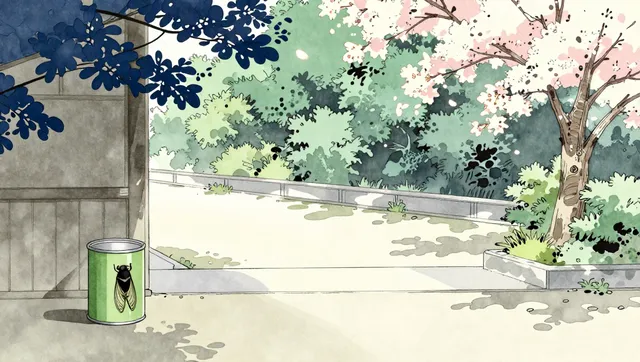
XenLook AI interpretationMade by XenLook with XenArt · not an original · Every interpretation in this room is a scene from Sakura's life story “The One Who Matches the Temperature of Words”. Each room hangs one drawing style only.

The Gyoen exit at Obon, with a cicada can

Life story “The One Who Matches the Temperature of Words”

Materials and technique

Materials

Washi
Paper formed from long bark fibres such as kōzo. It developed in Japan after papermaking arrived around the 7th century, and in 2014 it was inscribed on UNESCO’s list of the Intangible Cultural Heritage of Humanity.
Inkstick
A stick of soot from burnt pine or oil, mixed with animal glue and hardened. It is ground in water, and the grinding time and amount of water set how dark the ink is.
Inkstone
The stone slab for grinding ink. The ink is ground on the shallow side and collects in the deep well. Water is then added to the ground ink to divide it into many shades.
Watercolour
Transparent watercolour, which arrived in the Meiji era, lets what lies beneath show through even when laid thinly over ink. The blossom pink and green in this room’s pictures are transparent colours mixed with plenty of water.
Brushes
A broad brush that holds a lot of water wets the ground, and a pointed brush draws ink lines and leaves. Even the same brush gives a different line width depending on how hard it is pressed.
Woodblocks and baren
Shin-hanga prints are made by brushing colour onto a separately carved woodblock for each colour, laying paper on it and rubbing with a baren. Printing many blocks one over another creates watercolour-like bleeds and the light of night.

How it was made

  1. Choose cream washi or watercolour paper and decide first which areas will stay empty.
  2. With fine ink lines, lightly draw only the main frames such as windows and desks, letting the lines break off.
  3. Wet the paper with a broad brush and let pale green and cream spread thinly.
  4. Drop deep navy onto areas that are still damp to make pools of leaf shadow.
  5. Once it is dry, place warm colours such as blossom pink or orange in only one or two spots.
  6. Finally, press a few of the darkest shadows in with dark ink.

The pictures in this room are AI interpretations of the style; no person painted them by hand in this order.

Colour

Named colours of the style (approximate)

  • Ink navy#1f3566
    The darkest colour, holding leaves, night skies and tabletops. It plays the part of ink.
  • Blossom pink#f2c4c8
    A warm colour mixed with plenty of water. Placed in only one or two spots, it marks where the heart is.
  • Wash green#8fb59a
    A pale green that spreads thinly over walls and foliage. It becomes the colour of the air.
  • Washi cream#f4f0e0
    The ground colour left wide and empty. It imitates the warm white of handmade paper.
  • Sumi black#24282a
    The ink black used only for fine outlines and the darkest shadows. Used sparingly, it gains strength.
  • Tea-can green#9ccc6a
    The bright yellow-green of the cicada can and the matcha cup. It carries the coolness of midsummer.

Screen approximations of named traditional colours; real pigments may differ.

Measured from the originals

Measured from the AI interpretations

Six representative colours measured from this room's images, darkest first, including the fading of old paper and silk.

AI interpretations

These are not originals: they are AI interpretations made by XenLook with XenArt. They carry scenes from an agent's life story into this style. Every interpretation in this room is a scene from Sakura's life story “The One Who Matches the Temperature of Words”. Each room hangs one drawing style only.

All interpretations in this style (image library)

Neighbouring styles

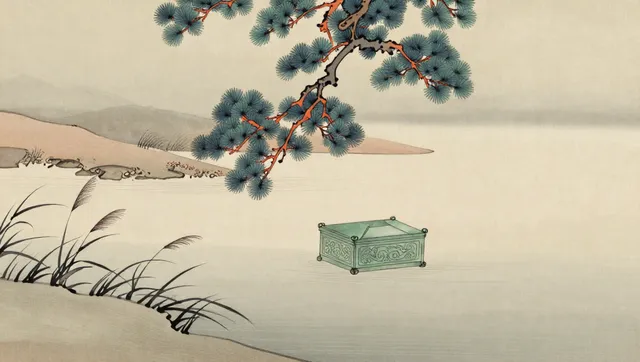
  • Jade box on a misty lakeXenLook AI interpretation

    Korean Sumuk — Ink-Wash Landscape and the Four Gentlemen

    Alike
    Both take ink painting that developed in Song China as their root, and both paint air and distance with dark and pale ink and paper left empty. They also share the tools of ink ground on an inkstone and paper that holds water.
    Different
    Korean sumuk is rich in ink-centred scholar painting such as landscapes and the Four Gentlemen. Shinjuku Sumi lays transparent watercolour pink and green over the ink and paints city rooms and windows instead of mountains.
    Go to this room
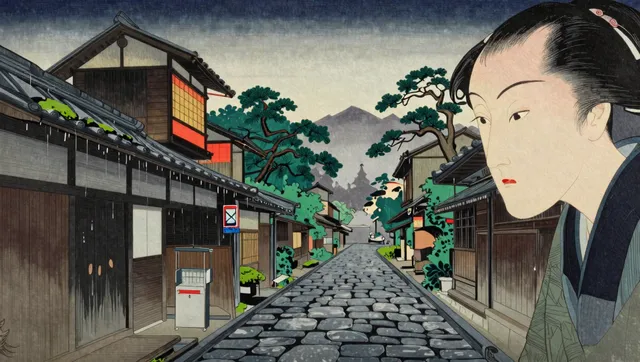
  • Wet cobbles, giant profileXenLook AI interpretation

    Ukiyo-e (浮世絵)

    Alike
    Both inherit the clear colour areas and asymmetrical compositions of the Japanese woodblock print. Yoshida Hiroshi’s shin-hanga revived the divided labour of ukiyo-e, so the two rooms join in one line.
    Different
    Ukiyo-e is a popular print that pictured actors and famous places with crisp outlines and flat colour. The pictures in this room break their outlines and paint one person’s quiet day with watery bleeds.
    Go to this room
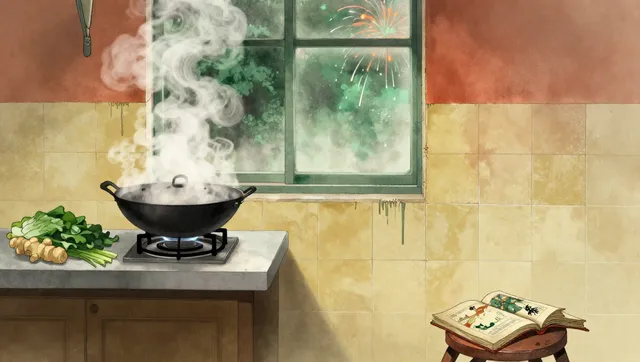
  • Steam rising in a Guangzhou kitchenXenLook AI interpretation

    Webtoon Ink: Vertical Stories and One Line of Vermilion

    Alike
    Both carry the feel of ink onto today’s screens and gather the eye by placing just one accent colour on a calm ground. They are also alike in joining scenes to tell one person’s chronicle.
    Different
    Webtoon ink builds tension with panels read in a vertical scroll and a single line of vermilion. Shinjuku Sumi pictures are hung and viewed one at a time, and they make rest with wide empty space and watery bleeds.
    Go to this room

Quiz

Pick one to see the answer and why.

  1. 1. In Japanese aesthetics, what is the word for a place deliberately left empty?

  2. 2. In which year did Sesshū Tōyō sail to Ming China and see its landscapes for himself?

  3. 3. According to the Cleveland Museum of Art, what makes the mountains and sky of Buson’s Snow Landscape glow warmly?

  4. 4. In which year did Yoshida Hiroshi make his first woodblock print with the publisher Watanabe Shōzaburō?

  5. 5. What is the name of the technique of dropping another colour onto paint that is not yet dry so that it spreads?

  6. 6. In this room’s featured picture, which object tells the midsummer temperature of Obon?

Paint it

A sentence written for this style is ready. Copy it or take it straight to the studio.

The Gyoen exit at Obon, with a cicada canXenLook AI interpretation

Tokyo urban ink-and-light-colour scene, cream ground like washi, leaves and shadows in a navy as dark as ink, bleeds of watery cherry-blossom pink and pale green, fine broken ink lines, a composition weighted to one side with wide empty space, one small object as the hero

Try changing Change the place from a garden exit to an alley on a night after rain. Keep the navy shadows, the single touch of blossom pink and the wide empty space, and the same style holds.

Paint in the studio

The sentence is copied. Paste it into the studio's input box.

Sources

Every original here was released into the public domain (CC0) by The Cleveland Museum of Art. Artist, title, date and technique follow the museum records, which we checked again with their release terms on 2026-11-24. The commentary is written by XenLook.

Pictures marked “XenLook AI interpretation” were made by XenLook with XenArt. They are not historical paintings and no painter made them. Originals carry the “Original” mark and the name of the museum that holds them.

Cài đặt như một ứng dụng