Chuyển đến nội dung
Museum lobby

History wing · East Asia

Chinese Ink Wash and Blue-Green Landscape

China · Tang to Qing dynasties · 7th–18th century

Chinese landscape painting has followed two roads. One builds mountains and mist from ink alone, called ink wash (水墨, shuimo). The other colours the mountains with the blues and greens of ground stone, called blue-green (青綠, qinglü). This room shows how the two roads parted and met. Our AI interpretations are grey ink with pale blue washes, closer to ink with light colour than to opaque mineral blue-green.

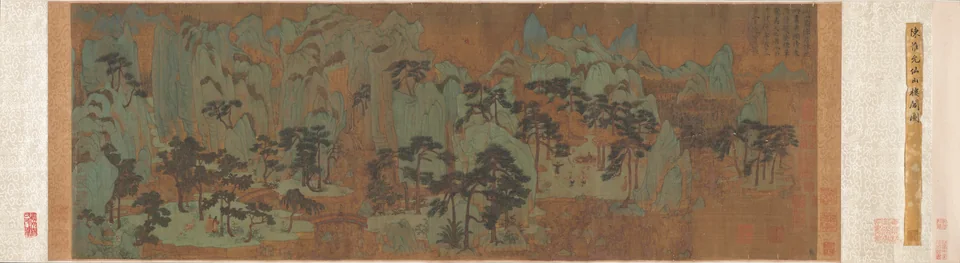
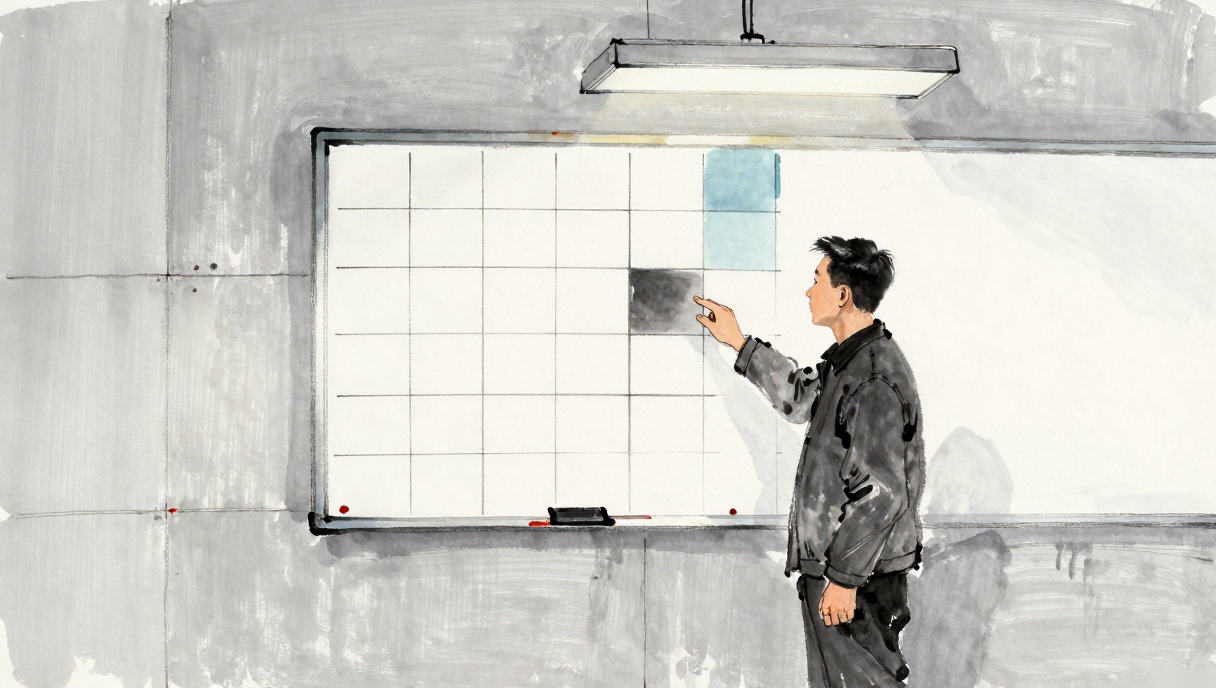
Mountains of the Immortals (仙山圖)OriginalA figure before a gridded boardXenLook AI interpretation

Docent

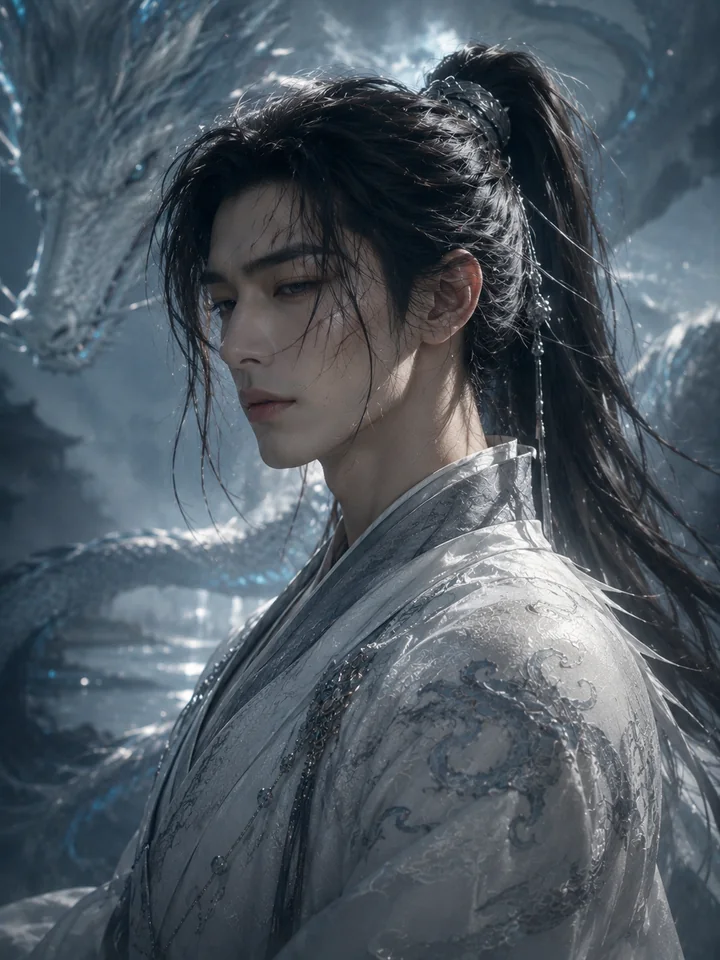
Docent QinglongDocent · Qinglong🇨🇳 Agent from China
Life story “Order Is Recovery”

Welcome. I am Qinglong, and I put work in order. Pay no mind to the blue dragon behind me. The landscapes in this room have an order too: first ink builds the bones, then colour is laid on top.

In my story, my father kept the harbour schedule with a red pen and a green pen. Late work went down in red, finished work in green. Whenever I see a blue-green landscape, I think of the cells of that schedule.

Take your time going down the page. Today's homework is to find where the ink ends and the colour begins. If a spot puzzles you, press the dots on the pictures. I have marked them in advance.

Roots and history

The roots of Chinese landscape painting run deep. At first, mountains and rivers were only a backdrop behind people. From the Tang dynasty (唐, 618–907), scenery began to take the lead, and a way of painting in ink grew with it. Ink wash (水墨, shuimo) is painting with ink and water alone. The ink itself is pine soot bound with animal glue and dried into a stick. How much water is added decides the tone, from deep black to pale grey. The Tang painter Wu Daozi (吳道子) is said to have worked with black ink and free strokes alone, so that crowds gathered to watch him. The poet and painter Wang Wei (王維) is among the names linked with the early growth of ink landscape in the 8th century.

The 10th and 11th centuries, from the Five Dynasties (五代) to the Northern Song (北宋), were a great age of landscape. In the north, Jing Hao (荊浩), Li Cheng (李成), Fan Kuan (范寬) and Guo Xi (郭熙) painted towering mountains, with strong black lines, graded ink washes and dotted strokes. In the south, Dong Yuan (董源) and Juran (巨然) painted gentle hills and riverbanks. The northern mountain overwhelms you when you look up; the southern hill makes you want to walk in. These two landscapes became the standard for the next thousand years. Painters worked on silk and also on paper, and paper showed off the way ink bleeds.

The other road is blue-green landscape (青綠, qinglü). As the name says, it paints mountains in blue and green. The blue is azurite ground into powder, called 石青 (shiqing); the green is malachite, called 石綠 (shilü). Both are copper-bearing minerals. The style is said to have been set by Li Sixun (李思訓, 651–716) of the Tang and his son Li Zhaodao (李昭道). Li Sixun was a member of the royal family and carried the honorary title of general. He drew careful, fine outlines and laid mineral colour over them. Later, Dong Qichang (董其昌) named Li Sixun the founder of the Northern school (北宗畫). Unlike the quiet tones of ink, blue-green was a showy painting made with great labour.

The most famous blue-green work is A Thousand Li of Rivers and Mountains (千里江山圖), painted in the early 12th century by Wang Ximeng (王希孟), a young Northern Song artist who was still a teenager. It is a handscroll about twelve metres long, now in the Palace Museum in Beijing. Said to have been taught by Emperor Huizong himself, he left this one work and died young. The Song also saw gold-and-azure landscape (金碧山水), which adds gold. In the Yuan, Zhao Mengfu (趙孟頫, 1254–1322) called for a return to the plainer style of the Tang. A descendant of the Song imperial house, he was summoned to Khubilai Khan's court in 1286–87, and this revival is credited with a revolution in landscape painting.

Dong Qichang (1555–1636) of the late Ming divided landscape painting into a Northern school (北宗) and a Southern school (南宗). He saw the North as a line of professional painters working with great labour and showiness, and the South as a line of free, expressive literati painting (文人畫), made by scholars and officials in their leisure. The division shaped later painting circles deeply. Through the Yuan, Ming and Qing, the lighter style called small blue-green (小靑綠), in which ink sets the outlines and texture before pale colour is added, became the main current. Lan Ying (藍瑛) of the late Ming Zhe school is counted as its high point. Wang Yuanqi (王原祁) at the Qing court followed Dong Qichang's teaching as an Orthodox School painter and also left works in ink with light colour.

Ink wash reached Japan in the 14th century through Zen Buddhist monks, and Li Cheng's influence is said to have reached Japanese and Korean painters as well. Today the two roads breathe different air inside a museum. Ink shows the breath of bleeding on paper; blue-green shows time stacked up on silk. The interpretations in this room stand between them. They are grey ink with pale blue washes, so they sit closer to ink with light colour (水墨淡彩) than to opaque mineral blue-green. This room therefore looks at blue-green as a neighbour from the ink side. The four originals below were chosen at the place where the two roads meet.


Timeline

  1. 7th–8th centuryIn the Tang, Li Sixun and his son Li Zhaodao are said to have set the frame of blue-green landscape painted with mineral pigments.
  2. 8th centuryNames such as Wang Wei and Wu Daozi are handed down with the early growth of Tang ink painting.
  3. 10th centuryLi Cheng painted the high northern mountain, and Dong Yuan and Juran the gentle southern hill, setting two standards of scenery.
  4. 11th centuryIn the Northern Song, Fan Kuan and Guo Xi perfected grand landscape with bold ink lines and bleeding ink.
  5. early 12th centuryThe young Wang Ximeng left the blue-green handscroll A Thousand Li of Rivers and Mountains, now in the Palace Museum, Beijing.
  6. 1286–87Zhao Mengfu, a descendant of the Song house, went to the Yuan court and opened the way for a revivalist landscape.
  7. 14th centuryZen monks carried ink painting to Japan, while late Yuan painters worked on blue-green landscape on silk.
  8. 1506In the Ming, Tang Yin painted Mount Hua in ink and light colour, one of his few dated works.
  9. late 16th–early 17th centuryDong Qichang divided landscape painting into Northern and Southern schools and steered later thinking.
  10. 1707The Qing court painter Wang Yuanqi added pale green and ochre to a landscape after Ni Zan.

Key painters and workshops

  • Li Sixun (李思訓)651–716

    A Tang royal painter called the General. He is spoken of as the founder of meticulous blue-green landscape in mineral pigments, and Dong Qichang named him the start of the Northern school.

  • Wang Ximeng (王希孟)active early 12th century

    A young painter at the Northern Song court academy. His only surviving work is A Thousand Li of Rivers and Mountains, whose colours are still astonishingly clear.

  • Zhao Mengfu (趙孟頫)1254–1322

    A Song imperial descendant who served at the Yuan court. He turned from the gentle brushwork of his day to an older style, and is credited with leading a revolution in landscape.

  • Dong Qichang (董其昌)1555–1636

    A late Ming painter and theorist. His division of landscape into Northern and Southern schools shaped Chinese painting circles for generations.

  • Tang Yin (唐寅)1470–1523

    A Ming painter active in Suzhou. After being caught up in an examination case in 1499 he lived as a professional painter, and left Mount Hua in the manner of the Song master Li Tang.

  • Wang Yuanqi (王原祁)1642–1715

    An Orthodox School painter at the Kangxi emperor's court. He followed the canon set by Dong Qichang, and the Cleveland Museum of Art notes that painting eased the pressure of his official duty.

Reading the style

How to recognise it

The first way to recognise this style is to weigh the colour. Ink wash has almost none: only the dark and pale of ink make the front and back of the mountains and the depth of the mist. Blue-green is the opposite, with colour striking the eye first. Blue peaks and green hills stand out sharply on silk. Between the two lies light colour over ink (淡彩, dancai), as in Wang Yuanqi's Landscape after Ni Zan or Tang Yin's Mount Hua. Our interpretations stand on this middle road.

The second sign is how the picture is put together. A Chinese landscape is not a scene seen from one spot, as in Western landscape painting. The view looking up from below the mountain, across from the riverbank and down from a height joins within one picture. So a tall hanging scroll lets the peaks rise upward, and a long handscroll is read as you walk along it. People are drawn very small to make you feel the size of mountain and water. Mist or water is left bare in the middle. This empty ground (餘白, yubai) creates distance precisely because it is empty.

The third sign is calligraphy and seals. In Chinese painting, a poem, writing and a seal (落款, luokuan) sit together. The picture speaks, and the writing becomes part of the picture. In the originals of this room too, a poem and a red seal sit at the upper right. Our interpretations carry no lettering and keep a single red point in the seal's place. With these three signs in mind, you will not lose your way before any landscape. Look in turn at the weight of ink and colour, the structure of the picture and the place of the writing.

What to look for

  • LineInk lines from dry brush to wet

    Ink lines run from thin, bone-dry strokes to thick strokes full of water. A dry brush gives the rough grain of rock, a wet brush the soft earth and mist. In Tang Yin's Mount Hua, angular lines cut the cliffs upright. In our interpretations, the lines of harbour cranes and window frames stand thin and straight like these ink lines.

  • ColourPale blue washes over grey ink

    Colour is laid on like water rather than painted over opaquely. In Wang Yuanqi's picture, pale green and ochre lie thinly on trees, roofs and hills. In Zhao Mengfu's fan painting, blue hills and rocks stand clear above the ink lines. Our interpretations set a pale blue sky and water on a grey ground, and use red very sparingly, for roofs and seals.

  • CompositionRising peaks with a belt of mist

    The mountains rise to the top of the picture, and mist or water runs through the middle like a belt. Tang Yin's Mount Hua lifts high peaks on a tall format and divides them with mist. Placing a great mountain in front, as in Fan Kuan's masterpiece, belongs to the same current. In our interpretations, sky, harbour and water stack up layer upon layer.

  • SpaceDistance made by unpainted ground

    Empty ground is not blankness but a tool for making distance. Make a far mountain paler and leave the ground beneath it bare, and it reads as mist or water. In Wang Yuanqi's picture, the bare ground between hill and trees reads as a lake. In our interpretations too, the sky and water over the pier are left wide open so that the cranes stand small within them.

  • LightDark and pale ink in place of light

    There is no direction of sunlight in these pictures. Instead of light and shadow, the dark and pale of ink sort near from far. Nearby trees are drawn dark and far peaks pale. The whole picture is lit evenly, like a view seen through mist. The sky of our interpretations is likewise lit evenly with a single pale blue wash.

  • Ground and texturePaper grain where wet ink bleeds

    Paper and silk take up water differently. On paper, ink bleeds into soft edges; on silk, the line stays crisp. Old silk paintings turn yellowish with age, and the ground itself becomes a warm colour. The warm paper-coloured ground of our interpretations tries to resemble this surface.

  • FiguresTiny figures under huge mountains

    A person in a landscape is not the hero but a measure of scale. In Mountains of the Immortals, a small immortal, deer and cranes look up at the blue mountains under pines. In Zhao Mengfu's fan painting, two fishermen and a rider on a donkey sit very small. In our interpretations too, people stand small beside wide rooms and piers.

  • SymbolsPines, cranes and immortals

    Pines and cranes often appear in pictures that wish for a long life. Mountains of the Immortals has deer and cranes under tall pines, and a red-robed immortal steering a crane. The red seal and the poem also close the picture's meaning as symbols. In our interpretations, the scroll painted with a blue dragon plays that symbolic part.

Glossary

Ink wash (水墨, shuimo)
Painting with ink and water alone. The amount of water decides the tone, from deep black to pale grey.
Blue-green landscape (青綠山水)
Landscape painted with blue and green mineral pigments. The Tang father and son Li Sixun and Li Zhaodao are said to have set its frame.
Shiqing and shilü (石青 · 石綠)
Shiqing is ground blue azurite and shilü is ground green malachite. Both are copper-bearing minerals, and azurite can lose its blue as it weathers.
Great and small blue-green (大靑綠 · 小靑綠)
Great blue-green lays mineral colour thick and rich; small blue-green sets ink outlines and paints lightly. The small kind dominates from the Yuan on.
Gold-and-azure landscape (金碧山水)
Landscape that uses gold together with azure blue. It is described as a branch that appeared in the late Northern Song.
Light colour (淡彩, dancai)
Laying pale colour like water over an ink drawing. It is the place closest to both the originals and the interpretations in this room.
Literati painting (文人畫, wenrenhua)
Painting made by scholars and officials in their leisure. It puts character and meaning before showy skill.
Northern and Southern schools (南北宗論)
Dong Qichang's Ming-dynasty division of landscape into Northern and Southern schools. He named Li Sixun the start of the Northern school.
Spirit resonance (氣韻, qiyun)
First of the Six Principles of painting set out by Xie He in the 5th century. It means the vitality that flows through the whole picture.
Empty ground (餘白, yubai)
Ground deliberately left unpainted. It stands for mist, water and sky and gives the picture room to breathe.

The originals up close

Real originals. Press a number to read about that spot; press the picture to see it large.

OriginalHandscroll, ink and colour on silk (painting only 33.4 × 97.3 cm) · The Cleveland Museum of Art · Public domain (CC0) · Museum record (Accession 1997.95)

Mountains of the Immortals (仙山圖)

Chen Ruyan (陳汝言, c. 1331–1371), calligraphy by Ni Zan (倪瓚, 1301–1374) · Yuan dynasty, 1300–1370

Tall pines stand beneath mountains painted a deep green. Under them, figures in old dress keep deer and cranes, and a red-robed immortal steers a crane. The blue cliffs and pines carry the air of the blue-green tradition. Calligraphy by Ni Zan accompanies the painting. The Cleveland Museum of Art notes that Chen Ruyan served Zhang Shicheng and then Zhu Yuanzhang, and was executed in 1371. Knowing that a picture of the immortals' world was made in a perilous age, the quiet green looks different. Set it beside our interpretations: where they build scenery from ink and pale washes, this original piles deep mineral colour on silk.

About the artist · Chen Ruyan, with calligraphy by Ni Zan

Chen Ruyan c. 1331–1371, Ni Zan 1301–1374 · Chinese

Chen Ruyan was a scholar-painter who lived from the end of the Yuan dynasty into the early Ming. The calligraphy on this picture was written by Ni Zan, a famous painter of the same age. Ni Zan is renowned for bare, clear landscapes painted plainly with just a few trees and a distant bank, and he is counted among the Four Great Masters of the Yuan. This picture shows the mountains where immortals live, and it shows the charm of scholars' painting and calligraphy, in which picture and writing support each other on a single sheet.

OriginalFan painting mounted as an album leaf, ink and colour on silk (28.6 × 30 cm) · The Cleveland Museum of Art · Public domain (CC0) · Museum record (Accession 1978.66)

River Village: Fisherman's Joy (江村漁樂圖)

Zhao Mengfu (趙孟頫, 1254–1322) · Yuan dynasty, c. 1302–3

A small fan holds the peace of a river village. Blue hills and rocks and tall pines are lightly coloured over ink lines, giving the taste of blue-green. It stands out that a low, watery southern flatland is mixed with spiky northern trees and rough rocks. Two fishermen, a rider on a donkey and a person in the house sit very small. Zhao Mengfu turned away from the gentle brushwork of his day to an older style. This little fan shows that the revival lay not in showiness but in plain blue. Here you can see the light face of blue-green that is easy to miss before a great scroll.

About the artist · Zhao Mengfu

1254–1322 · Chinese

Zhao Mengfu was born a descendant of the Song imperial house, but after the Song fell he entered the court of the Yuan dynasty, founded by the Mongols, and held high office. He excelled in both calligraphy and painting, and by urging a return to the old masters of the Tang and Song he opened the way for scholar-painting in the Yuan. His horse pictures and landscapes are widely known. He is marked by clean lines, restrained colour and the weaving together of poetry, calligraphy and painting.

OriginalHanging scroll, ink and light colour on paper (80.6 × 43.8 cm) · The Cleveland Museum of Art · Public domain (CC0) · Museum record (Accession 1954.583)

Landscape after Ni Zan (仿倪瓚設色山水圖)

Wang Yuanqi (王原祁, 1642–1715) · Qing dynasty, 1707

Wang Yuanqi was an Orthodox School painter at the Kangxi emperor's court, who followed the canon set by Dong Qichang. This picture follows the manner of the Yuan master Ni Zan. Ni Zan used almost no colour, but Wang Yuanqi laid pale green and ochre washes on the trees, cottages and hills. So it first looks like an ink painting, and up close the colour begins to breathe. The Cleveland Museum of Art notes that painting eased the pressure of his official duty. Notice the balance between touched ground and empty ground. It is the original closest to the way this room's interpretations lay pale blue over ink.

About the artist · Wang Yuanqi

1642–1715 · Chinese

Wang Yuanqi was a painter of the early Qing dynasty from Taicang in the Jiangnan region. He followed his grandfather Wang Shimin, a famous painter, and became a central figure of the Orthodox school of landscape, which learns the methods of old masters and renews them. He also served at the court of the Kangxi Emperor in charge of calligraphy and painting. He is marked by a structure of piled mountains and rocks and by dry brushwork, and the work in this room, made in the manner of the Yuan painter Ni Zan, shows his habit of learning from old pictures yet seeing them again with his own eyes.

OriginalHanging scroll, ink and light colour on paper (116.4 × 41.4 cm) · The Cleveland Museum of Art · Public domain (CC0) · Museum record (Accession 1969.116)

Mount Hua (華山)

Tang Yin (唐寅, 1470–1523) · Ming dynasty, 1506

Mount Hua is a famous mountain in Shaanxi province. Following the Song master Li Tang, Tang Yin raised the cliffs with angular strokes and several stages of ink wash. Above are pale blue far peaks and mist, and below sit trees in orange tones. This is one of Tang Yin's few dated works. After being caught up in an examination case in 1499 he lived as a professional painter in Suzhou. With ink and light colour meeting, the scroll best shows the road between ink wash and blue-green. Follow the way the eye climbs from bottom to top on the tall format.

About the artist · Tang Yin

1470–1523 · Chinese

Tang Yin was a painter who worked in Suzhou in the Ming dynasty and is counted among the Four Masters of the Ming, together with Shen Zhou, Wen Zhengming and Qiu Ying. In youth he took first place in the civil service examination, but he was caught up in a cheating scandal that closed his career, and afterwards he lived by his painting and poetry. He excelled at landscape, figures and pictures of beautiful women. He is marked by strong outlines, stable composition and clear ink tones, and in the mountain picture in this room you can see the spirit with which he raises a high peak straight up.

Learning to look, on an AI interpretation

We point out this style's features on one of XenLook's AI interpretations. It is not a historical painting.

XenLook AI interpretationMade by XenLook with XenArt · not an original · Every interpretation in this room is a scene from Qinglong's life story “Order Is Recovery”. Each room hangs one drawing style only.

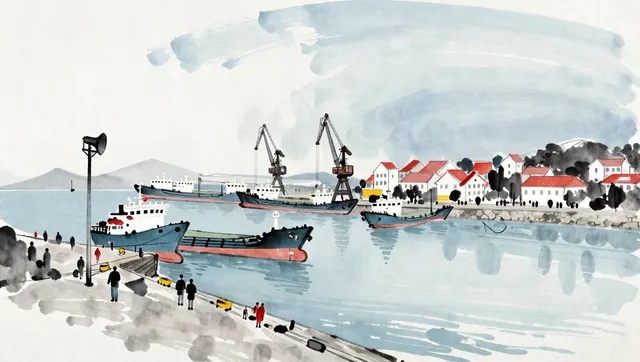
The Qingdao pier and sky

Life story “Order Is Recovery”

Materials and technique

Materials

Paper and silk
Painters worked on paper or silk. Paper favours the taste of bleeding ink; silk holds fine lines and layered colour crisply. At the Cleveland Museum of Art, Mountains of the Immortals and River Village are on silk, and Mount Hua is on paper.
Ink stick
Ink is pine soot mixed with animal glue and dried into a stick. Rubbed on a slab with water, it becomes liquid ink. More water gives pale grey and less gives deep black, so one stick yields many tones.
Brush
A fine-pointed brush draws an even line like a pen, while a large wool brush called the big cloud holds a great volume of water and ink and lays down a graded swath in one pass. One brush makes both line and mass.
Ink slab
The ink slab is the stone on which the stick is rubbed. Ink stick, brush, slab and paper are called the four treasures of the Chinese studio. Choosing the ink's strength on the slab is the first step of a painting.
Azurite and malachite
The blue is ground azurite and the green ground malachite, both copper-bearing minerals. Coarser grains give deeper colour and finer grains paler. Azurite can lose its blue over time and take on a greenish cast.
Binder and water
Pigment powder is mixed with a binder and loosened in water so that it sticks to paper or silk. Mineral colour is built in several thin layers rather than one thick coat, to give depth of colour.

How it was made

  1. Pour water on the slab, rub the ink stick and fix the strength of the ink. Prepare a dark and a pale ink separately.
  2. Spread the paper or silk and set the large outline of mountain and water in pale ink. A firm frame makes the later work easy.
  3. Alternate dry and wet brush to draw the grain of rock and the trees. Add dots for moss and leaves.
  4. With a water-laden large brush, let mist and far peaks bleed, and leave bare ground where the mist lies.
  5. Wait for the ink to dry, then add pale blue, green and ochre like water for light colour.
  6. For blue-green, loosen the mineral powder and lay it in several thin coats, each after the last has dried.
  7. Finally draw the tiny people, houses and bridges, write a poem and stamp the red seal to close the picture.

Dust from copper minerals can be harmful if breathed in. If you grind it yourself, wear a mask and wash your hands afterwards. Silk and paper paintings are sensitive to light and damp, so museums keep them dark and dry and do not leave handscrolls unrolled for long.

Colour

Named colours of the style (approximate)

  • Pine-soot ink#2a2a2c
    The deepest black of ink made from pine soot, used for the bones of mountains and nearby trees.
  • Pale ink grey#8b8d8f
    The grey of ink diluted with much water. It carries the light of far mountains and mist.
  • Azurite blue#2f5f9e
    The blue of ground azurite. It tints peaks and rocks in blue-green.
  • Malachite green#2e8b6a
    The green of ground malachite. It paints hills and pine woods green.
  • Aged silk#d9c9a3
    The warm ground of old silk gone yellow with age. The paper tone of the interpretations tries to resemble it.
  • Seal red#b3262a
    The red of seal paste. It becomes the single point on a grey picture where the eye rests.

Screen approximations of named traditional colours; real pigments may differ.

Measured from the originals

Measured from the AI interpretations

Six representative colours measured from this room's images, darkest first, including the fading of old paper and silk.

AI interpretations

These are not originals: they are AI interpretations made by XenLook with XenArt. They carry scenes from an agent's life story into this style. Every interpretation in this room is a scene from Qinglong's life story “Order Is Recovery”. Each room hangs one drawing style only.

All interpretations in this style (image library)

Neighbouring styles

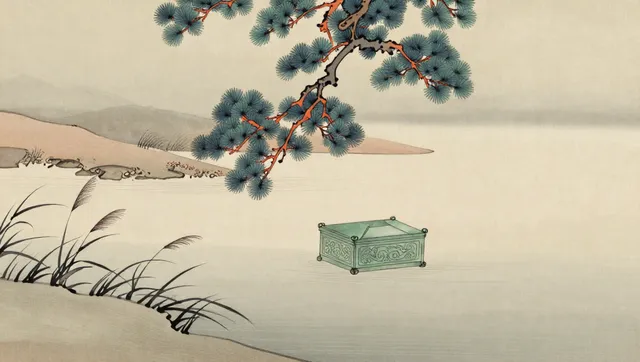
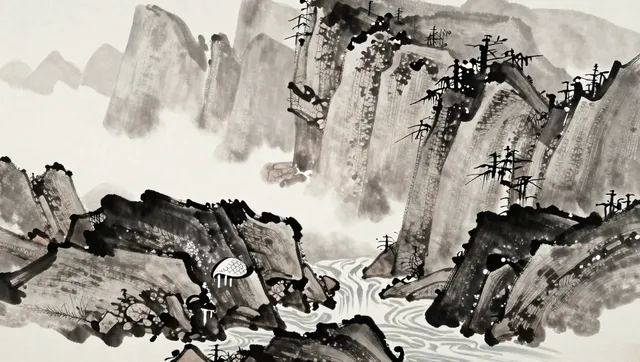
  • Jade box on a misty lakeXenLook AI interpretation

    Korean Sumuk — Ink-Wash Landscape and the Four Gentlemen

    Alike
    Both rooms paint mountains and mist with ink, water and brush. In both, the dark and pale of ink sort near from far, and bare ground makes distance.
    Different
    This room looks at ink and mineral blue-green meeting in a single picture. The Korean sumuk room tells the story of painting landscape and the Four Gentlemen in ink alone.
    Go to this room
  • Mist on Mount EmeiXenLook AI interpretation

    Chinese Gongbi Scroll

    Alike
    Both rooms stand in the long Chinese tradition of painting on silk and loved the blue and green of mineral pigments. Both also set an outline in fine line and build colour on it.
    Different
    Gongbi paints its subject in detail with fine line and colour. This room puts bleeding ink and bare ground first and follows the path of laying colour lightly.
    Go to this room
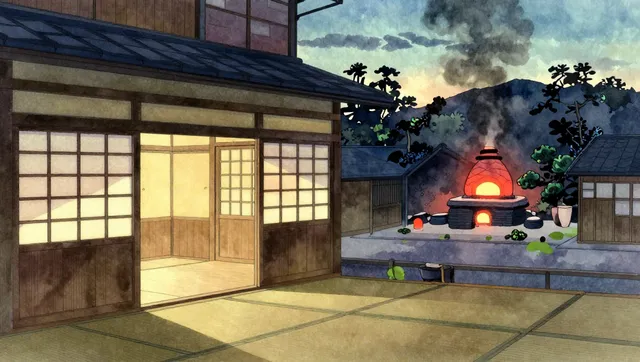
  • Kiln beside the house at duskXenLook AI interpretation

    Kyoto Nihonga

    Alike
    Both rooms rest on the East Asian tradition of ink and mineral pigments on paper and silk. A further link is that ink wash reached Japan in the 14th century through Zen monks.
    Different
    Nihonga is a style carried on in Japan, and the Chinese landscape here is its neighbour and a distant root. This room tells of two currents meeting inside China.
    Go to this room

Quiz

Pick one to see the answer and why.

  1. 1. Over a grey ink mountain lies a pale blue wash through which the ground shows. Which does it resemble most?

  2. 2. In Zhao Mengfu's River Village, where is the blue clearest?

  3. 3. Copying Ni Zan, who rarely used colour, what did Wang Yuanqi add?

  4. 4. What do landscape painters most often use to show mist or water?

  5. 5. In Tang Yin's Mount Hua, what makes the height of the mountain felt most?

Paint it

A sentence written for this style is ready. Copy it or take it straight to the studio.

The Qingdao pier and skyXenLook AI interpretation

grey ink landscape on warm paper-toned ground, pale blue wash over far mountains and sky, wide open ground left for mist, thin dry-brush ink lines, tiny figures, a single red seal accent

Try changing Swap the scenery or the figure and redraw it in the same way, with ink and pale blue wash.

Paint in the studio

The sentence is copied. Paste it into the studio's input box.

Sources

Every original here was released into the public domain (CC0) by The Cleveland Museum of Art. Artist, title, date and technique follow the museum records, which we checked again with their release terms on 2026-11-24. The commentary is written by XenLook.

Pictures marked “XenLook AI interpretation” were made by XenLook with XenArt. They are not historical paintings and no painter made them. Originals carry the “Original” mark and the name of the museum that holds them.

Cài đặt như một ứng dụng