In the 1890s the streets of Paris were a vast picture gallery. Posters for theatres, circuses and cafés covered the walls. The French word for a poster is “affiche”. Jules Chéret (1836–1932) is called the “father of the modern poster”. He learned lithographic printing in London from 1859 to 1866, and in the early 1870s he helped cut the cost of colour lithography sharply. Thanks to that, big colourful pictures could be pasted up in the street.
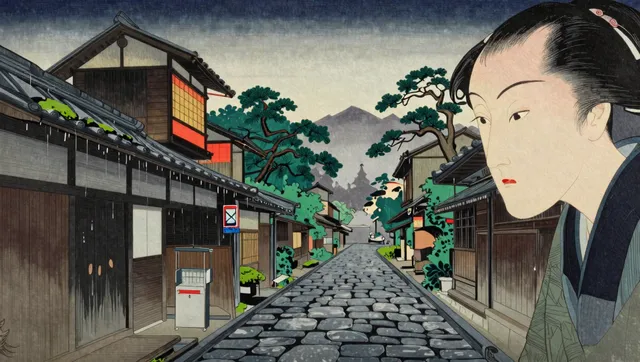
Around the same time Japanese prints flooded into Europe. Ukiyo-e by Hokusai and Hiroshige arrived in large numbers from the 1870s, and Siegfried Bing published the magazine Le Japon artistique from 1888 to 1891. Japanese prints, with their firm outlines, flat colour and lopsided layouts, opened new eyes for painters. This taste is called “Japonisme”, a fashion for things Japanese.
On top of this came the mood of “Symbolism”. In 1886 the poet Jean Moréas first used the word for the poems of Mallarmé and Verlaine. It is an attitude that hints at ideas and dreams in the mind rather than describing what lies before the eye. Painters such as Moreau, Redon and Gauguin in France and Khnopff in Belgium walked this road. Pictures leaned toward whispering rather than explaining.
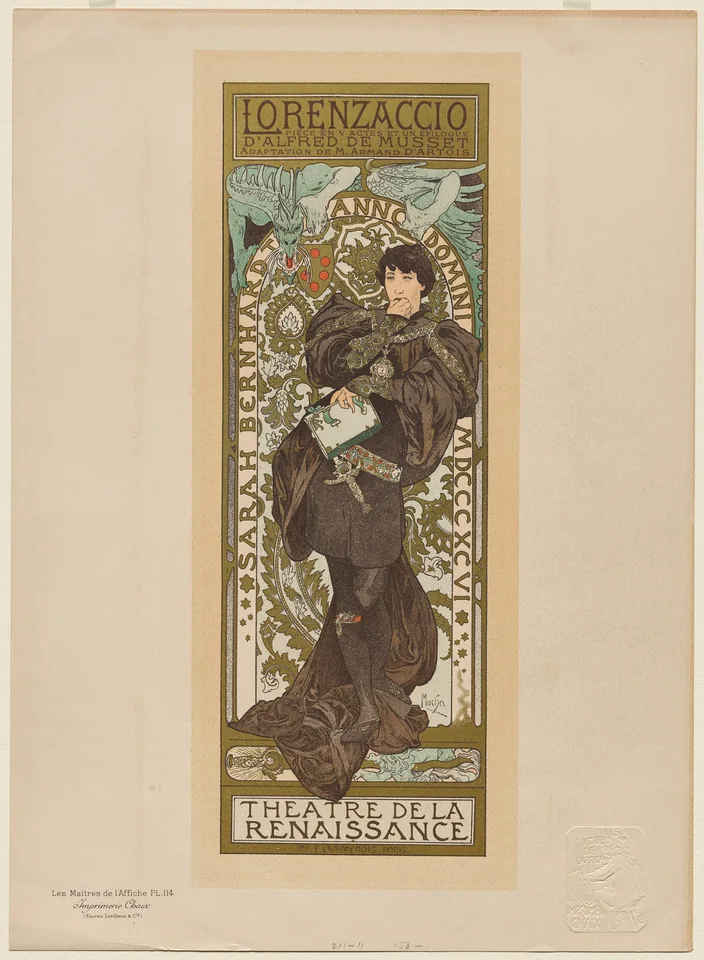
What made posters famous was the meeting of the actress Sarah Bernhardt and the Czech-born painter Alphonse Mucha (1860–1939). The poster for Bernhardt's play Gismonda had to be on the walls by 1 January 1895, and the play had opened on 31 October 1894 at the Théâtre de la Renaissance. Bernhardt was delighted with Mucha's hurried poster and gave him more work afterwards. Mucha became the “Master of Art Nouveau”.
Posters soon became collectables. From 1895 to 1900 a series called “Maîtres de l'Affiche” (Masters of the Poster) appeared. It gathered the best posters as small reprints, printed by the Chaix printing house. Lorenzaccio in this room is one of those plates. Pictures that were pasted up and torn down found their way into drawers and albums at home.
Mucha was not alone. Eugène Grasset, born in Switzerland and working in Paris, drew on Egypt and Japan, and in 1890 he drew the “Sower” trademark for the dictionary publisher Larousse. Jan Toorop (1858–1928) of the Netherlands, born on Java, showed willowy Symbolist lines that recall Javanese patterns. Théophile Steinlen (1859–1923), born in Lausanne, became known for his pictures of Montmartre and for the anarchist press. This current carried on until about the First World War.