Zum Inhalt springen
Museum lobby

Masters annex · Europe

Henri de Toulouse-Lautrec

Montmartre, Paris · 1880s to 1901 · Post-Impressionism, 1880s to 1901

Henri de Toulouse-Lautrec was born into a count's family in the south of France and became the painter of the cabarets, theatres and backstage rooms of Montmartre in Paris. His legs stopped growing after he broke them at thirteen and fourteen, yet from that low eye level he saw the light of the stage and the breath of the audience more closely than anyone. With short outlines and flat areas of colour he caught a singer or dancer in a single moment, and by sending lithograph posters out into the street he made pictures everyone's. He lived thirty-six years and left thousands of works. In this room you meet five of them, from the stage, the racecourse and a quiet room.

May BelfortOriginalThe passage above the ceilingXenLook AI interpretation

Docent

Docent SylvieDocent · Sylvie🇫🇷 Agent from France
Life story “Applause Is Made by Silence”

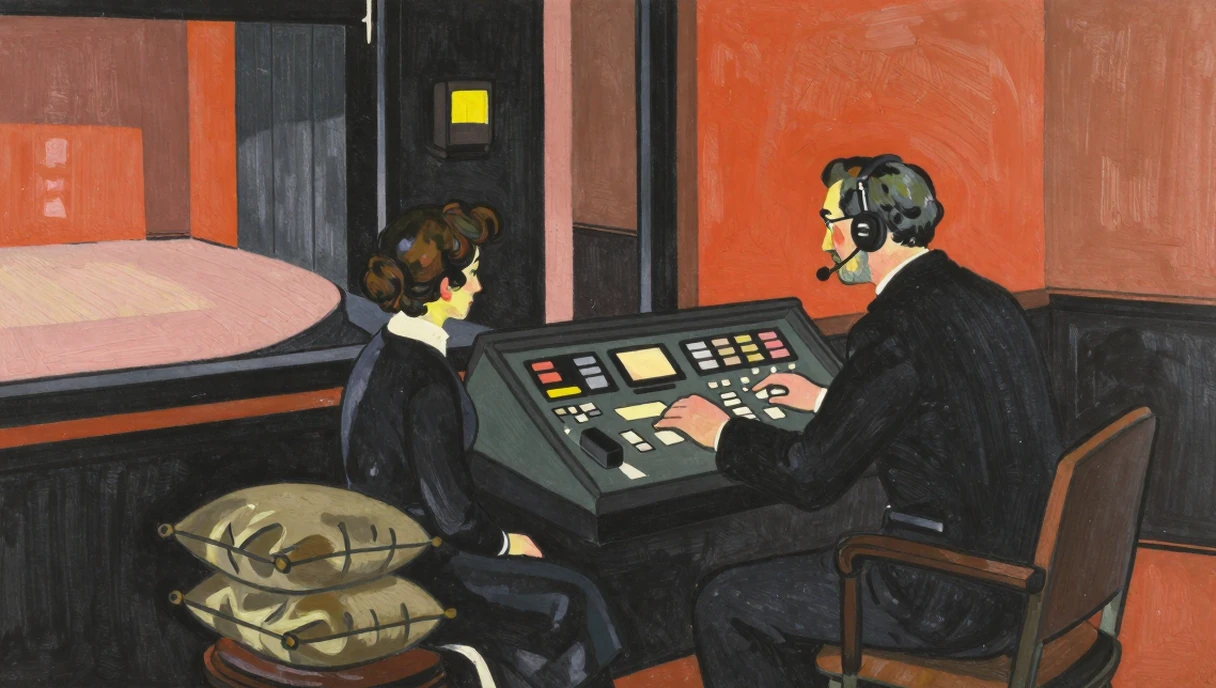
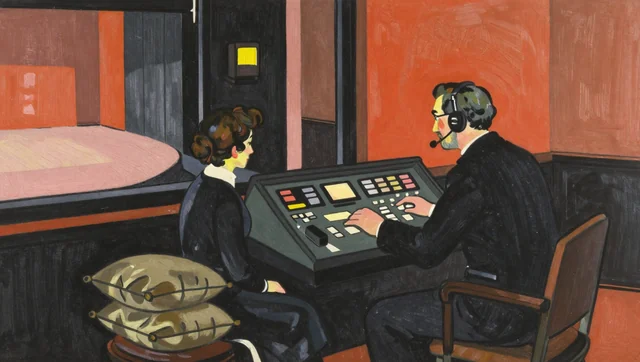
I am Sylvie. In a theatre control booth in Paris's 19th arrondissement I have kept the breath just before the curtain rises. This room smells of such evenings.

There, the house lights are slowly going down. Lautrec's pictures begin to speak only when the eye has grown used to the dark after the lights go out.

Let us watch from the side of the stage, not on it. I will help you find how this painter drew the single beat of rest before the singer begins.

Roots and history

Henri Marie Raymond de Toulouse-Lautrec-Montfa was born on 24 November 1864 in Albi in the south of France. His father, Count Alphonse, belonged to an old noble house, and young Henri grew up as the family's first child. At about eight he lived with his mother in Paris, and his greatest pleasure was to make sketches and caricatures in his exercise books. René Princeteau, a friend of his father and a painter skilled at horses, sometimes visited to give informal lessons. The horses drawn in those days became the root of the eye that later drew the circus and the racecourse. He was frail, but he never put down his pencil.

At thirteen his right femur and at fourteen his left femur broke, and the bones did not heal properly. Modern physicians attribute this to an unknown genetic disorder, and its exact name is not settled. His legs stopped growing at 1.52 metres while his torso reached adult size. People mocked his small stature. He kept drawing through his recovery, and in the end Princeteau persuaded his parents to let him return to Paris. That his eye level came to sit where one looks up at stage and people touches the character of his pictures deeply.

In 1882 he came back to Paris and entered the studio of the portrait painter Léon Bonnat. His mother wanted her son to become a respectable painter of good standing. He then moved to the studio of Fernand Cormon, whose instruction was more relaxed than Bonnat's. There he met Émile Bernard and Vincent van Gogh and made friends for life. He was drawn to Montmartre, where artists and writers gathered. From 1885 he exhibited at Aristide Bruant's cabaret, the Mirliton, and in 1887 he took part in an exhibition in Toulouse under the pseudonym Tréclau, the family name turned back to front.

On 6 October 1889 the Moulin Rouge opened in Montmartre, and Lautrec was commissioned to make posters for the cabaret. In 1891 he produced its first poster, whose star was the can-can dancer La Goulue. Although he had a regular income from his family even after his mother left Paris, posters gave him a living he had earned himself. Other painters looked down on poster work, but he paid them no mind. As large posters printed by lithography went up on the walls of Paris, pictures went out of the museum into the street, and Lautrec's name spread with them.

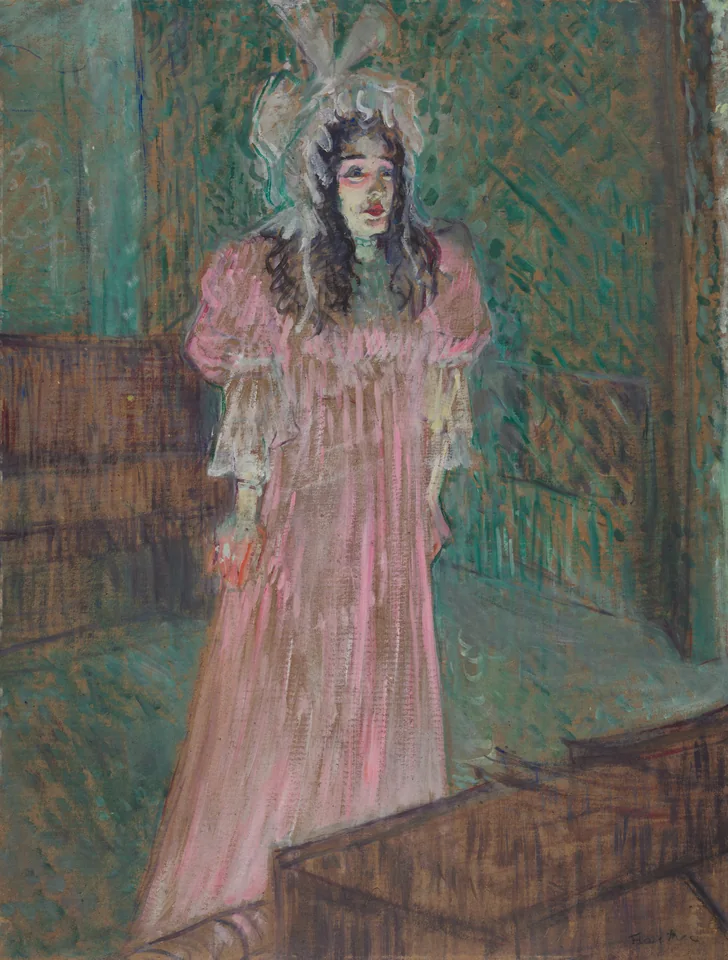
His eye learned from Impressionism. He was indebted to painters who looked closely at people, such as Manet and Degas, and he gladly took in the flat colour areas and daring cropping of ukiyo-e (浮世繪), the Japanese woodblock print. In 1892 he made a poster of his friend Bruant for the Café des Ambassadeurs. In the same year came At the Moulin Rouge, and the next year he turned the American dancer Loïe Fuller into a lithograph. In 1895 he met the Irish-born singer May Belfort at the café Les Décadents and drew her, and she soon became one of his favourite models. He stripped the gloss from the glitter of the stage and drew the person.

Between 1892 and 1895 he often lived for weeks at a time in several Parisian brothels and saw the daily lives of the women there at close range. At the request of the publisher Gustave Pellet he issued in 1896 Elles, a set of ten prints and a cover. The Cleveland Museum explains that the series was a commercial failure at first, perhaps because the scenes are not erotic. He took no moral stand, and is judged to have portrayed the women warmly, restoring their humanity. Private moments of bathing and combing hair, caring for each other and boredom, and the isolation of life on the edge of society are the subjects of the series.

His body grew steadily weaker. His alcoholism deepened, and in February 1899 he collapsed from exhaustion; his family had him committed for three months to the sanatorium Folie Saint James in Neuilly-sur-Seine. Even in hospital he drew thirty-nine circus figures from memory alone. After his release the work continued, and in that same year came the lithograph The Jockey, which caught a moment at the races. On 9 September 1901 he died at the age of thirty-six at his mother's estate, Château Malromé. In a career of less than twenty years he is recorded as leaving 737 oil paintings, 275 watercolours, 363 prints and posters and 5,084 drawings.


Timeline

  1. 1864Born on 24 November in Albi in the south of France, the first child of a count's family.
  2. Ages 13–14Breaks his right femur at thirteen and his left at fourteen. His legs do not grow further.
  3. 1882Returns to Paris, entering Bonnat's studio and then Cormon's, where he meets van Gogh.
  4. 1885Begins to exhibit at Bruant's cabaret, the Mirliton.
  5. 1889The Moulin Rouge opens on 6 October. Lautrec is commissioned to make its posters.
  6. 1891Makes the Moulin Rouge's first poster, starring the can-can dancer La Goulue.
  7. 1893Turns the American dancer Loïe Fuller into a lithograph of layered coloured inks.
  8. 1896The portfolio Elles, ten prints and a cover, is published.
  9. 1899Collapses in February and spends three months in a sanatorium. Makes the lithograph The Jockey.
  10. 1901Dies on 9 September at Château Malromé, aged thirty-six.

Key painters and workshops

  • Aristide Bruant1851–1925

    A cabaret singer and owner who survives on Lautrec's posters in a red scarf and black cape. Lautrec first exhibited in his cabaret.

  • La Goulue1866–1929

    Her real name was Louise Weber. A star can-can dancer of the Moulin Rouge, she is the subject of the 1891 first poster and of At the Moulin Rouge.

  • Jane Avril1868–1943

    A can-can dancer at the Moulin Rouge and a frequent model for Lautrec, nicknamed La Mélinite for her thin, jerky, sudden movements.

  • Loïe Fuller1862–1928

    An American-born dancer, pioneer of modern dance and stage lighting, who captivated Paris with long translucent robes and coloured light.

Reading the style

How to recognise it

The easiest way to recognise Lautrec is to follow the outline. His line is short and supple, quick as if drawn in a single stroke. He does not draw the whole body, and merely fixing the direction of shoulder, neck and arm is enough to stand a person on the stage. This line, meshing with flat areas of colour learned from the Japanese woodblock print, reads from afar like a poster. That the picture speaks to the street and not to a small room is his hallmark.

The second is deliberate cropping and oblique composition. The Cleveland Museum explains the daring cropping of the background horse's head and hindquarters in The Jockey as an influence of the Japanese print. In At the Moulin Rouge a figure's back blocks the front, and the balcony at the top is cut at the edge of the picture. The viewer peeks at the scene from a step to one side like a bystander. By pushing the centre to the edge rather than the middle, the movement of the moment comes alive.

The third is an eye that does not dress people up. He stripped the gloss from the glitter of the stage and saw the person's fatigue, habits and loneliness together. The singer stands without moving in a childlike voice, the dancer's face grows tiny within whirling cloth, and the woman in the room bends unaware of being watched. He looked closely without judging or teasing. The colours may be beautiful, but the picture stands a step back from splendour.

What to look for

  • LineA short, supple outline

    Lautrec's line is quick as if drawn in a single stroke. Fixing only the direction of shoulder, waist and arm is enough to read a figure's pose. The more removed, the clearer the movement of a moment, and the line becomes both gesture and rhythm of the figure.

  • ColourFlat colour and layered ink

    Colour is laid in flat areas one by one, and in prints the ink layers overlap to make depth. In Miss Loïe Fuller layers of coloured ink, including metallic tones, convey movement and energy. The contrast of red, black and pink catches the eye from afar.

  • CompositionOblique, cropped composition

    He pushes the centre to the corner and not the middle. In The Jockey part of the background horse is boldly cut off, and in At the Moulin Rouge a figure turned away blocks the front of the picture. This composition was learned from the Japanese print and places the viewer in the position of a bystander.

  • SpacePerspective rushing across the stage

    Space does not dig deep but runs aslant. In The Jockey a hurried perspective of horses galloping into the distance leads the picture. In At the Moulin Rouge the balcony above and the people below form layers that read like one stage.

  • FiguresPeople undressed of gloss

    Figures are drawn not as heroes or decoration but as people at work. The singer in May Belfort stands in ruffled dress and bonnet, and the woman in Elles bends unaware of being observed. A close eye that neither judges nor mocks is the temperature of the picture.

  • Ground and textureThe grain of sprayed and scraped stone

    In lithography, methods such as spattering ink to make dots or scraping to make texture are used. In Miss Loïe Fuller scattered speckles lie across the dark background, and this grain makes the dancer's whirl look brighter.

  • LightA moment after the lights go down

    Lautrec's light is not midday sun but the contrast of artificial light and dark. Loïe Fuller danced in a glass floor lit from below, mirrors and coloured light, and the picture transposed that vision into layers of ink. The deeper the dark, the brighter the moment appears.

Glossary

Post-Impressionism (後期印象主義)
The current in which the generation after Impressionism found structure, symbol and feeling anew. Lautrec is counted in it with Cézanne, Gauguin and van Gogh.
Lithograph (石版畫)
A print made by drawing with a greasy material on a flat stone, inking it and printing. Using a separate stone for each colour makes a colour lithograph.
Poster (affiche)
A large advertising picture pasted on street walls. With the advance of lithographic technique it became an art in late nineteenth-century Paris.
Café-concert
A popular Paris entertainment venue where people drink while enjoying a stage of singers and players. May Belfort is one scene of it.
Can-can
A dance of high kicks to a fast beat that became popular at the Moulin Rouge. La Goulue and Jane Avril were leading dancers.
Ukiyo-e (浮世繪)
Japanese woodblock prints of the Edo period. Their flat colour areas and bold cropping greatly influenced nineteenth-century Paris painters.
Spatter
A lithographic technique of spattering ink to obtain a pattern of dots. It can be seen in the dark background of Miss Loïe Fuller.
Model
A person who poses for a painter's picture. For Lautrec, stage figures such as May Belfort and Jane Avril were long-time models.

The originals up close

Real originals. Press a number to read about that spot; press the picture to see it large.

OriginalOil on millboard · The Cleveland Museum of Art · Public domain (CC0) · Museum record (Accession 1958.54)

May Belfort

Henri de Toulouse-Lautrec (French, 1864–1901) · 1895

Lautrec was captivated by the café-concerts of Paris, the popular venues where singers and players took the stage. According to the Cleveland Museum, in 1895 he discovered the singer May Belfort at the popular nightclub Les Décadents, and she soon became one of his favourite models. Here she wears the ruffled dress and bonnet that became a signature of her performances. Belfort sang in a babyish voice and stood motionless on the stage, encouraging her fans to shout the lyrics along with her. The picture holds that still moment. Quick, rough brushwork lets the ground colour of the card show through, and the face is small yet distinct.

About the artist · Henri de Toulouse-Lautrec

1864–1901 · French

Toulouse-Lautrec was born into an aristocratic family in Albi in the south of France, but as a boy he injured the bones of his legs and did not grow tall. He lived almost in the cabarets and theatres of Montmartre in Paris, painting singers, dancers and people backstage. With posters and lithographs he opened a new road for popular art, and he died at thirty-six. He is marked by bold outlines and flat areas of colour learned from Japanese prints, and by gestures caught at a glance.

OriginalColor lithograph · The Cleveland Museum of Art · Public domain (CC0) · Museum record (Accession 1923.213)

At the Moulin Rouge: La Goulue and Her Sister

Henri de Toulouse-Lautrec (French, 1864–1901) · 1892

A scene of the Moulin Rouge that Lautrec turned into a colour lithograph in 1892. The Cleveland Museum record gives no description beyond date and technique, and the title tells us the can-can dancer La Goulue is its subject. In the picture a figure with red-orange hair stands in front seen from behind, and another in a black blouse and striped skirt is at the right. At the left are men in tall hats, and at the top a balustrade and boxes. The centre is set aslant, not in the middle, and the composition, as though peeking from a bystander's place, recalls the method learned from the Japanese print.

About the artist · Henri de Toulouse-Lautrec

1864–1901 · French

Toulouse-Lautrec was born into an aristocratic family in Albi in the south of France, but as a boy he injured the bones of his legs and did not grow tall. He lived almost in the cabarets and theatres of Montmartre in Paris, painting singers, dancers and people backstage. With posters and lithographs he opened a new road for popular art, and he died at thirty-six. He is marked by bold outlines and flat areas of colour learned from Japanese prints, and by gestures caught at a glance.

OriginalColor lithograph · The Cleveland Museum of Art · Public domain (CC0) · Museum record (Accession 1925.1202)

Miss Loïe Fuller

Henri de Toulouse-Lautrec (French, 1864–1901) · 1893

Parisian audiences were captivated by the American dancer Loïe Fuller (1862–1928). She danced manipulating voluminous translucent gowns with large poles in each hand. The Cleveland Museum explains that she danced in a specially designed space with a glass floor lit from below and mirrors all round, and that electric lights of several colours made an ethereal, swirling effect. This work is called Lautrec's most abstract lithograph. With layers of coloured ink, including metallic tones, he conveyed the movement and energy of Fuller's performances. The dancer's face has grown tiny within the whirling cloth, and speckles are scattered over the dark background.

About the artist · Henri de Toulouse-Lautrec

1864–1901 · French

Toulouse-Lautrec was born into an aristocratic family in Albi in the south of France, but as a boy he injured the bones of his legs and did not grow tall. He lived almost in the cabarets and theatres of Montmartre in Paris, painting singers, dancers and people backstage. With posters and lithographs he opened a new road for popular art, and he died at thirty-six. He is marked by bold outlines and flat areas of colour learned from Japanese prints, and by gestures caught at a glance.

OriginalColor lithograph · The Cleveland Museum of Art · Public domain (CC0) · Museum record (Accession 1925.1204.5)

Elles: Woman at the Tub

Henri de Toulouse-Lautrec (French, 1864–1901) · 1896

The publisher Gustave Pellet, hoping to attract new customers, persuaded Lautrec to make a series of ten prints, plus frontispiece and cover, depicting brothels. The Cleveland Museum explains that the series was a commercial failure at first, perhaps because the scenes are not erotic. Between 1892 and 1895 he often lived for weeks in several brothels and saw the women's daily lives, and he is said to have drawn them warmly without taking a moral stand, restoring their humanity. In this scene a woman bends over a basin. It is a private moment, unaware of being watched, and its beautiful line and colour make the set one of the masterpieces of late nineteenth-century French colour lithography.

About the artist · Henri de Toulouse-Lautrec

1864–1901 · French

Toulouse-Lautrec was born into an aristocratic family in Albi in the south of France, but as a boy he injured the bones of his legs and did not grow tall. He lived almost in the cabarets and theatres of Montmartre in Paris, painting singers, dancers and people backstage. With posters and lithographs he opened a new road for popular art, and he died at thirty-six. He is marked by bold outlines and flat areas of colour learned from Japanese prints, and by gestures caught at a glance.

OriginalColor lithograph · The Cleveland Museum of Art · Public domain (CC0) · Museum record (Accession 1967.234)

The Jockey

Henri de Toulouse-Lautrec (French, 1864–1901) · 1899

Motivated by the popularity of the races, Lautrec executed this lithograph both in colour and in black and white. He intended to publish the colour version in a portfolio of horse-racing subjects, but the project never came to fruition and The Jockey was published alone. The Cleveland Museum explains that his admiration for Degas's horse-racing pictures is clear, and that the influence of the Japanese woodcut shows in the flatness, the daring cropping, the pale green grass and blue-violet sky, and the hurried perspective of horses galloping into the distance. Unlike Degas, he ignored Muybridge's photographs and drew horse and rider in the physically impossible flying-gallop position. The setting is known to be the Longchamp racecourse in the Bois de Boulogne in Paris.

About the artist · Henri de Toulouse-Lautrec

1864–1901 · French

Toulouse-Lautrec was born into an aristocratic family in Albi in the south of France, but as a boy he injured the bones of his legs and did not grow tall. He lived almost in the cabarets and theatres of Montmartre in Paris, painting singers, dancers and people backstage. With posters and lithographs he opened a new road for popular art, and he died at thirty-six. He is marked by bold outlines and flat areas of colour learned from Japanese prints, and by gestures caught at a glance.

OriginalFour-colour lithograph on three sheets · The Metropolitan Museum of Art · Public domain (CC0) · Museum record (Accession 32.88.12)

Moulin Rouge: La Goulue

Henri de Toulouse-Lautrec · 1891

Made by Lautrec in 1891, this poster is widely known as his first, and as the work that made his name in the nightlife of Paris. The Metropolitan Museum of Art records it as a lithograph printed in four colours on three sheets joined together, about 190 centimetres tall and 116.5 centimetres wide. The woman dancing in the middle, her white skirts flying, is La Goulue, famed for the can-can. The tall grey figure standing in front of her is generally identified as Valentin le Désossé, her dancing partner. Behind the two, hatted onlookers run together as a single black silhouette. With flat shapes like shadows and bold lettering, Lautrec made an advertisement that catches the eye from far away. The signature at lower left and the printer's name along the bottom remind us that this was a commercial poster.

About the artist · Henri de Toulouse-Lautrec

1864–1901 · French

Toulouse-Lautrec was born into an aristocratic family in Albi in the south of France, but as a boy he injured the bones of his legs and did not grow tall. He lived almost in the cabarets and theatres of Montmartre in Paris, painting singers, dancers and people backstage. With posters and lithographs he opened a new road for popular art, and he died at thirty-six. He is marked by bold outlines and flat areas of colour learned from Japanese prints, and by gestures caught at a glance.

OriginalColour lithograph (poster) · The Metropolitan Museum of Art · Public domain (CC0) · Museum record (Accession 58.621.17)

Divan Japonais

Henri de Toulouse-Lautrec · 1892–93

Divan Japonais is a poster for a café-concert, a café with songs and entertainments, at 75 rue des Martyrs in Montmartre. The name of the place, its address and the name of its manager, Ed Fournier, are clearly lettered on the sheet. The Metropolitan Museum of Art records it as a lithograph of 1892–93, about 80.8 centimetres tall and 60.8 centimetres wide. The woman in black at the centre is commonly identified as the singer Jane Avril, and the gentleman beside her as Édouard Dujardin. The singer at upper left, whose head is cut away, is generally taken to be Yvette Guilbert. By dropping the face and leaving only black gloves and the gesture of a long arm, Lautrec turns recognising her into a game. The thick, smooth black outlines and flat areas of colour are known to owe much to Japanese woodblock prints.

About the artist · Henri de Toulouse-Lautrec

1864–1901 · French

Toulouse-Lautrec was born into an aristocratic family in Albi in the south of France, but as a boy he injured the bones of his legs and did not grow tall. He lived almost in the cabarets and theatres of Montmartre in Paris, painting singers, dancers and people backstage. With posters and lithographs he opened a new road for popular art, and he died at thirty-six. He is marked by bold outlines and flat areas of colour learned from Japanese prints, and by gestures caught at a glance.

OriginalColour lithograph (poster) · The Metropolitan Museum of Art · Public domain (CC0) · Museum record (Accession 32.88.17)

Aristide Bruant, at His Cabaret

Henri de Toulouse-Lautrec · 1893

This is a poster of 1893 showing the cabaret singer Aristide Bruant, who is known to have made his name singing in the cabarets of Montmartre in Paris. The Metropolitan Museum of Art records it as a lithograph about 138 centimetres tall and 99 centimetres wide. The wide-brimmed black hat, black cape and red scarf round the neck are known to have been Bruant's habitual dress, and here they are almost enough on their own to identify him. The cape is painted simply as one great black shape, and the red scarf becomes the strongest colour above it. The face is expressed in a few lines of profile. At lower right sit his name and the words meaning ‘in his cabaret’, and at lower left a signature and a red monogram stamp can be seen.

About the artist · Henri de Toulouse-Lautrec

1864–1901 · French

Toulouse-Lautrec was born into an aristocratic family in Albi in the south of France, but as a boy he injured the bones of his legs and did not grow tall. He lived almost in the cabarets and theatres of Montmartre in Paris, painting singers, dancers and people backstage. With posters and lithographs he opened a new road for popular art, and he died at thirty-six. He is marked by bold outlines and flat areas of colour learned from Japanese prints, and by gestures caught at a glance.

OriginalOil on cardboard · The Metropolitan Museum of Art · Public domain (CC0) · Museum record (Accession 67.187.108)

The Englishman at the Moulin Rouge (William Tom Warrener)

Henri de Toulouse-Lautrec · 1892

This oil of 1892 is a portrait in which the Metropolitan Museum of Art names William Tom Warrener (1861–1934) in the title. Its signature quality is the thin paint laid on cardboard, so that the brown of the ground shows through in many places. It measures about 85.7 centimetres tall and 66 centimetres wide. A gentleman in a tall black hat smiles beneath his moustache, seated large at the right front, while at left a woman's face is cut off by the edge of the picture. Crowding the figures to one side like this gives the feeling of a moment cut straight out of life. The scene is known as one at the Moulin Rouge, and the greens and yellows of the background were brushed in lightly with fine strokes. At lower left Lautrec's signature can be seen.

About the artist · Henri de Toulouse-Lautrec

1864–1901 · French

Toulouse-Lautrec was born into an aristocratic family in Albi in the south of France, but as a boy he injured the bones of his legs and did not grow tall. He lived almost in the cabarets and theatres of Montmartre in Paris, painting singers, dancers and people backstage. With posters and lithographs he opened a new road for popular art, and he died at thirty-six. He is marked by bold outlines and flat areas of colour learned from Japanese prints, and by gestures caught at a glance.

OriginalColour lithograph · The Cleveland Museum of Art · Public domain (CC0) · Museum record (Accession 1925.1204.2)

Elles: The Seated Clown, Mlle Cha-U-Kao

Henri de Toulouse-Lautrec · 1896

Elles is a series of lithographs that Lautrec issued in 1896. The Cleveland Museum of Art explains that the publisher Gustave Pellet, hoping to attract new customers, persuaded Lautrec to make a set of ten prints with a frontispiece and a cover. The museum notes that the set was a commercial failure when it first appeared, perhaps because the scenes are not provocative. Elles: Woman at the Tub, already on the wall of this room, belongs to the same series. The figure here, in a clown's yellow ruff, is generally identified as Cha-U-Kao, a dancer at the Moulin Rouge. Seated on a long red couch with her legs, in black stockings, planted wide and her hands clasped, she conveys a tired moment backstage. The sheet measures about 52.6 centimetres tall and 40.3 centimetres wide. The printing was done by Auguste Clot.

About the artist · Henri de Toulouse-Lautrec

1864–1901 · French

Toulouse-Lautrec was born into an aristocratic family in Albi in the south of France, but as a boy he injured the bones of his legs and did not grow tall. He lived almost in the cabarets and theatres of Montmartre in Paris, painting singers, dancers and people backstage. With posters and lithographs he opened a new road for popular art, and he died at thirty-six. He is marked by bold outlines and flat areas of colour learned from Japanese prints, and by gestures caught at a glance.

Where to see the originals

Lautrec's large oil At the Moulin Rouge (Art Institute of Chicago) and other big pictures such as The Bath are in other museums. This room shows ten works from the Cleveland Museum of Art and the Metropolitan Museum of Art. There are two oils and eight colour lithographs, six held by the Cleveland Museum of Art and four by the Metropolitan Museum of Art.

Materials and technique

Materials

Stone and greasy crayon
A lithograph is drawn with a greasy material on a flat stone and printed by exploiting the way water and ink repel each other. At the Moulin Rouge, Elles and The Jockey are recorded as colour lithographs made this way.
Layers of coloured ink
A colour lithograph uses a separate stone for each colour and prints them in turn, one over another. The Cleveland Museum explains that layers of coloured ink, including metallic tones, were used in Miss Loïe Fuller.
Oil on millboard
May Belfort is an oil painting on millboard, a thick card. The card shows part of the ground colour and suits quick, rough brushwork.
Fine print paper
The Cleveland Museum records that the publisher Pellet had a special luxury paper made for Elles, with a watermark of his initials. The paper too is part of the work.
Tools for spattering and scraping
Spattering ink or scraping the stone's surface to make dots and grain was used in Lautrec's lithographs. The dots in a dark background are its trace.

How it was made

  1. He watches a moment of a figure long from beside the stage and sketches it quickly in pencil.
  2. He transfers the sketch to the stone and settles where the outline and the large colour areas go.
  3. A separate stone for each colour, he prints in turn from the lightest colour, layer upon layer.
  4. On the last layer he adds black and deep colours to fix outline and shadow firmly.
  5. If needed he spatters ink or scrapes to add texture, and leaves his signature.

Lithographs on paper are vulnerable to light, so museums display them only briefly. In this room you can study the ink layers and the blank paper at length on screen.

Colour

Named colours of the style (approximate)

  • Red-orange hair#d9562b
    The hair colour of the figure turned away in At the Moulin Rouge. It is what the eye meets first in the whole picture.
  • Stage black#1e1b20
    The deep black used in the black blouse and dark backgrounds. The deeper the dark, the brighter the other colours.
  • Pale pink dress#e7a3b2
    The pink used in the dress of May Belfort. The ground colour of the card shows through, making it soft.
  • Racecourse pale green#a9c88c
    The pale green used for the grass in The Jockey. The Cleveland Museum describes it as a hue learned from the Japanese print.
  • Blue-violet sky#7c78bd
    The sky colour of The Jockey. Set beside the pale green grass, it makes each more vivid.
  • Metallic silver-grey#9b9ea6
    Metallic inks were used in Miss Loïe Fuller. They express the gleam of cloth flashing under the lights.

Screen approximations of named traditional colours; real pigments may differ.

Measured from the originals

Measured from the AI interpretations

Six representative colours measured from this room's images, darkest first, including the fading of old paper and silk.

AI interpretations

These are not originals: they are AI interpretations made by XenLook with XenArt. They carry scenes from an agent's life story into this style. Every interpretation in this room is a scene from Sylvie's life story “Applause Is Made by Silence”. Each room hangs one drawing style only.

Neighbouring styles

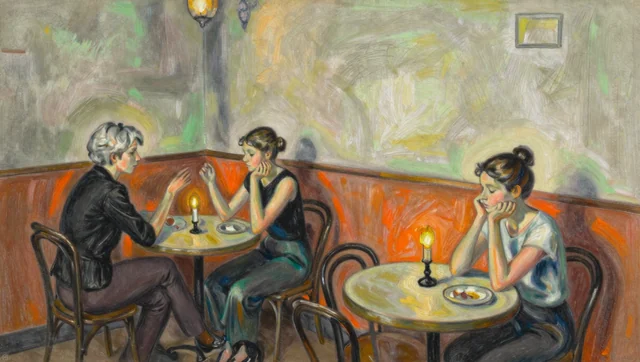
  • MargueriteXenLook AI interpretation

    Edgar Degas

    Alike
    Both rooms draw the stage and racecourse of Paris, dancers and singers. In The Jockey Lautrec showed his admiration for Degas's racing pictures.
    Different
    Degas observed the stage from a distance at the height of the auditorium, while Lautrec went backstage and into the bar and caught a moment in quick line and flat colour. If Degas is the observer, Lautrec is a companion in the same place.
    Go to this room
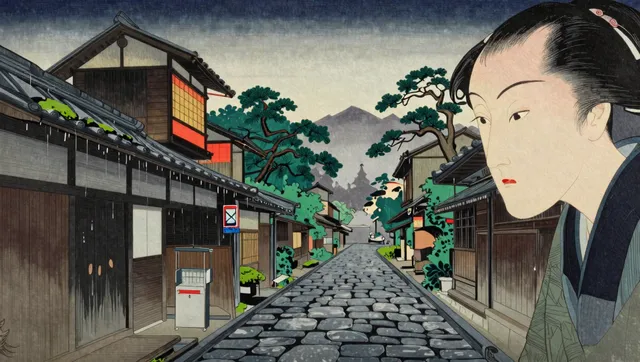
  • Wet cobbles, giant profileXenLook AI interpretation

    Ukiyo-e

    Alike
    Both rooms use flat areas of colour and daring cropping. The pale green grass and oblique composition of The Jockey show this influence.
    Different
    Ukiyo-e were made by Edo woodblock and a division of craftsmen's labour, while Lautrec drew directly on stone in Paris and printed a separate stone for each colour. The same eye was carried by other tools into the night of another city.
    Go to this room
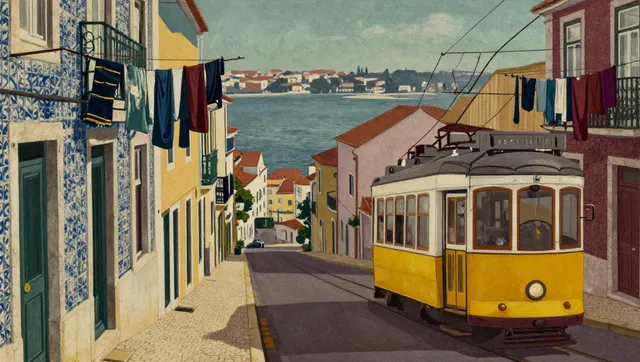
  • Tram under clotheslinesXenLook AI interpretation

    Symbolism and Art Nouveau

    Alike
    Both rooms share the poster and lithograph culture of late nineteenth-century Paris and Europe. Flowing line and flat colour resemble each other.
    Different
    Where Art Nouveau adorned an ideal with plant and curve ornament, Lautrec removed the ornament and saw the fatigue and loneliness of people backstage. The same line goes one toward dream, the other toward reality.
    Go to this room

Quiz

Pick one to see the answer and why.

  1. 1. Who is the star of the first Moulin Rouge poster Lautrec made in 1891?

  2. 2. In Miss Loïe Fuller, how are movement and energy conveyed?

  3. 3. How many prints, plus a cover, make up the series Elles?

  4. 4. In what posture did Lautrec draw horse and rider in The Jockey?

  5. 5. How did May Belfort sing on the stage?

Paint it

A sentence written for this style is ready. Copy it or take it straight to the studio.

The passage above the ceilingXenLook AI interpretation

A single singer beside the stage as the lights go down, short supple outlines, flat areas of red-orange, black and pale pink, edges cut aslant and a balcony above, a dark audience in the foreground, thin layers of colour like a layered lithograph

Try changing Swap the stage for a scene in a neighbourhood restaurant or the subway on the way home. Draw with the central figure pushed from the middle to a corner, and you gain a bystander's eye.

Paint in the studio

The sentence is copied. Paste it into the studio's input box.

Sources

Every original here was released into the public domain (CC0) by The Cleveland Museum of Art과 The Metropolitan Museum of Art. Artist, title, date and technique follow the museum records, which we checked again with their release terms on 2026-11-24. The commentary is written by XenLook.

Pictures marked “XenLook AI interpretation” were made by XenLook with XenArt. They are not historical paintings and no painter made them. Originals carry the “Original” mark and the name of the museum that holds them.

Als App installieren